








Toby Rzepka - 2026 No. 110
About the luthier
Toby Rzepka began building guitars in 2001 after studying with Walter Stanul at the School of the Museum of Fine Arts in Boston. His early development as a luthier continued under the guidance of the American guitar maker Stephan Connor, where he refined his understanding of contemporary classical guitar construction.
Seeking a broader historical perspective on instrument making, Rzepka later attended the West Dean College of Arts and Conservation in England, where he specialised in the construction of Baroque and Renaissance instruments. His work there was recognised with a President’s Award and a Distinction in 2008. These experiences provided him with a foundation that combines historical knowledge with an openness toward modern design concepts.
Rzepka approaches guitar making as a craft that continues to evolve. His instruments reflect a dialogue between traditional aesthetics and contemporary structural ideas, aiming to explore new tonal possibilities while maintaining a clear connection to the classical guitar’s established form.
About the guitar
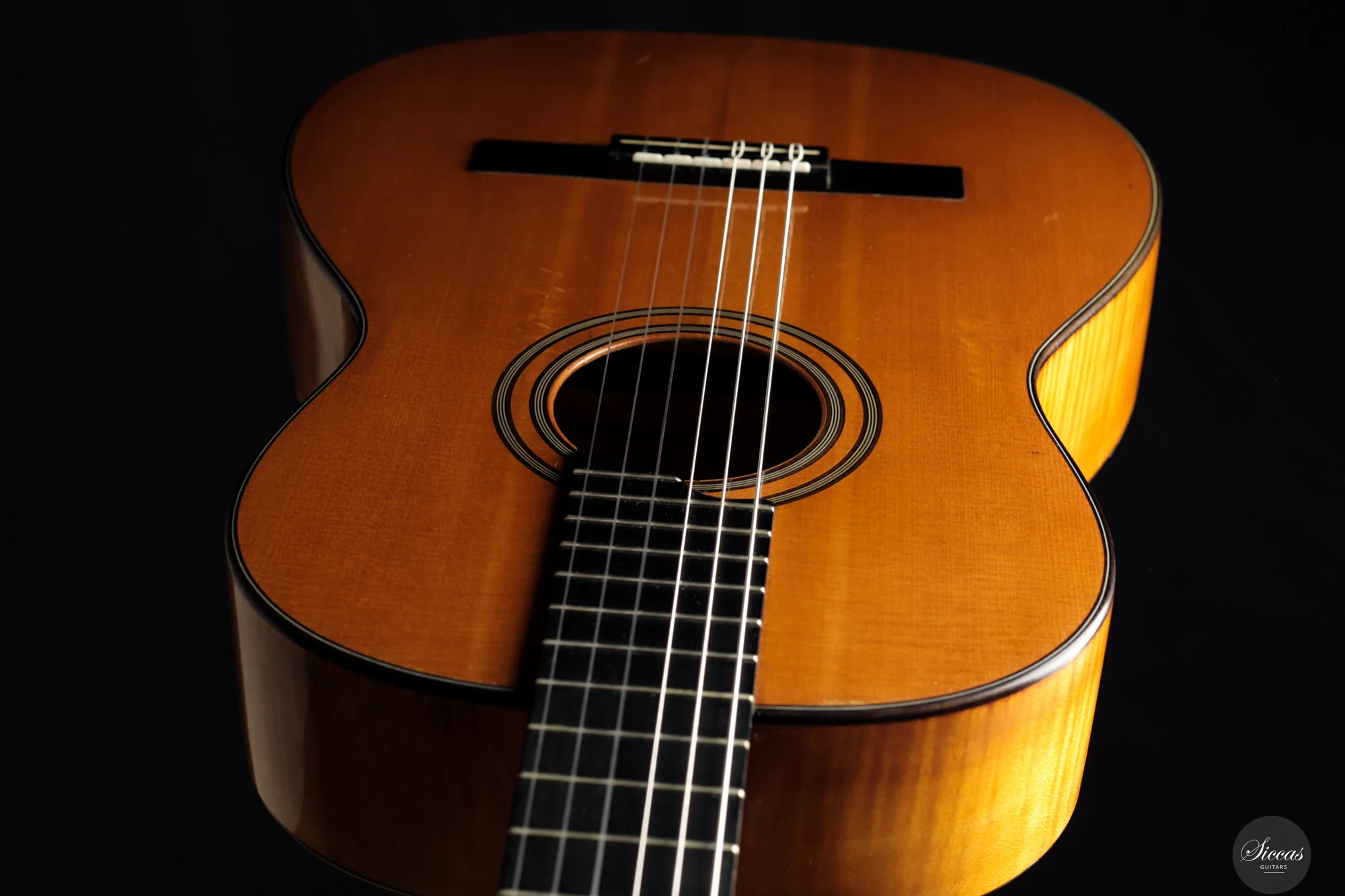
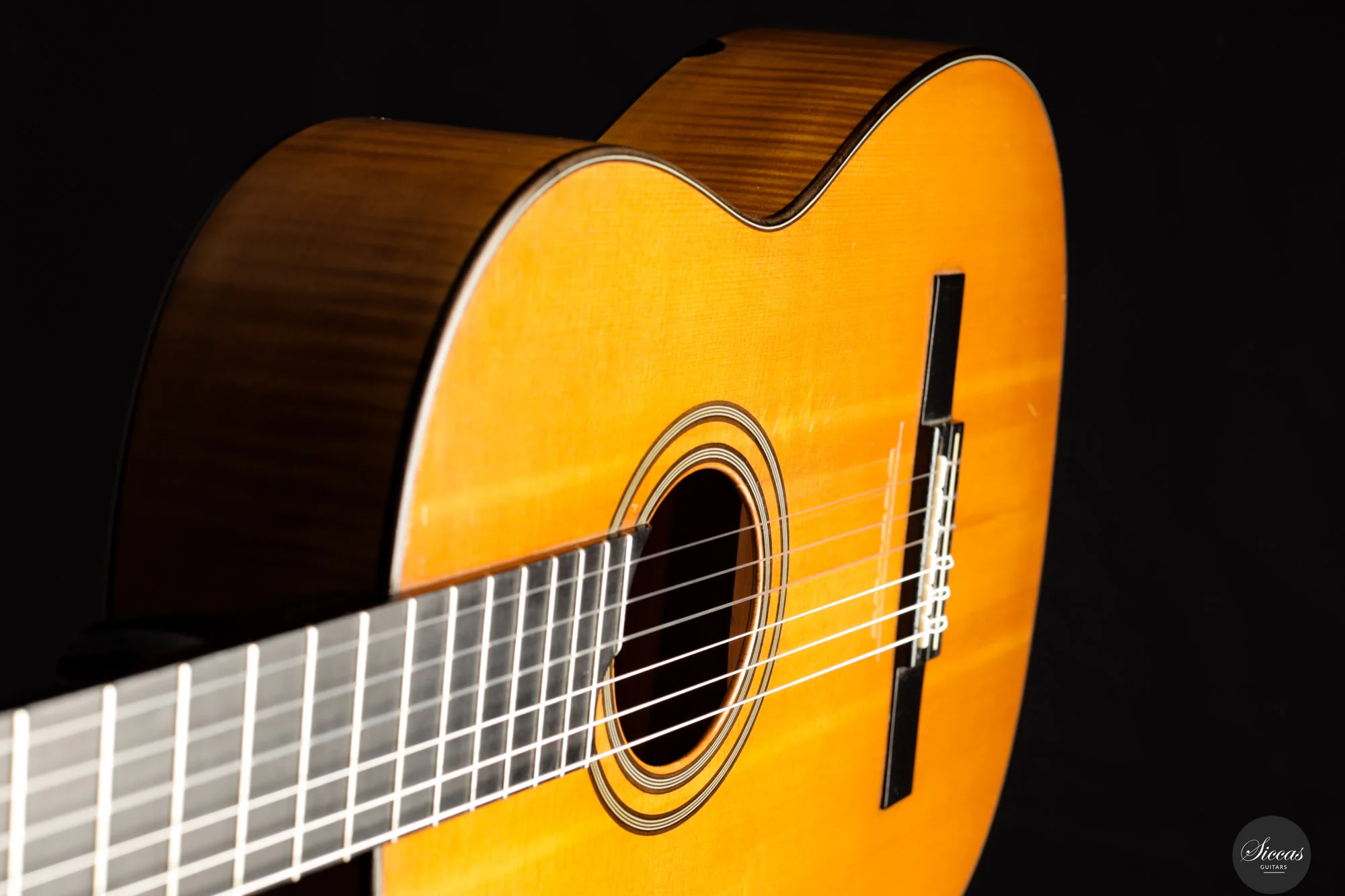
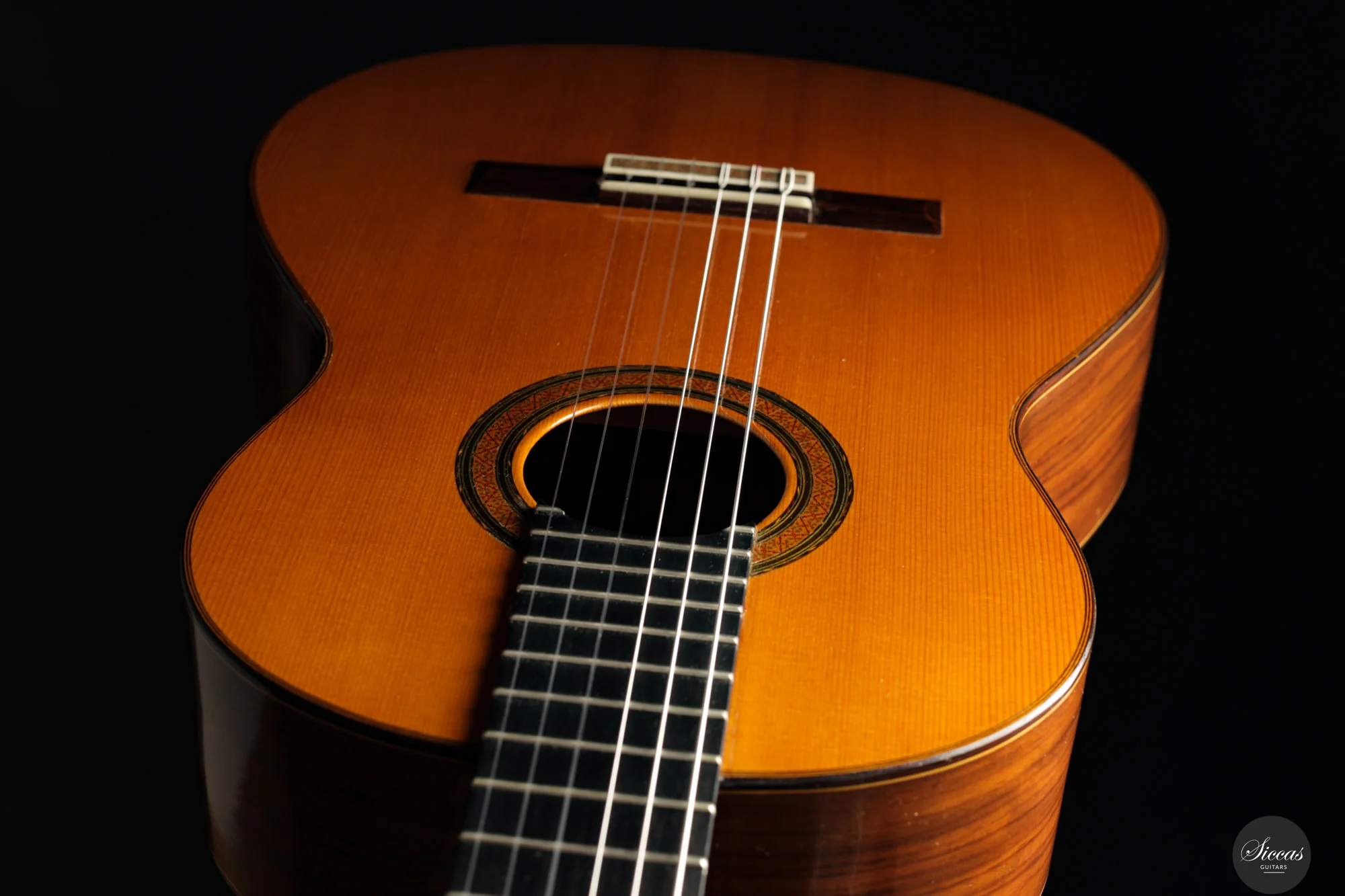
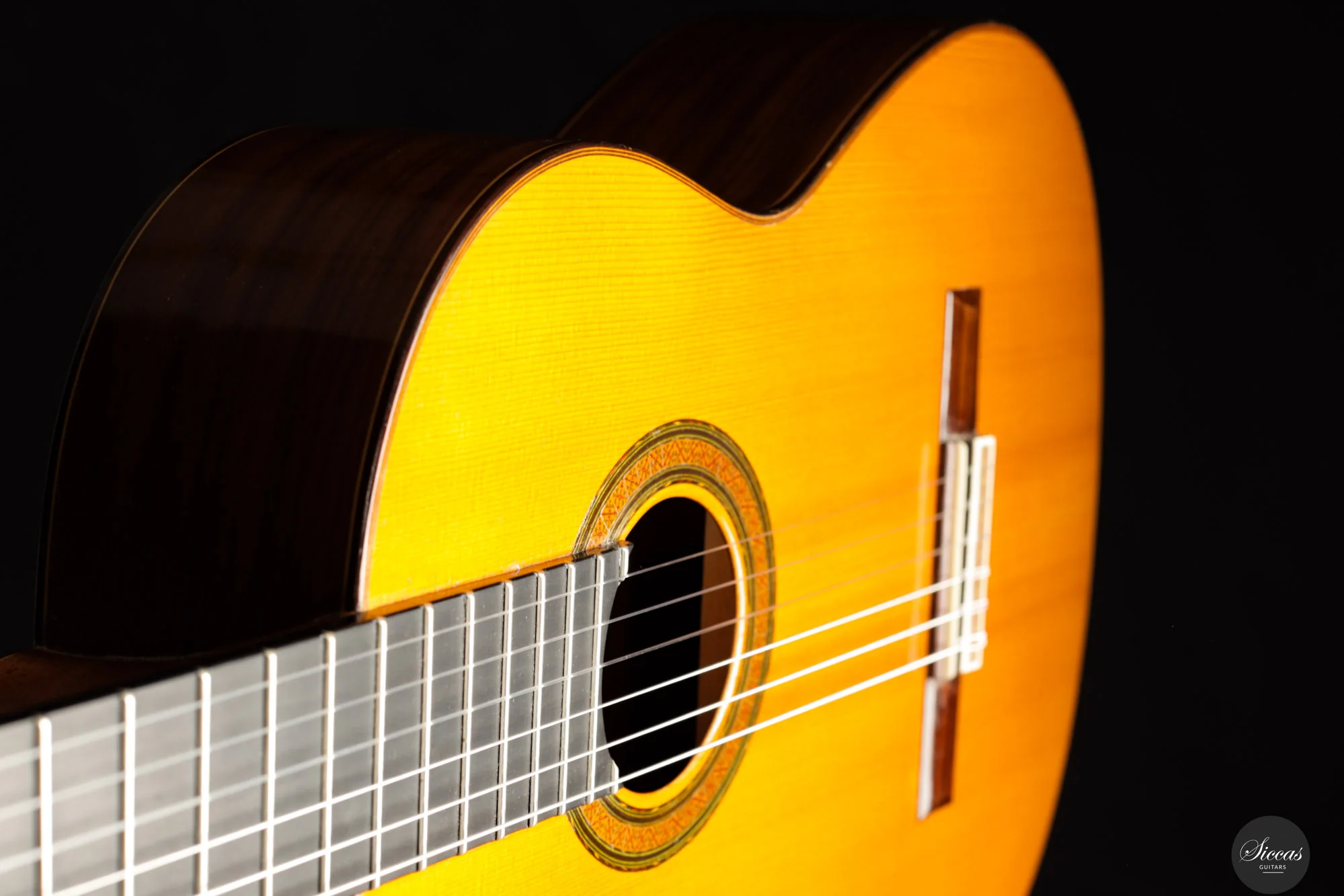
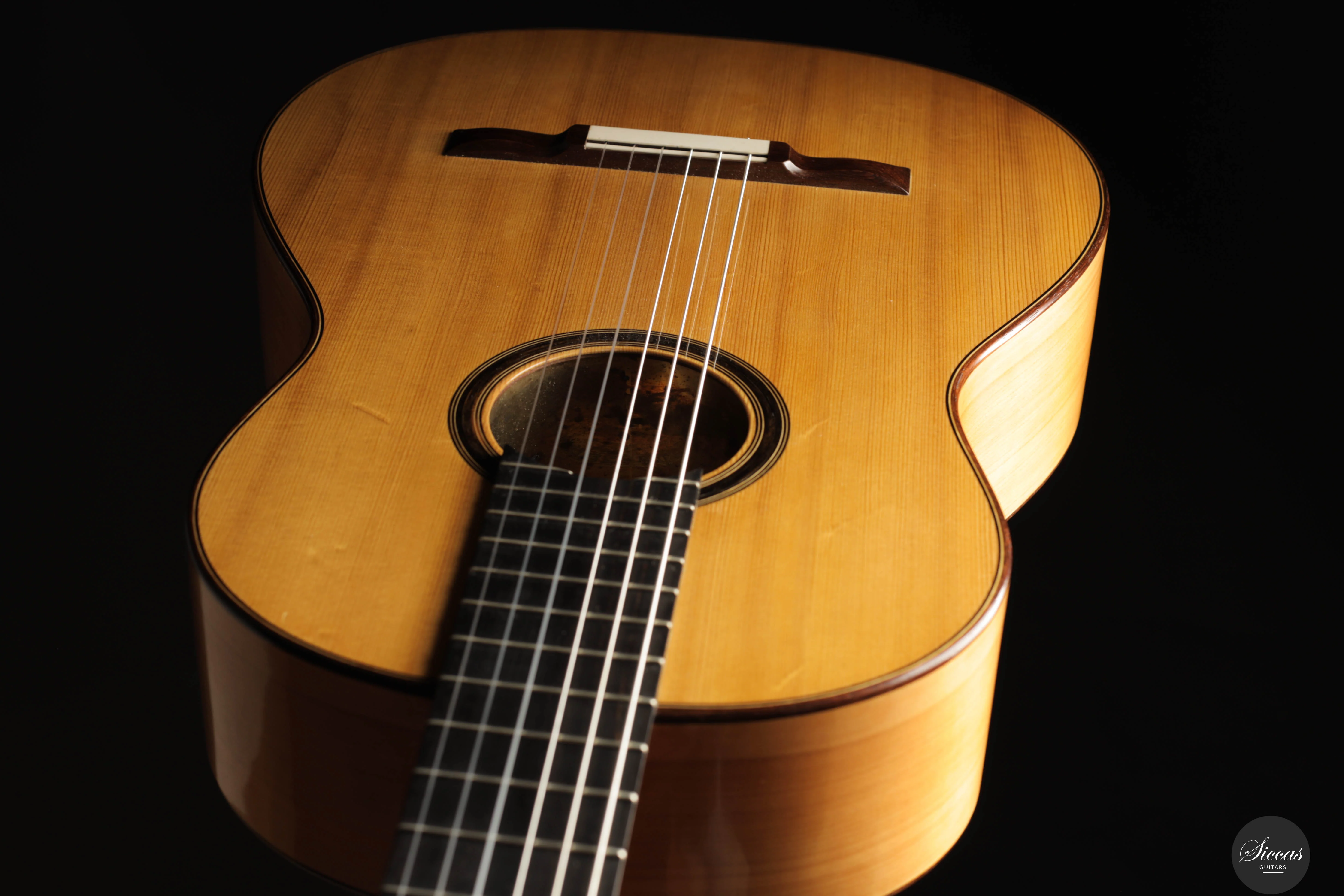
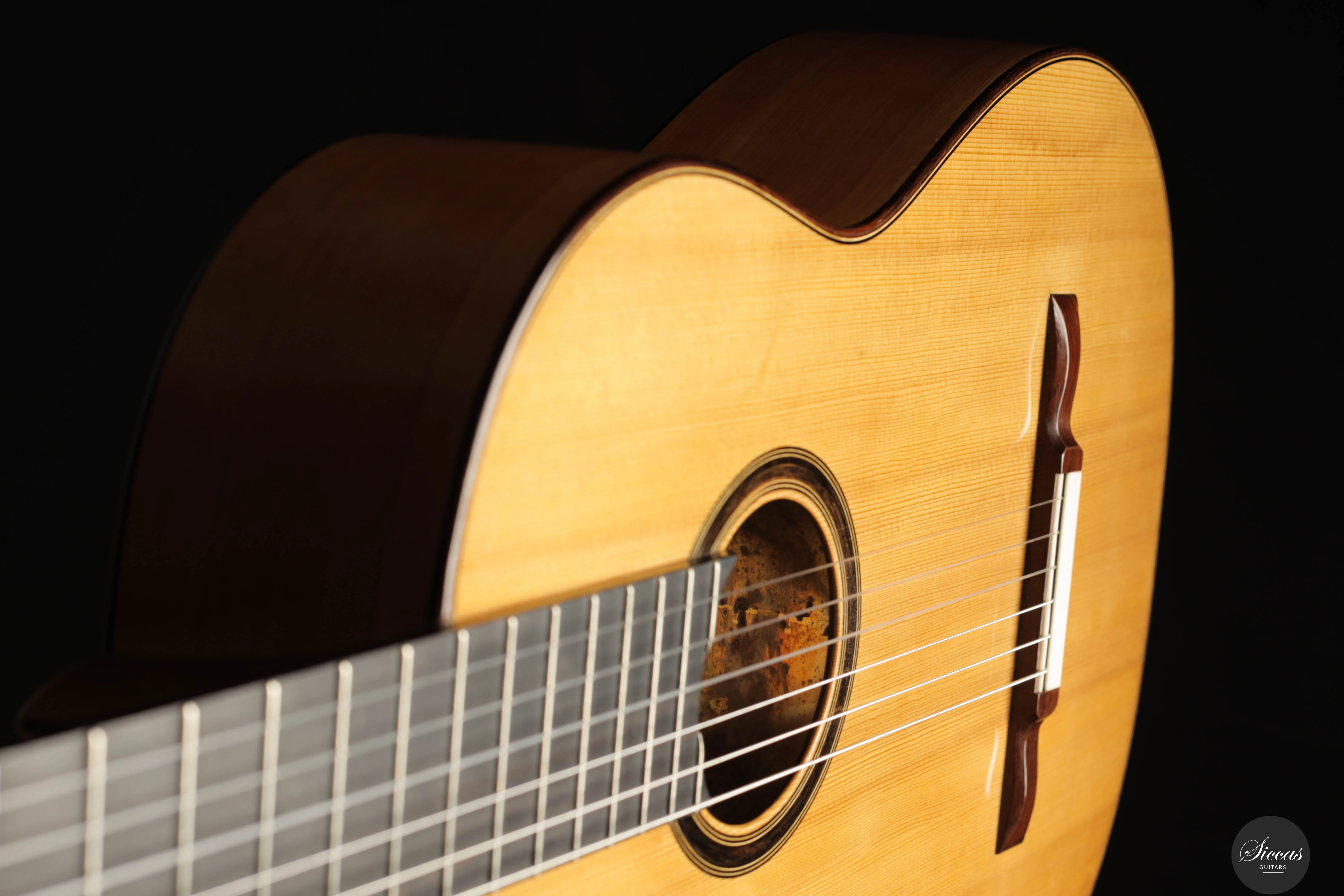
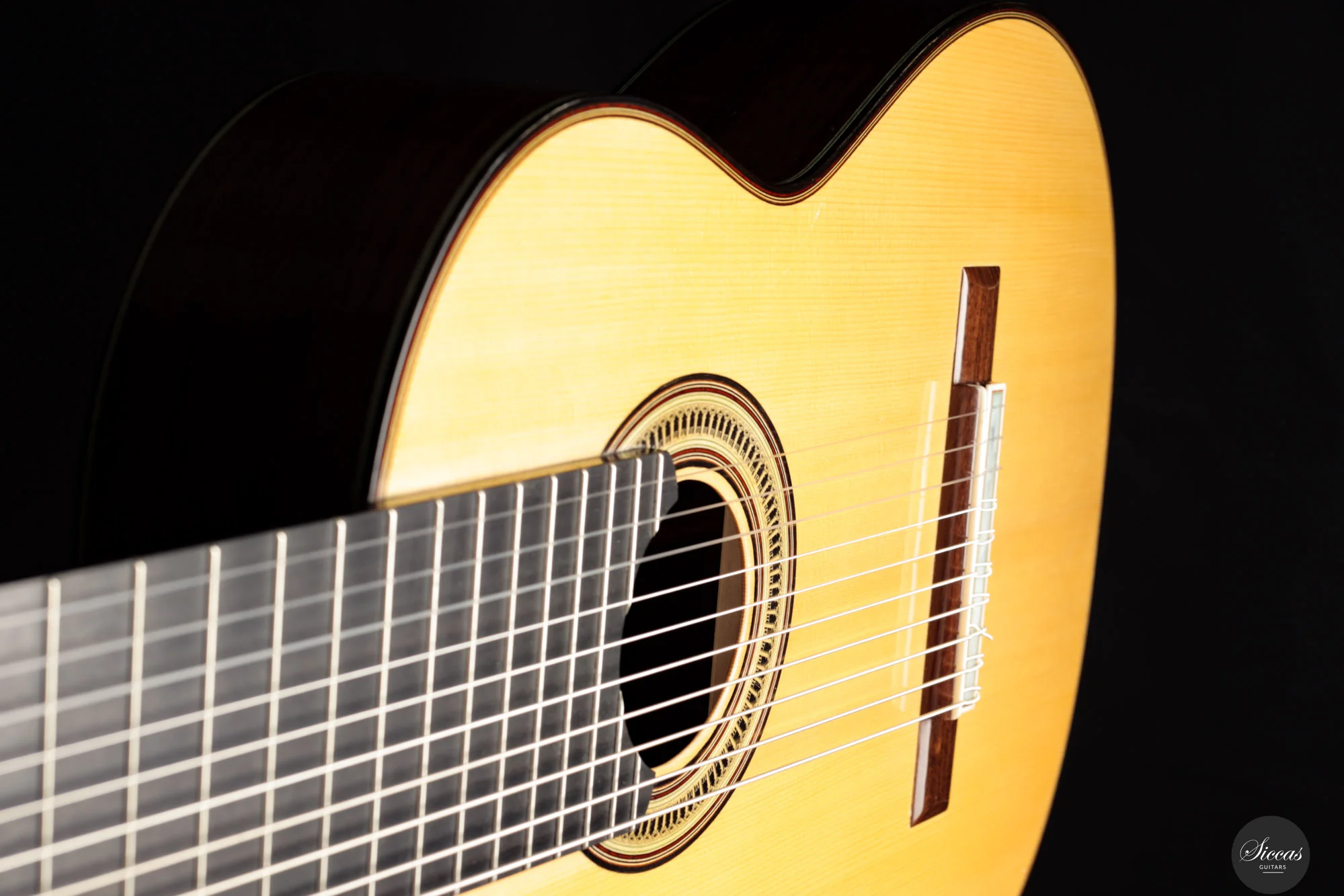
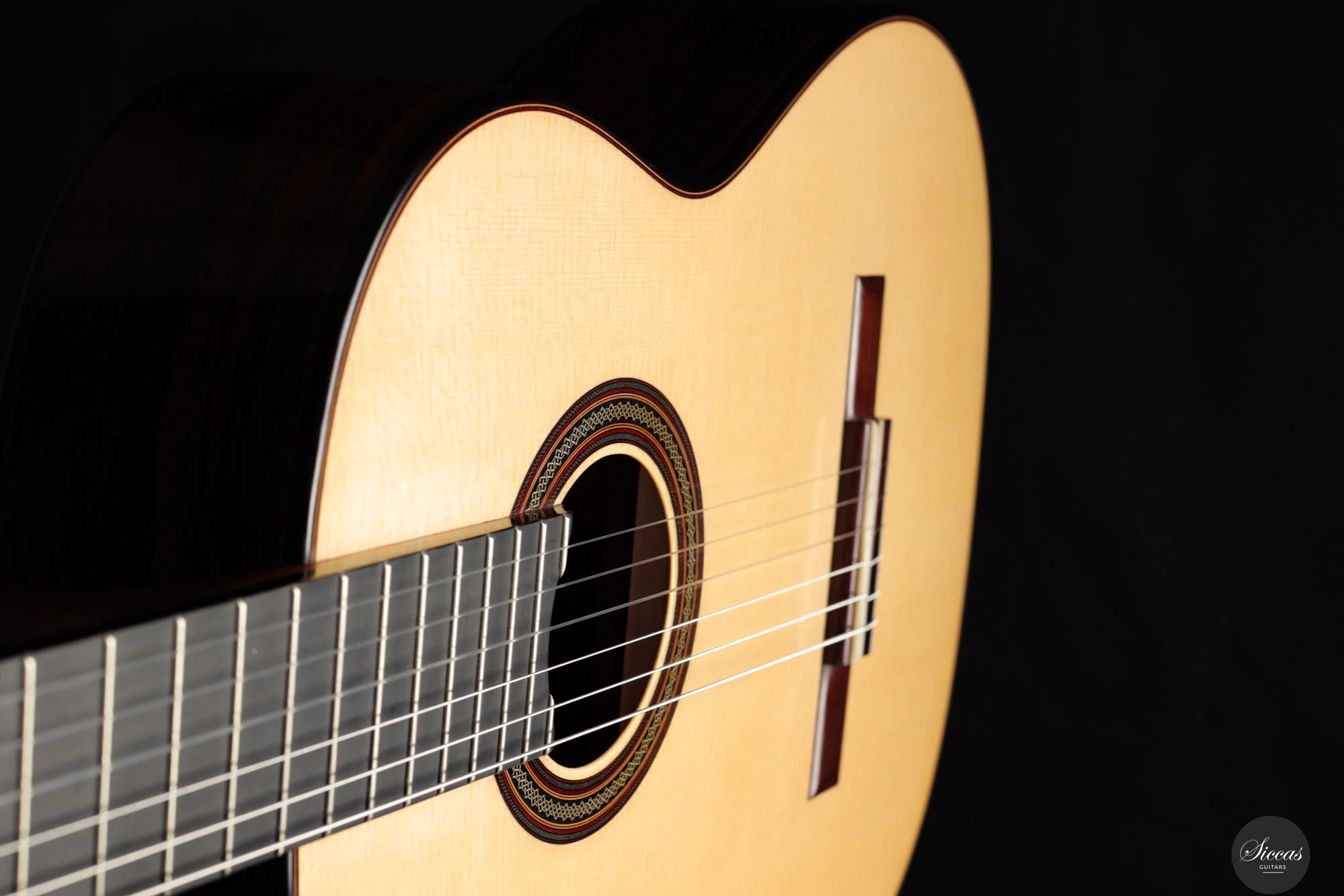
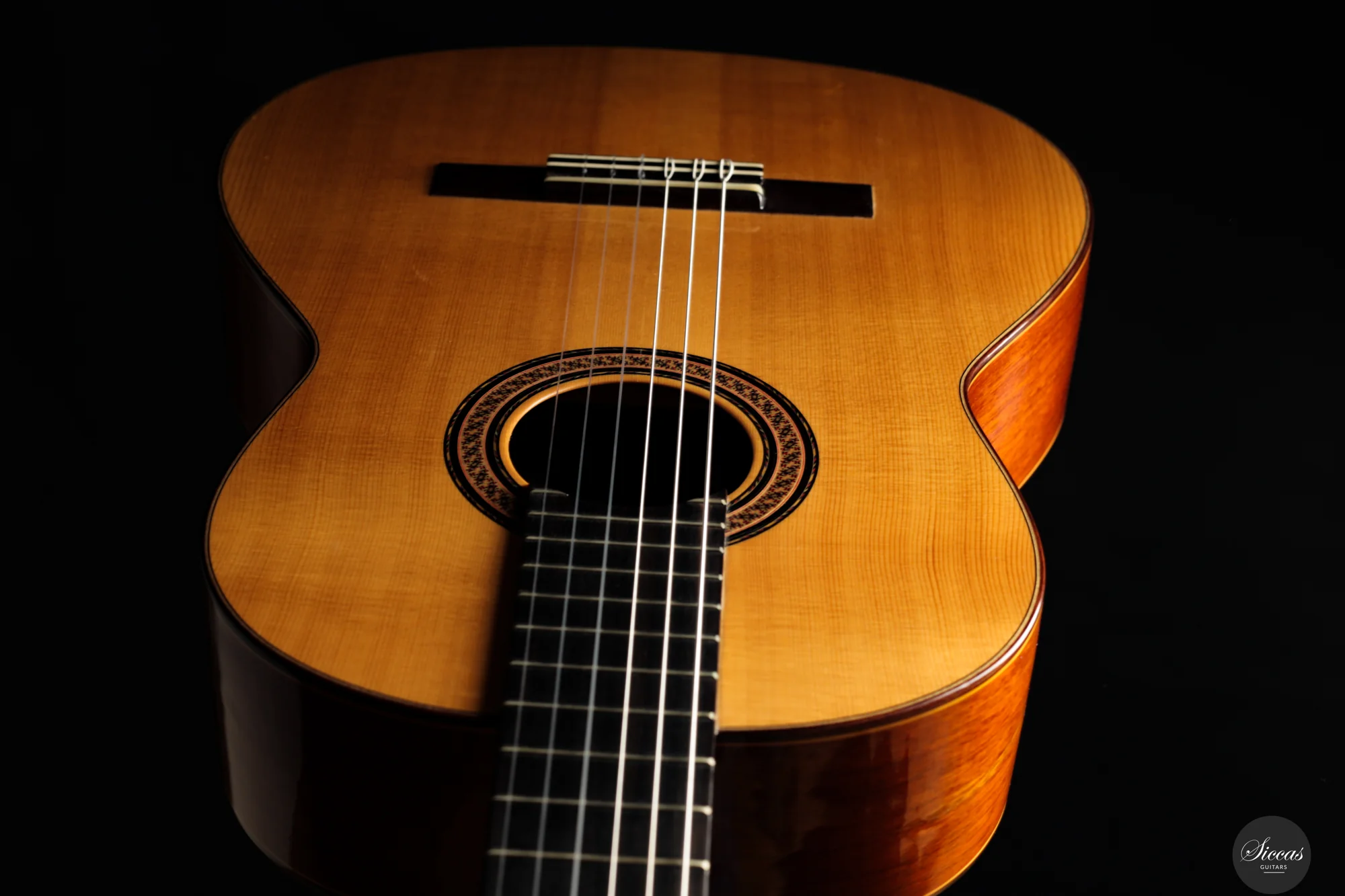
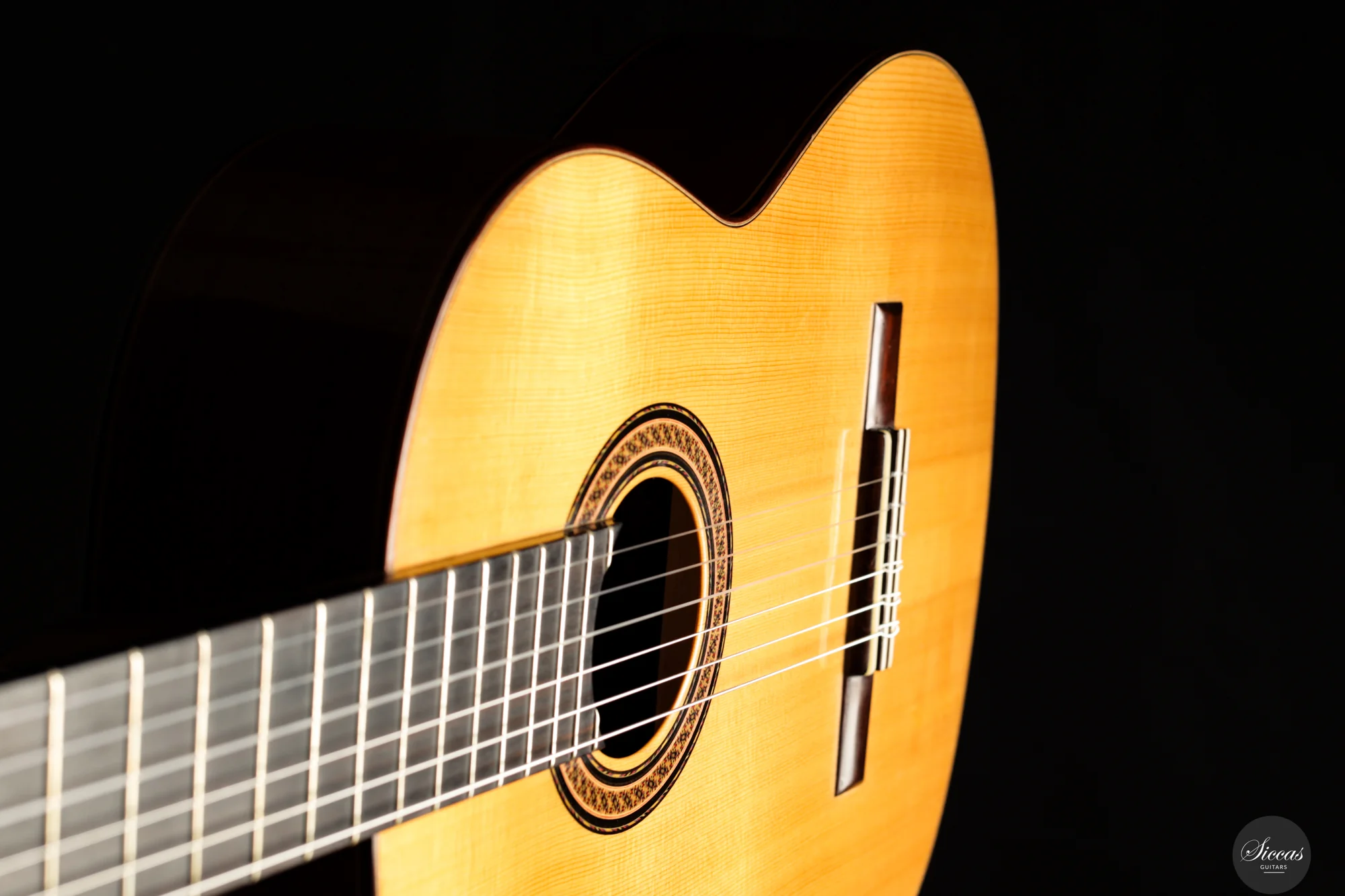
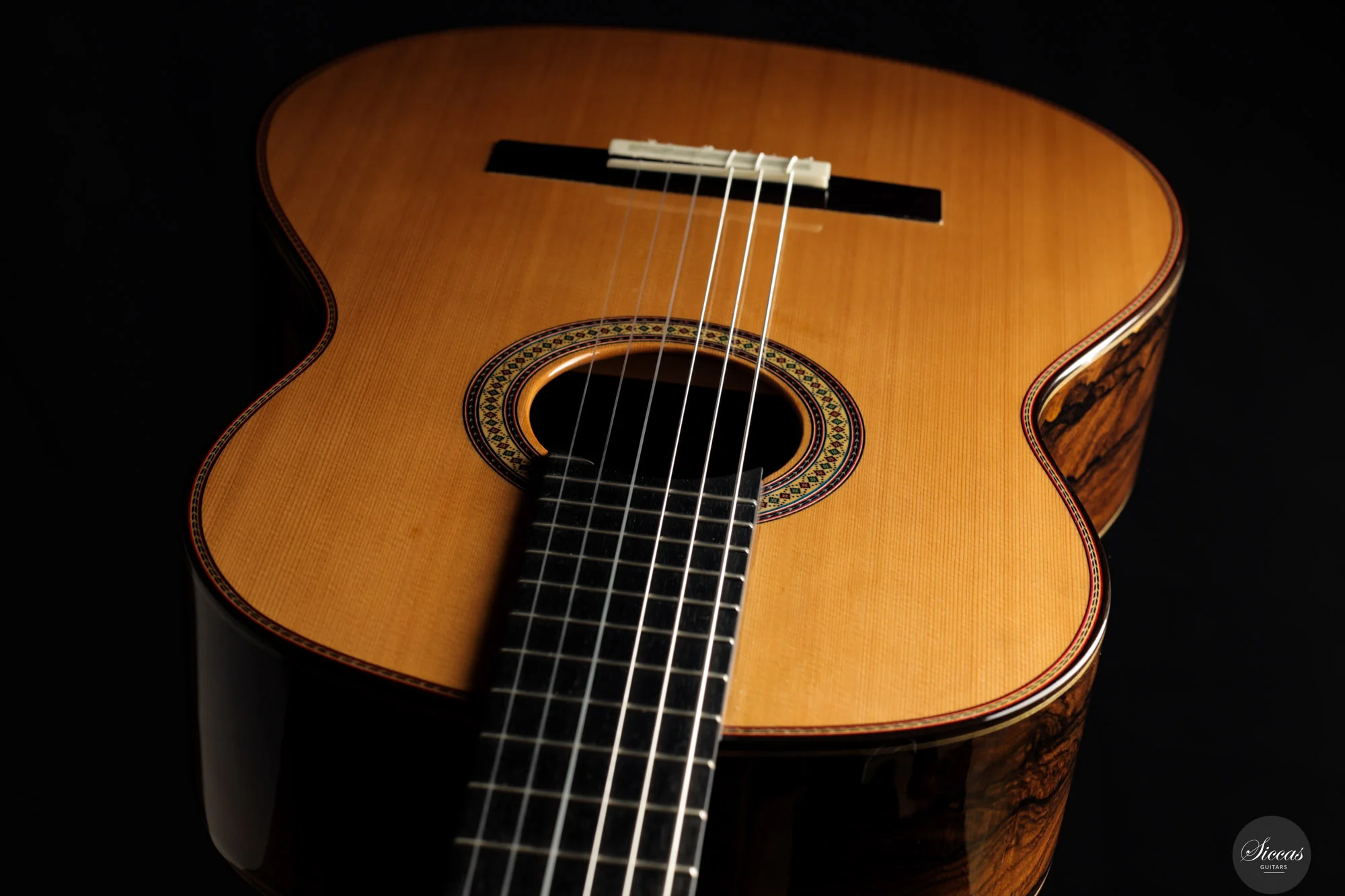
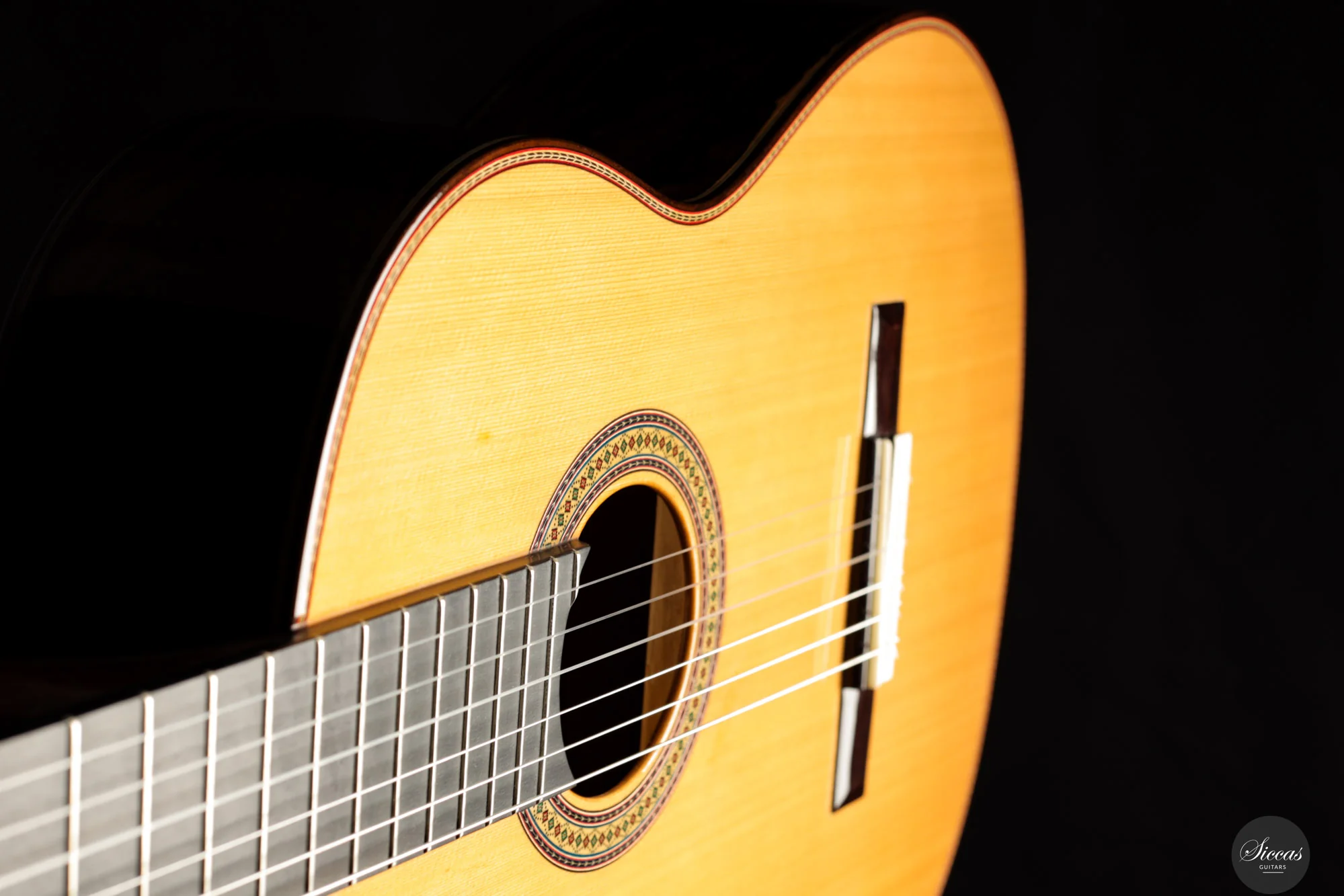
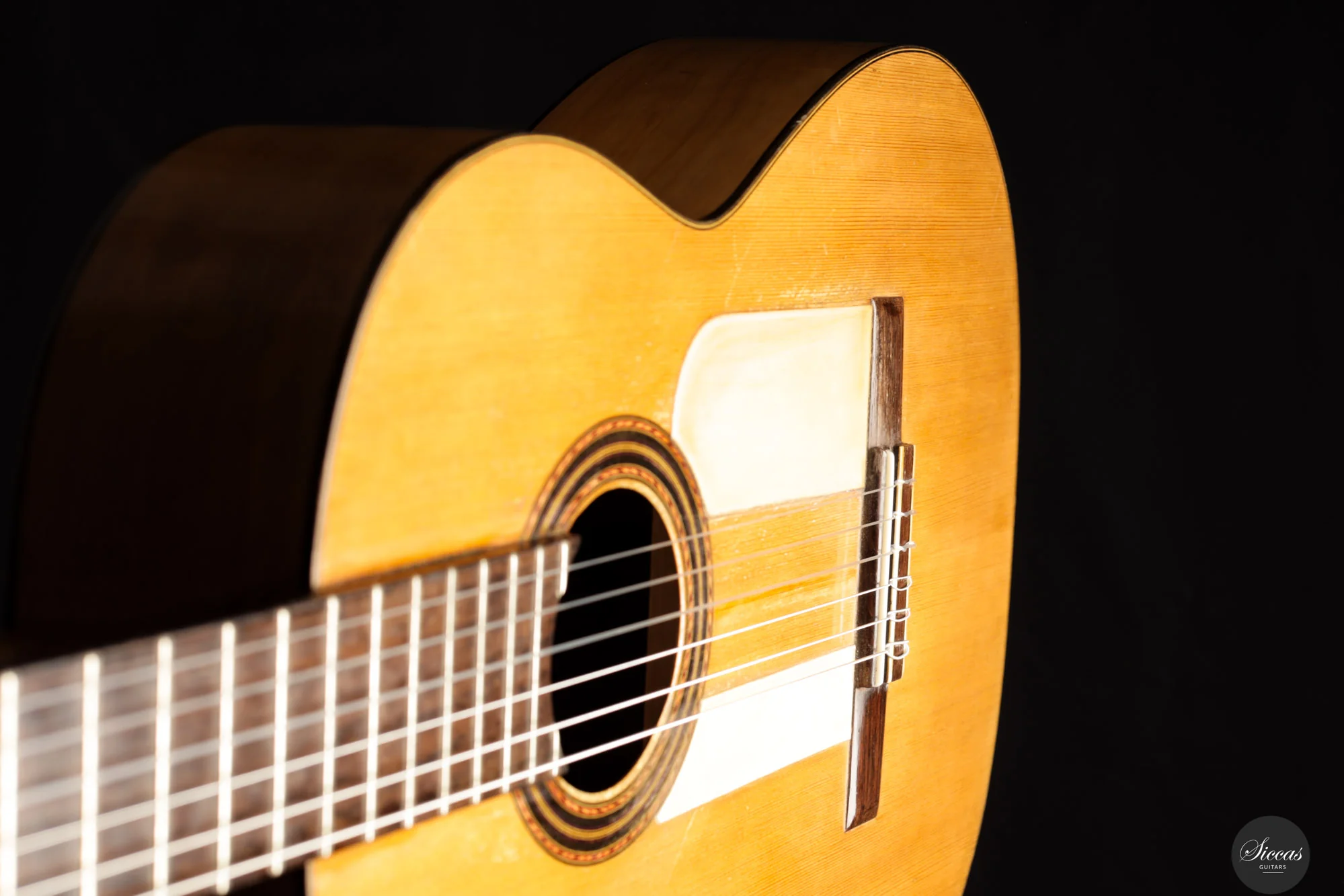
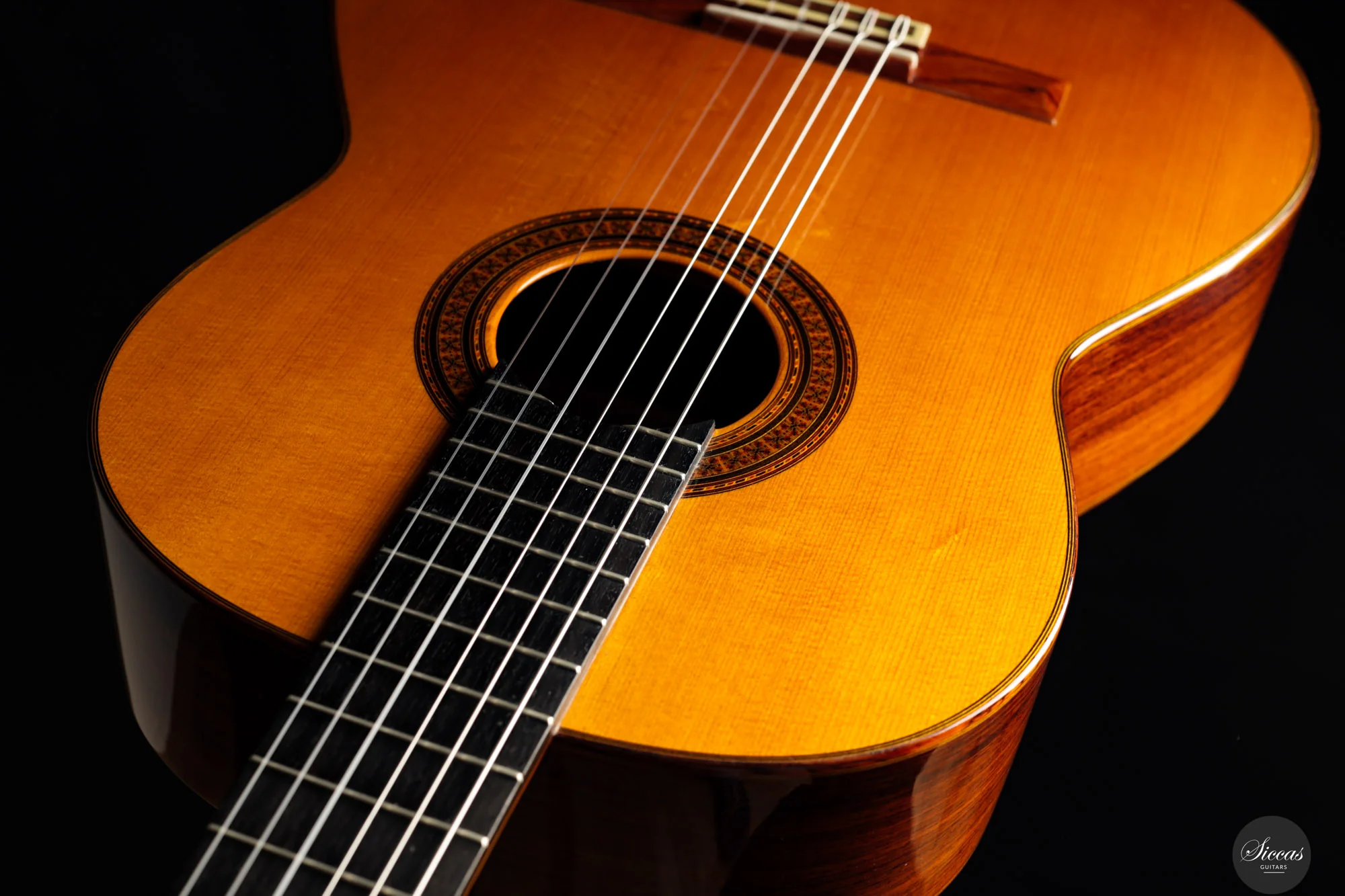
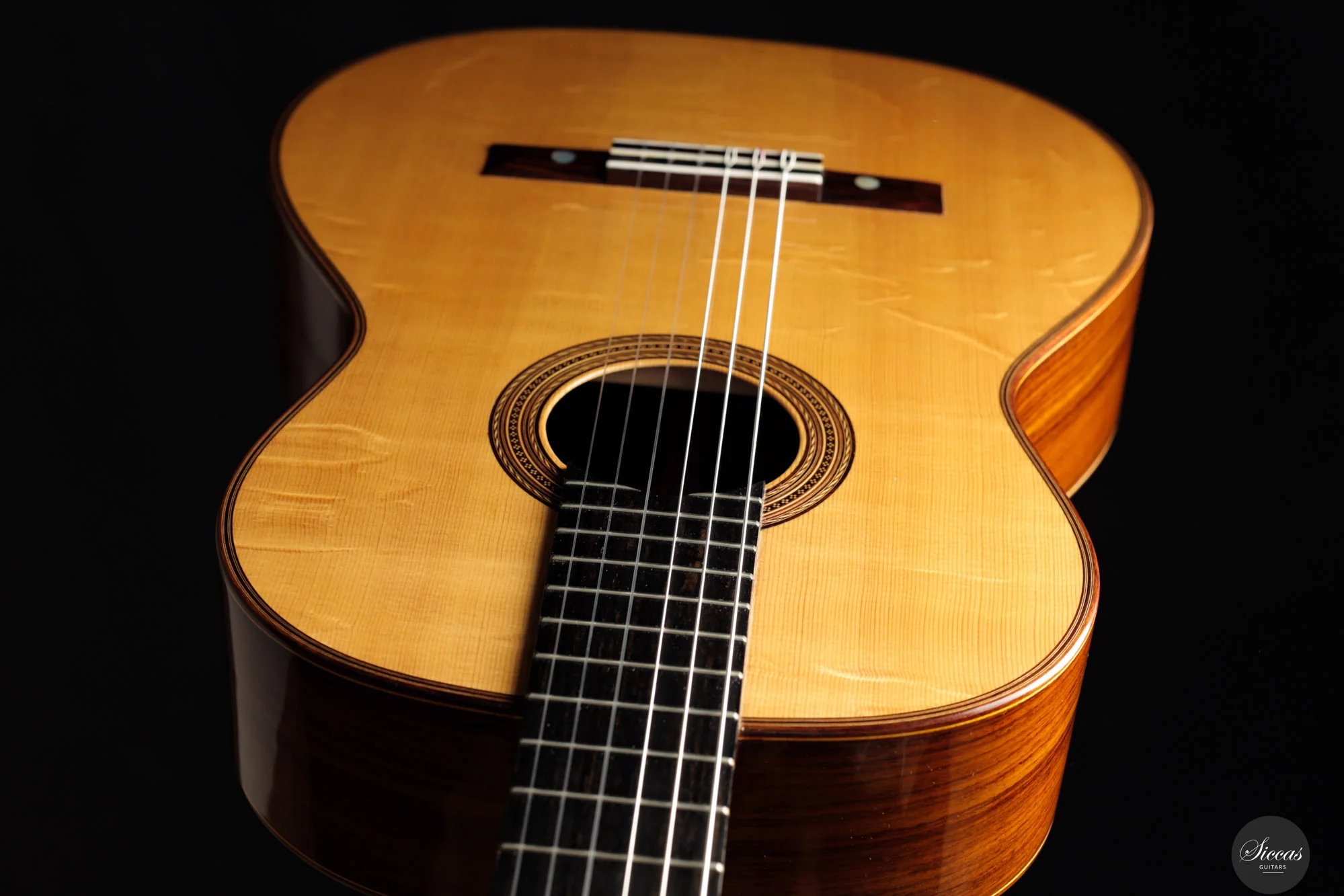
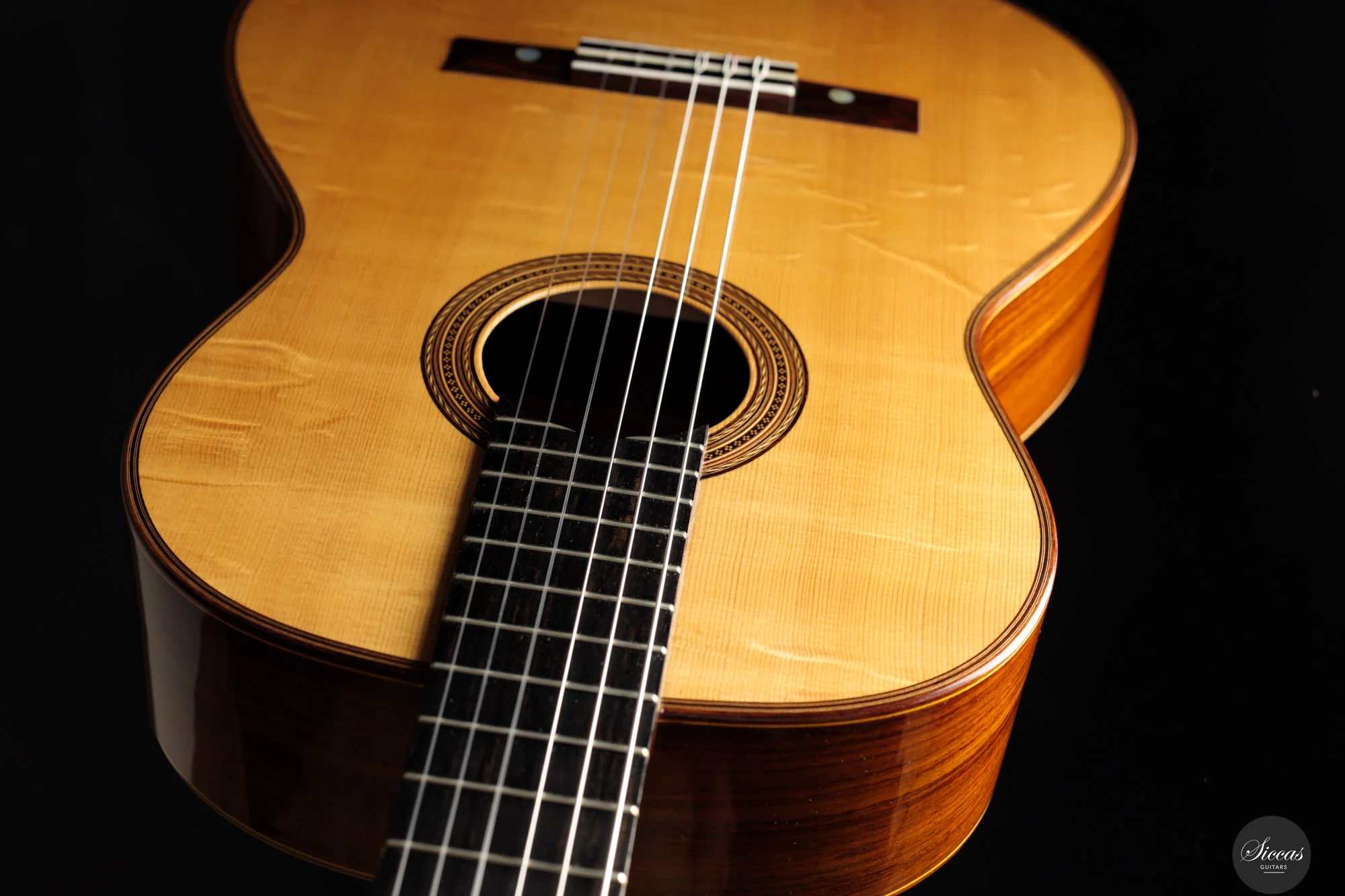
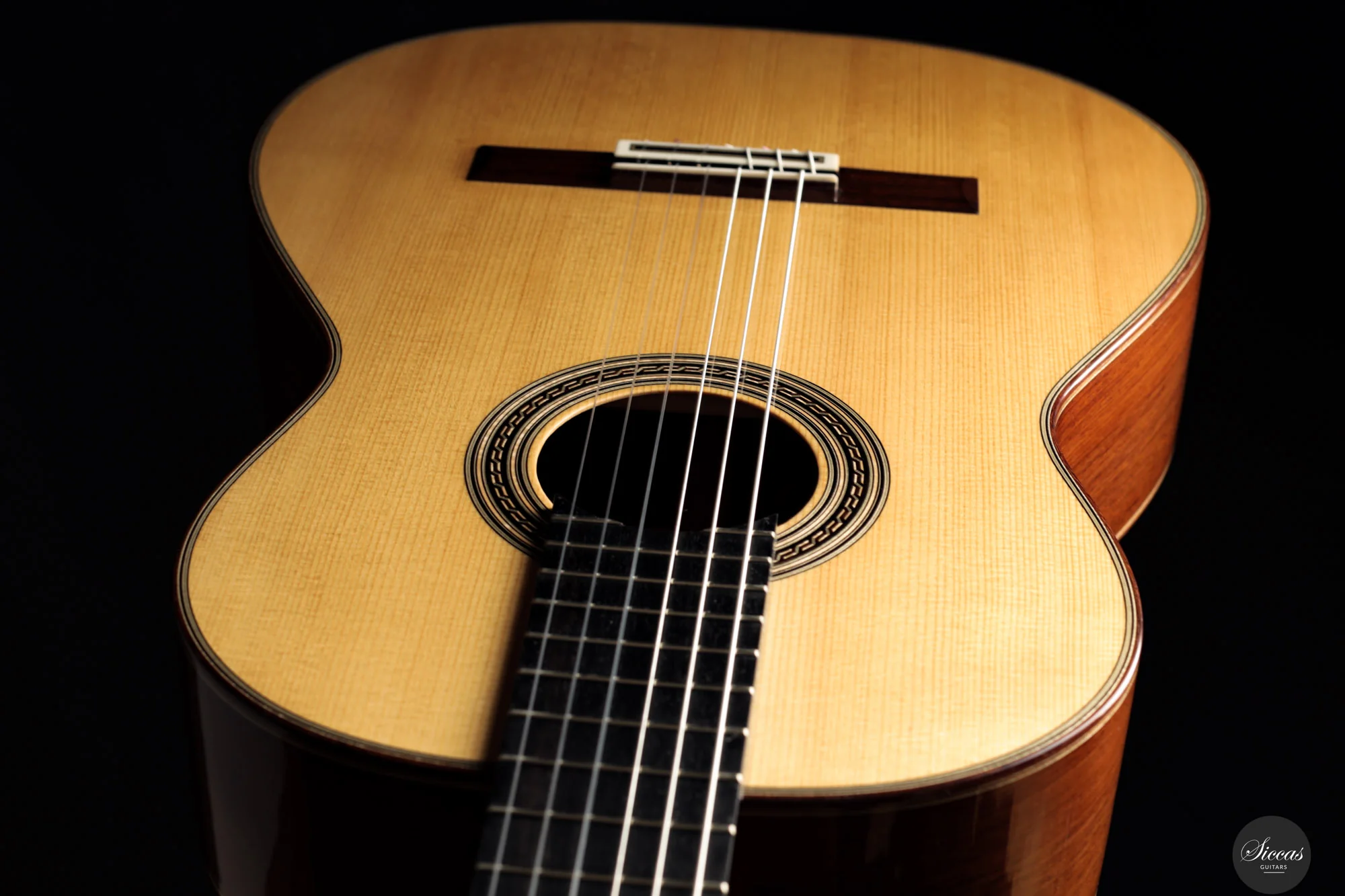
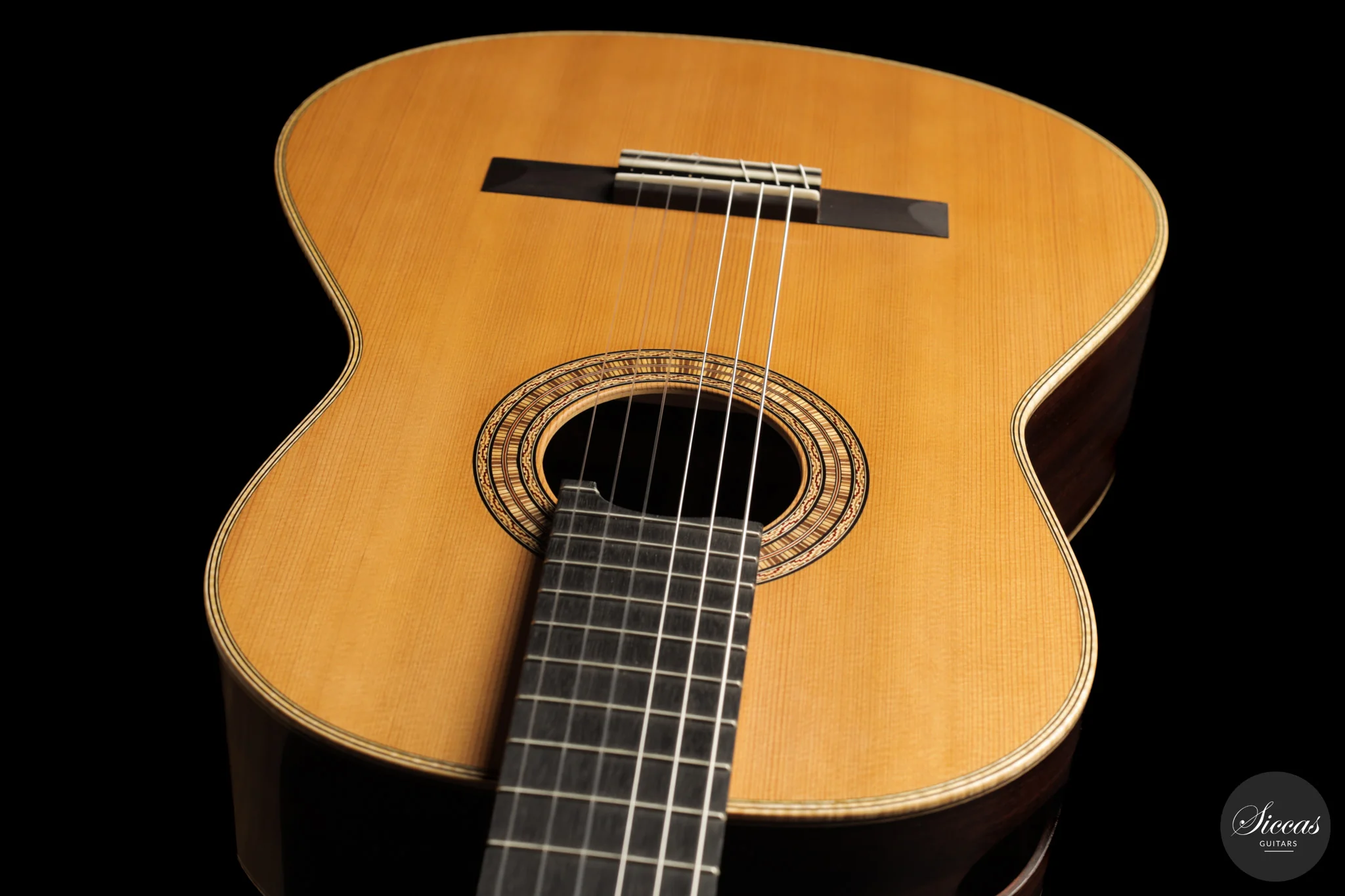
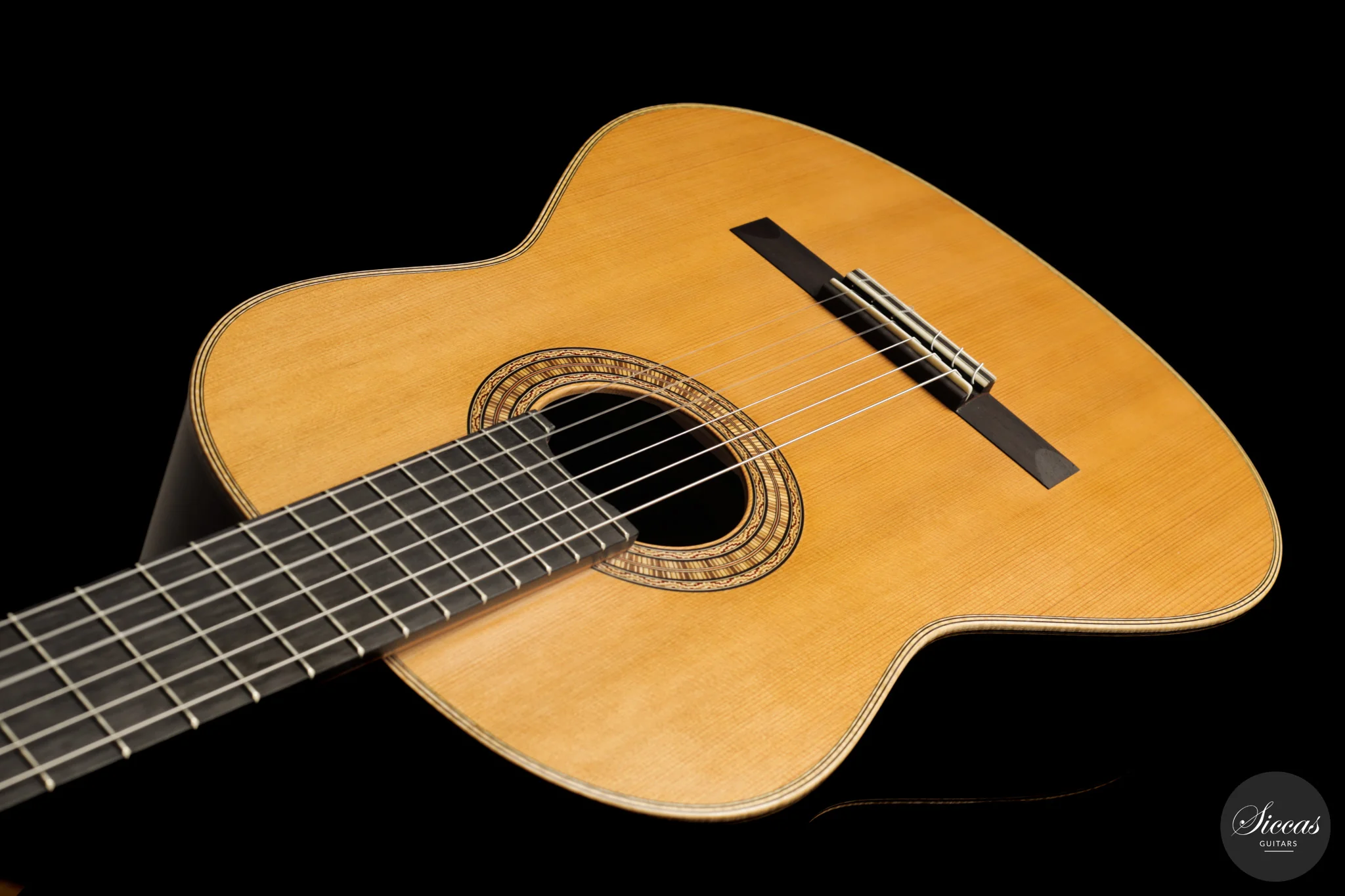
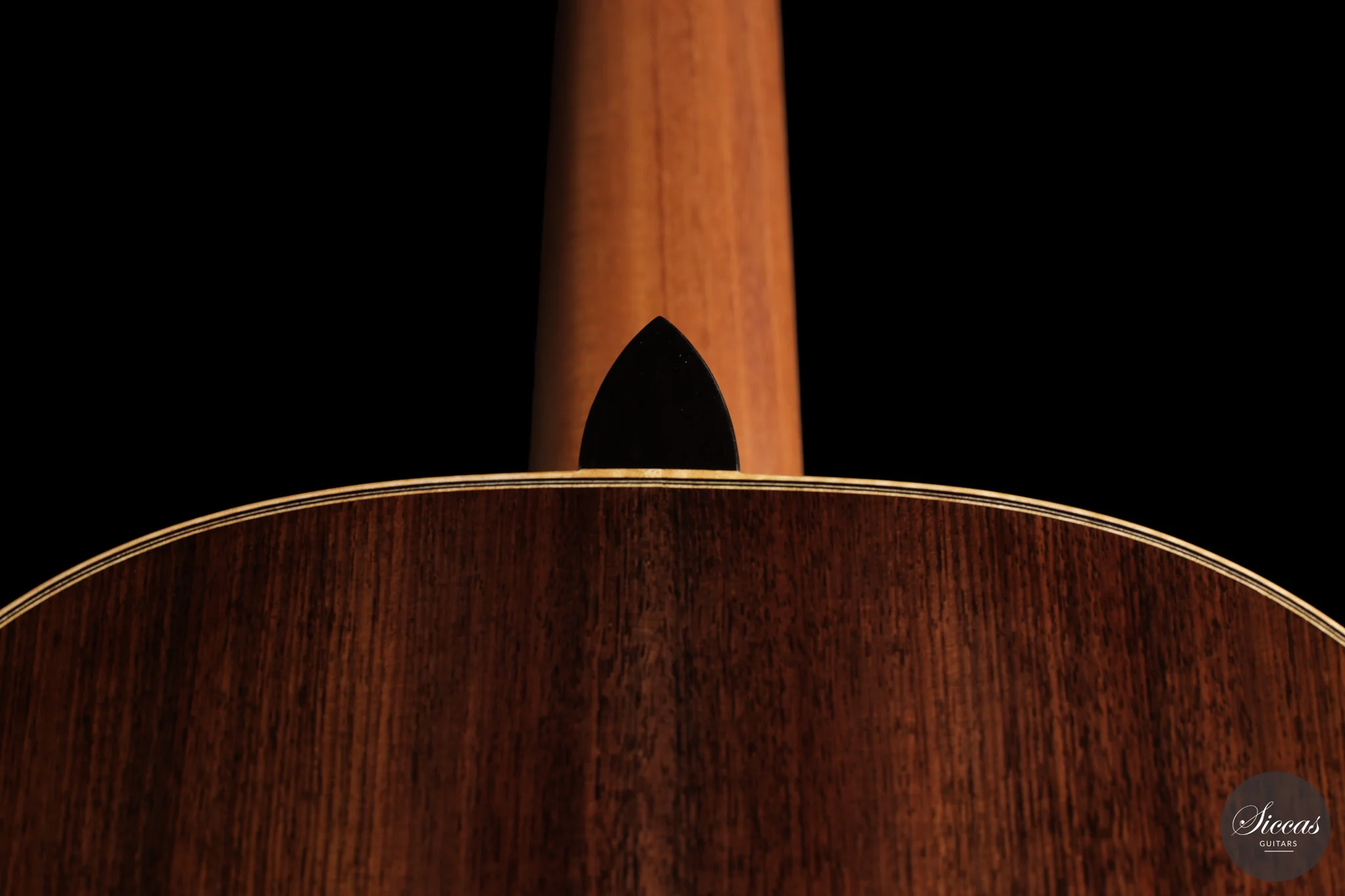
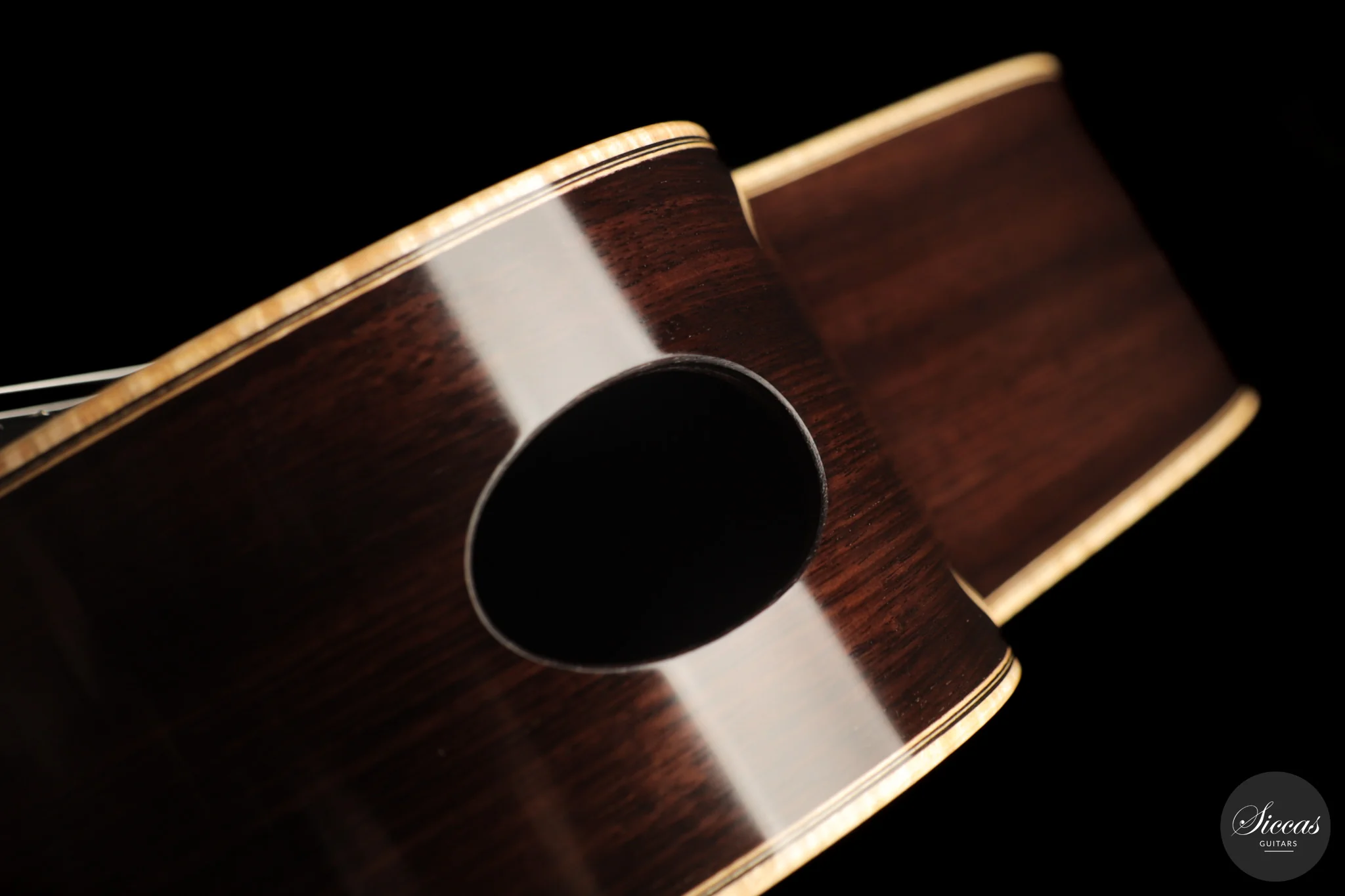
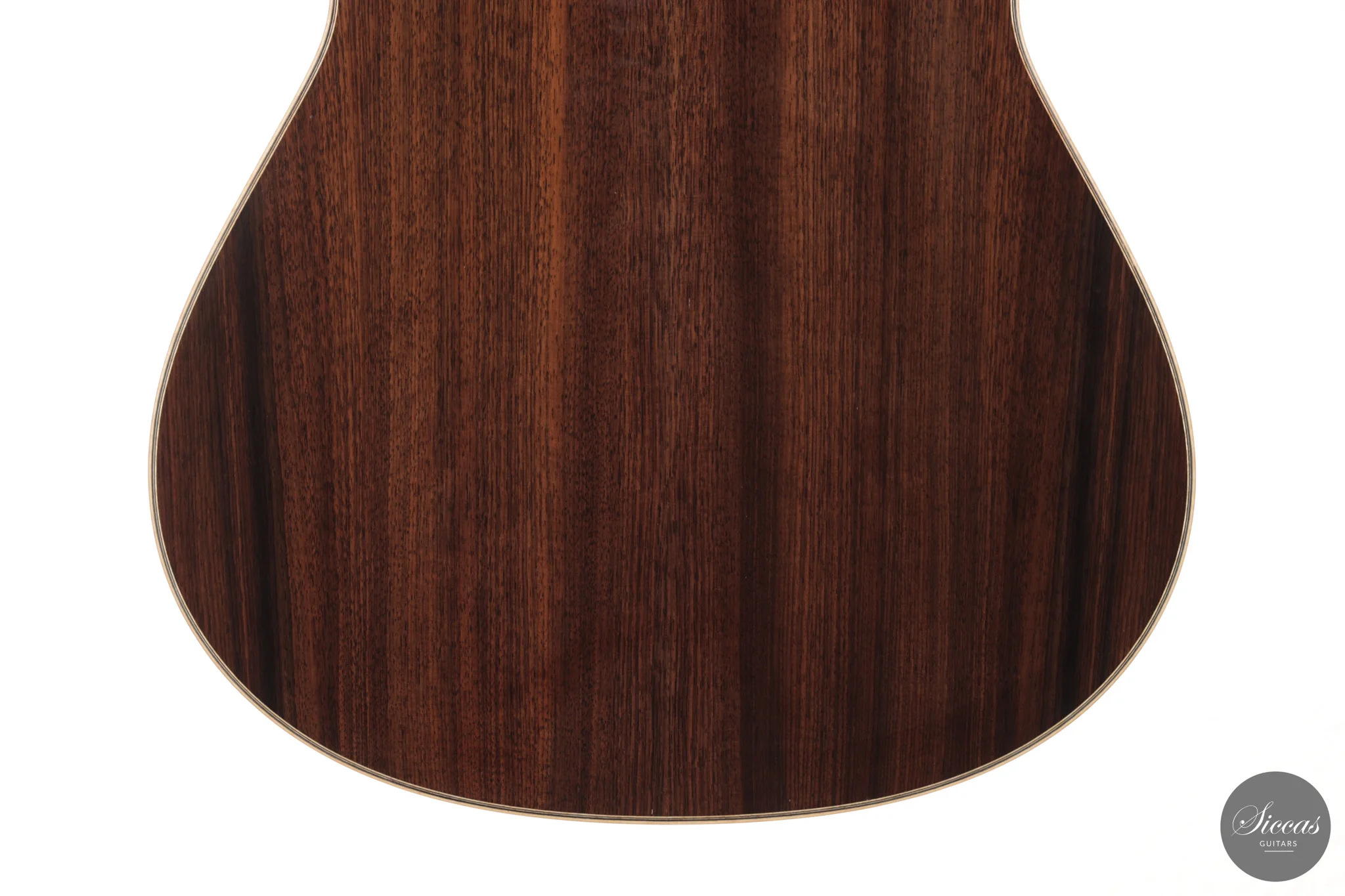
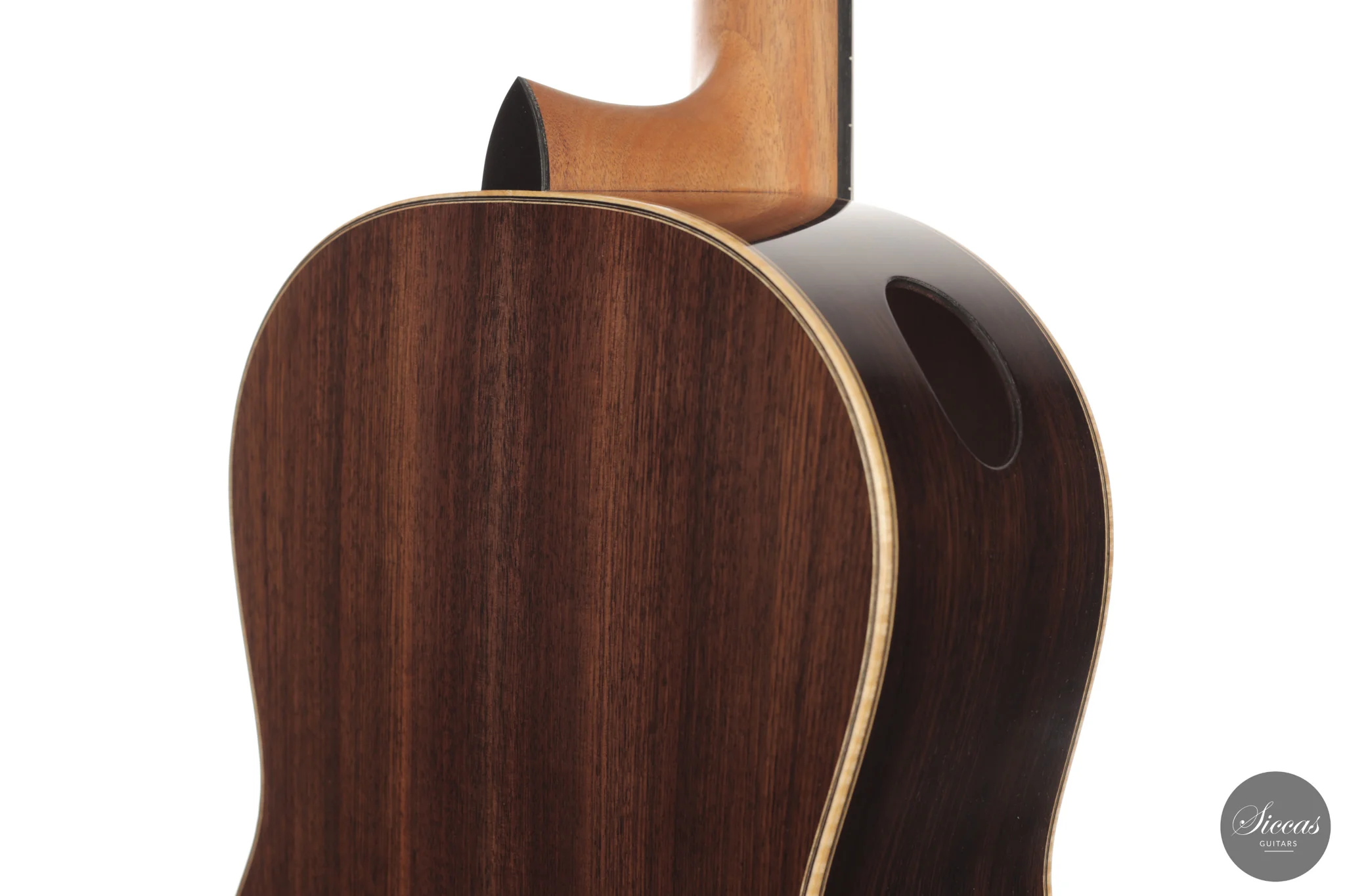
This guitar from 2026 represents Toby Rzepka’s modern approach to classical guitar construction. Built with a spruce top and Indian rosewood back and sides, the instrument incorporates a contemporary structural concept that emphasises projection, sustain and tonal depth. The design includes modern features such as a soundport and an elevated fingerboard, both intended to enhance the responsiveness and acoustic efficiency of the instrument.
The tonal character is notably dark and rounded. The bass register develops with considerable depth, while the overall sound remains soft in its attack and rich in overtones. Rather than producing an overtly bright response, the guitar favours a smooth tonal profile that maintains warmth even under stronger articulation.
Despite this dark tonal centre, the instrument retains strong projection and a wide dynamic capacity. The sound can be shaped through subtle adjustments in right hand position, allowing the player to introduce brighter colours when required while preserving the instrument’s characteristic warmth. The result is a powerful modern concert guitar with a distinctive voice and a broad expressive range.
Original: $8,226.98
-70%$8,226.98
$2,468.09Product Information
Product Information
Shipping & Returns
Shipping & Returns
Description
About the luthier
Toby Rzepka began building guitars in 2001 after studying with Walter Stanul at the School of the Museum of Fine Arts in Boston. His early development as a luthier continued under the guidance of the American guitar maker Stephan Connor, where he refined his understanding of contemporary classical guitar construction.
Seeking a broader historical perspective on instrument making, Rzepka later attended the West Dean College of Arts and Conservation in England, where he specialised in the construction of Baroque and Renaissance instruments. His work there was recognised with a President’s Award and a Distinction in 2008. These experiences provided him with a foundation that combines historical knowledge with an openness toward modern design concepts.
Rzepka approaches guitar making as a craft that continues to evolve. His instruments reflect a dialogue between traditional aesthetics and contemporary structural ideas, aiming to explore new tonal possibilities while maintaining a clear connection to the classical guitar’s established form.
About the guitar
This guitar from 2026 represents Toby Rzepka’s modern approach to classical guitar construction. Built with a spruce top and Indian rosewood back and sides, the instrument incorporates a contemporary structural concept that emphasises projection, sustain and tonal depth. The design includes modern features such as a soundport and an elevated fingerboard, both intended to enhance the responsiveness and acoustic efficiency of the instrument.
The tonal character is notably dark and rounded. The bass register develops with considerable depth, while the overall sound remains soft in its attack and rich in overtones. Rather than producing an overtly bright response, the guitar favours a smooth tonal profile that maintains warmth even under stronger articulation.
Despite this dark tonal centre, the instrument retains strong projection and a wide dynamic capacity. The sound can be shaped through subtle adjustments in right hand position, allowing the player to introduce brighter colours when required while preserving the instrument’s characteristic warmth. The result is a powerful modern concert guitar with a distinctive voice and a broad expressive range.