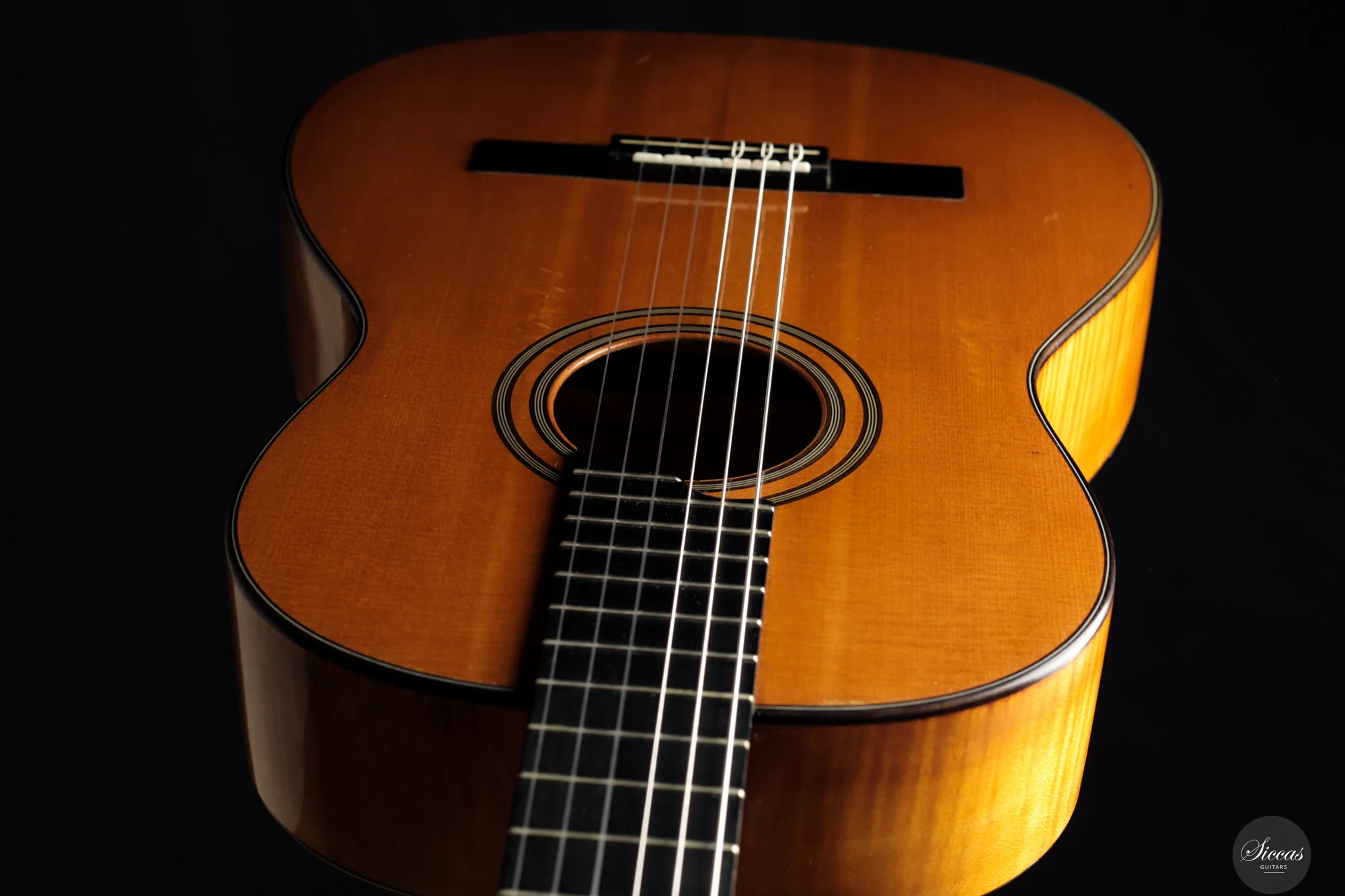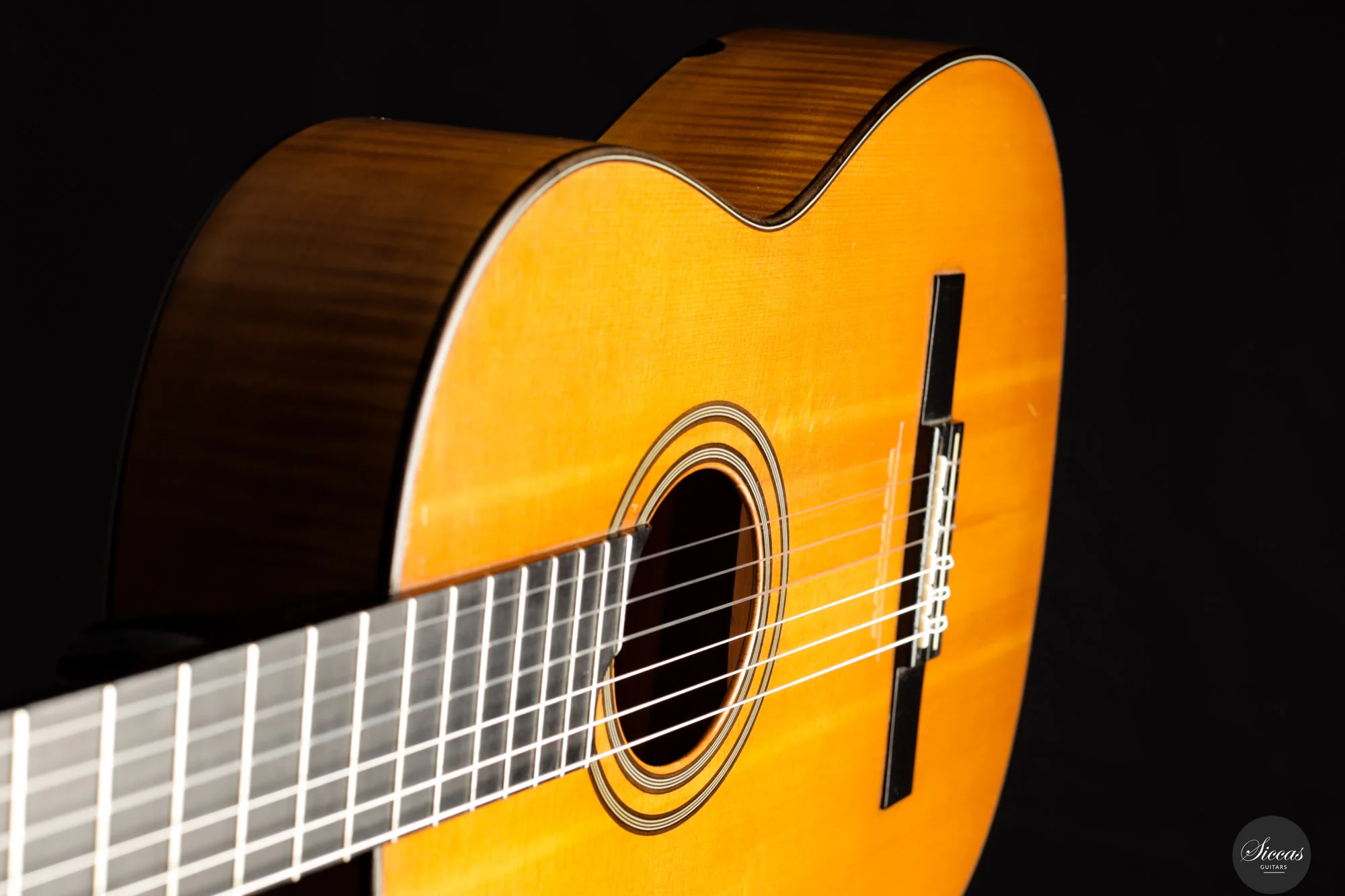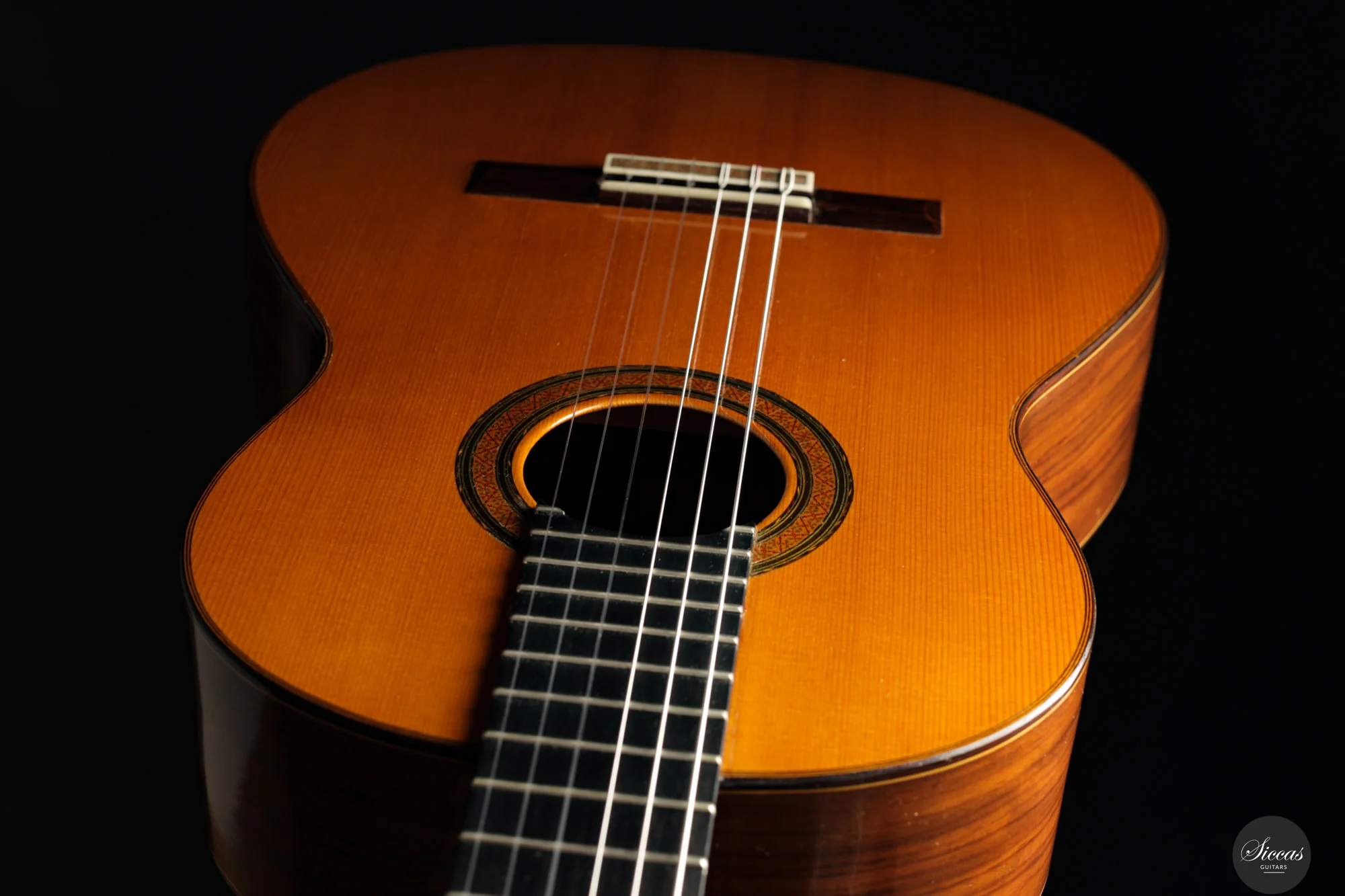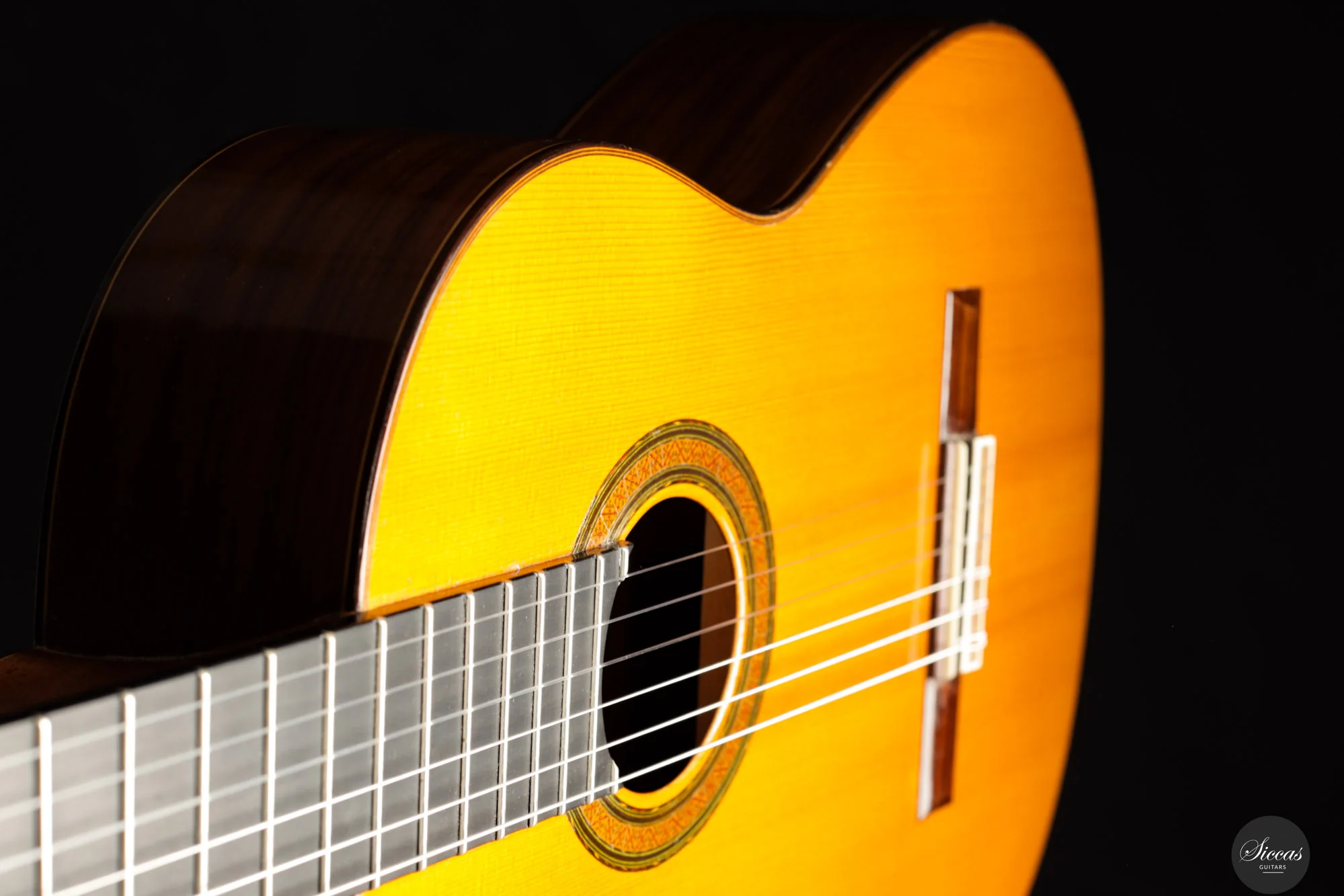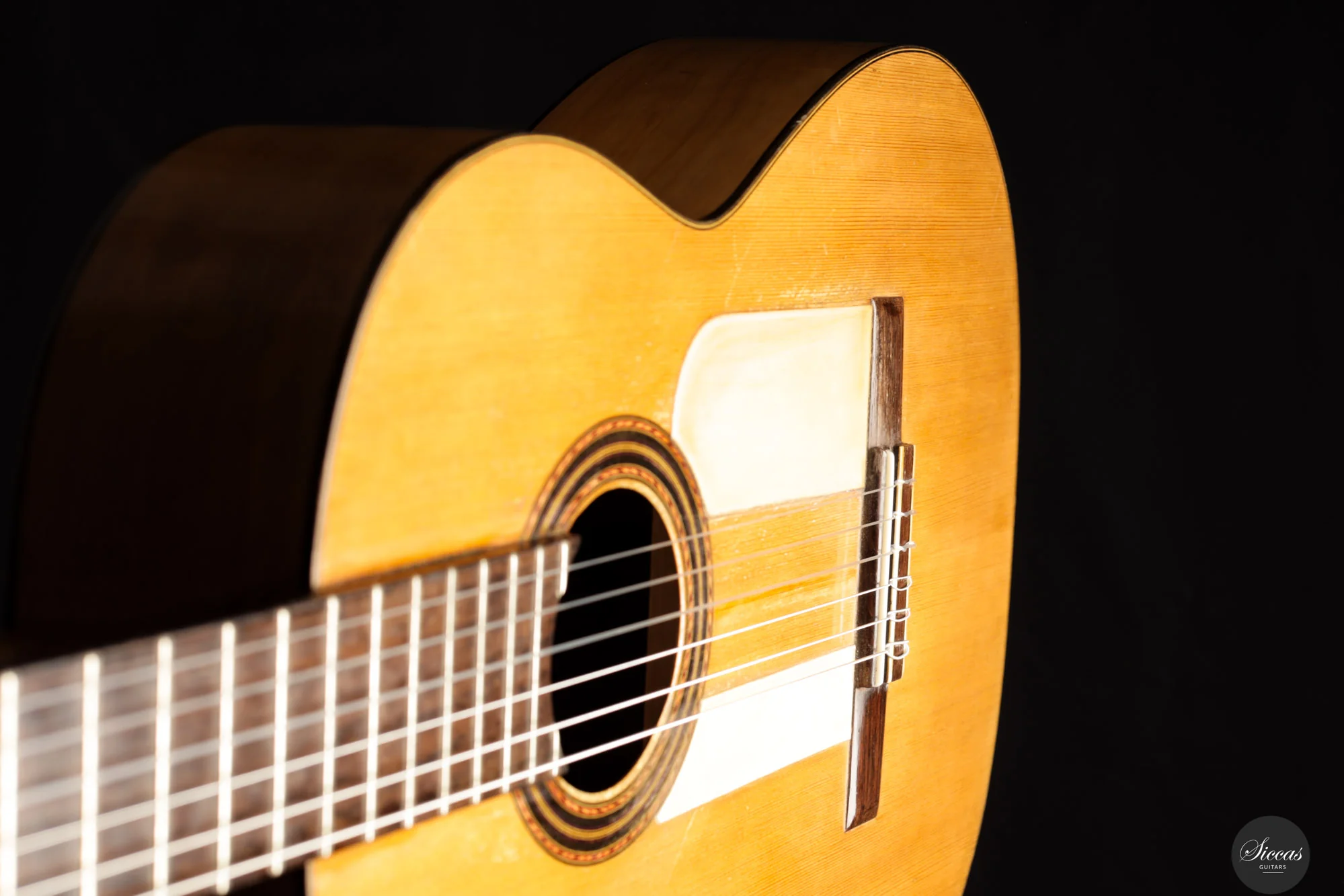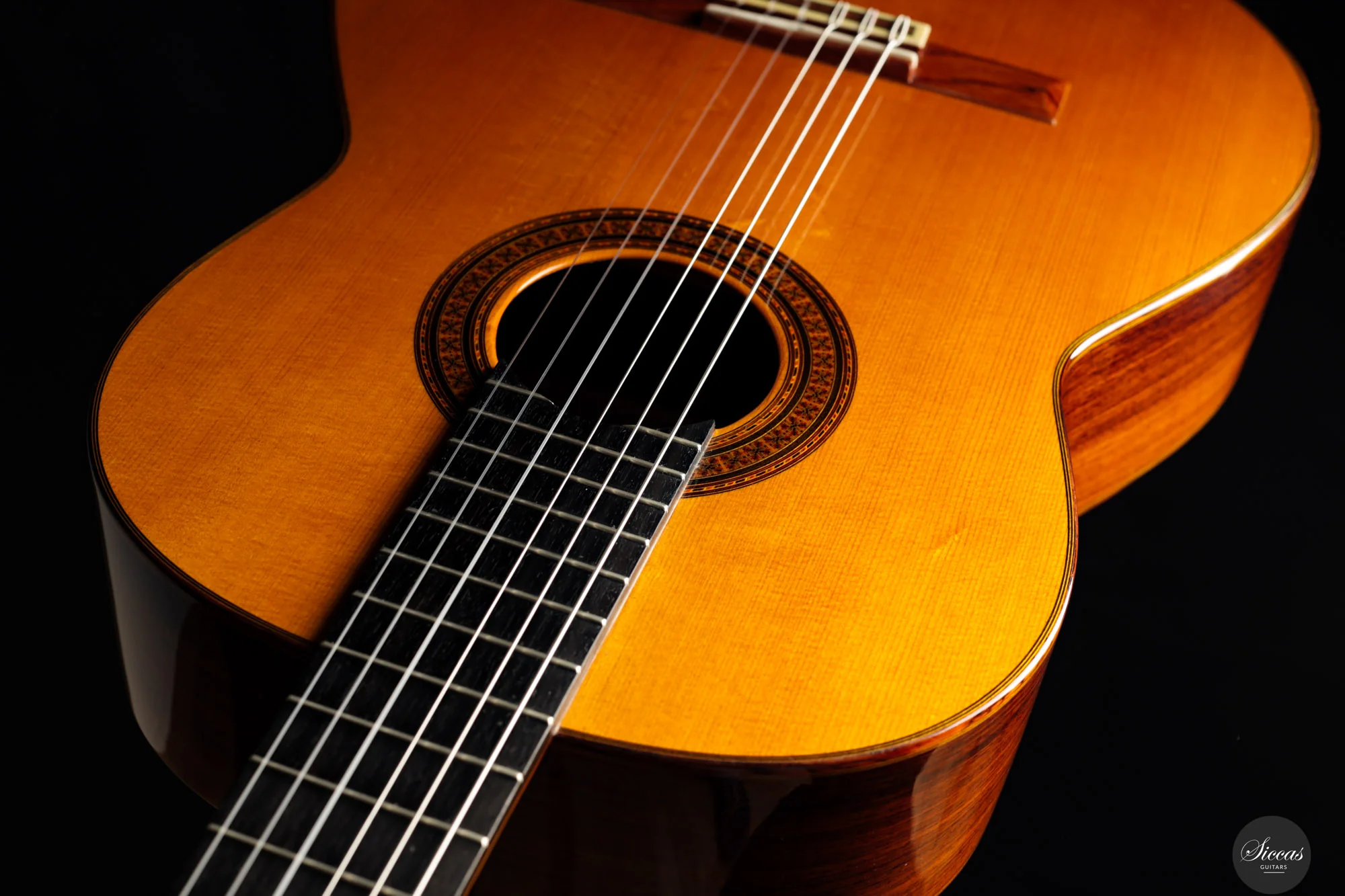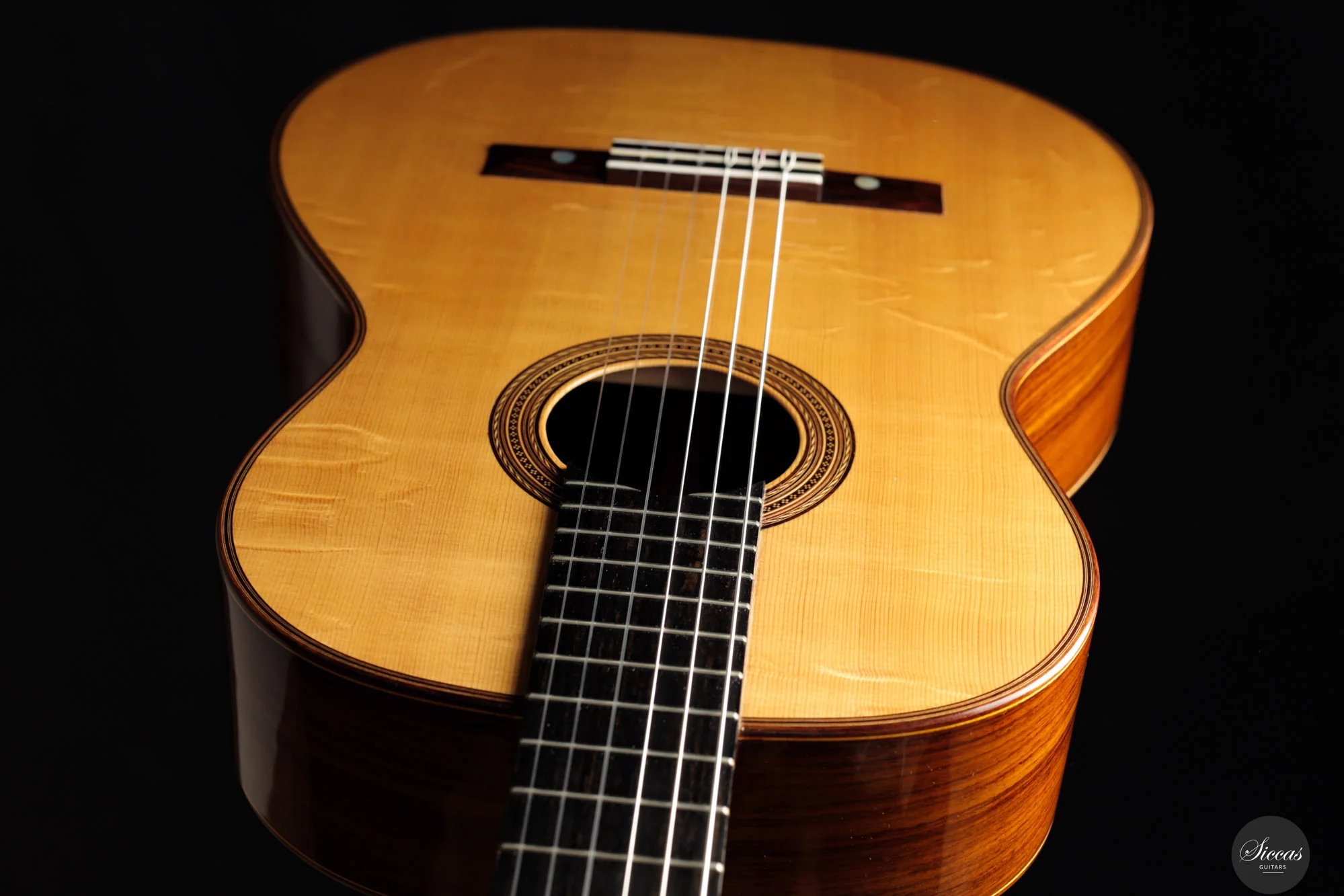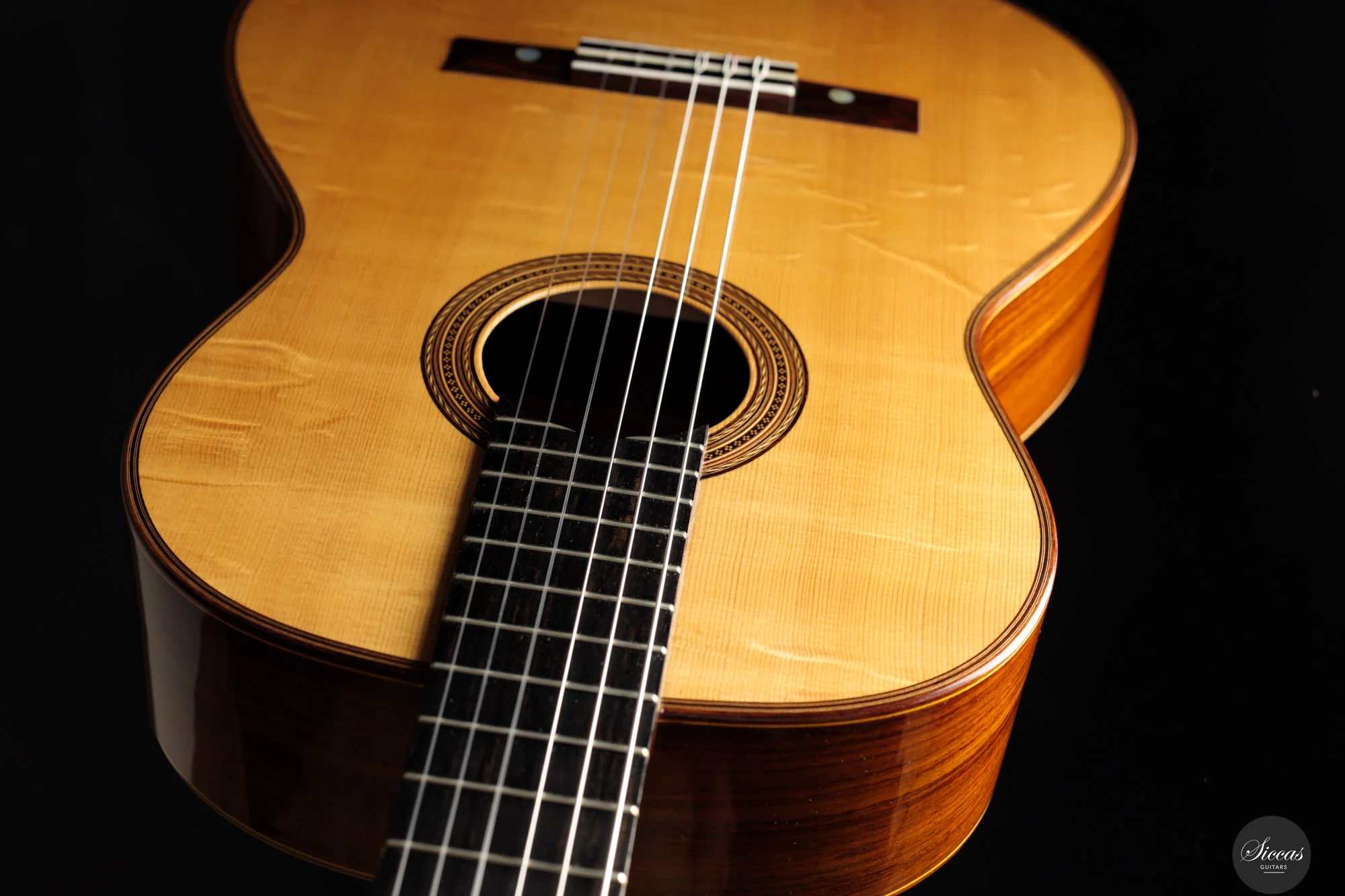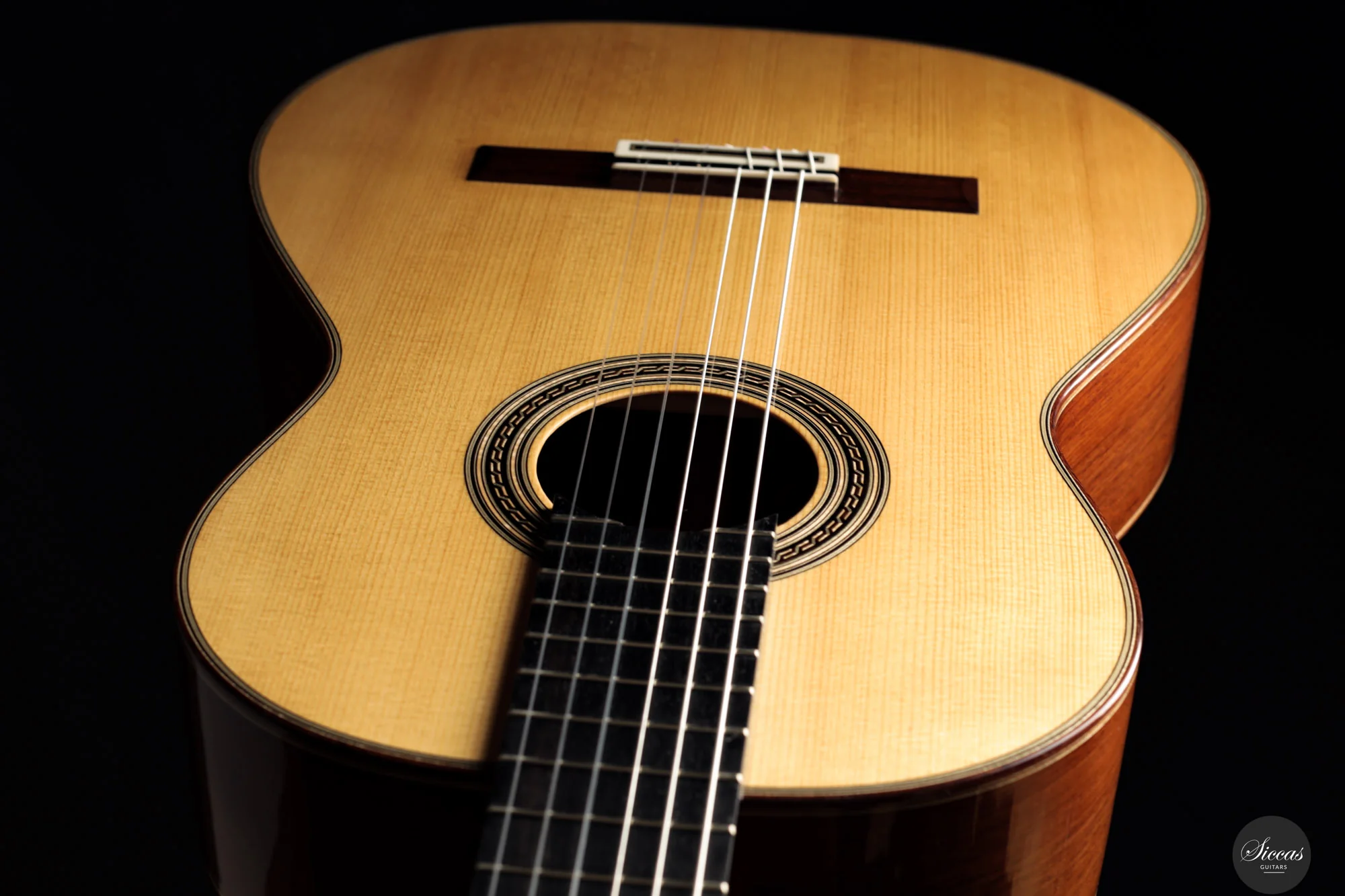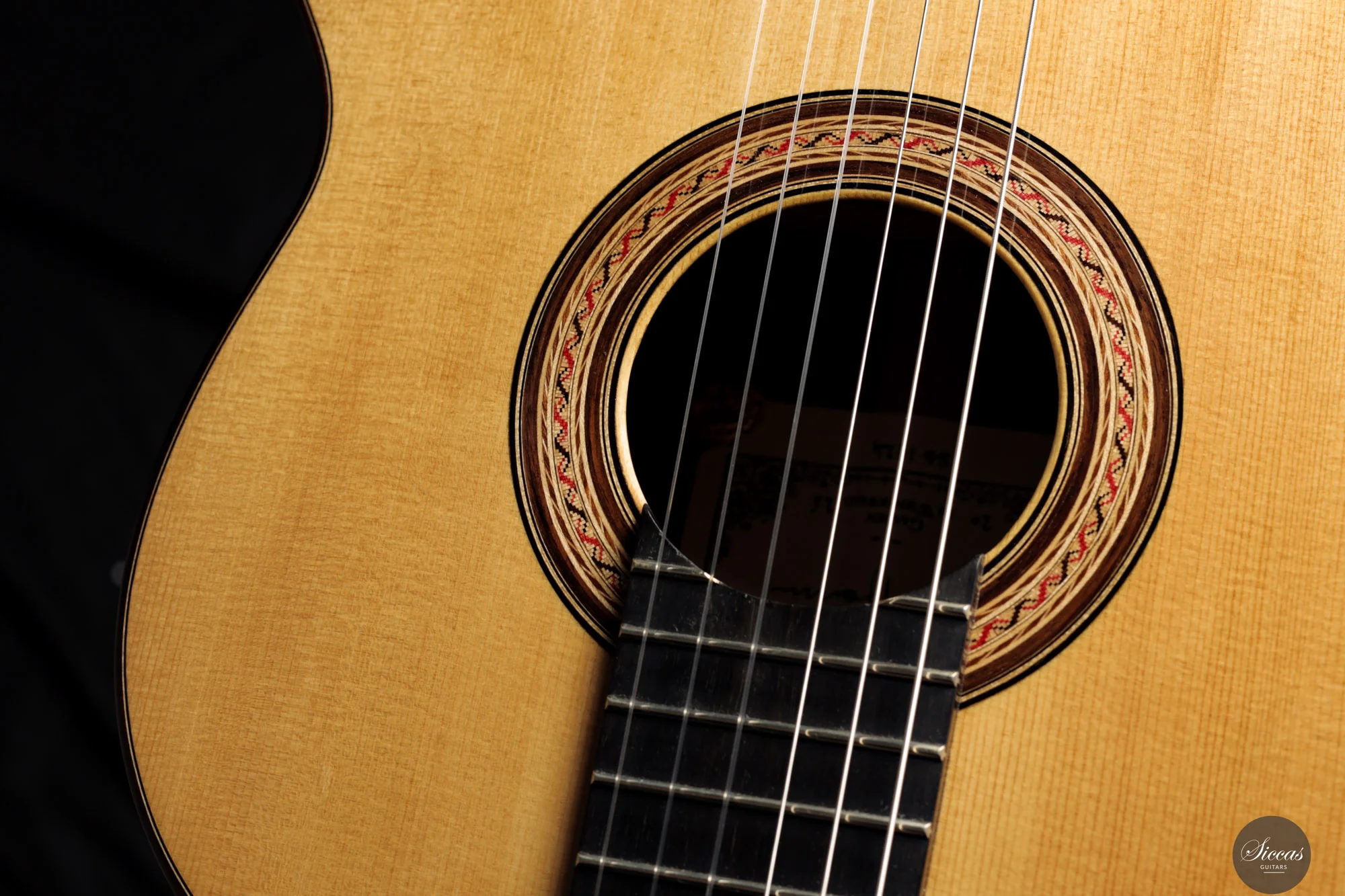


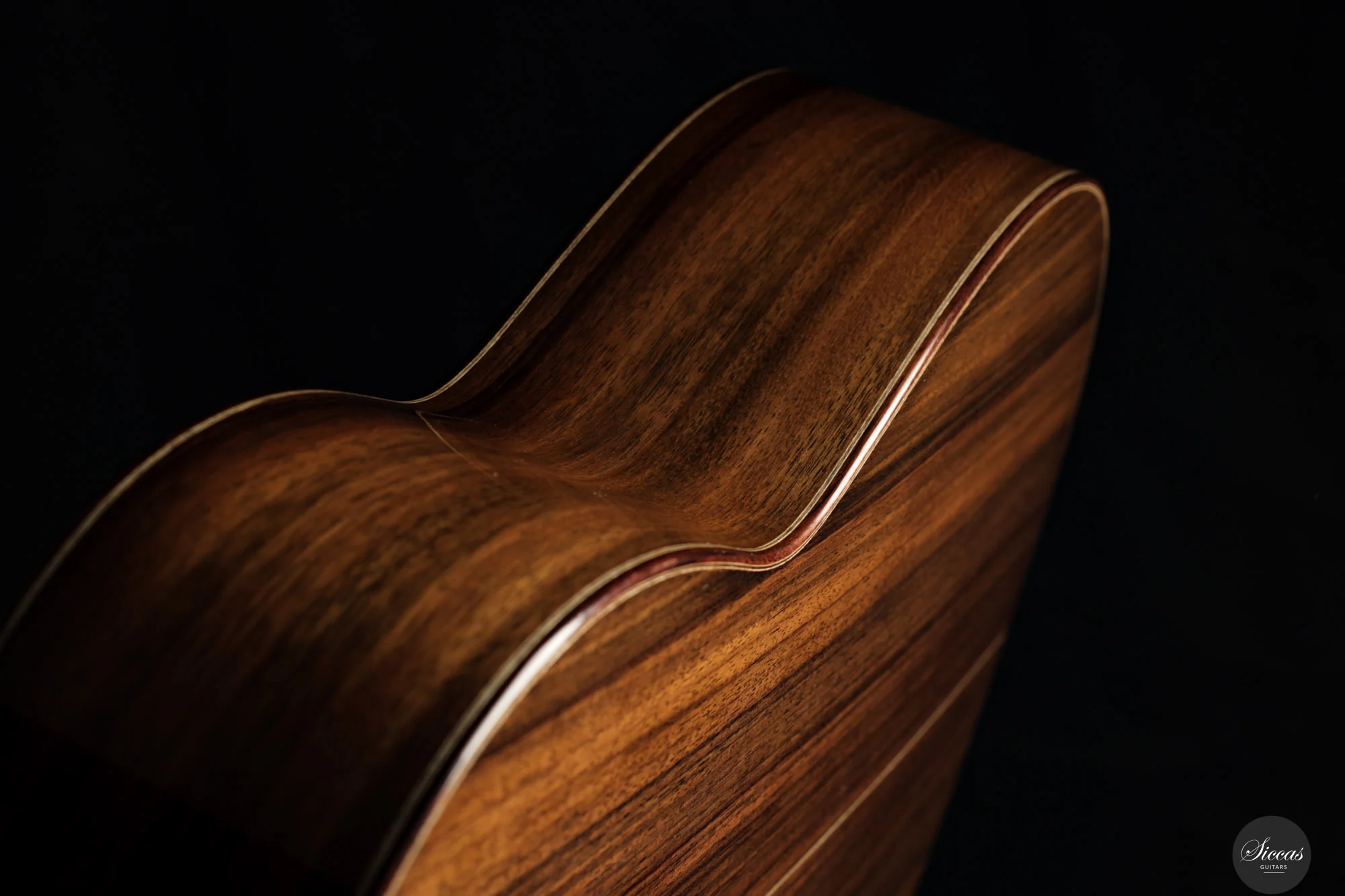


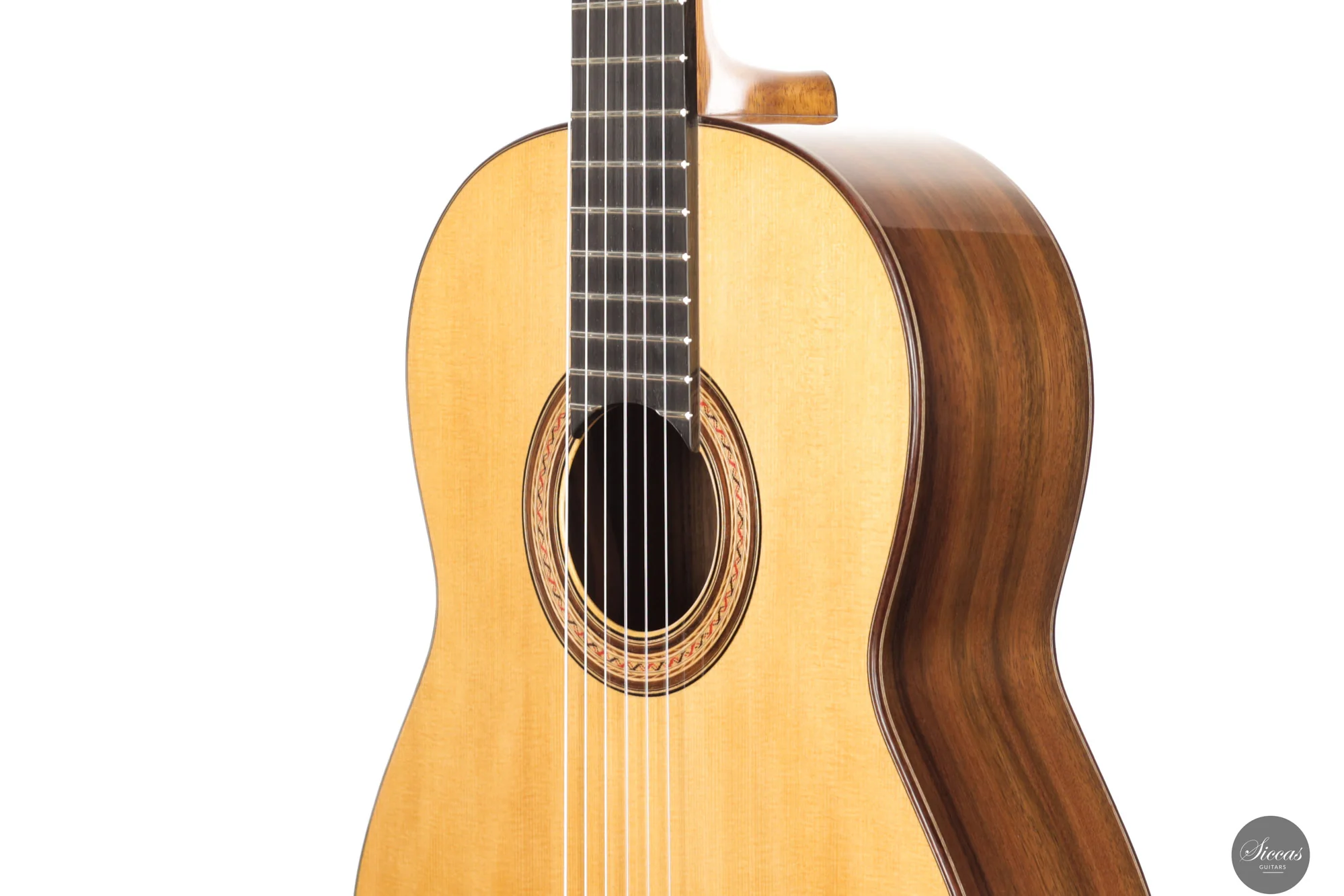
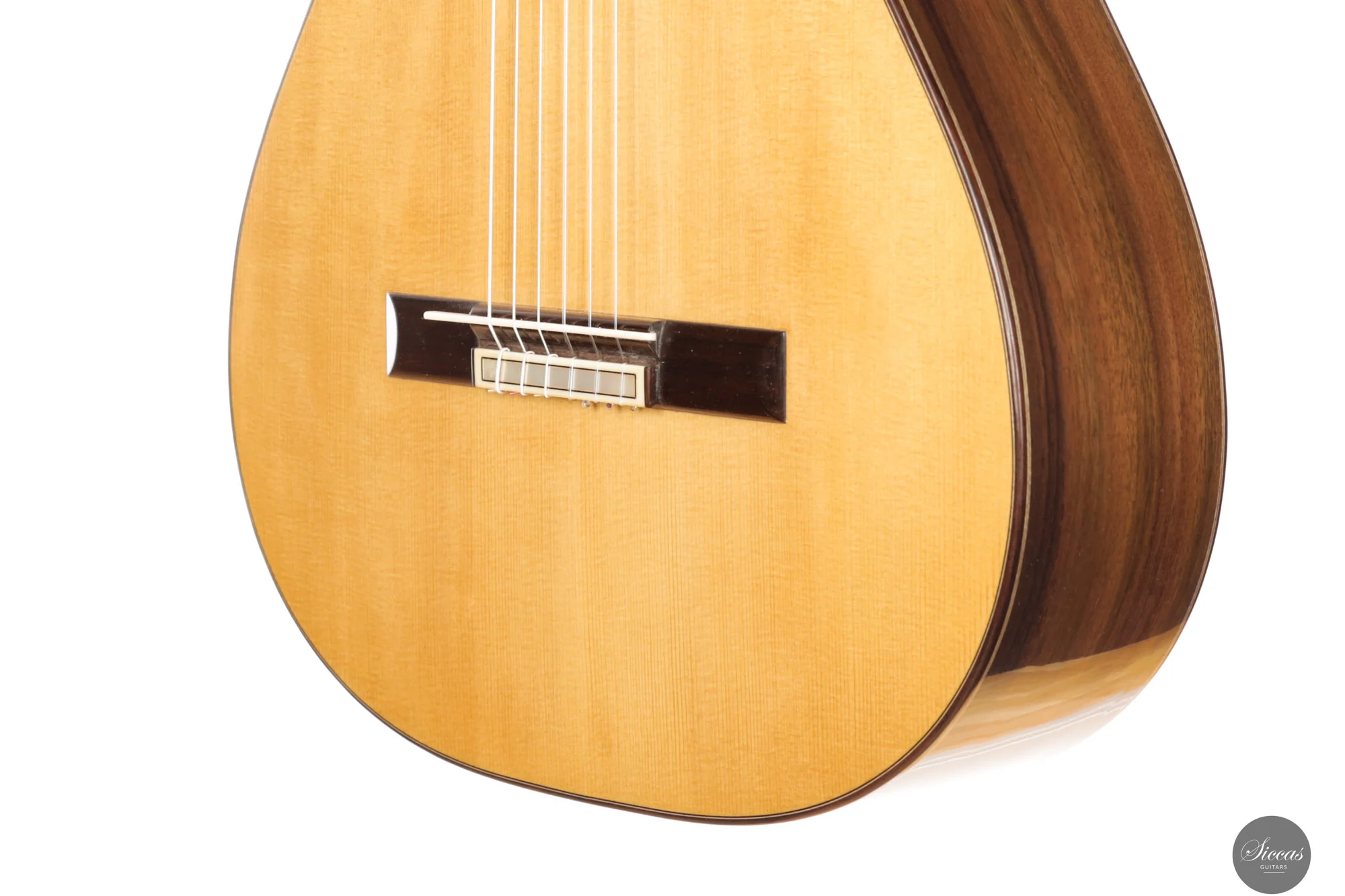


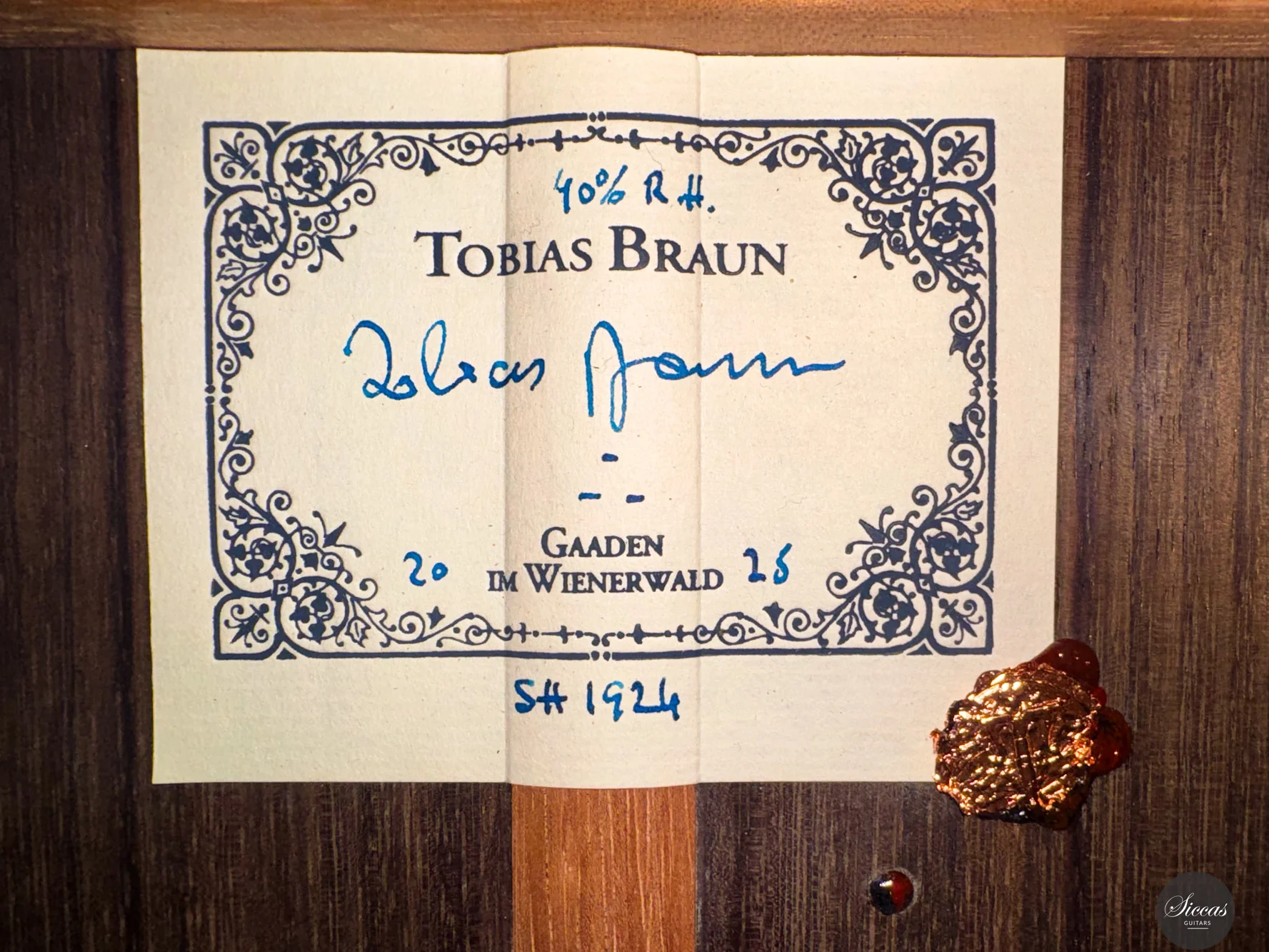
Tobias Braun - 2025 - Santos Hernandez 1924
About the luthier
Tobias Braun, born in 1960 in Holzminden, Germany, relocated with his family to Perchtoldsdorf near Vienna at an early age. His path into guitar making began in 1983 with the construction of his first concert guitar. In 1984, he attended his first guitar making course with José Romanillos, followed by two further courses in 1988 and 1989. In that same year, Braun obtained his master’s certificate in Vienna.
Braun’s work is firmly rooted in the traditional Spanish school of guitar making. He is particularly known for his historically informed instruments based on close study of original guitars by makers such as Santos Hernández and Manuel Ramírez. His approach reflects a deep respect for original construction concepts and tonal ideals, interpreted through disciplined craftsmanship rather than stylistic reinterpretation.
About the guitar
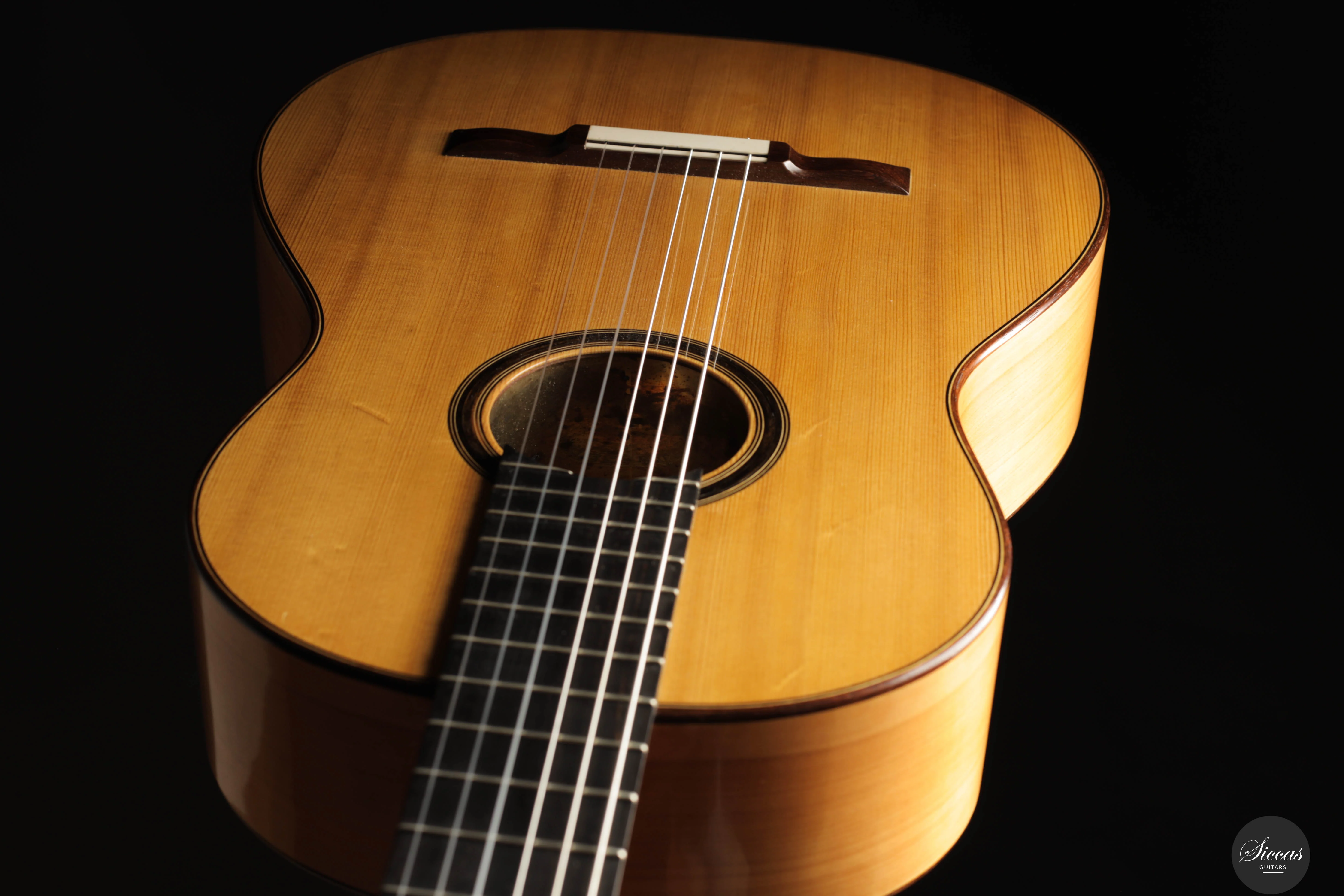
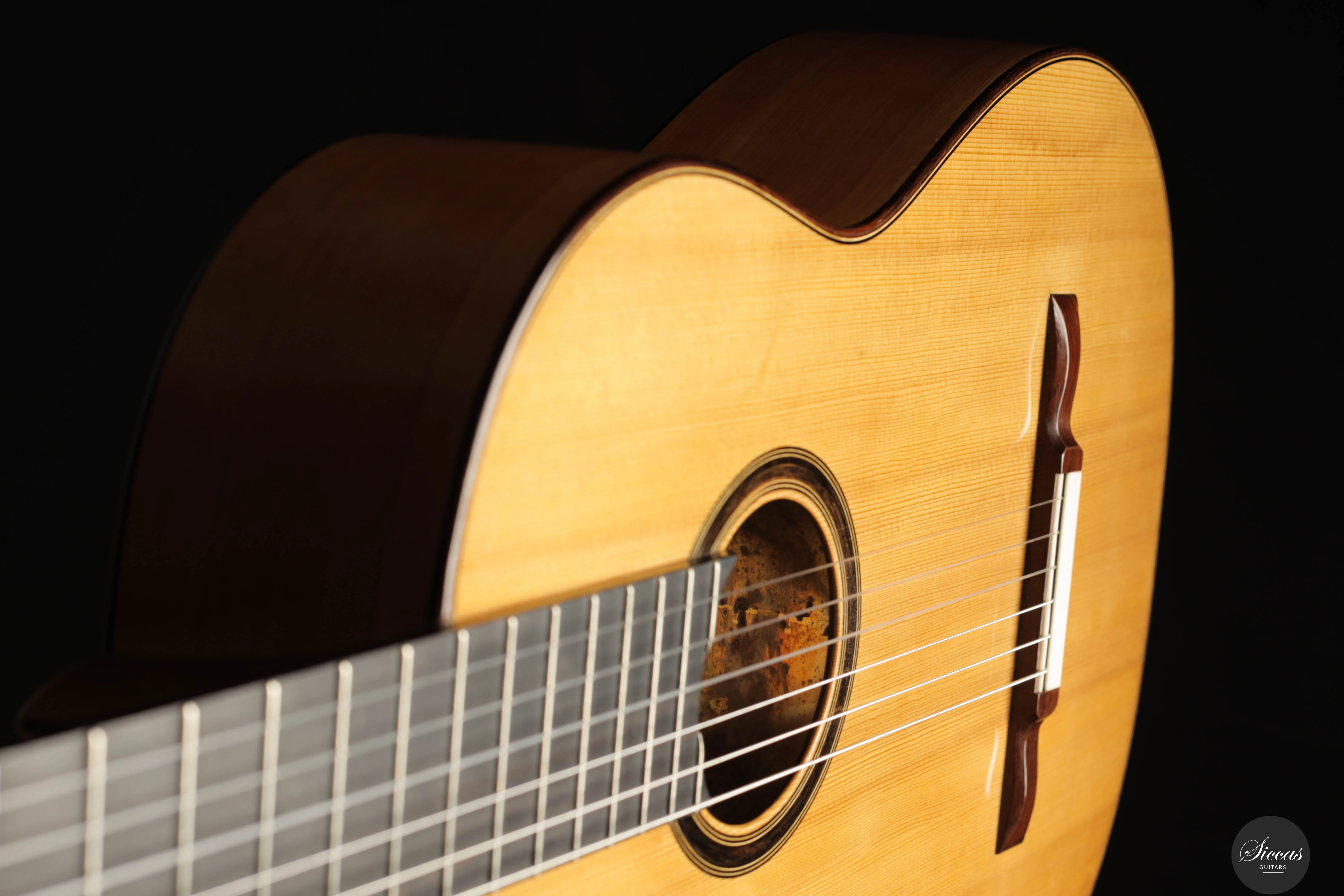
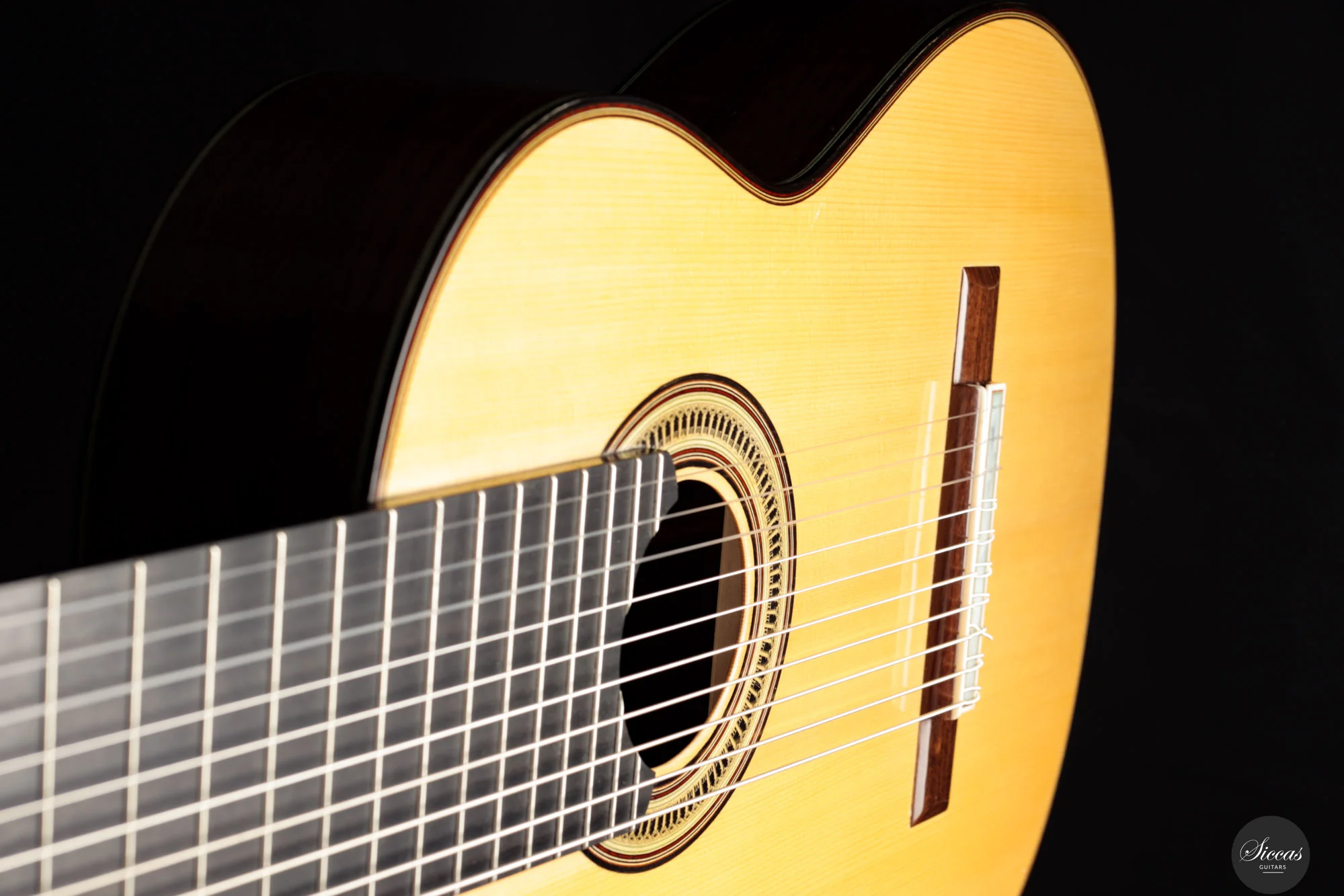
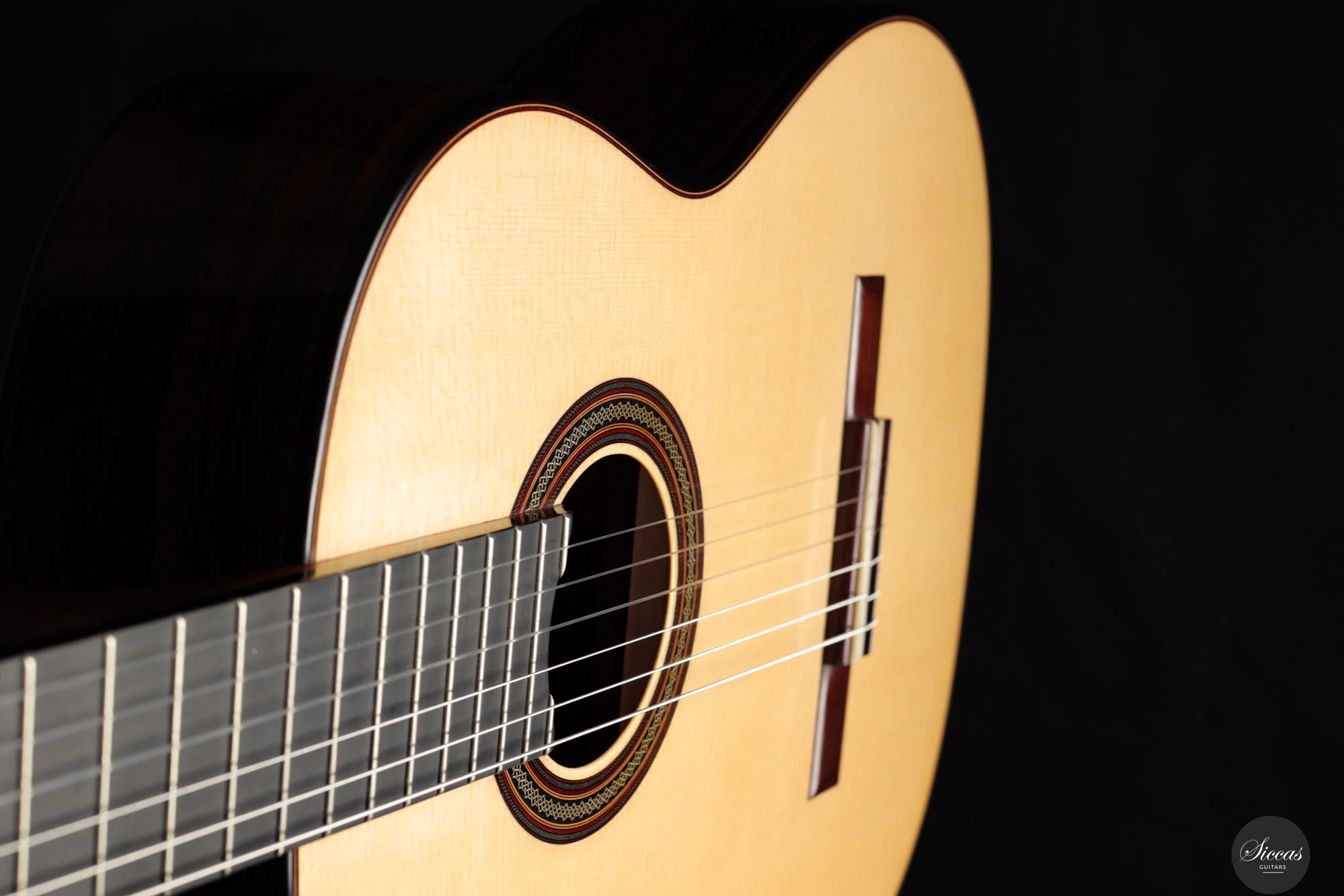
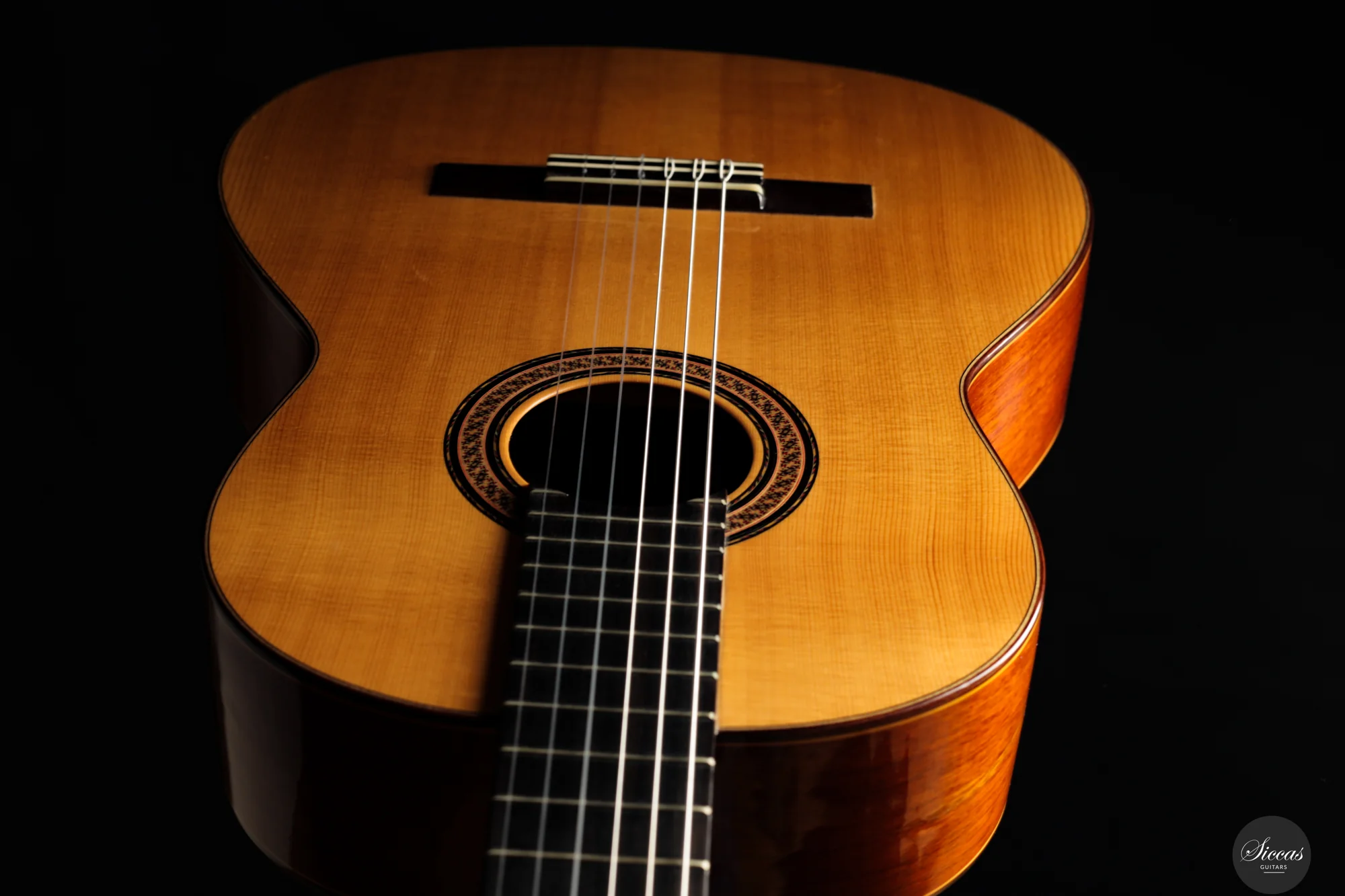
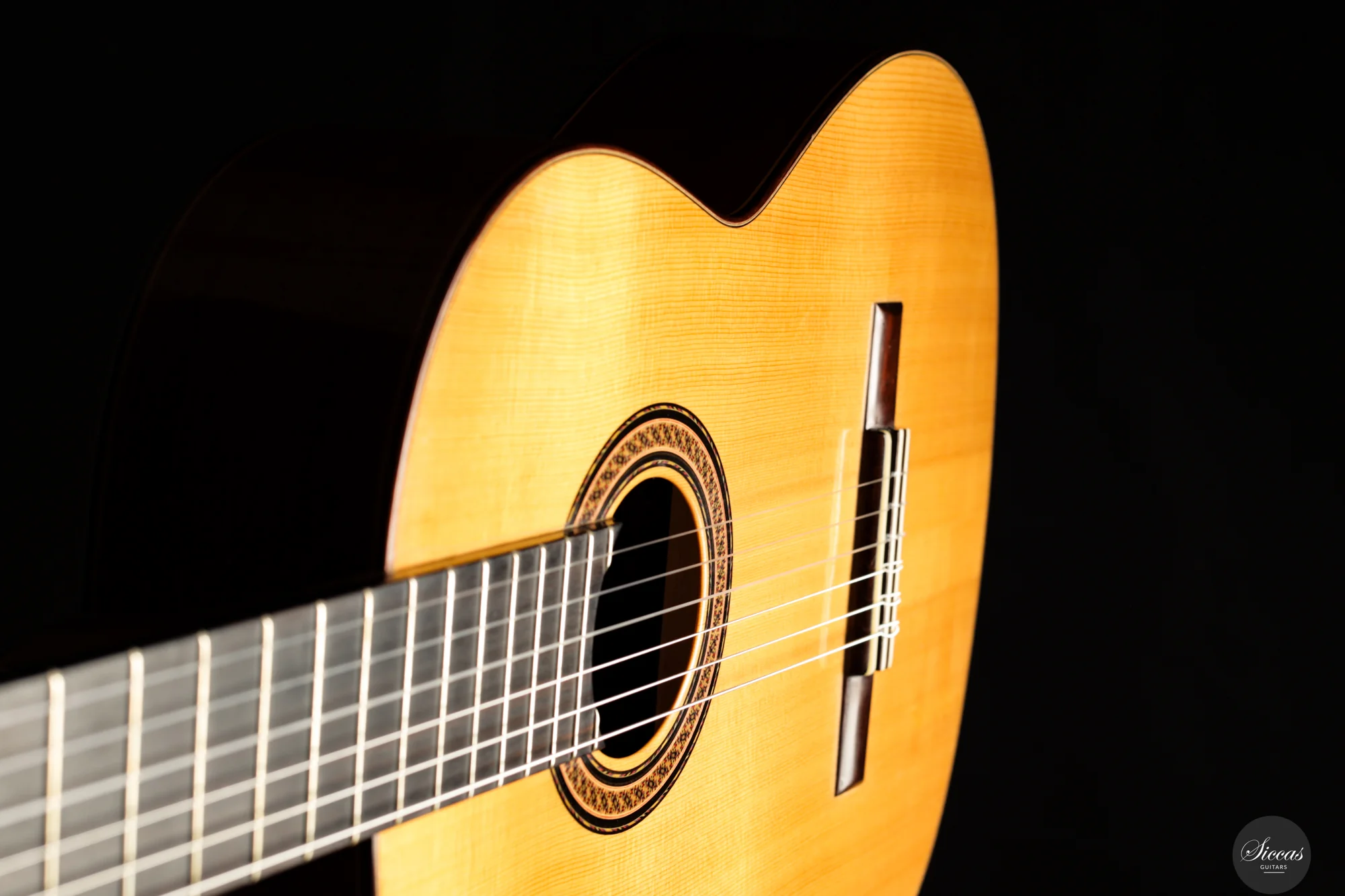
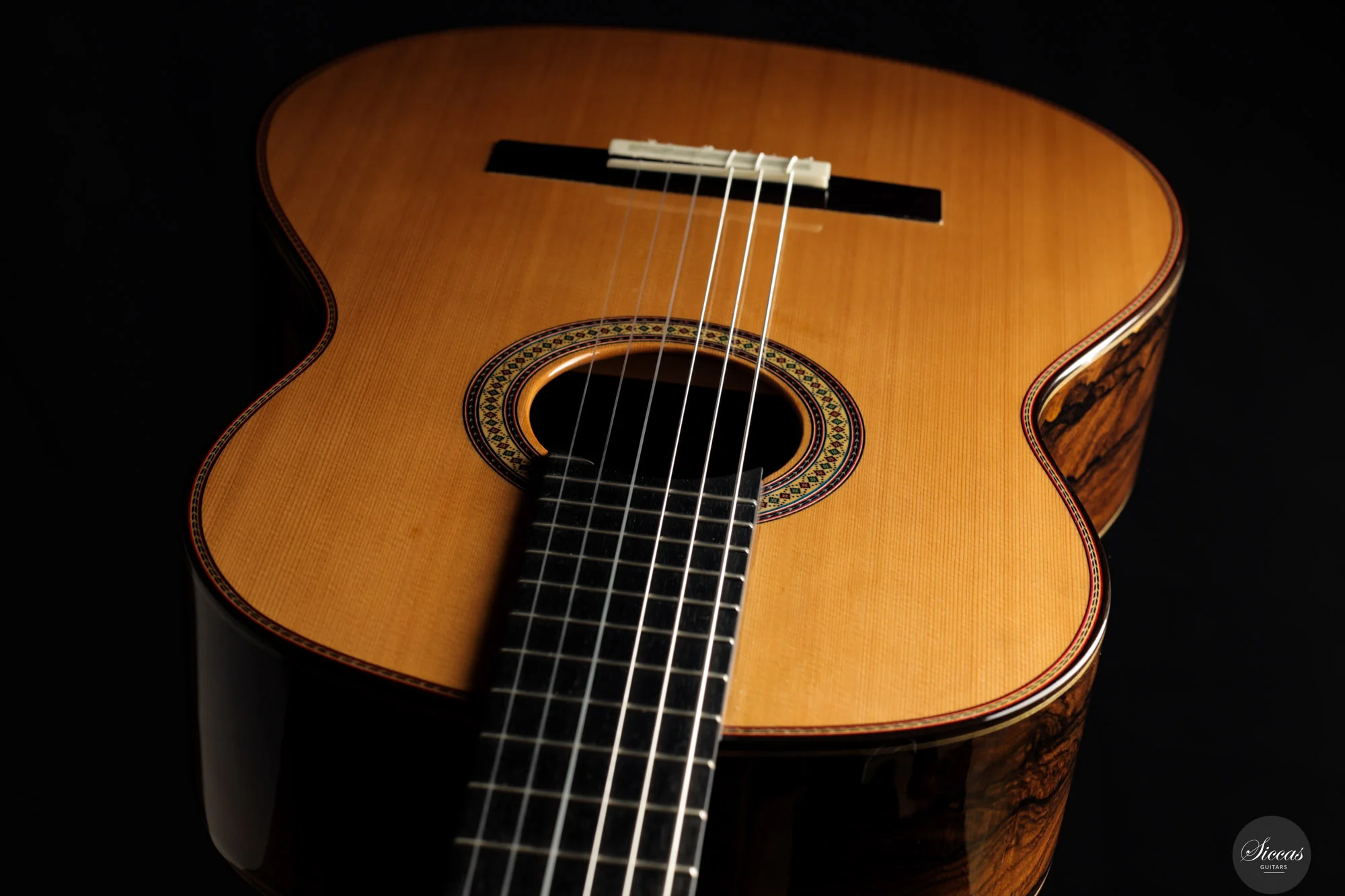
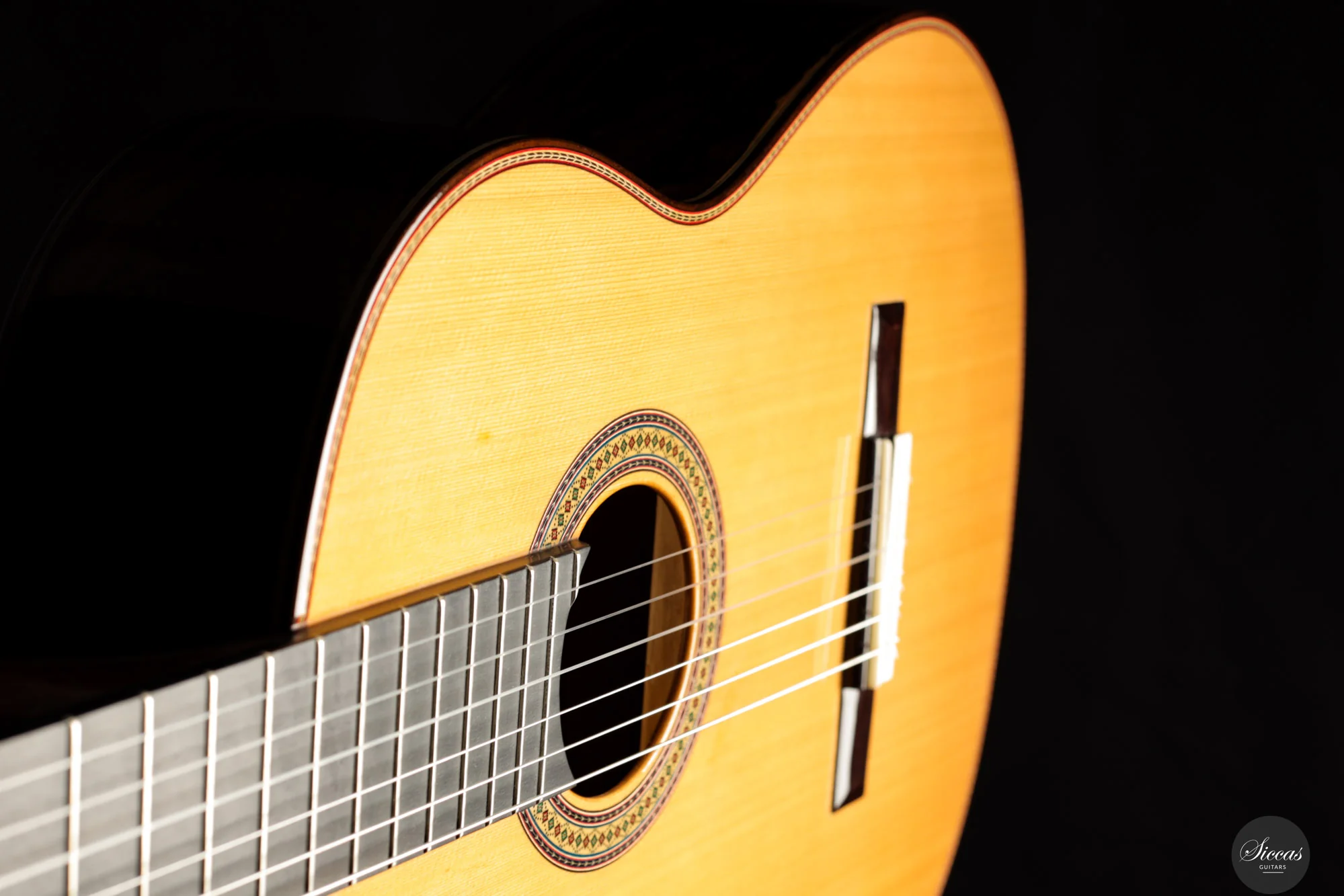
This guitar was built in 2025 as Tobias Braun’s interpretation of a Santos Hernández guitar from 1924, an instrument originally owned by the Austrian guitarist Luise Walker and personally delivered to her in Vienna by Miguel Llobet. Braun’s work follows the structural and aesthetic logic of the historical model while remaining clearly articulated as a contemporary instrument.
The sound is characterised by a balanced and even response across all registers. Compared to an original Santos Hernández from the mid 1920s, the basses are less deeply resonant but remain warm and controlled, while the overall sustain is noticeably longer. The trebles are clear and lyrical, and the midrange remains stable and well integrated. The tone has a slightly brighter and more modern profile, without the boxy quality often associated with early Spanish guitars.
The instrument responds easily to changes in right hand articulation and offers a stable dynamic range, making it suitable for a wide repertoire. While historically informed in concept, its tonal behaviour and playing comfort place it firmly in a contemporary performance context.
Original: $11,618.56
-70%$11,618.56
$3,485.57Product Information
Product Information
Shipping & Returns
Shipping & Returns
Description
About the luthier
Tobias Braun, born in 1960 in Holzminden, Germany, relocated with his family to Perchtoldsdorf near Vienna at an early age. His path into guitar making began in 1983 with the construction of his first concert guitar. In 1984, he attended his first guitar making course with José Romanillos, followed by two further courses in 1988 and 1989. In that same year, Braun obtained his master’s certificate in Vienna.
Braun’s work is firmly rooted in the traditional Spanish school of guitar making. He is particularly known for his historically informed instruments based on close study of original guitars by makers such as Santos Hernández and Manuel Ramírez. His approach reflects a deep respect for original construction concepts and tonal ideals, interpreted through disciplined craftsmanship rather than stylistic reinterpretation.
About the guitar
This guitar was built in 2025 as Tobias Braun’s interpretation of a Santos Hernández guitar from 1924, an instrument originally owned by the Austrian guitarist Luise Walker and personally delivered to her in Vienna by Miguel Llobet. Braun’s work follows the structural and aesthetic logic of the historical model while remaining clearly articulated as a contemporary instrument.
The sound is characterised by a balanced and even response across all registers. Compared to an original Santos Hernández from the mid 1920s, the basses are less deeply resonant but remain warm and controlled, while the overall sustain is noticeably longer. The trebles are clear and lyrical, and the midrange remains stable and well integrated. The tone has a slightly brighter and more modern profile, without the boxy quality often associated with early Spanish guitars.
The instrument responds easily to changes in right hand articulation and offers a stable dynamic range, making it suitable for a wide repertoire. While historically informed in concept, its tonal behaviour and playing comfort place it firmly in a contemporary performance context.