HomeStore

Santos Hernandez - 1932

Product image 1
Product image 2
Product image 3
Product image 4
Product image 5
Product image 6
Product image 7
Product image 8
Product image 9
Product image 10
Product image 11
Product image 12
Product image 13
Product image 14
Product image 15
Product image 16
Product image 17
Product image 18
Product image 19
Product image 20
Product image 21
Product image 22
Product image 23
Product image 24
Product image 25

Santos Hernandez - 1932

About the luthier

Santos Hernandez (Madrid, 1873-1943) started an apprenticeship very early in Valentin Viudes’s workshop and then moved to José Ortega’s Granadinian workshop. After moving to a few other workshops and serving as a soldier for Spain, he eventually took over Enrique Garcia’s position in Manuel Ramirez’s workshop in 1905. His involvement in the building of Andrés Segovia’s famous 1912 Manuel Ramirez sealed his reputation as an extraordinary luthier. He opened his first own workshop in 1921 after having worked for Manuel Ramirez’s widow along with Domingo Esteso.

About the guitar

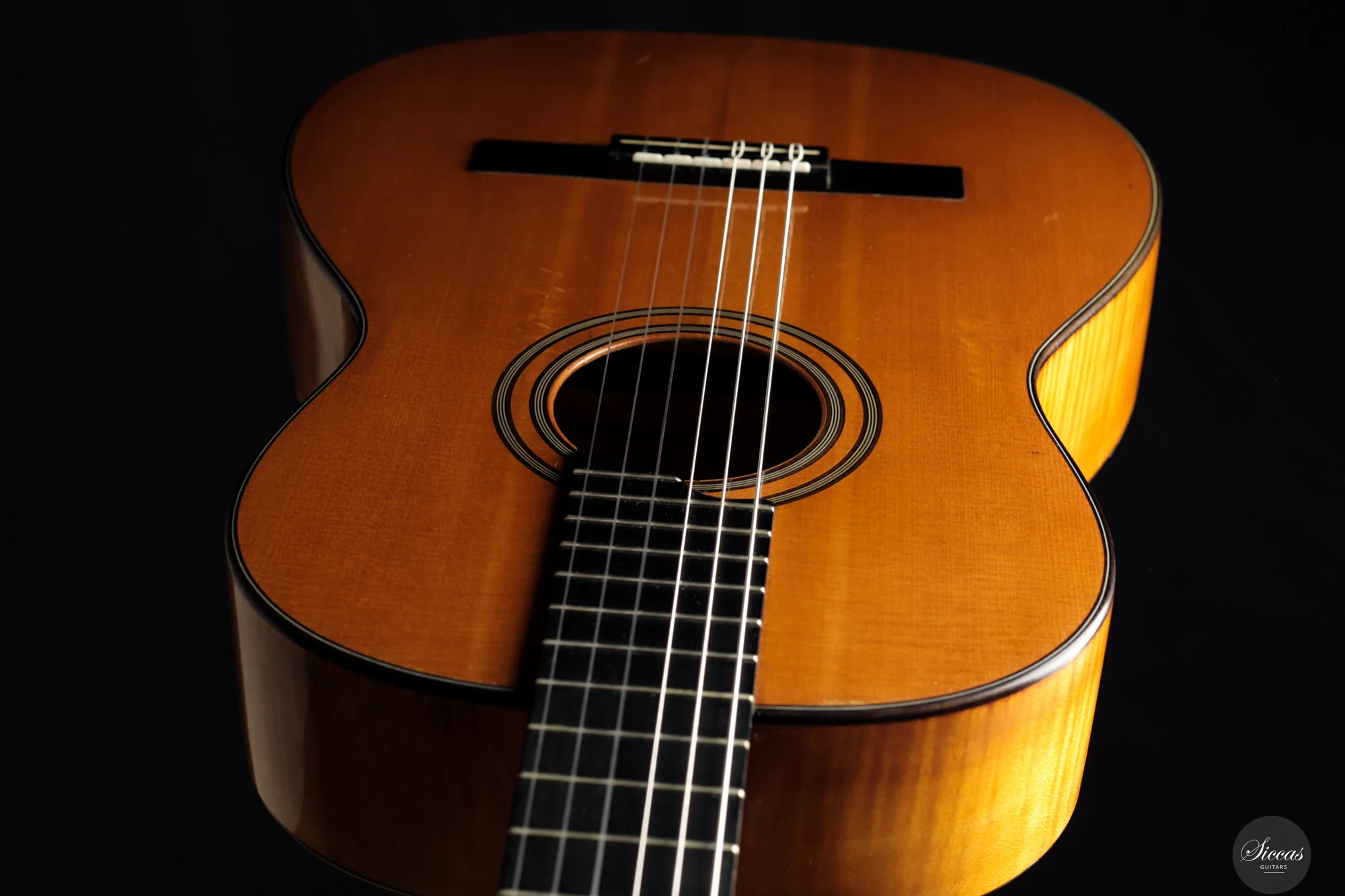
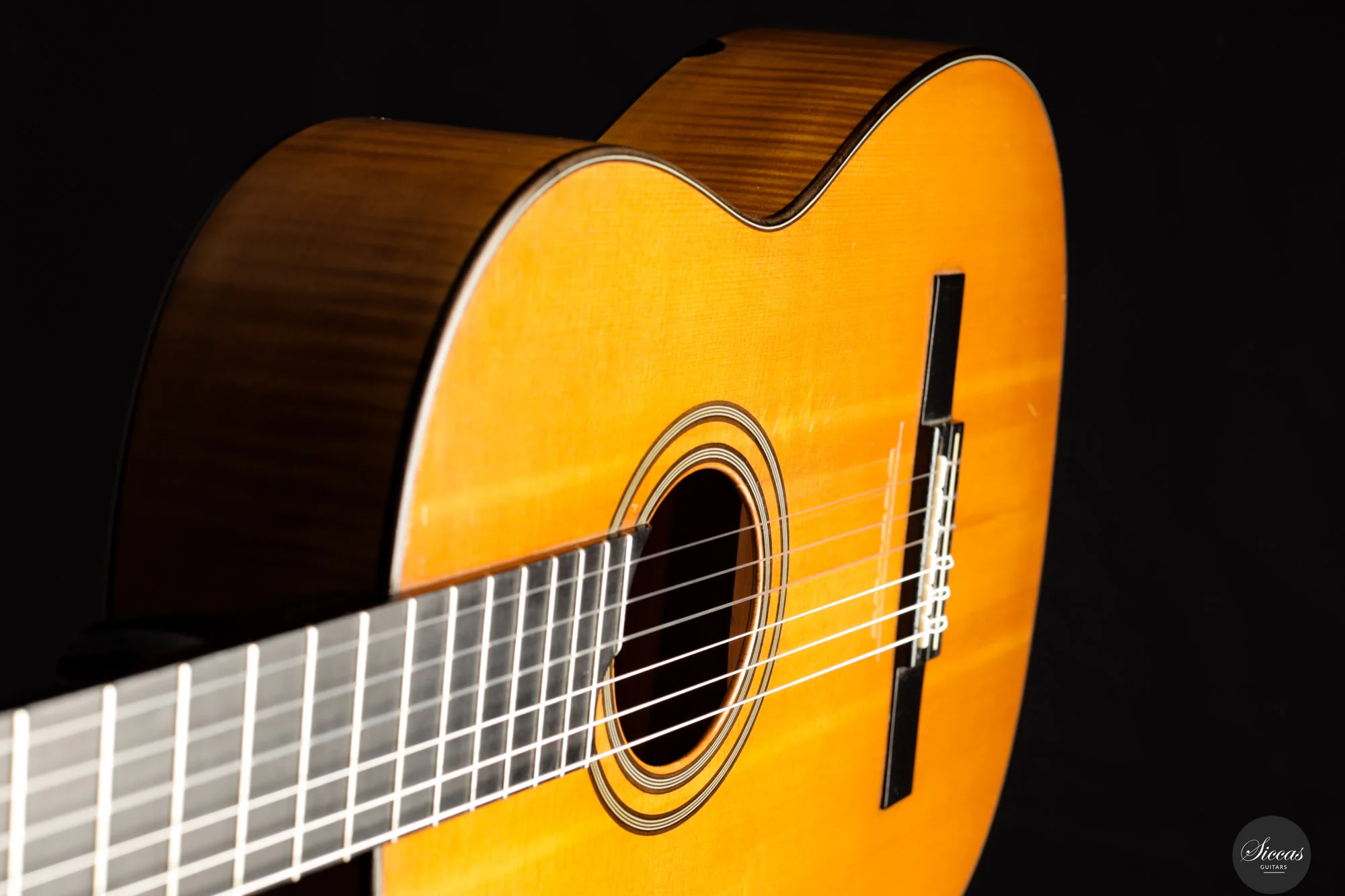
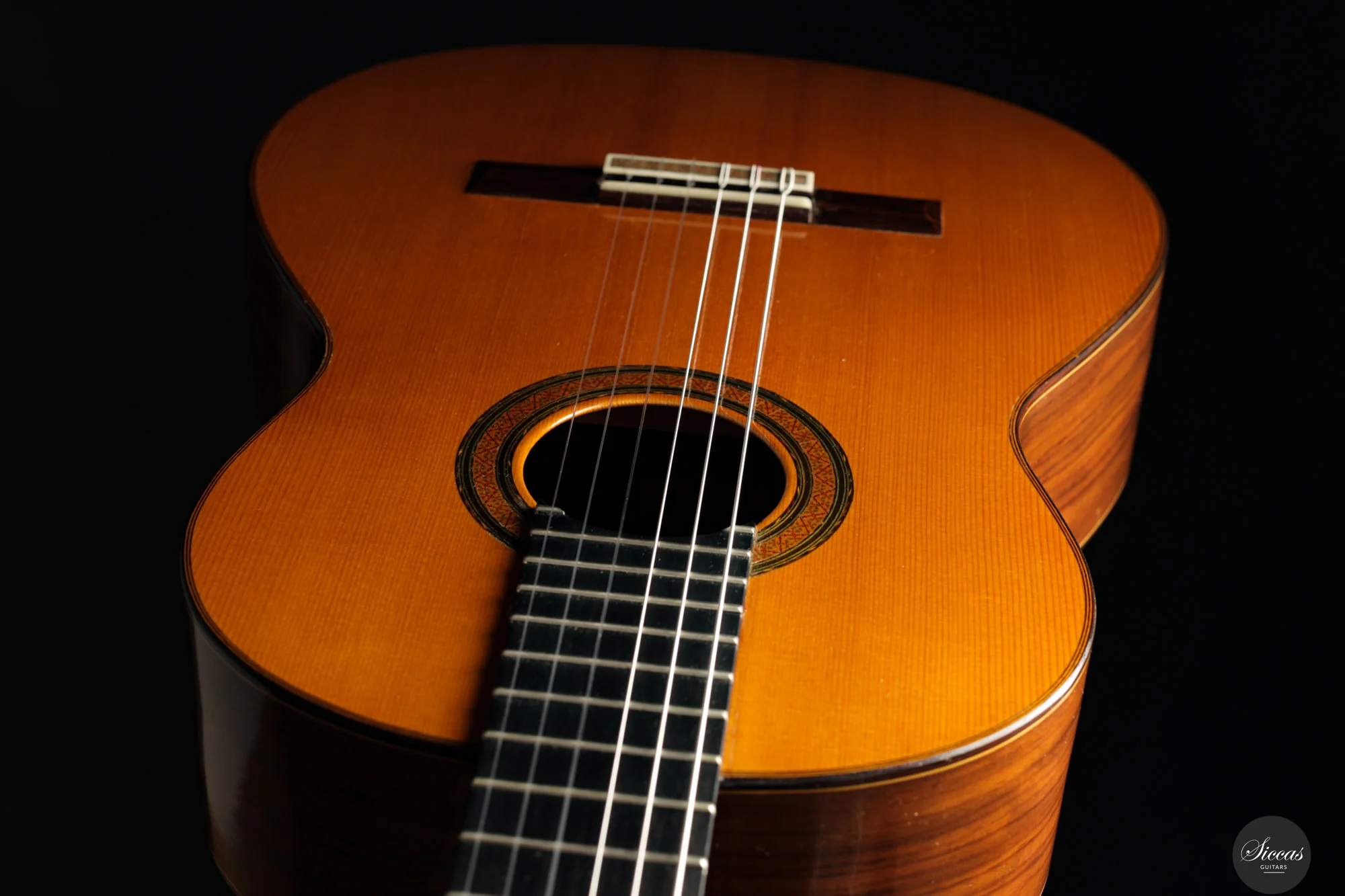
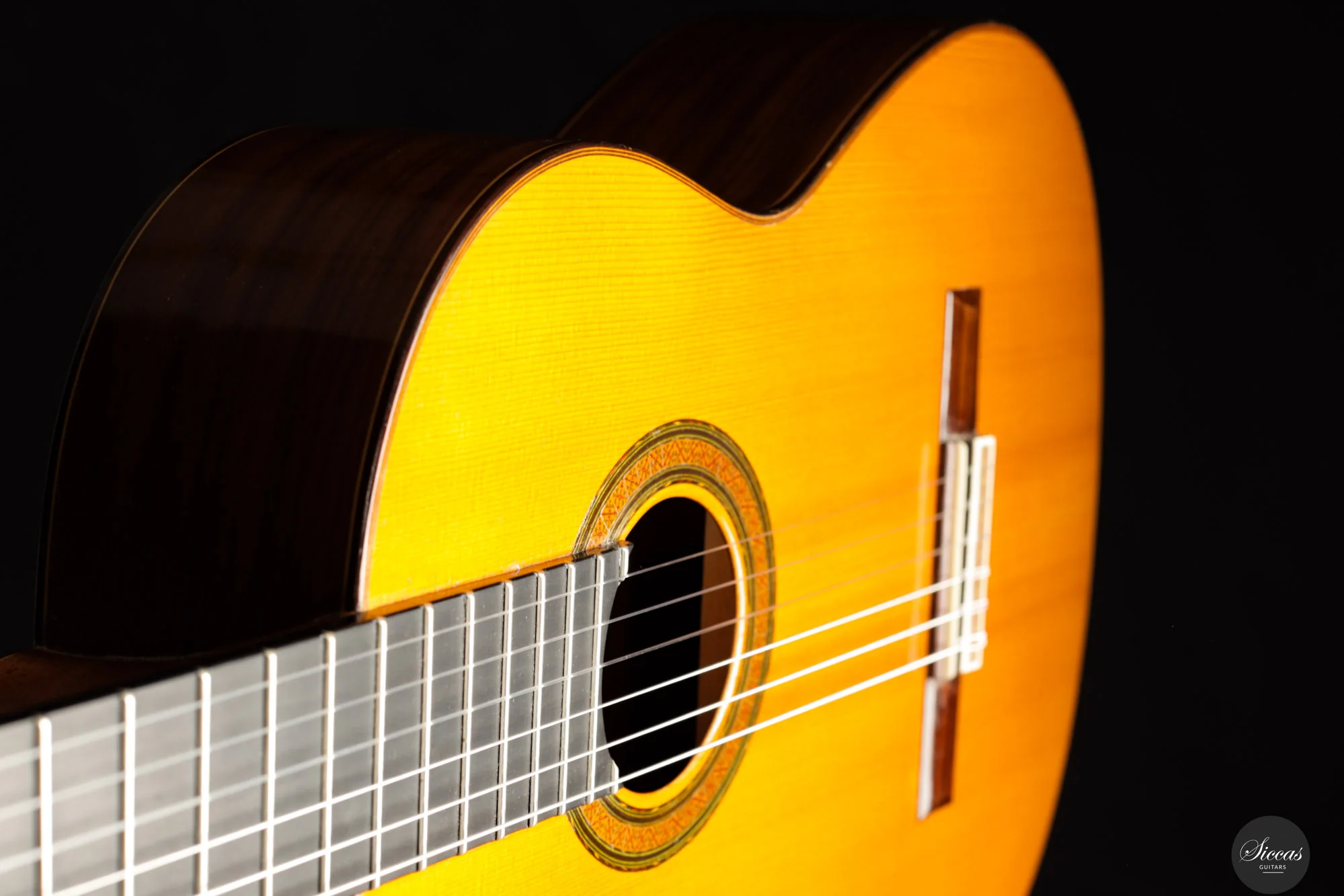
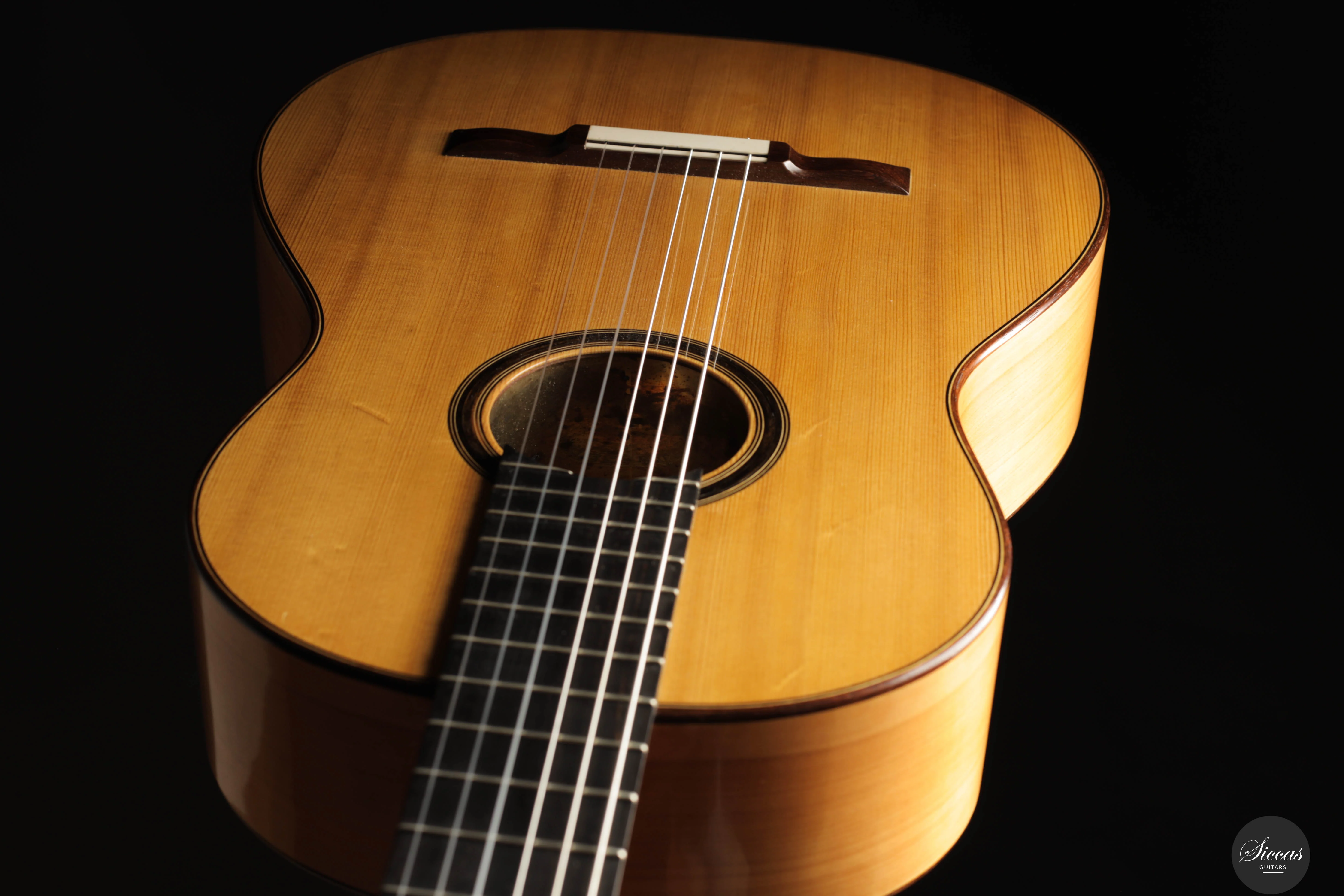
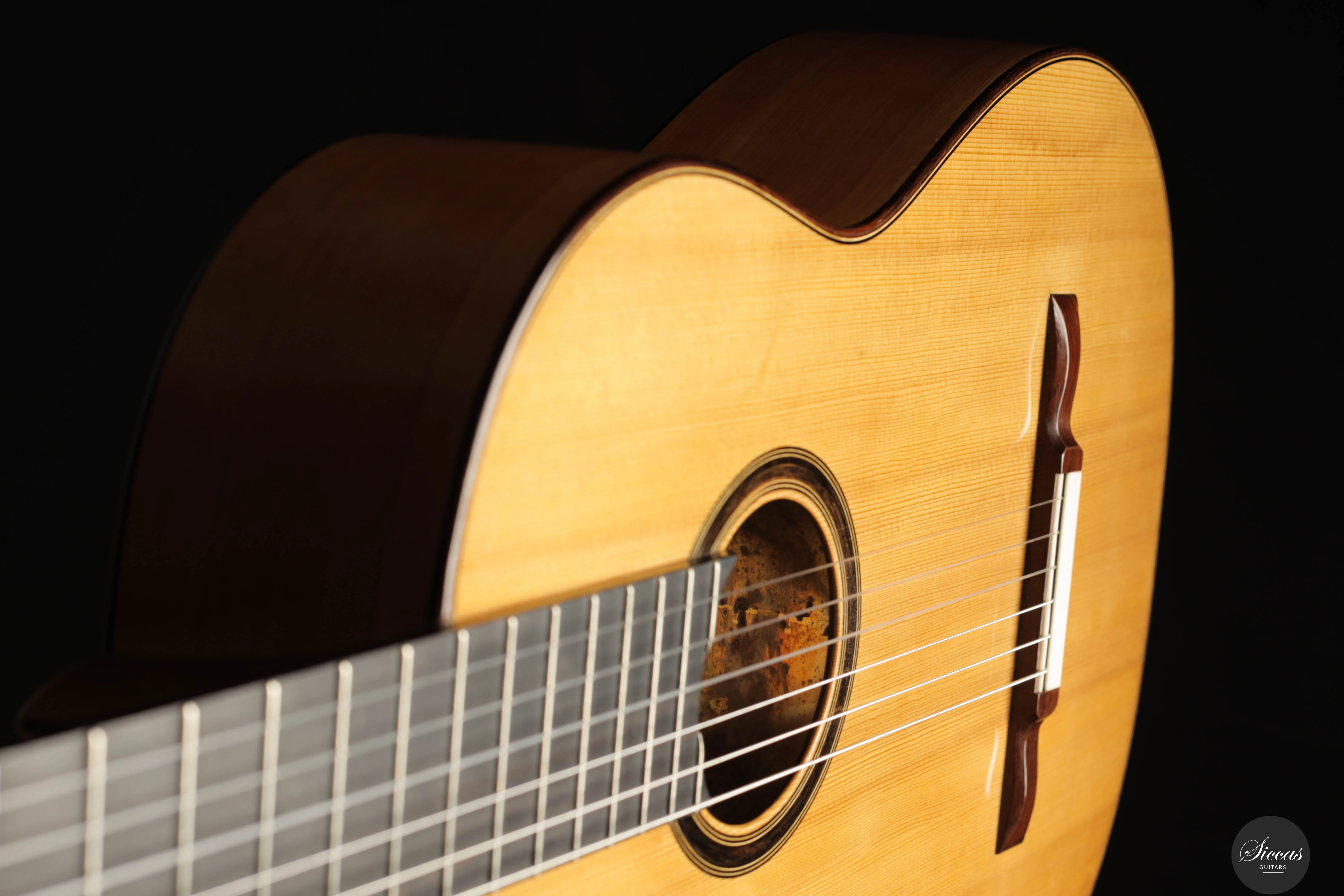
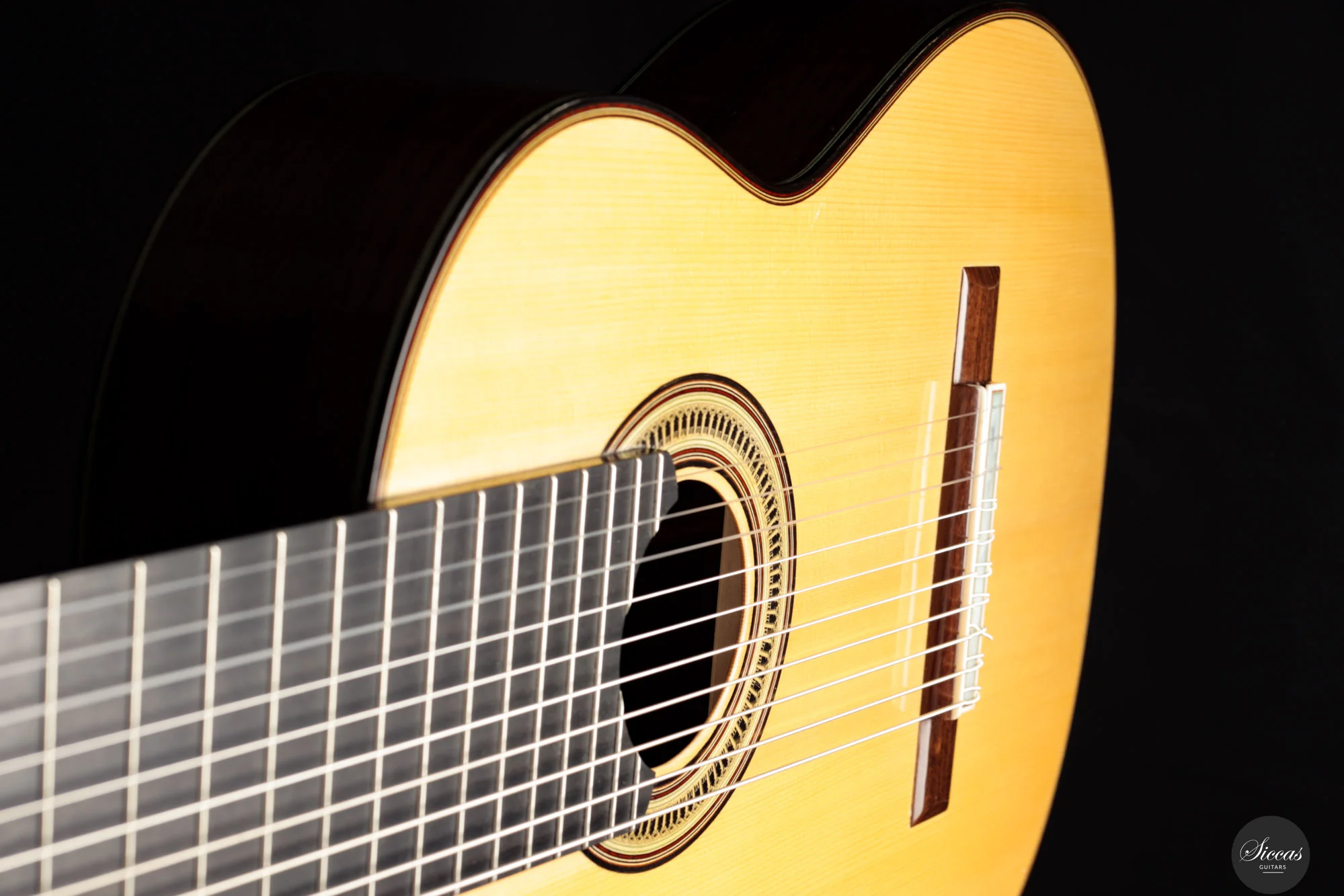
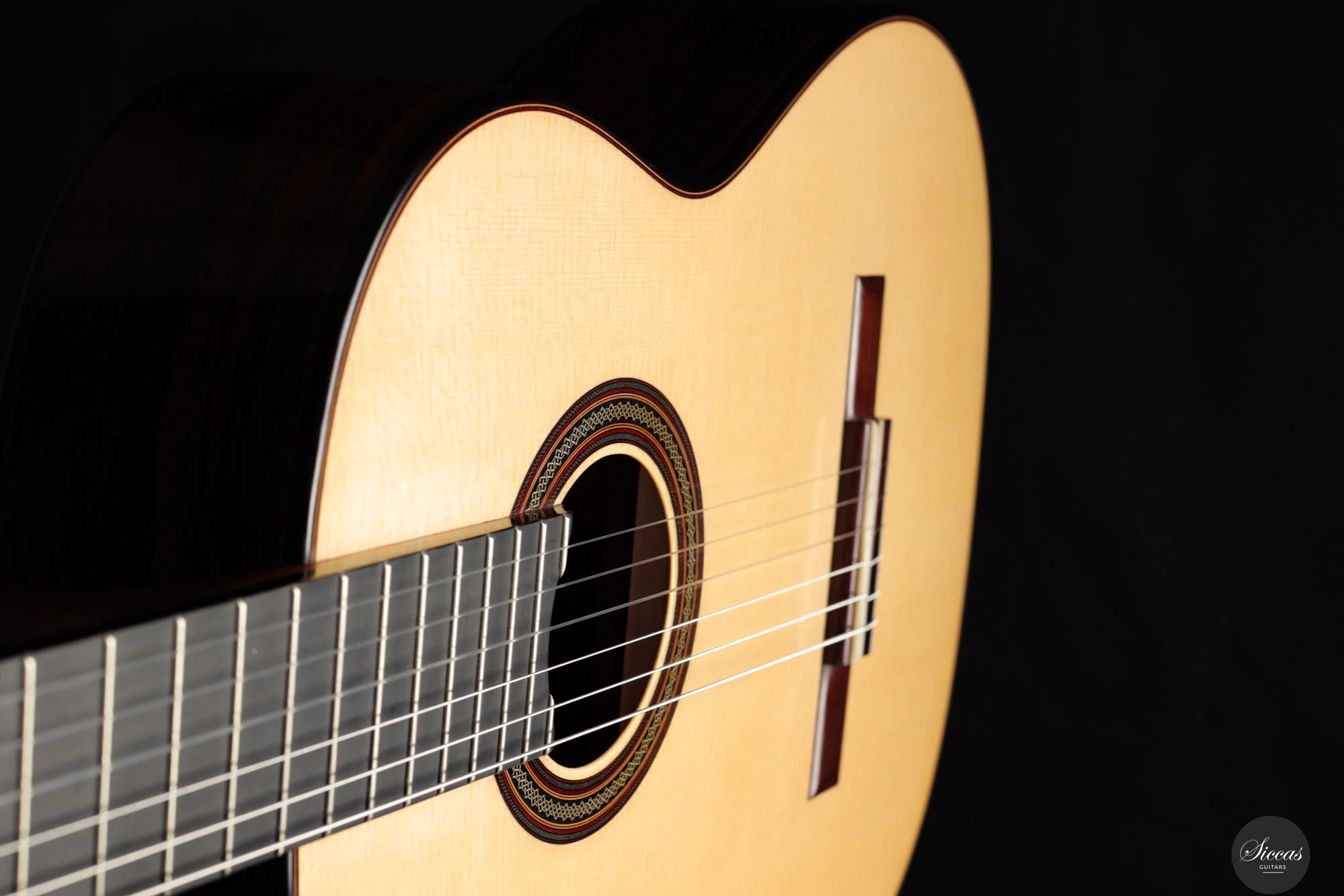
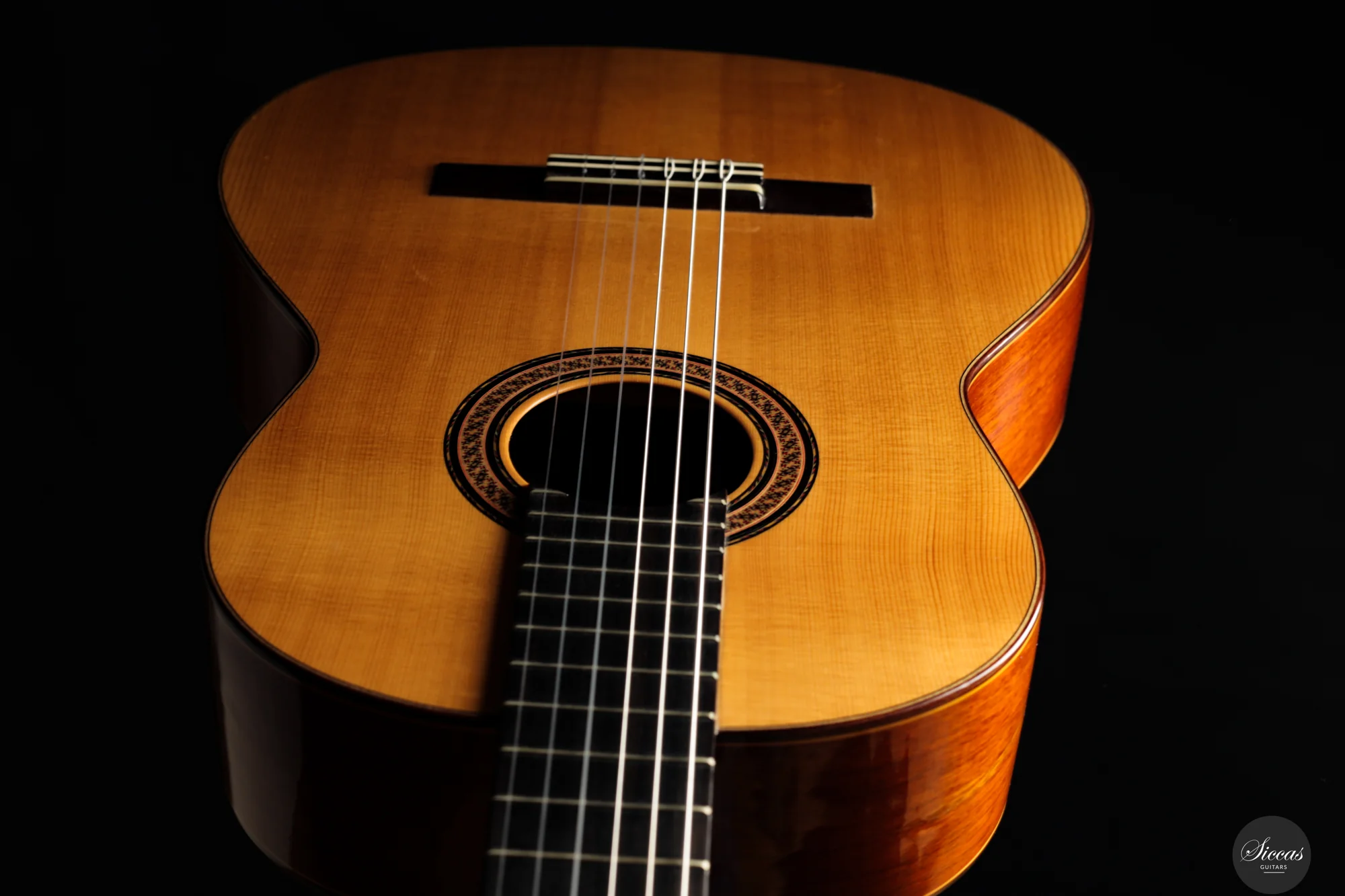
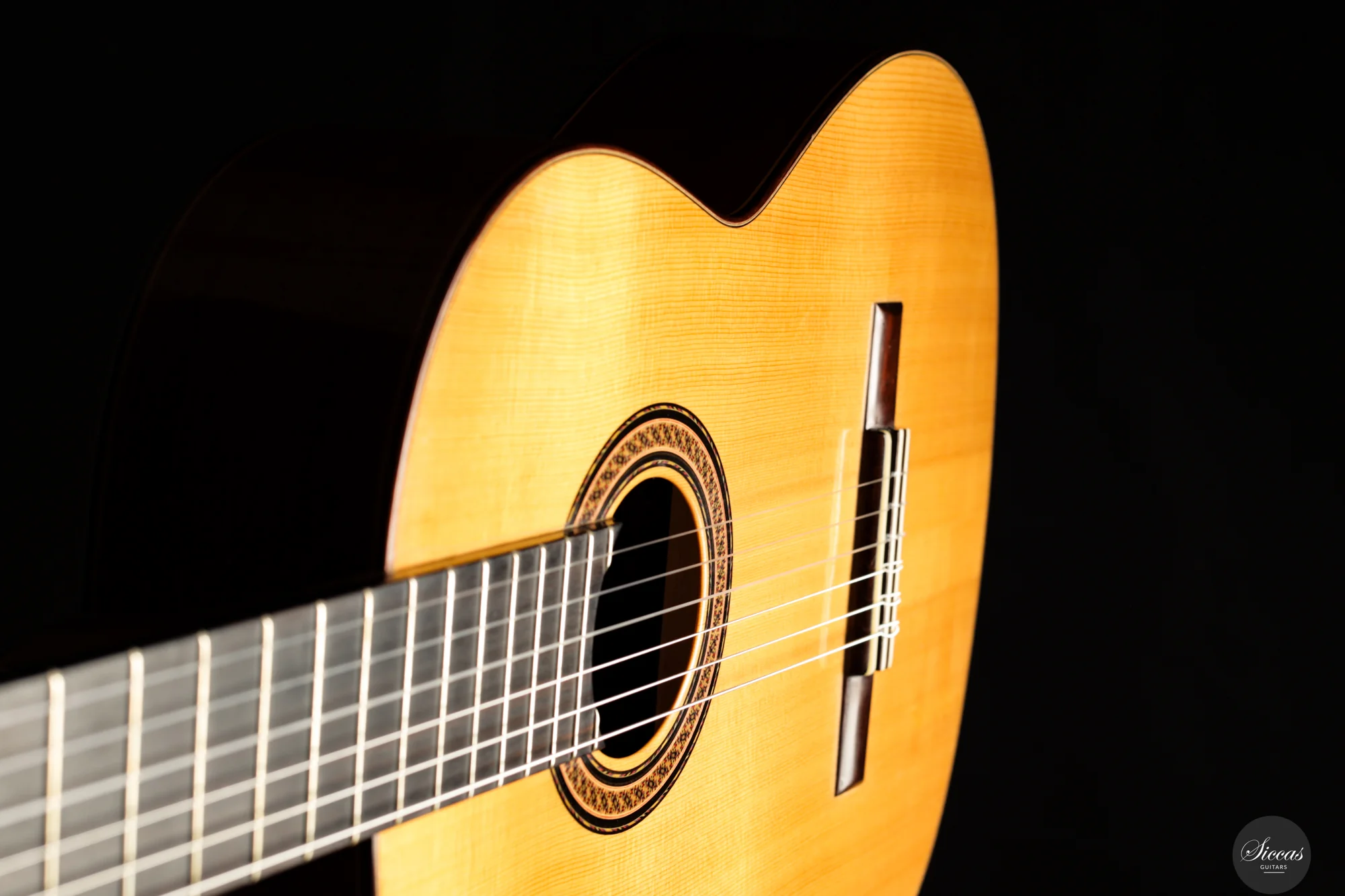
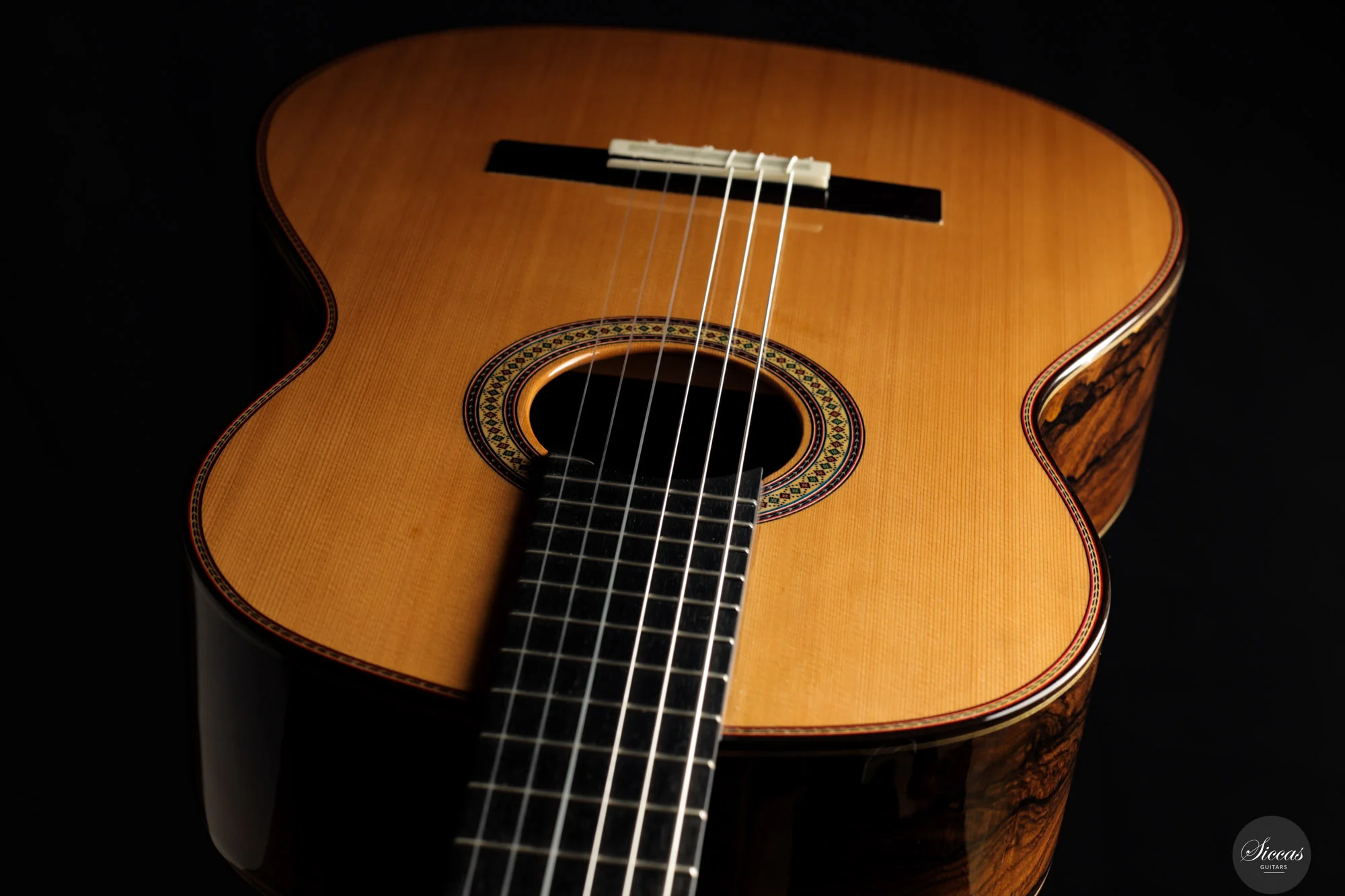
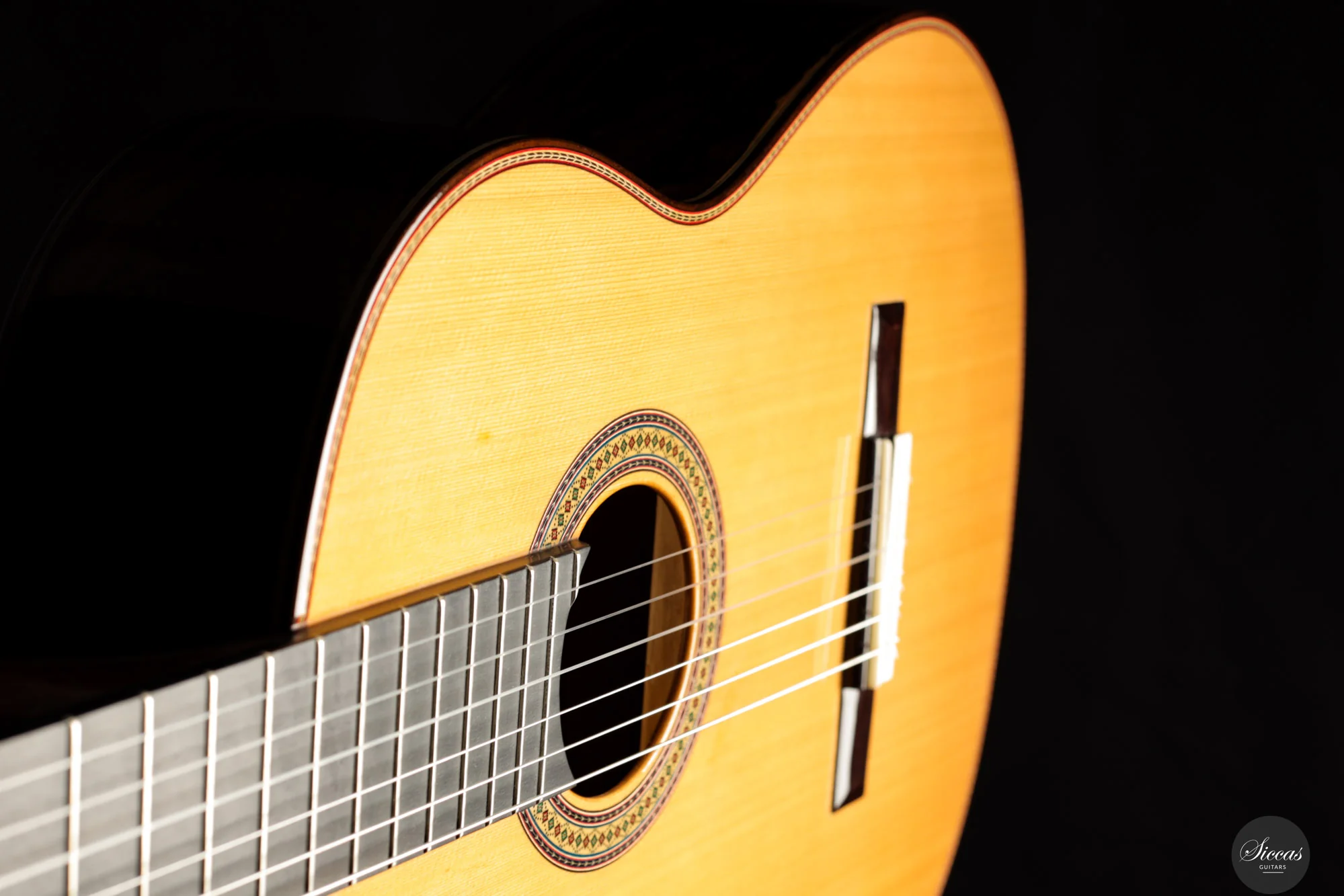
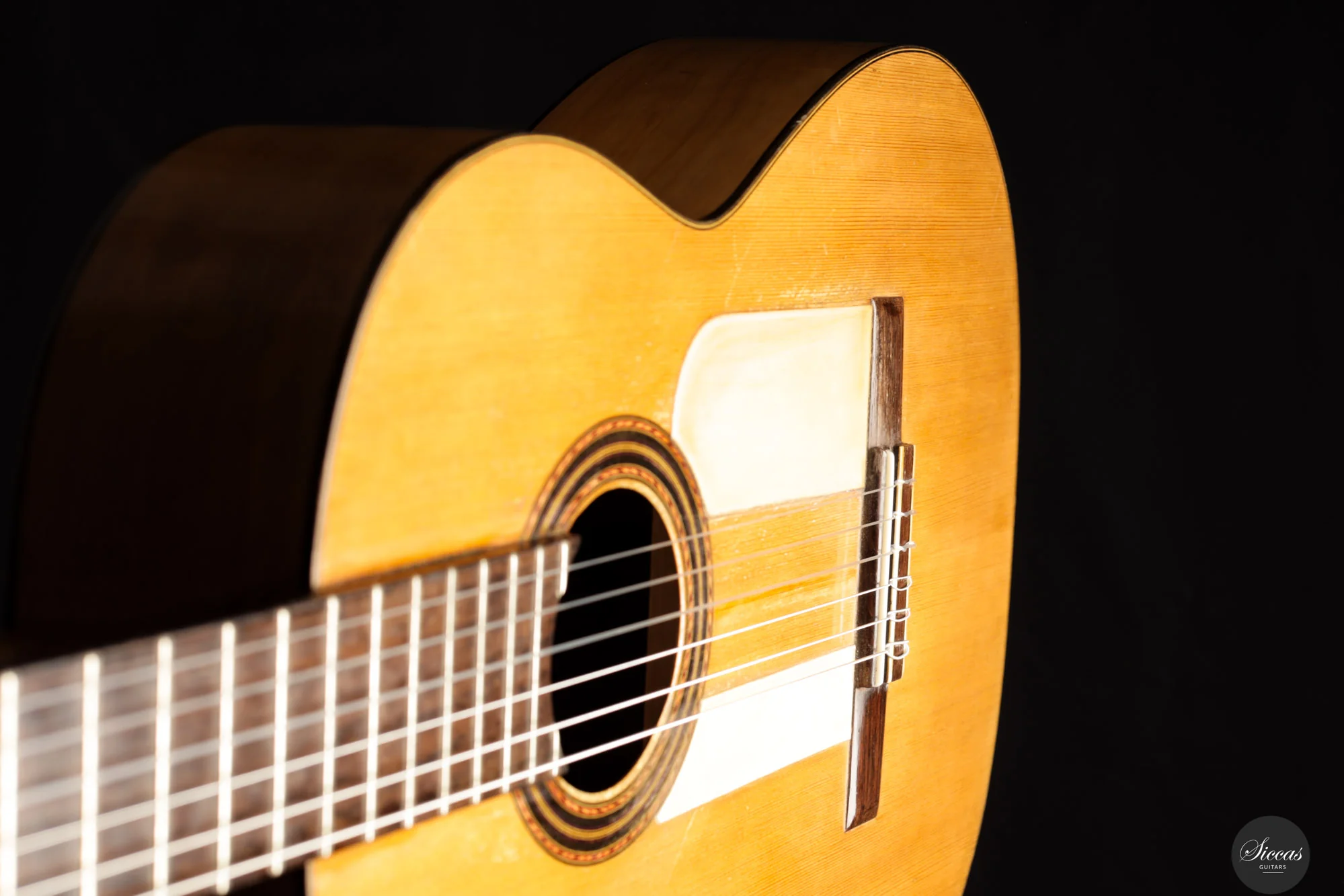
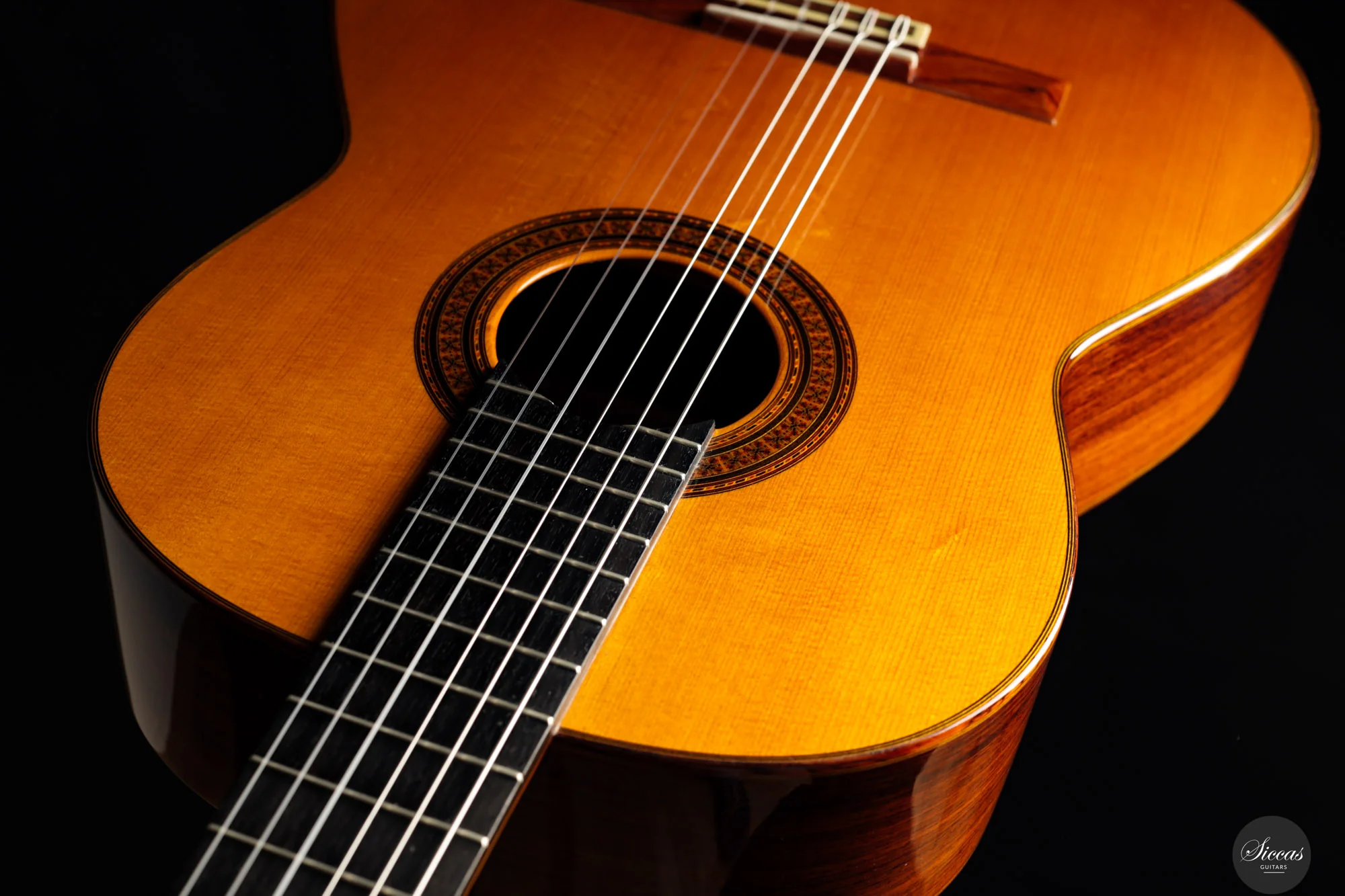
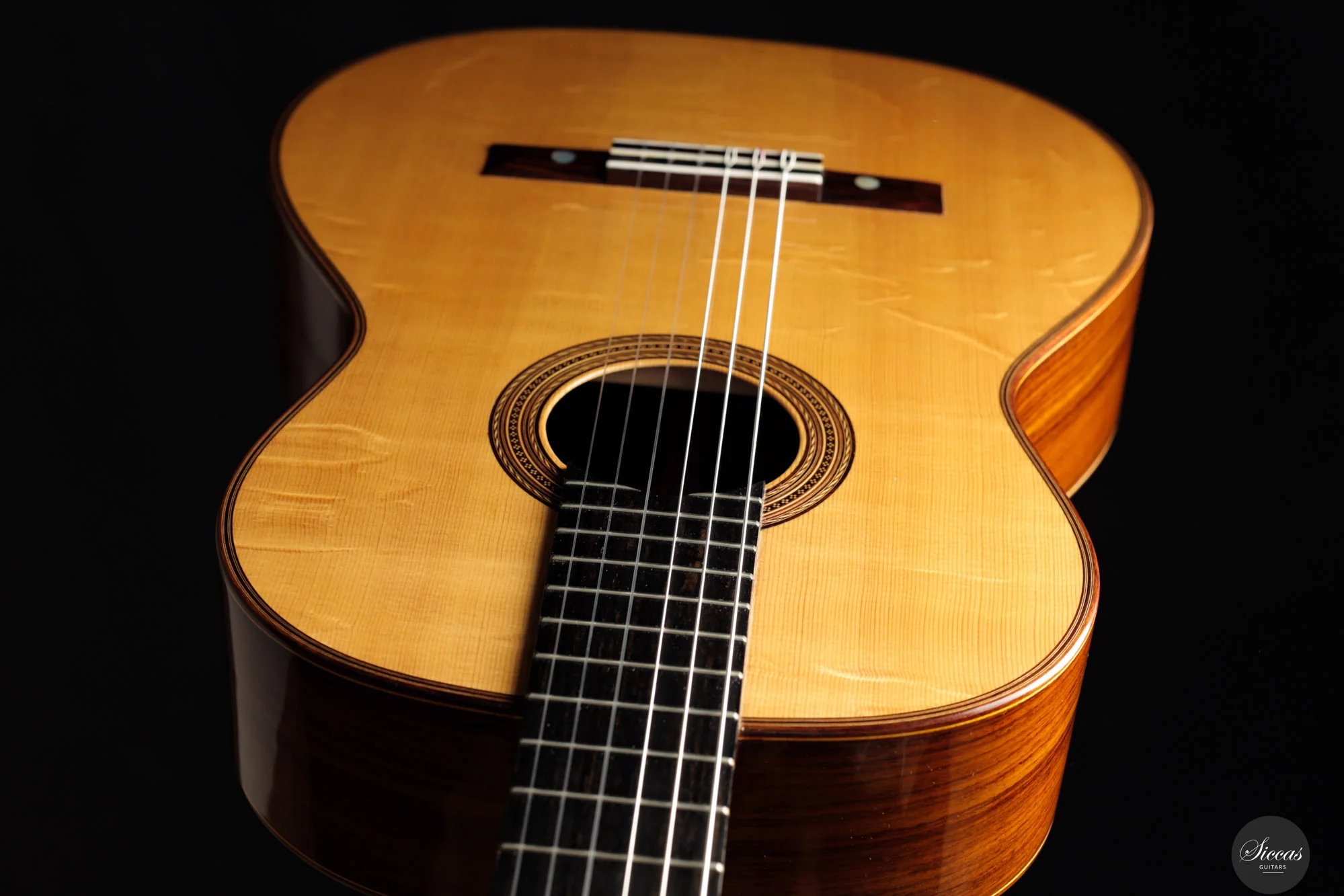
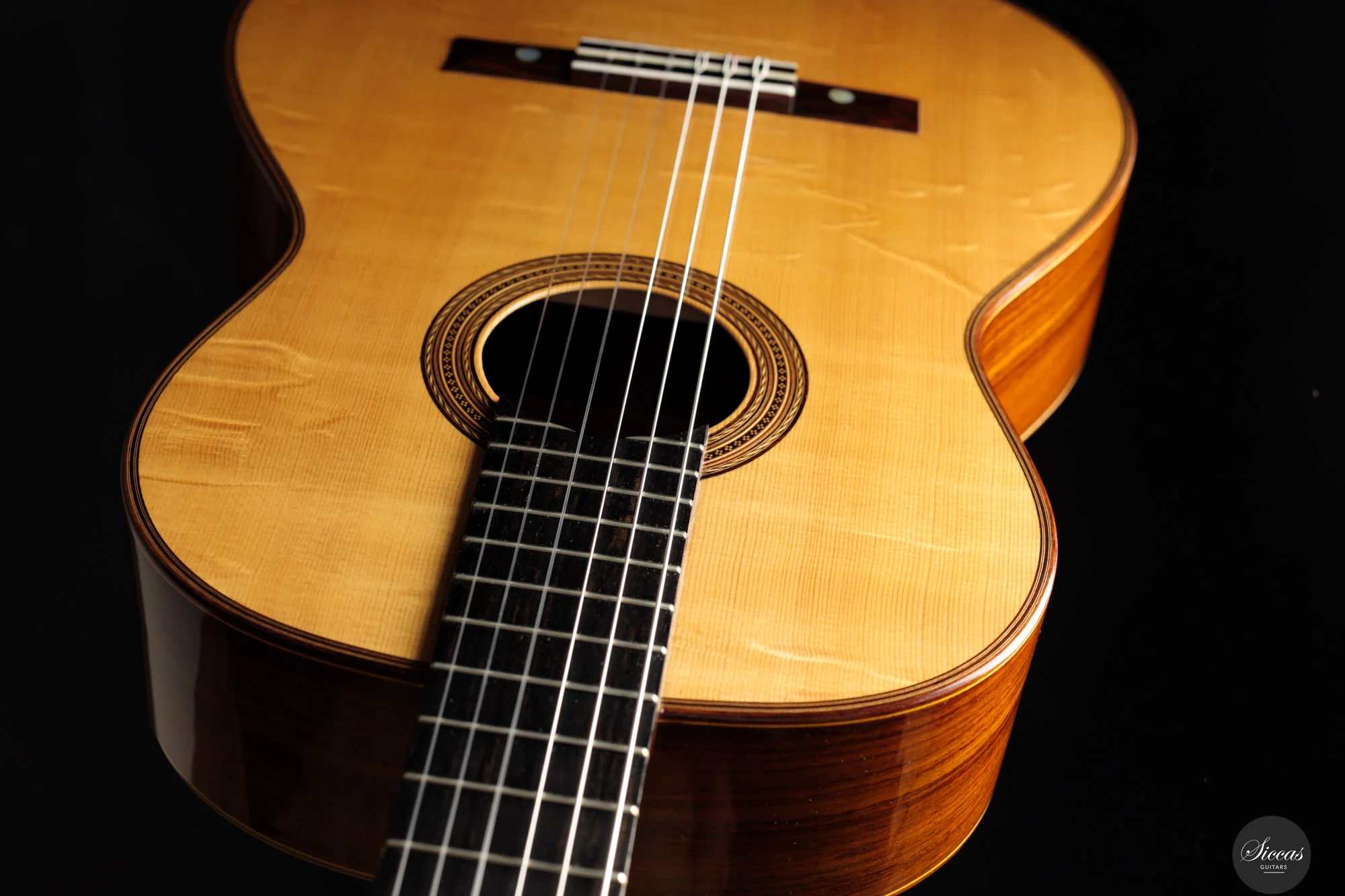
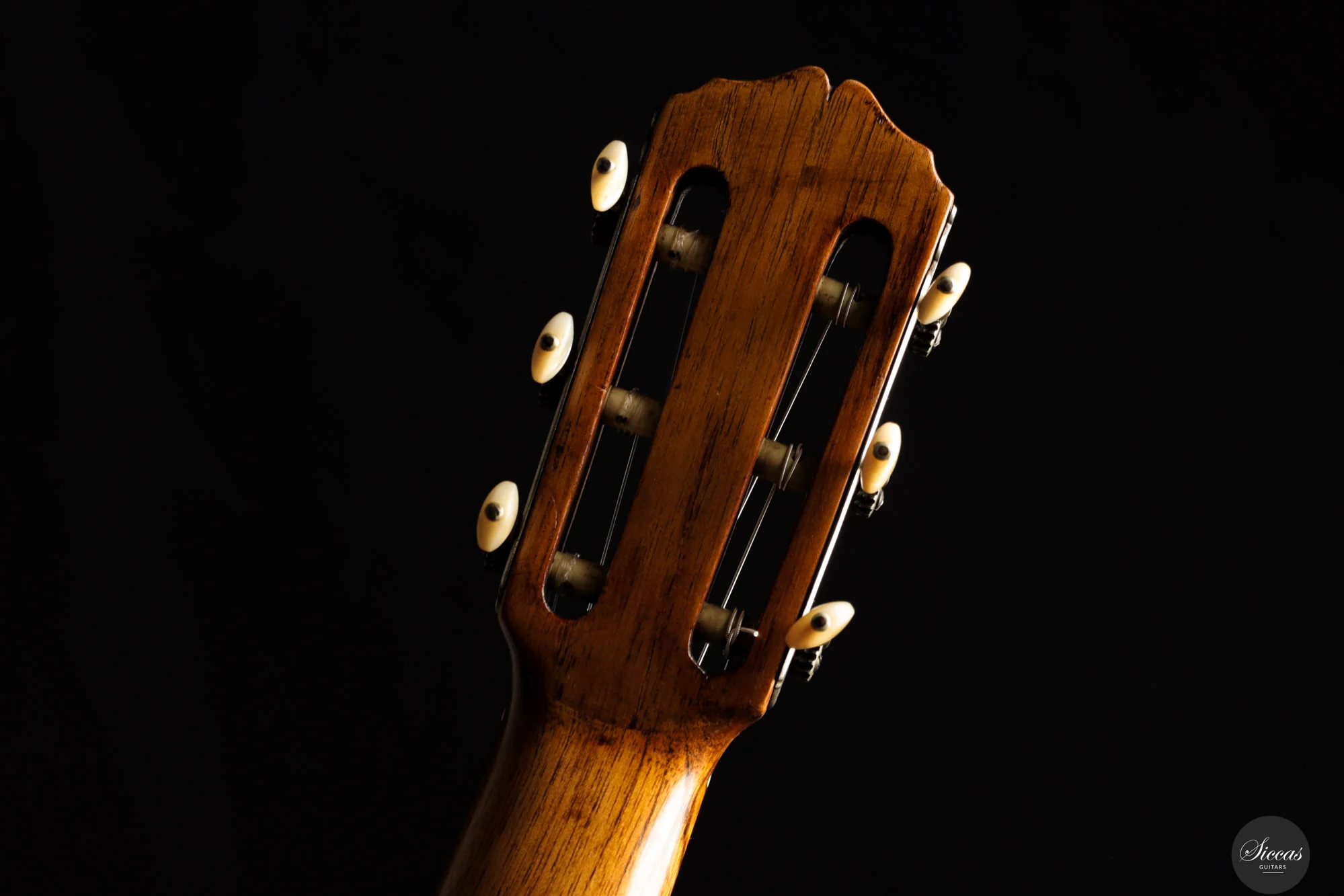
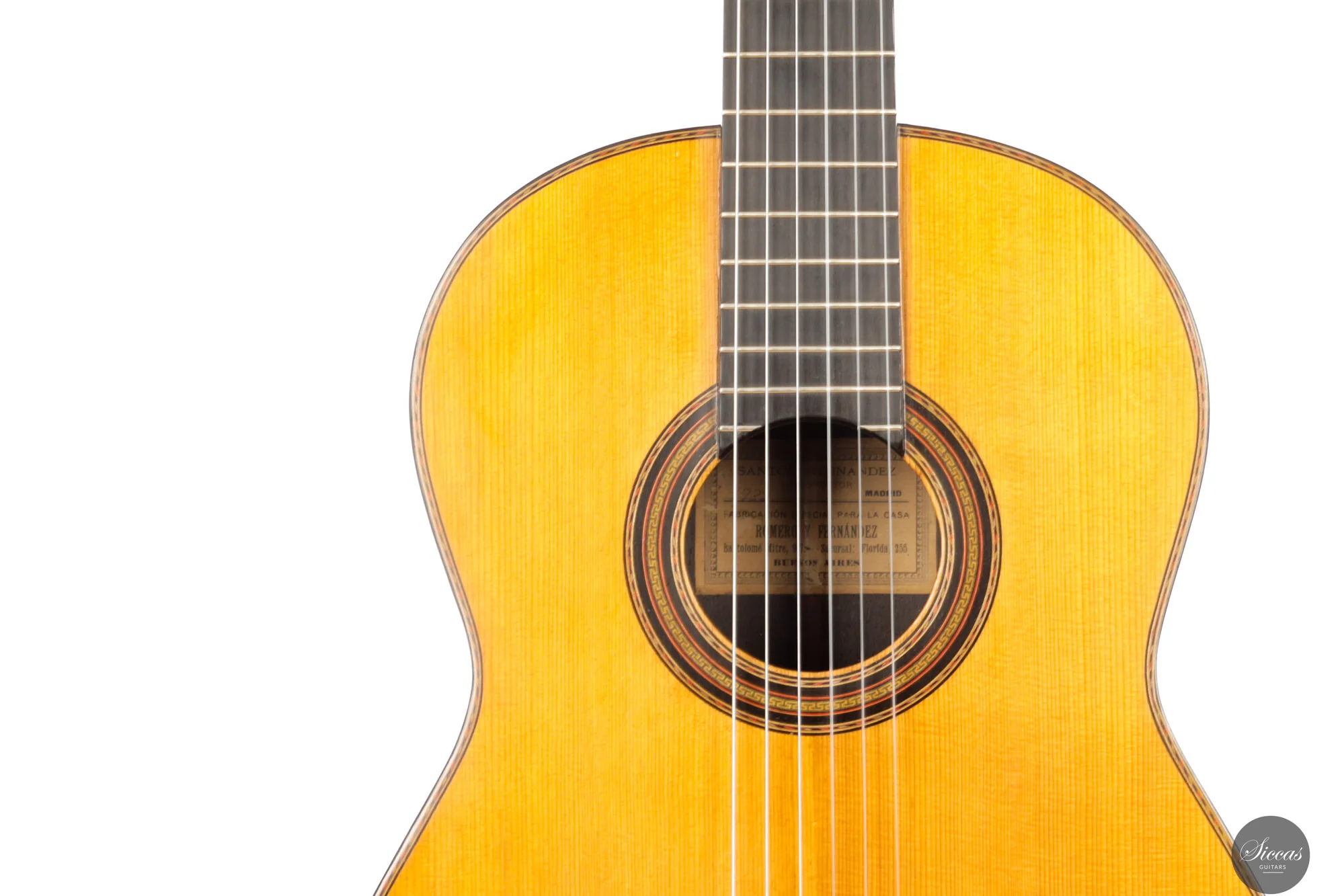
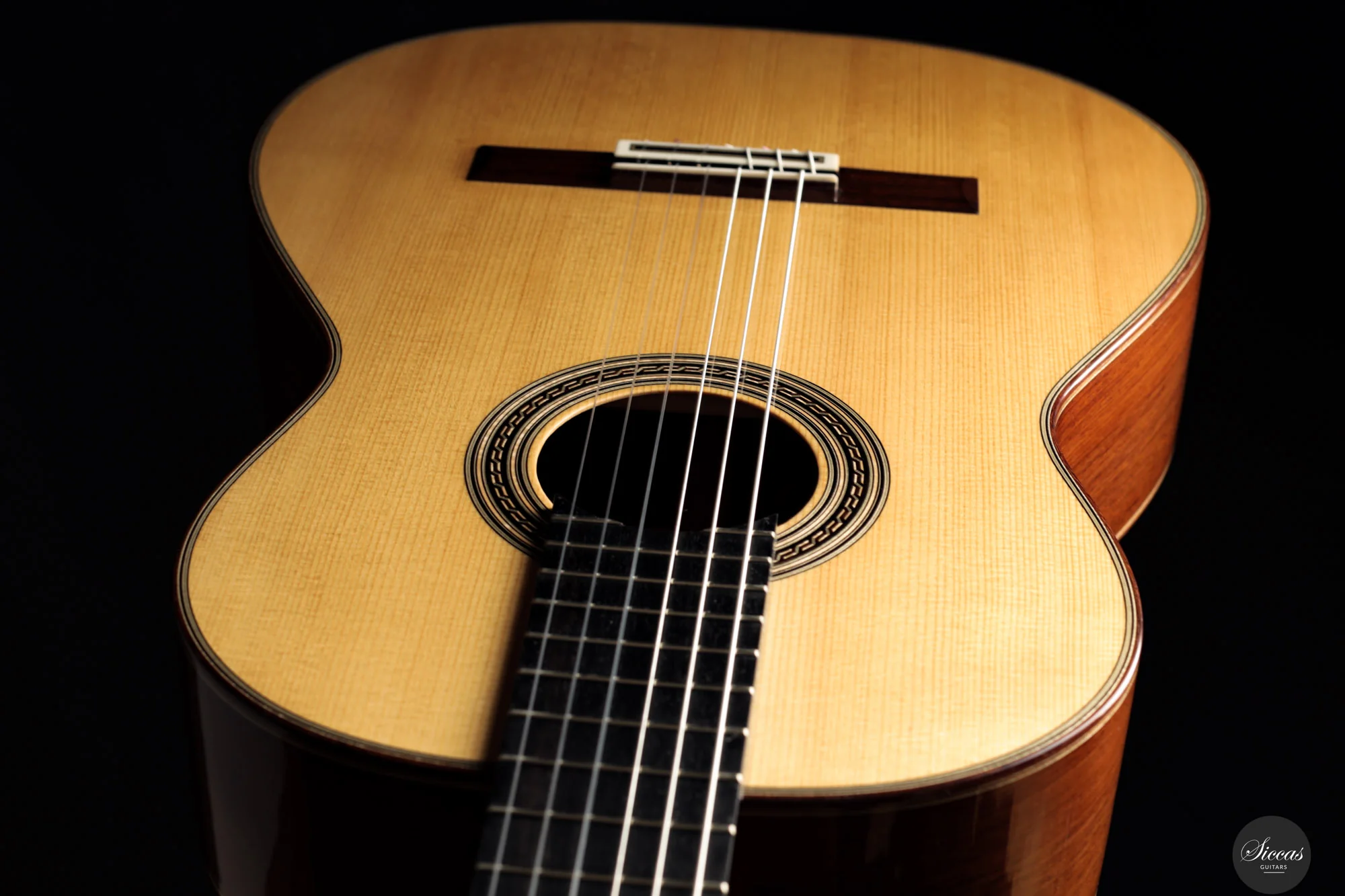
This exceptional guitar is considered one of the luxury models made by Santos Hernández, clearly distinguished by its elaborate decorative elements. Although dated 1932 on its label, clearly reflects the design and craftsmanship typical of Santos Hernández’s work from the 1920s. The materials used—particularly the Brazilian rosewood for the back and sides—are consistent with the wood Santos had access to during his tenure at Viuda de Manuel Ramírez. The rosette features a central motif reminiscent of ancient Greek design, a distinctive detail also commonly seen in his earlier works under Viuda de Manuel Ramírez.

Historical Significance & Attribution

According to Gabriele Lodi, who restored this remarkable instrument, it’s crucial to understand the transitional period when Santos Hernández left his role at the Viuda de Manuel Ramírez workshop and established his own. During this early period of independence, he is believed to have entered an exclusive production contract with the firm Romero y Fernández, which helped secure a steady income and guaranteed sales—particularly for the Argentine market. These guitars varied in their level of ornamentation and quality, and some were even delivered without labels. It was possibly during this phase that Santos began marking his guitars with a unique stamp beneath the soundboard as a sign of authenticity and authorship.

Construction & Internal Design

Internally, this instrument echoes Santos Hernández’s Torres-inspired construction style, which he developed during his time with Manuel Ramírez. This makes the guitar not only a historically significant example of early 20th-century Spanish luthiery but also a rare document of a master craftsman’s evolution.

Sound & Playability

Sonically, the guitar is a marvel. It captures the essence of the “old world” tone—warm, lyrical, and full of nuance—yet remains relevant and inspiring for modern repertoire. The bass response is rich and free due to the low body resonance, while the trebles are sweet, charismatic, and articulate. It is an instrument of great expressive range, equally suited for refined historical interpretation and contemporary concert performance.

Condition

This guitar is in very good condition. It has been professionally restored by Gabriele Lodi, one of the most highly respected experts in the restoration of historical instruments. His meticulous work ensures that the guitar retains its original character and acoustic qualities while being structurally secure and visually refined. This restoration enhances both the value and longevity of this exceptional instrument.
$345,940,499.65

Original: $1,153,134,998.85

-70%
Santos Hernandez - 1932

$1,153,134,998.85

$345,940,499.65

Product Information

Shipping & Returns
Description

About the luthier

Santos Hernandez (Madrid, 1873-1943) started an apprenticeship very early in Valentin Viudes’s workshop and then moved to José Ortega’s Granadinian workshop. After moving to a few other workshops and serving as a soldier for Spain, he eventually took over Enrique Garcia’s position in Manuel Ramirez’s workshop in 1905. His involvement in the building of Andrés Segovia’s famous 1912 Manuel Ramirez sealed his reputation as an extraordinary luthier. He opened his first own workshop in 1921 after having worked for Manuel Ramirez’s widow along with Domingo Esteso.

About the guitar

This exceptional guitar is considered one of the luxury models made by Santos Hernández, clearly distinguished by its elaborate decorative elements. Although dated 1932 on its label, clearly reflects the design and craftsmanship typical of Santos Hernández’s work from the 1920s. The materials used—particularly the Brazilian rosewood for the back and sides—are consistent with the wood Santos had access to during his tenure at Viuda de Manuel Ramírez. The rosette features a central motif reminiscent of ancient Greek design, a distinctive detail also commonly seen in his earlier works under Viuda de Manuel Ramírez.

Historical Significance & Attribution

According to Gabriele Lodi, who restored this remarkable instrument, it’s crucial to understand the transitional period when Santos Hernández left his role at the Viuda de Manuel Ramírez workshop and established his own. During this early period of independence, he is believed to have entered an exclusive production contract with the firm Romero y Fernández, which helped secure a steady income and guaranteed sales—particularly for the Argentine market. These guitars varied in their level of ornamentation and quality, and some were even delivered without labels. It was possibly during this phase that Santos began marking his guitars with a unique stamp beneath the soundboard as a sign of authenticity and authorship.

Construction & Internal Design

Internally, this instrument echoes Santos Hernández’s Torres-inspired construction style, which he developed during his time with Manuel Ramírez. This makes the guitar not only a historically significant example of early 20th-century Spanish luthiery but also a rare document of a master craftsman’s evolution.

Sound & Playability

Sonically, the guitar is a marvel. It captures the essence of the “old world” tone—warm, lyrical, and full of nuance—yet remains relevant and inspiring for modern repertoire. The bass response is rich and free due to the low body resonance, while the trebles are sweet, charismatic, and articulate. It is an instrument of great expressive range, equally suited for refined historical interpretation and contemporary concert performance.

Condition

This guitar is in very good condition. It has been professionally restored by Gabriele Lodi, one of the most highly respected experts in the restoration of historical instruments. His meticulous work ensures that the guitar retains its original character and acoustic qualities while being structurally secure and visually refined. This restoration enhances both the value and longevity of this exceptional instrument.