




Rojas & Sanzol - 2025 Apollinea
About the luthier
Matías Ezequiel Rojas and Carmen Sanzol were born in Buenos Aires, Argentina, where they received their first training in guitar making in 2007. After meeting during their studies they completed their apprenticeships and began building instruments professionally together. In the following years they broadened their knowledge with various teachers in both guitar and violin making and attended specialised seminars on traditional varnishes, acoustic behaviour of woods and bracing patterns, and restoration methods for plucked and bowed instruments. From 2016 onward they combined construction and restoration with teaching and later deepened their understanding of historical keyboard instruments, building an Italian polygonal spinet in collaboration with noted specialists.
In 2021 they moved to Cremona where they analysed and restored Italian guitars of the nineteenth and twentieth centuries and wrote documentation based on this work. Since 2023 they have also spent time in the workshop of Suji Kim in Parma, learning the construction methods of the Scrollavezza school of violin making. Recently they won the third prize at the Antonio Marín Montero competition in Granada. They now work in Santa Cecilia, a village in the Apennines of Piacenza, where all their guitars are built entirely by hand using traditional techniques and exclusively organic materials.
About the guitar
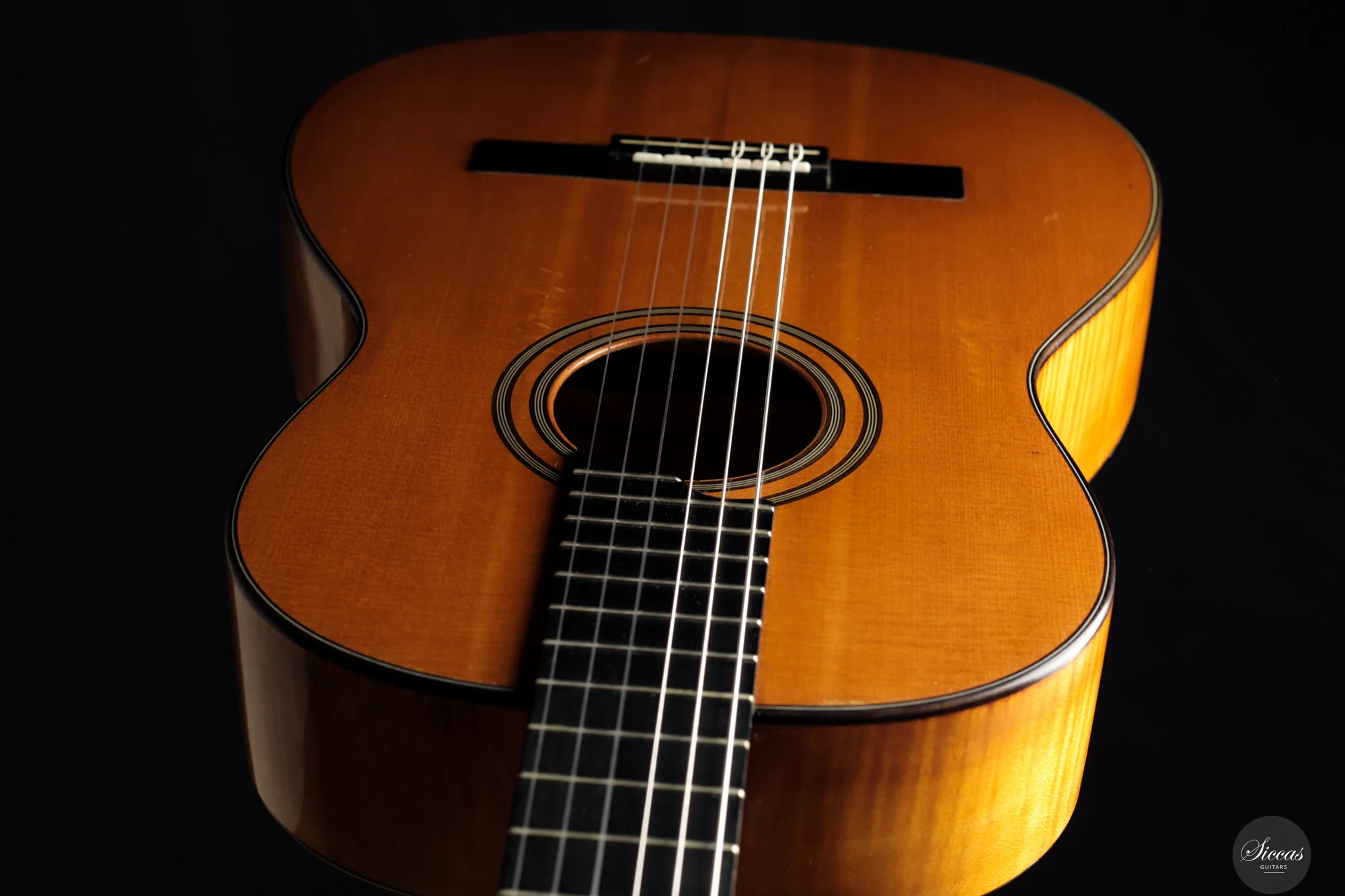
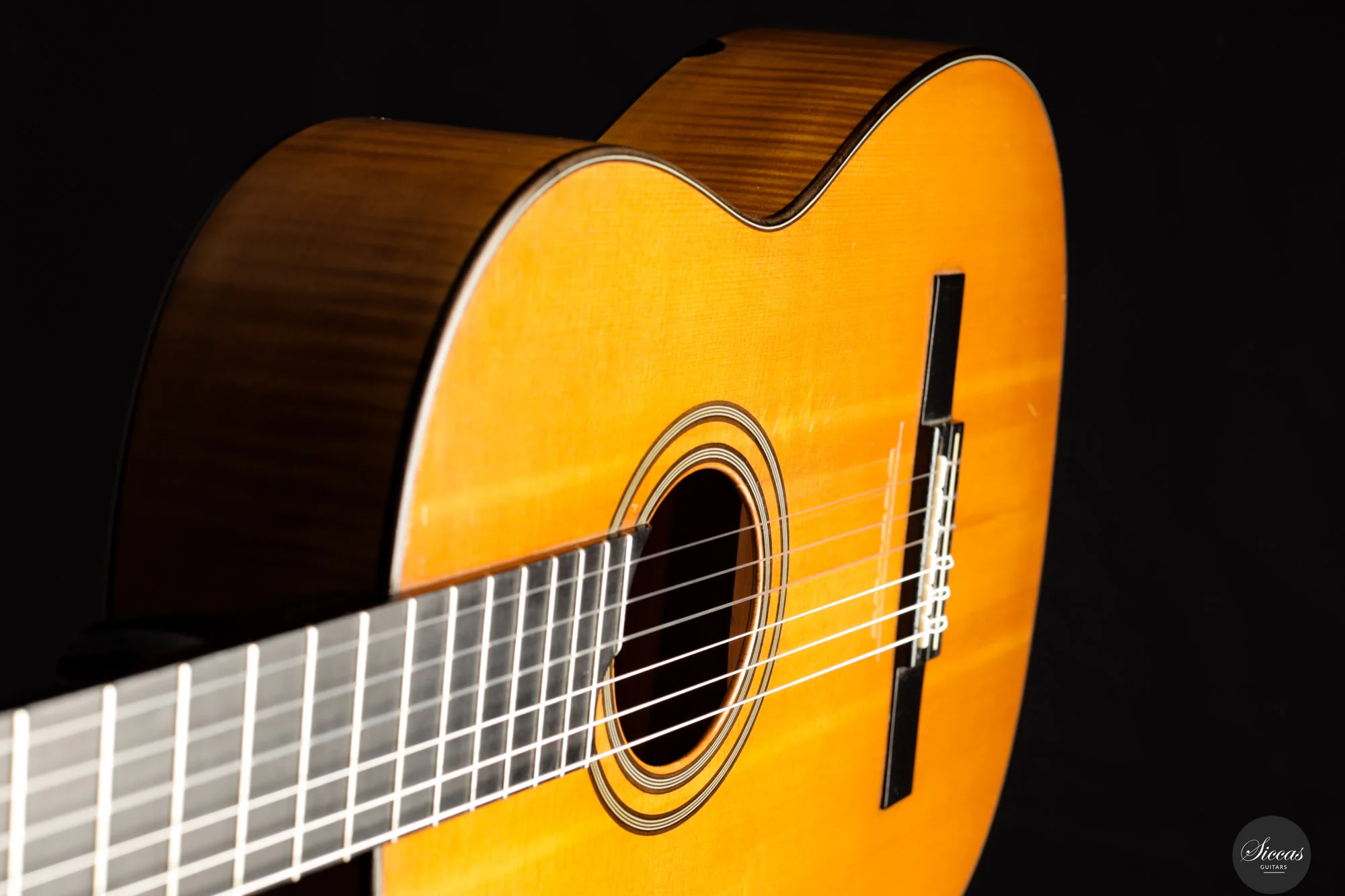
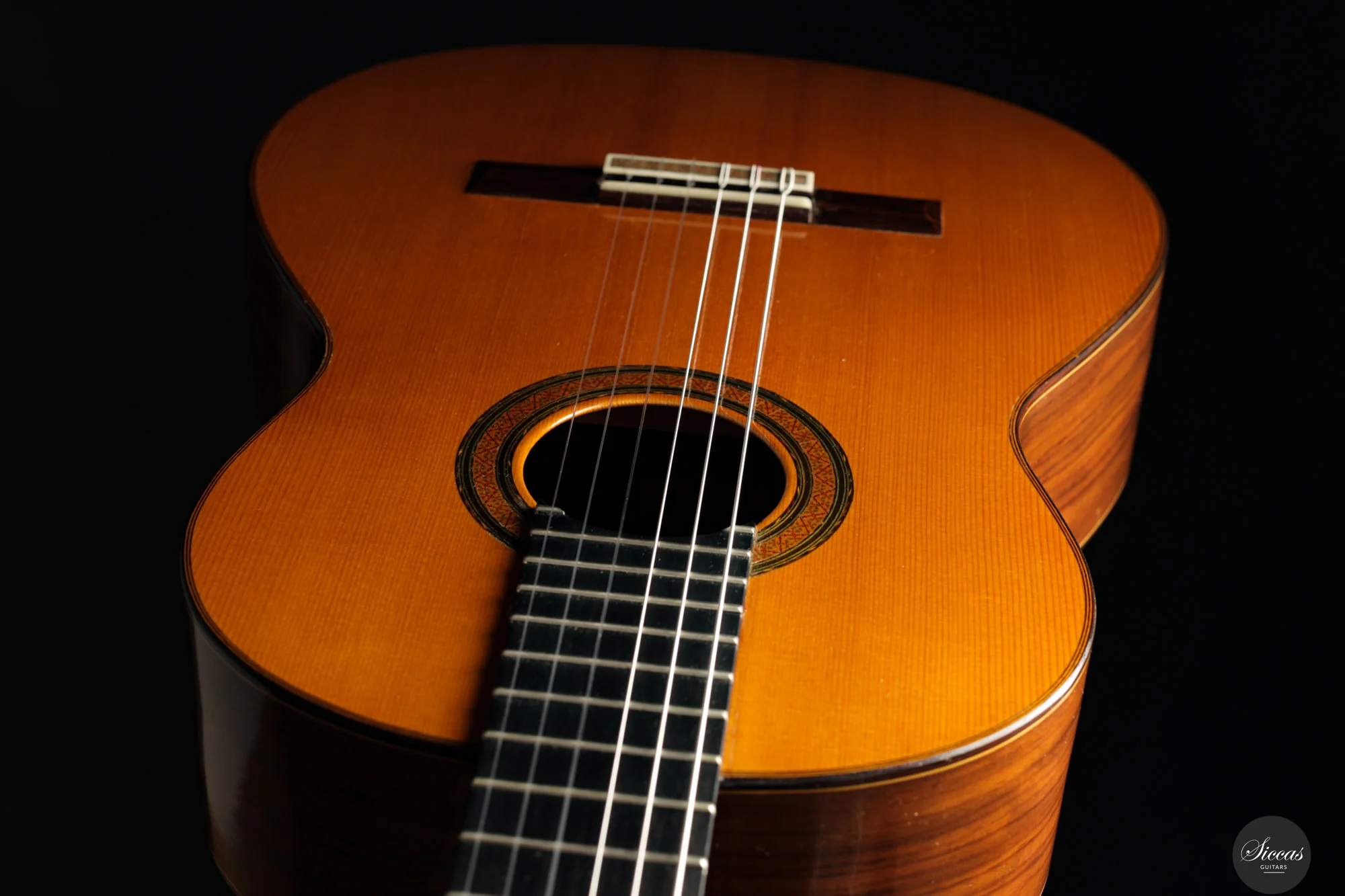
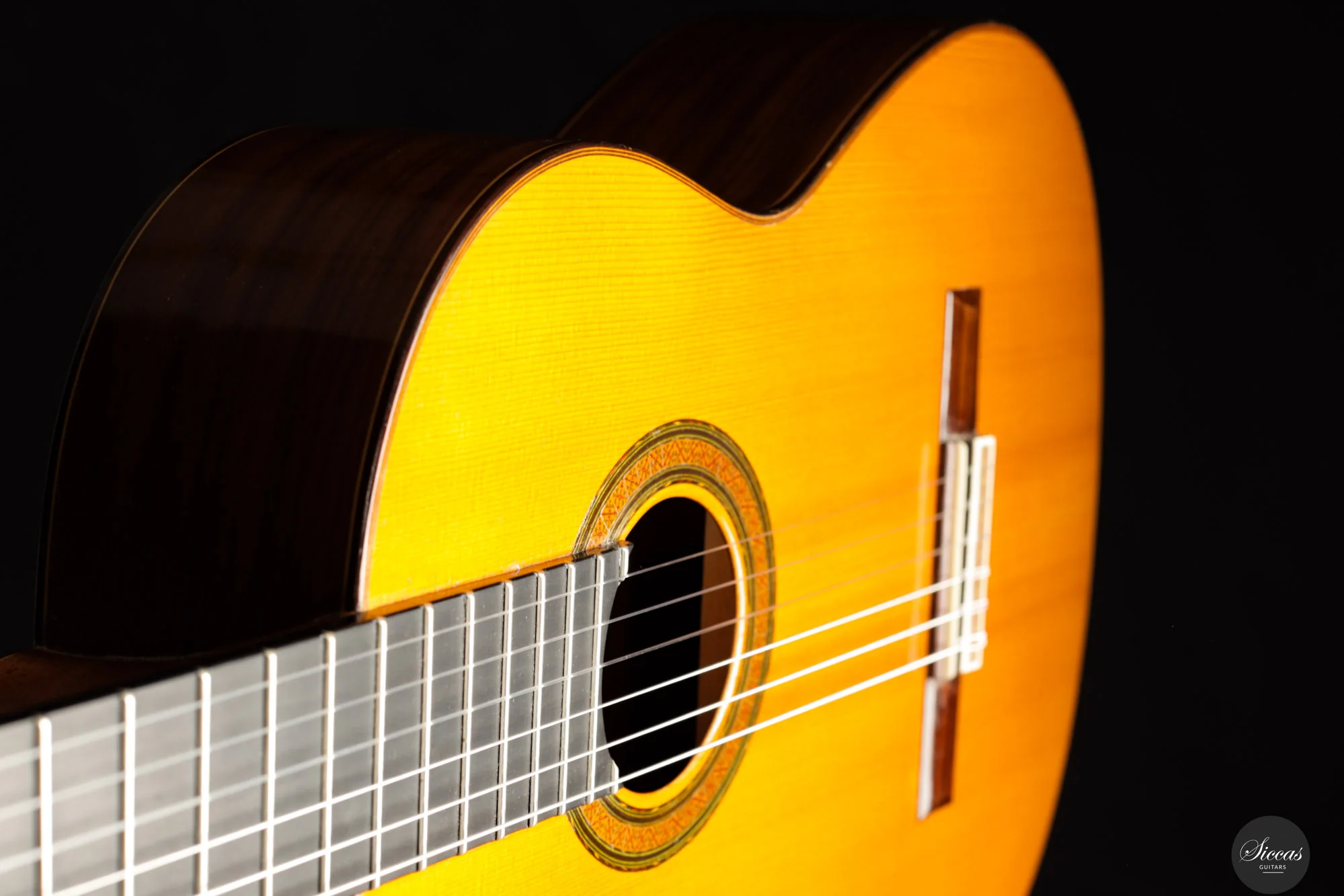
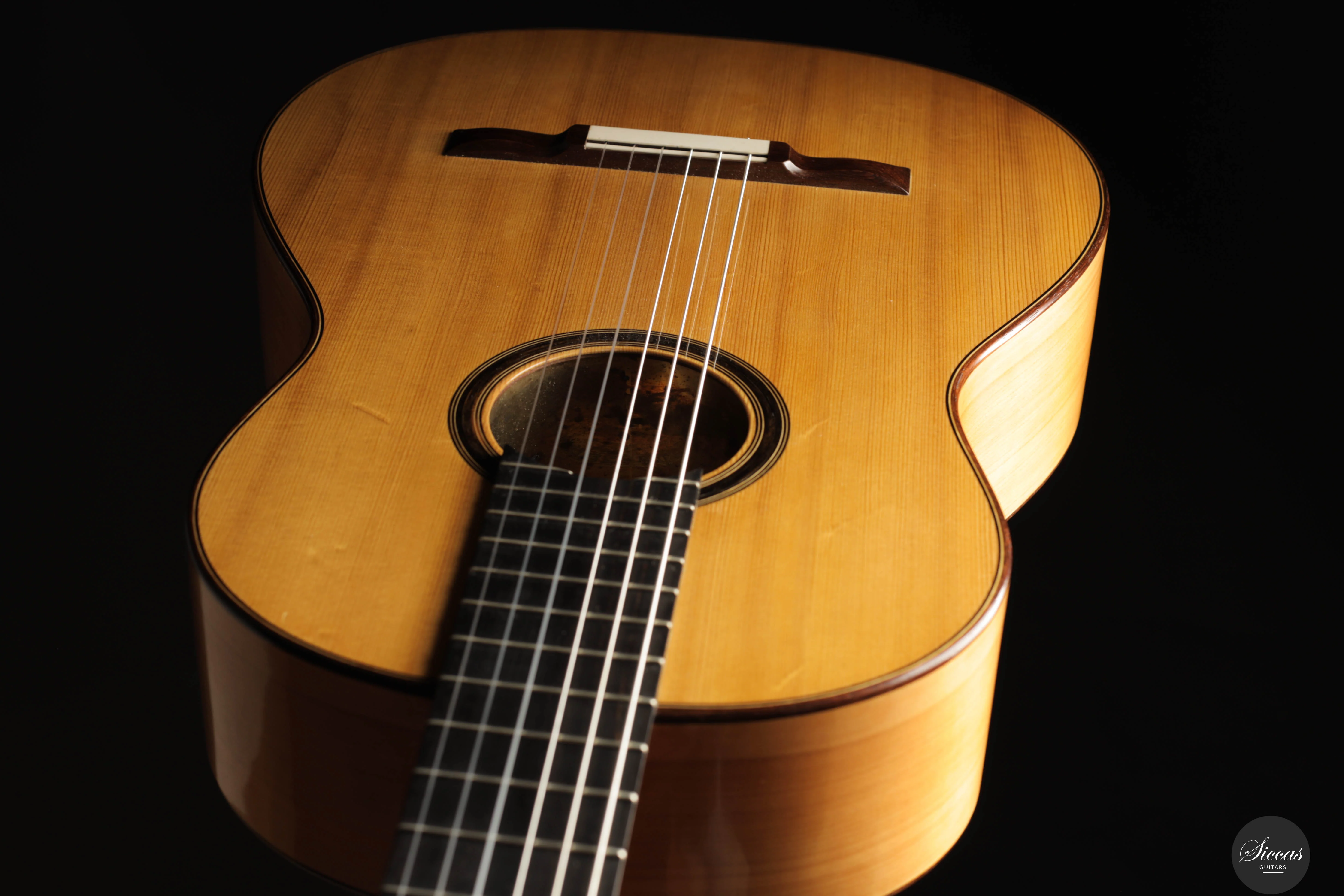
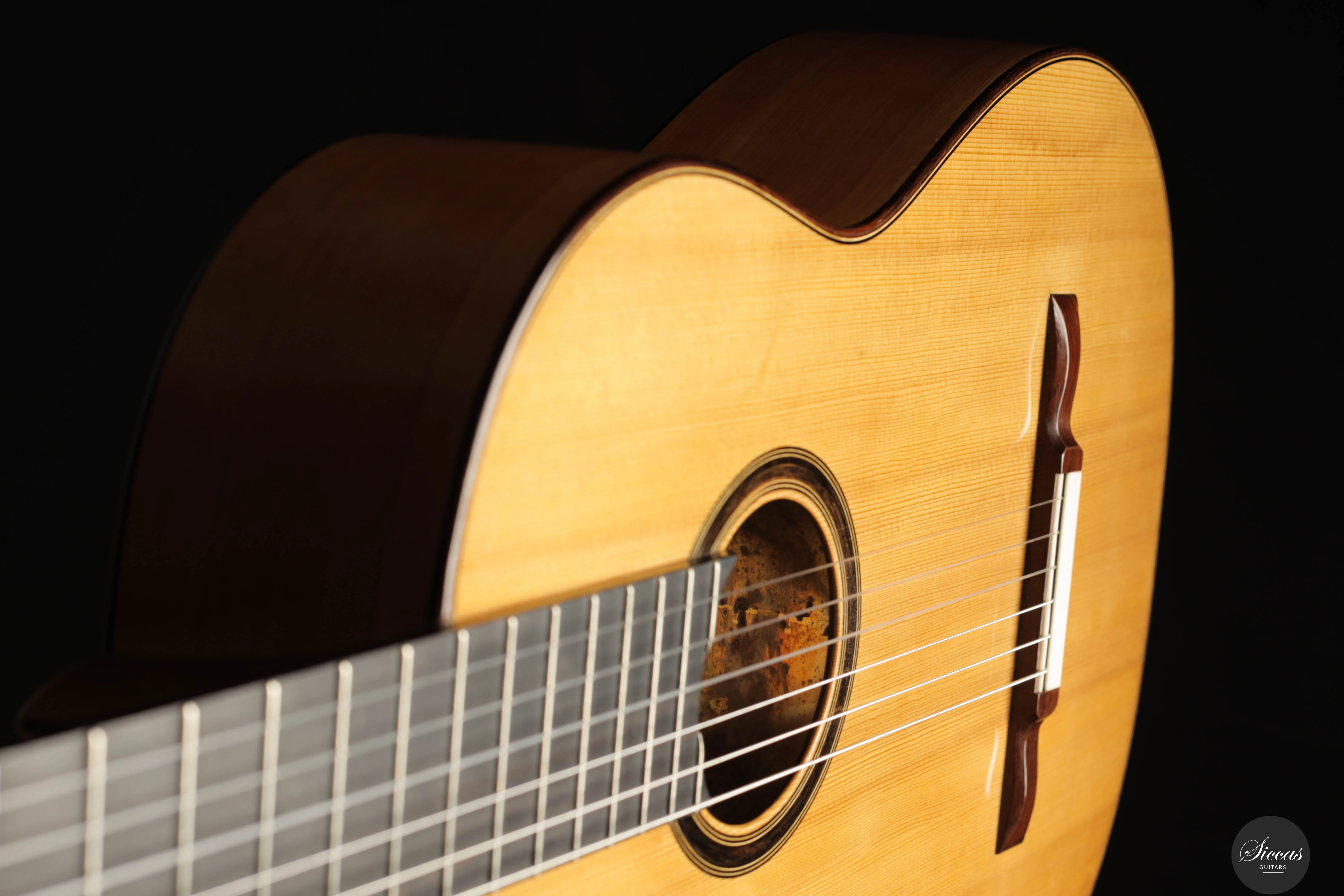
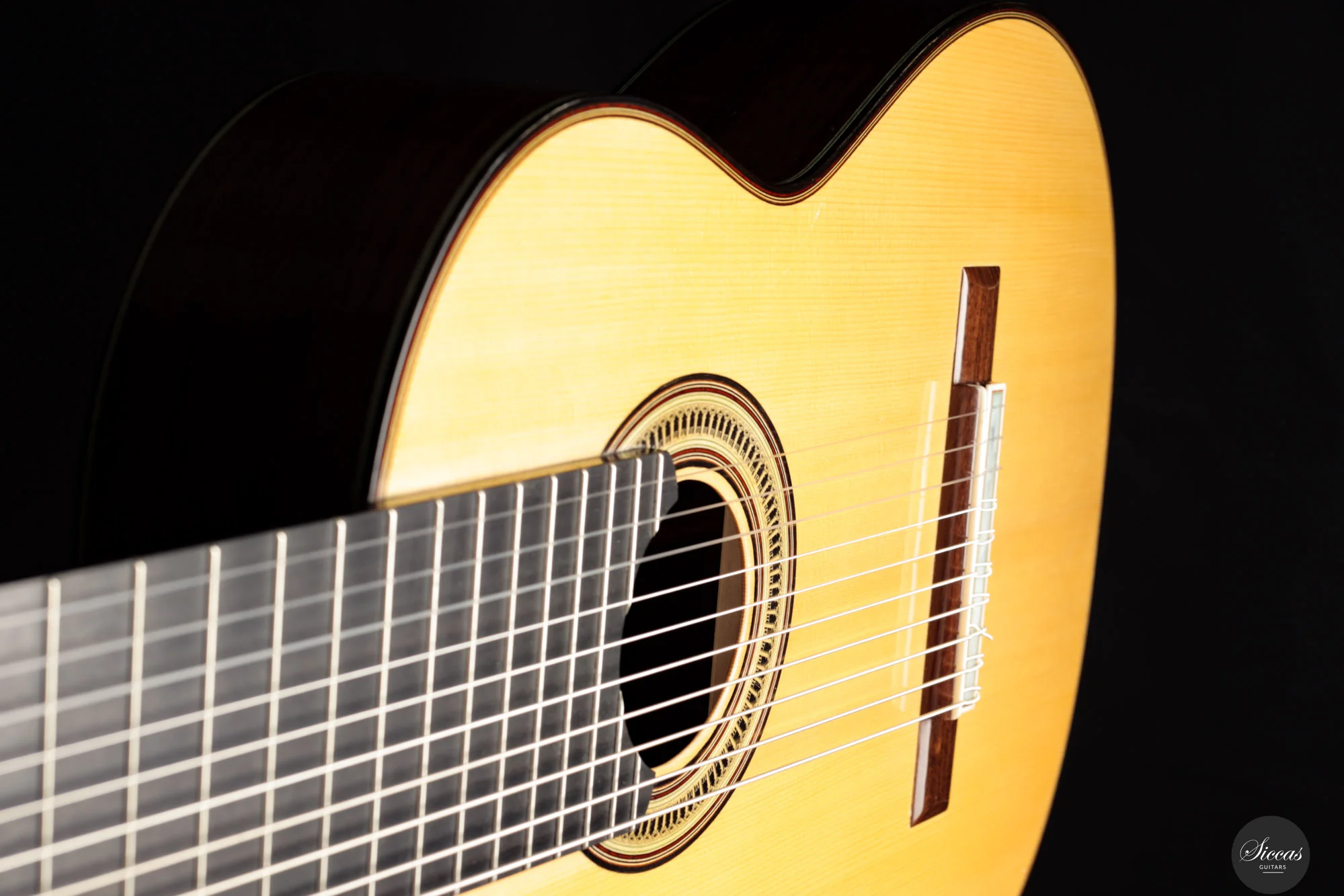
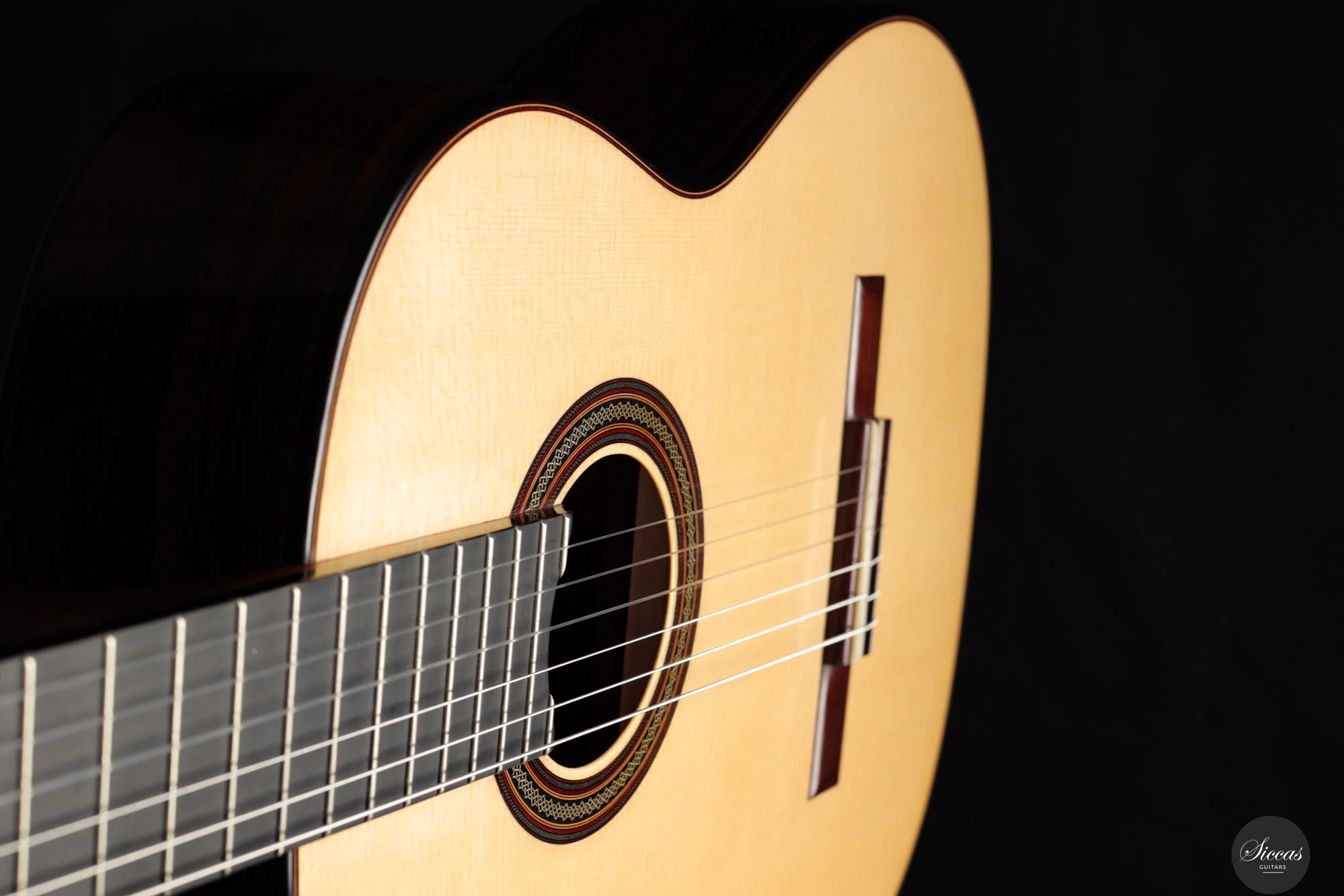
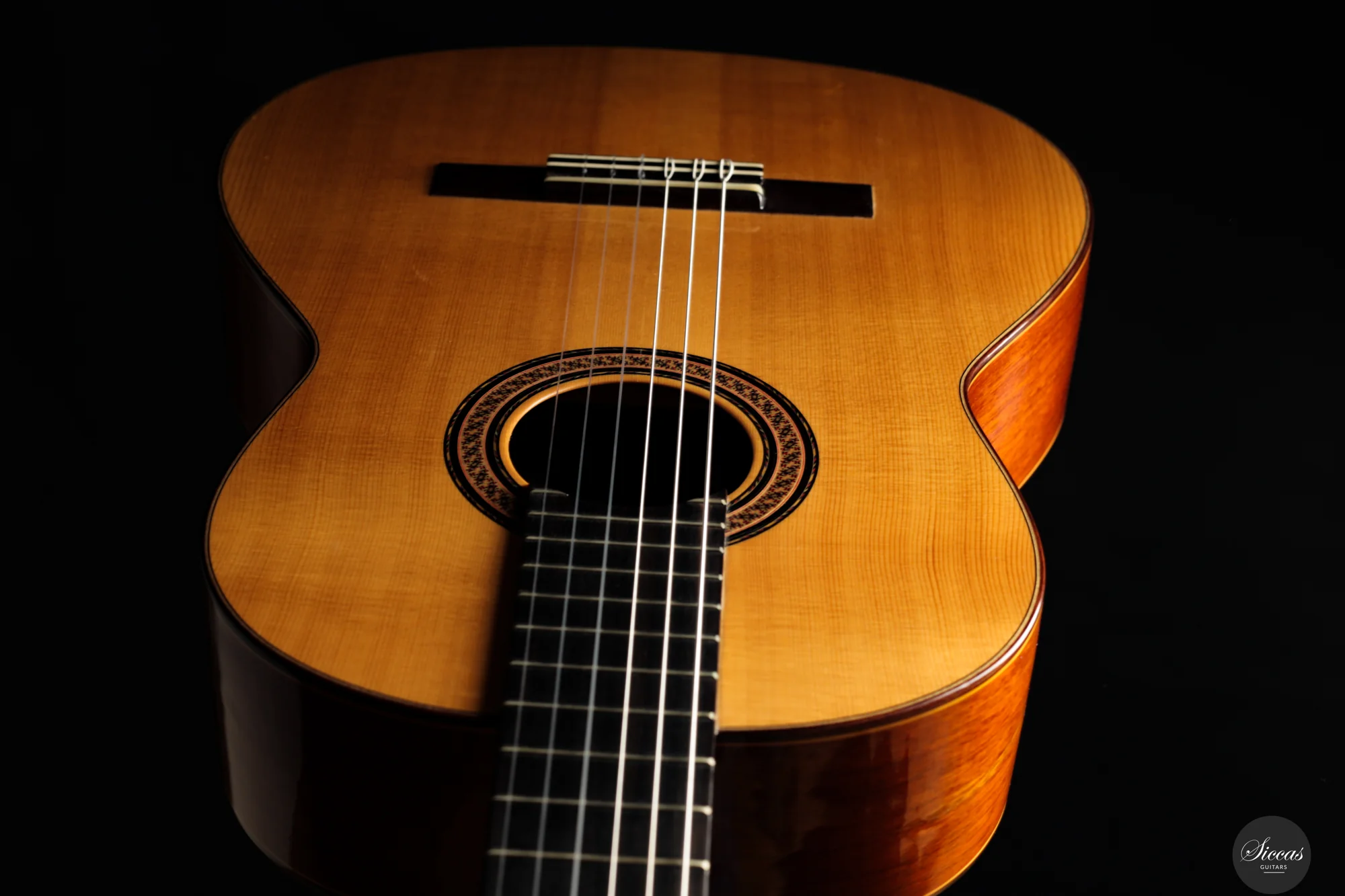
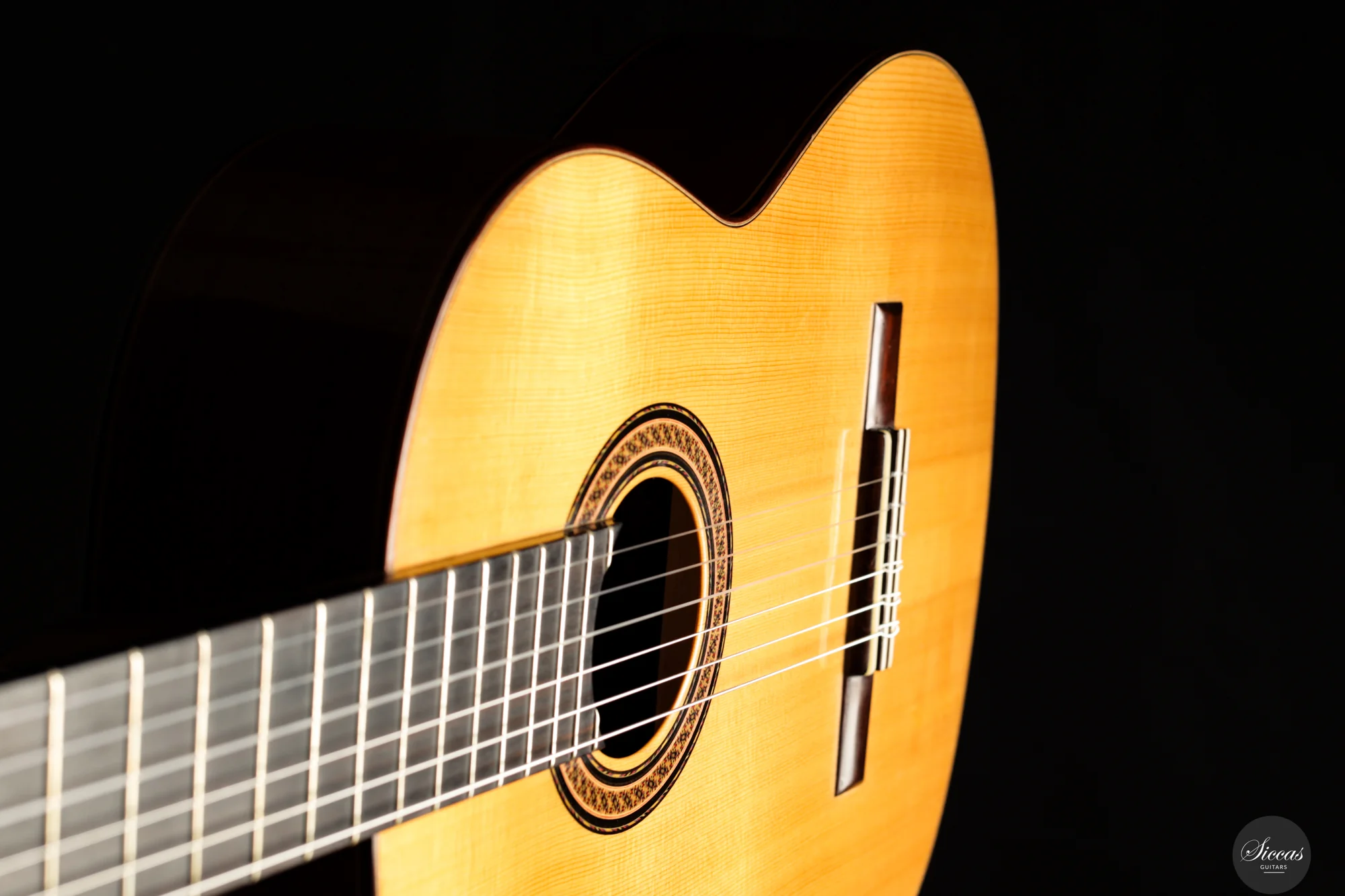
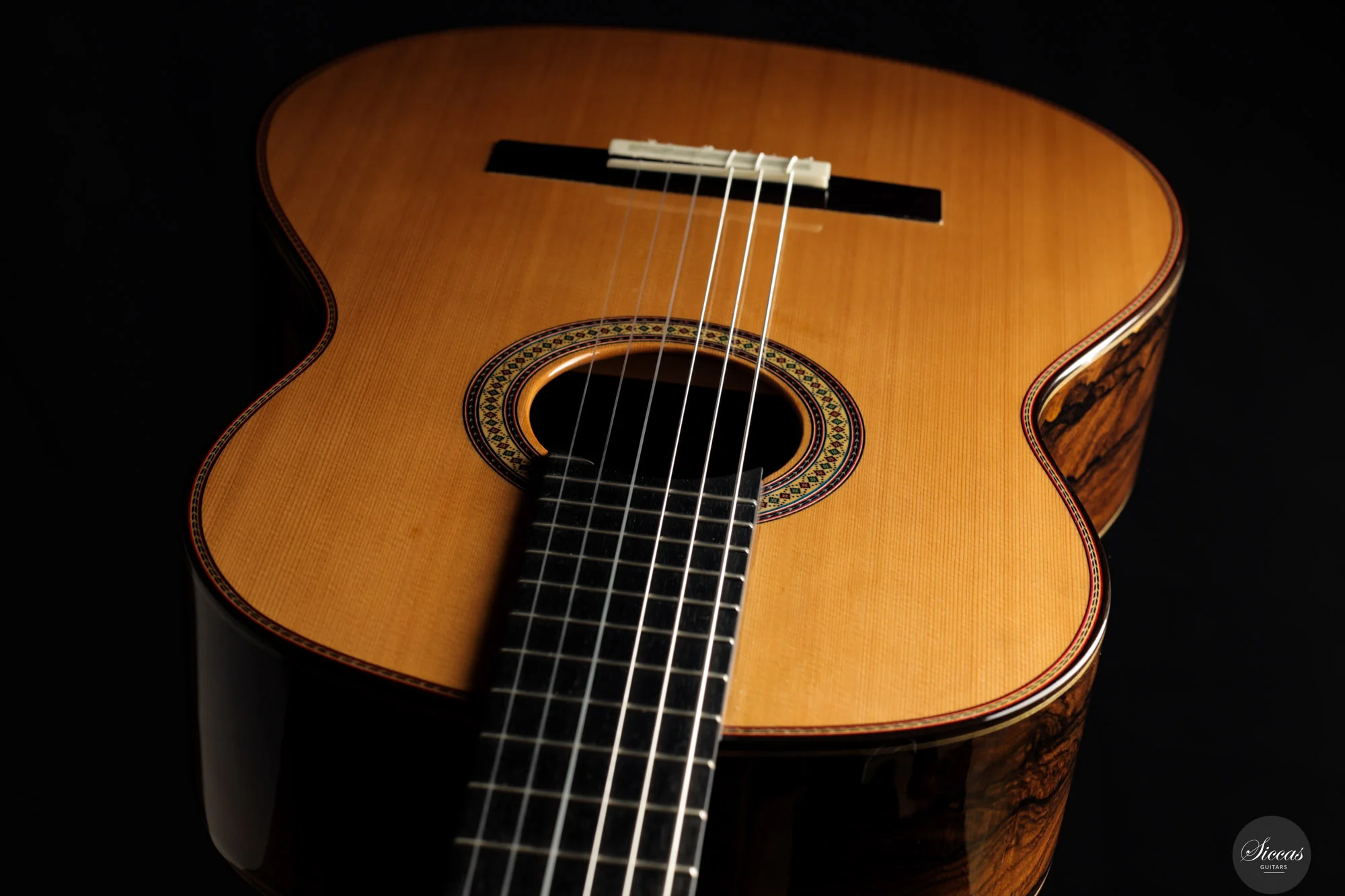
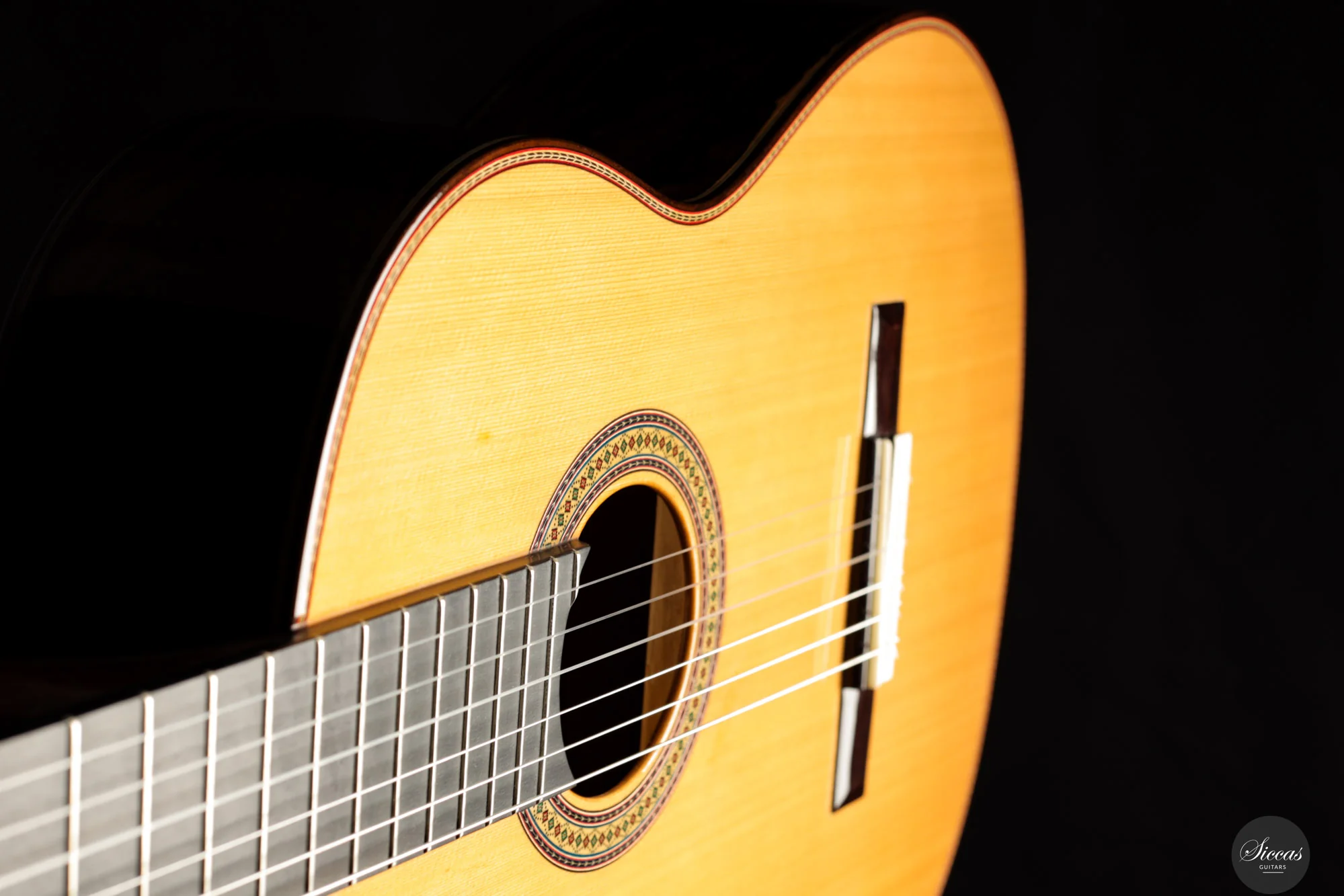
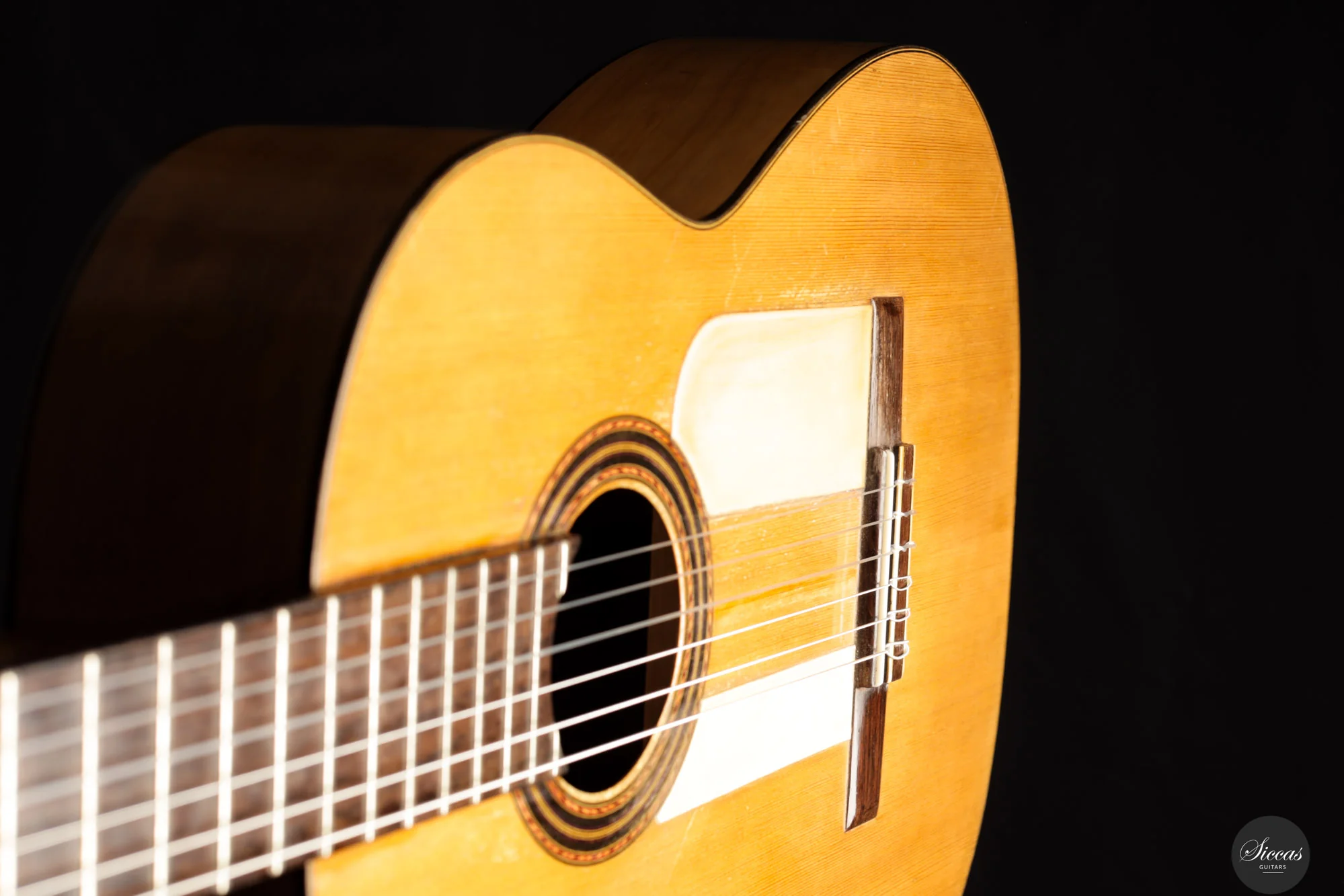
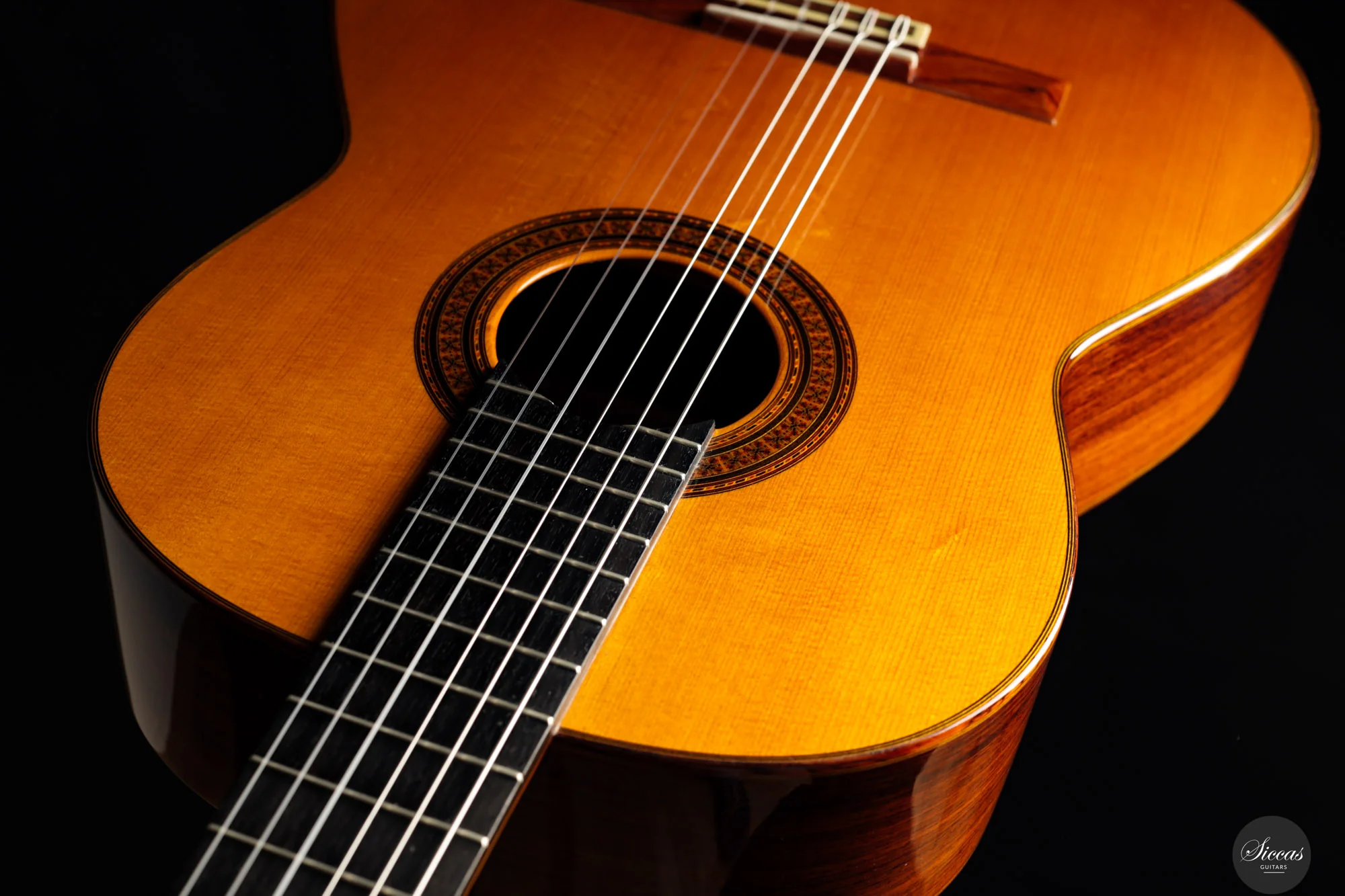
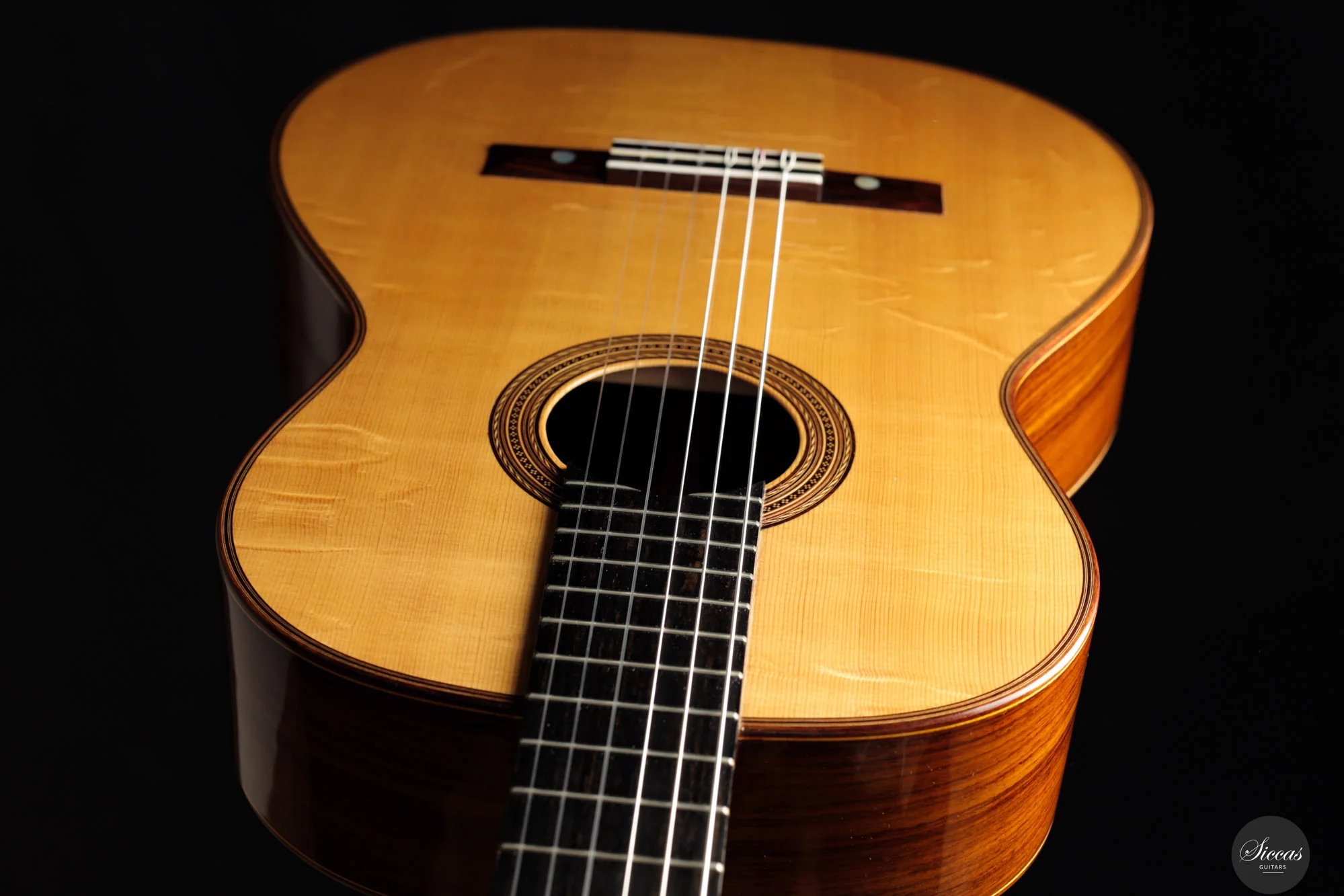
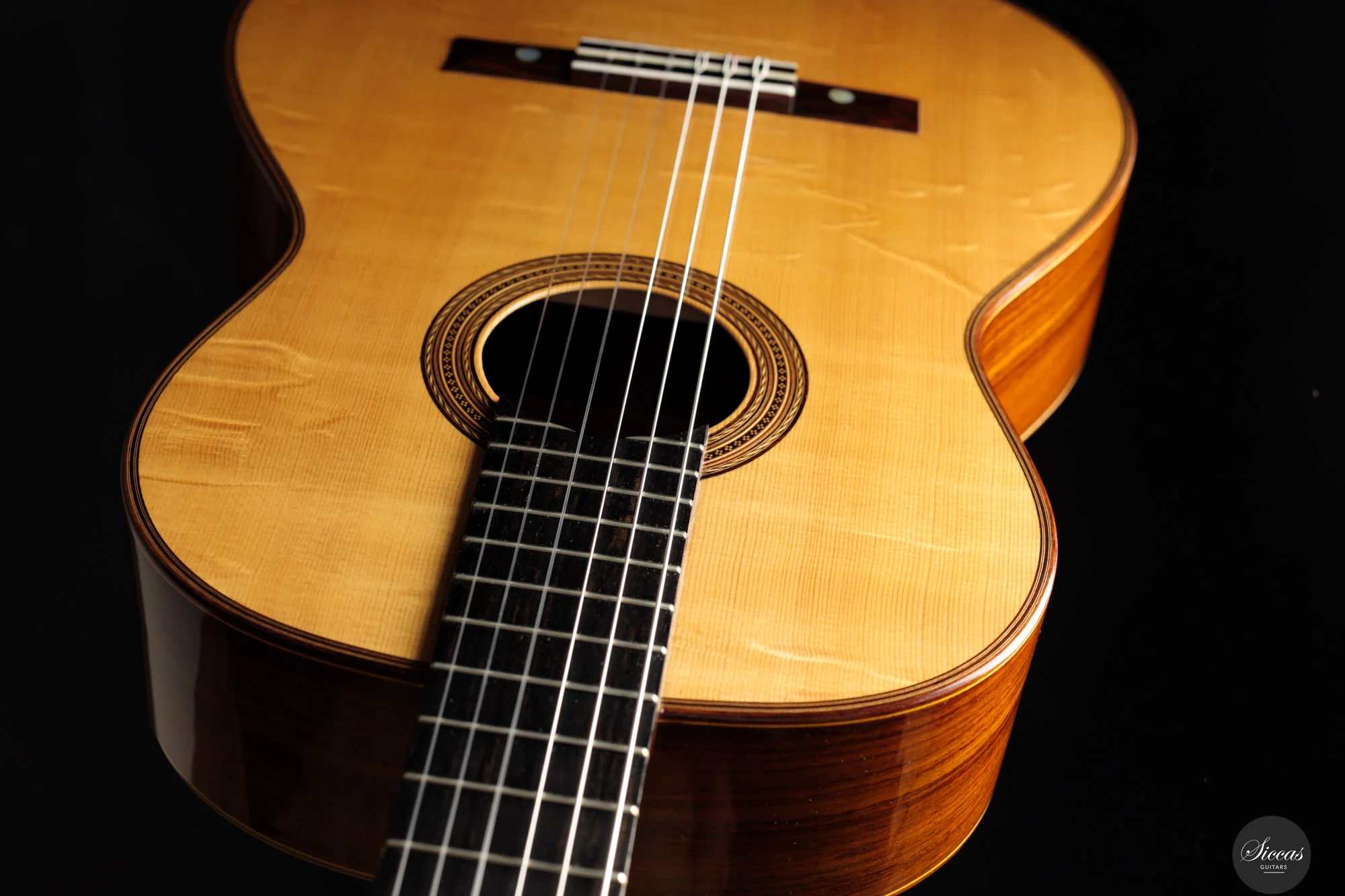
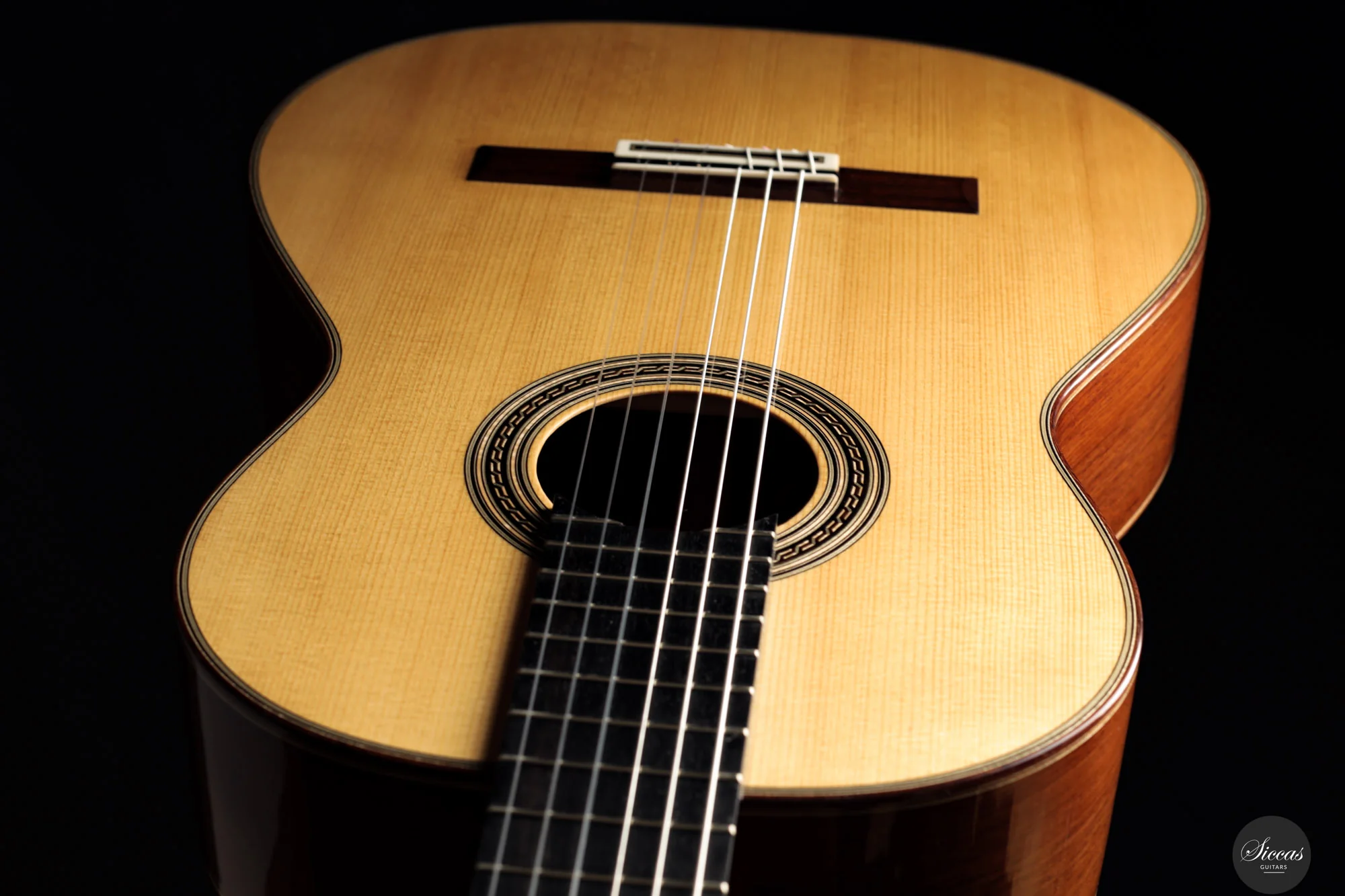
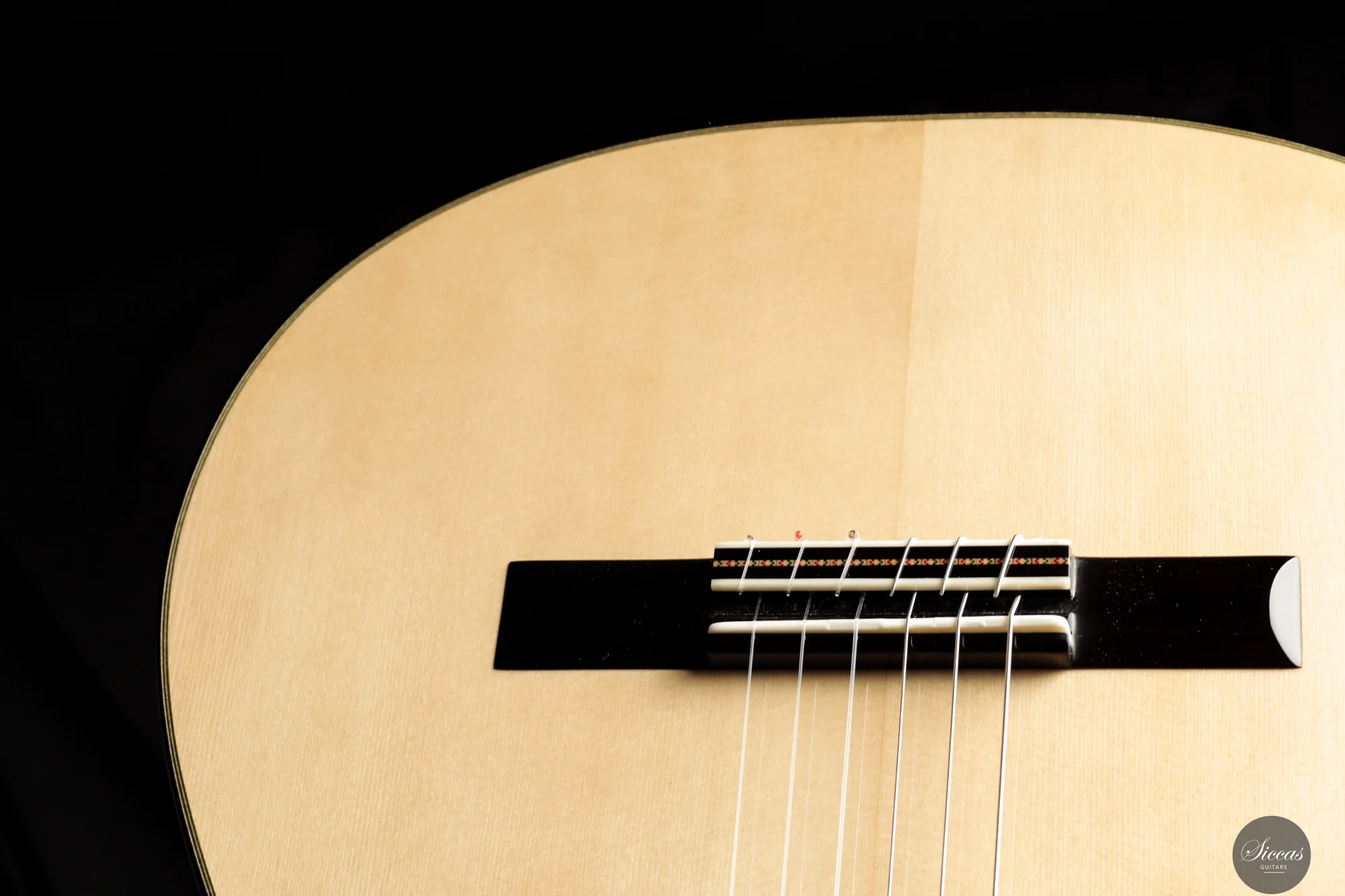
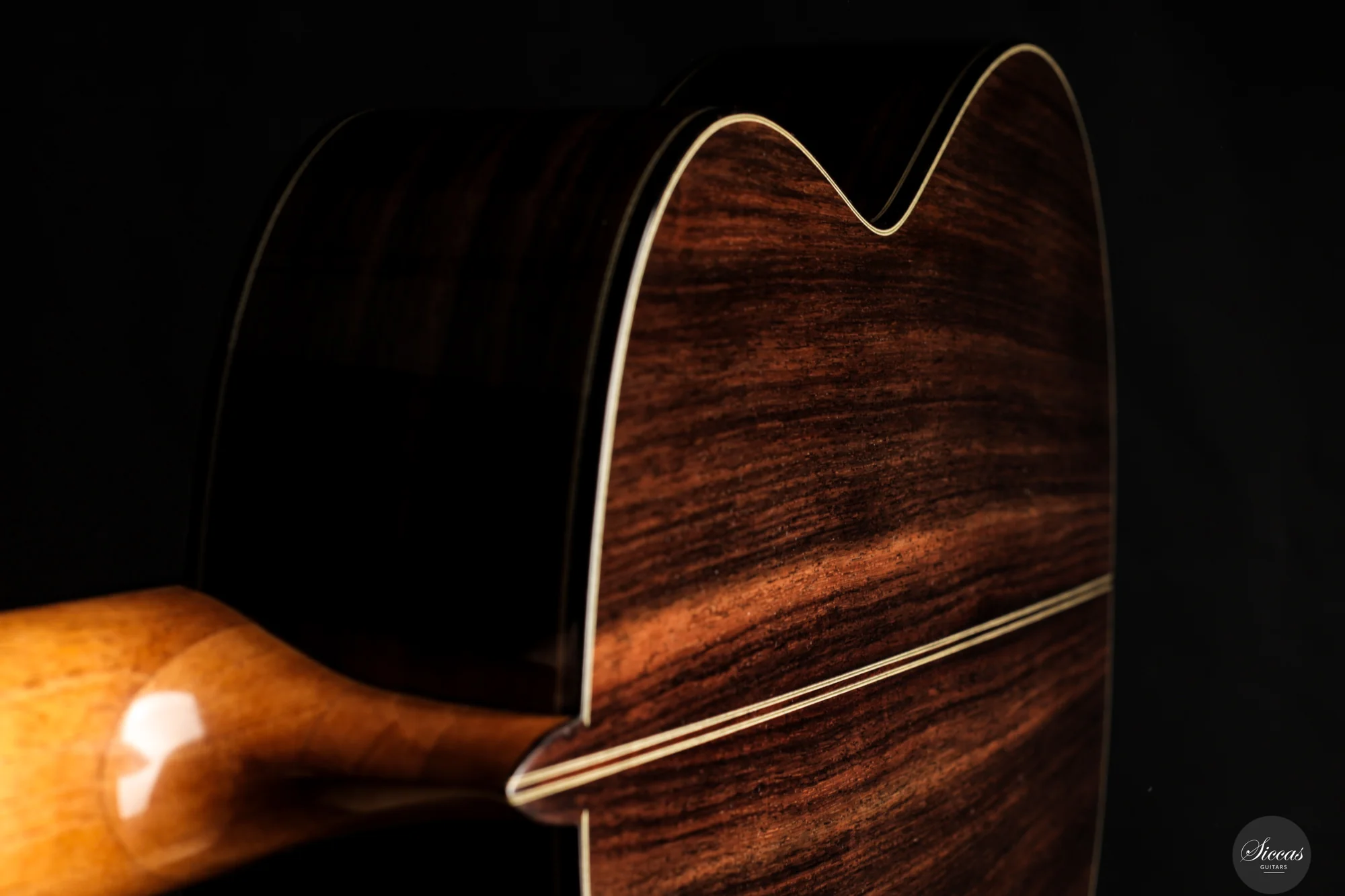
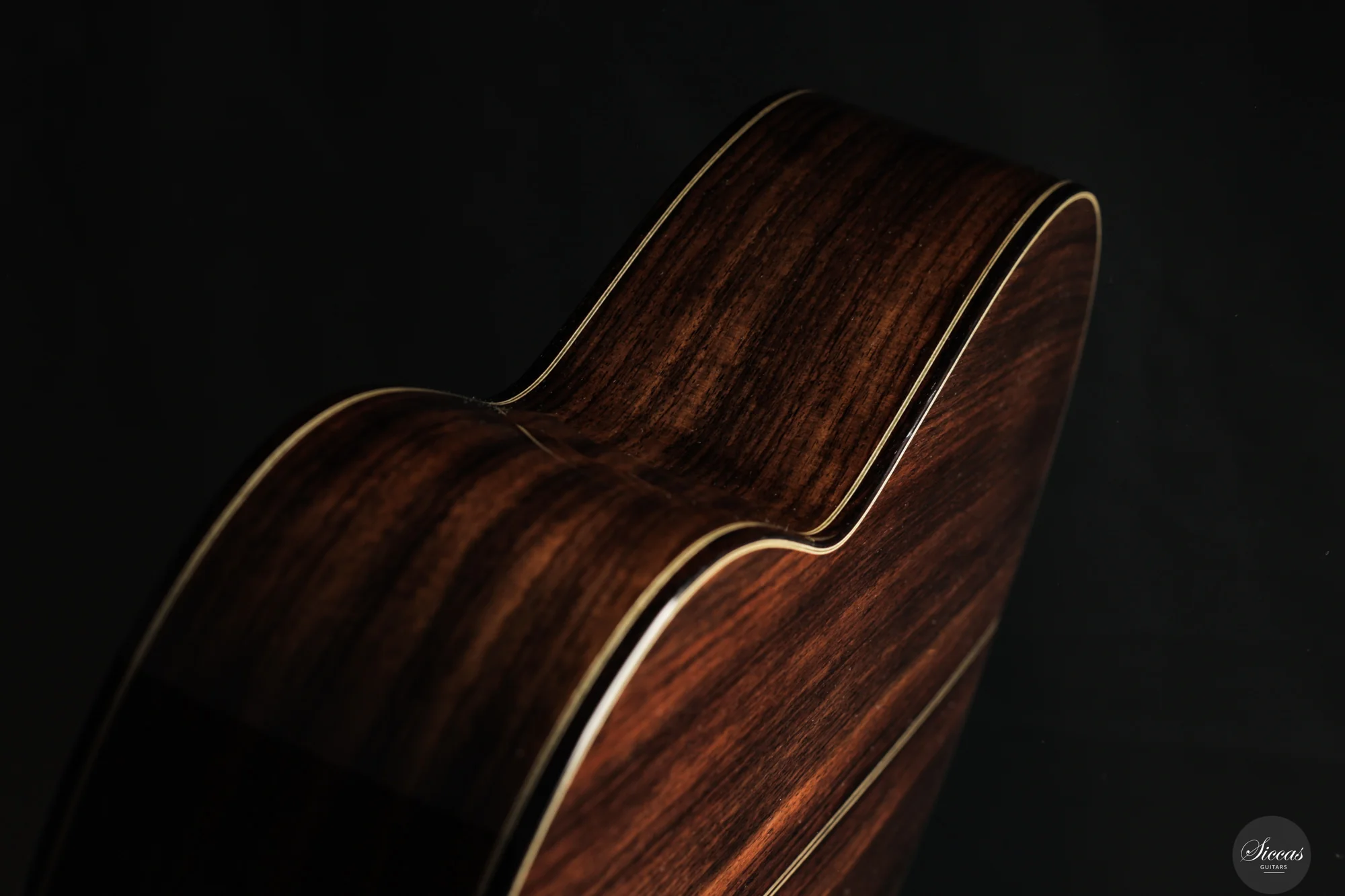
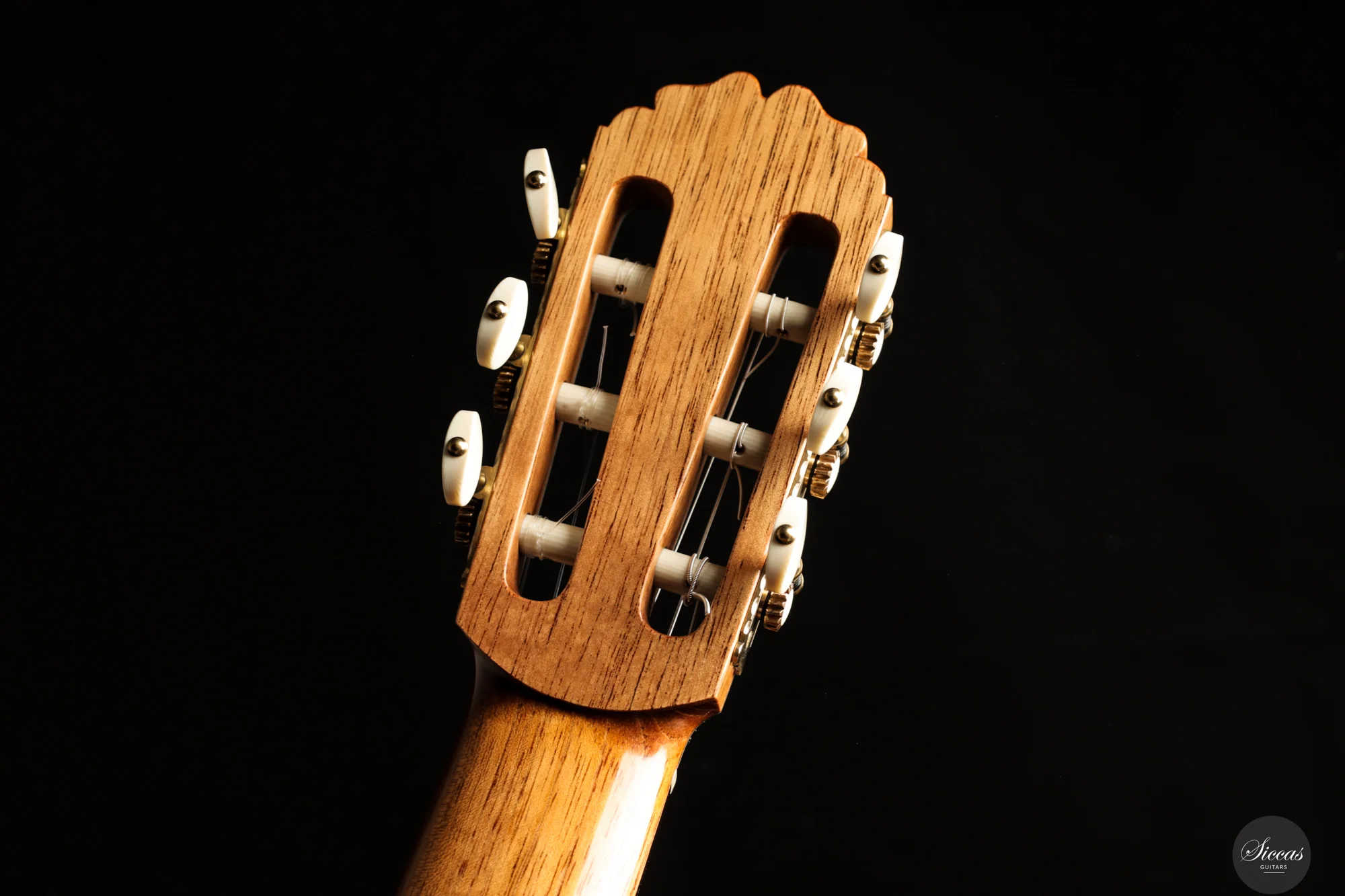
The 2025 Apollinea model is conceived as a pursuit of harmonious and rational aesthetics, a concept drawn from Greek art. The soundboard is Italian spruce from Val di Fiemme, chosen for its low resin content, lightness and transverse flexibility combined with longitudinal strength. The top is built with two transverse bars, one above and one below the soundhole, seven fan braces, and an additional transverse bar at bridge level. Heights, thicknesses and spacing are intentionally asymmetrical to allow the strings to express their full character. The rosette is inspired by the work of Santos Hernández. The back and sides are Indian rosewood and the cedar neck contains a concealed hardwood reinforcement. The ebony fingerboard and headplate give a sober solidity. The bridge is light and crafted from rosewood with coloured wood inlays and bone. Rubner El Sonido tuners complete the instrument. The finish is French polish.
The sound has an intimate and inviting quality. The tone is bright and smiling yet never sharp and the basses are remarkably deep for an instrument of this weight. A gentle veil of overtones surrounds the main voice and gives each note a luminous shape. The air body resonance lies around F and can be felt as a subtle undercurrent that breathes warmly beneath the fundamentals. The response is immediate and expressive even at soft dynamics and the guitar opens naturally when played with strength without losing its clarity. One of the most striking qualities is the comfort of the instrument. The left hand glides freely across the fingerboard and complex passages feel unusually accessible. The overall impression is of a finely balanced guitar that combines intimacy with depth and presents a vivid and poetic tonal landscape.
Original: $6,907.28
-70%$6,907.28
$2,072.18Product Information
Product Information
Shipping & Returns
Shipping & Returns
Description
About the luthier
Matías Ezequiel Rojas and Carmen Sanzol were born in Buenos Aires, Argentina, where they received their first training in guitar making in 2007. After meeting during their studies they completed their apprenticeships and began building instruments professionally together. In the following years they broadened their knowledge with various teachers in both guitar and violin making and attended specialised seminars on traditional varnishes, acoustic behaviour of woods and bracing patterns, and restoration methods for plucked and bowed instruments. From 2016 onward they combined construction and restoration with teaching and later deepened their understanding of historical keyboard instruments, building an Italian polygonal spinet in collaboration with noted specialists.
In 2021 they moved to Cremona where they analysed and restored Italian guitars of the nineteenth and twentieth centuries and wrote documentation based on this work. Since 2023 they have also spent time in the workshop of Suji Kim in Parma, learning the construction methods of the Scrollavezza school of violin making. Recently they won the third prize at the Antonio Marín Montero competition in Granada. They now work in Santa Cecilia, a village in the Apennines of Piacenza, where all their guitars are built entirely by hand using traditional techniques and exclusively organic materials.
About the guitar
The 2025 Apollinea model is conceived as a pursuit of harmonious and rational aesthetics, a concept drawn from Greek art. The soundboard is Italian spruce from Val di Fiemme, chosen for its low resin content, lightness and transverse flexibility combined with longitudinal strength. The top is built with two transverse bars, one above and one below the soundhole, seven fan braces, and an additional transverse bar at bridge level. Heights, thicknesses and spacing are intentionally asymmetrical to allow the strings to express their full character. The rosette is inspired by the work of Santos Hernández. The back and sides are Indian rosewood and the cedar neck contains a concealed hardwood reinforcement. The ebony fingerboard and headplate give a sober solidity. The bridge is light and crafted from rosewood with coloured wood inlays and bone. Rubner El Sonido tuners complete the instrument. The finish is French polish.
The sound has an intimate and inviting quality. The tone is bright and smiling yet never sharp and the basses are remarkably deep for an instrument of this weight. A gentle veil of overtones surrounds the main voice and gives each note a luminous shape. The air body resonance lies around F and can be felt as a subtle undercurrent that breathes warmly beneath the fundamentals. The response is immediate and expressive even at soft dynamics and the guitar opens naturally when played with strength without losing its clarity. One of the most striking qualities is the comfort of the instrument. The left hand glides freely across the fingerboard and complex passages feel unusually accessible. The overall impression is of a finely balanced guitar that combines intimacy with depth and presents a vivid and poetic tonal landscape.