




Raffaele Dantone - 2026
About the luthier
Raffaele Dantone builds his guitars in Canazei, in the Dolomites. His work stands in close relation to the traditions of Torres and Robert Bouchet, but it is not directed toward imitation alone. What matters more is how clarity, carrying power, and tonal beauty can be rebalanced within the framework of a traditional guitar. Careful wood selection, precise workmanship, and continued attention to soundboard design and bracing all play an important role in his instruments.
Dantone’s guitars reflect an approach that takes the traditional voice seriously while continuing to question how it can be made more effective in projection, tonal reach, and expressive flexibility. His research is not aimed at novelty for its own sake, but at building instruments that can develop real power without losing composure or warmth. That gives his work a clear internal direction and helps explain the coherence of his guitars as musical tools.
About the guitar
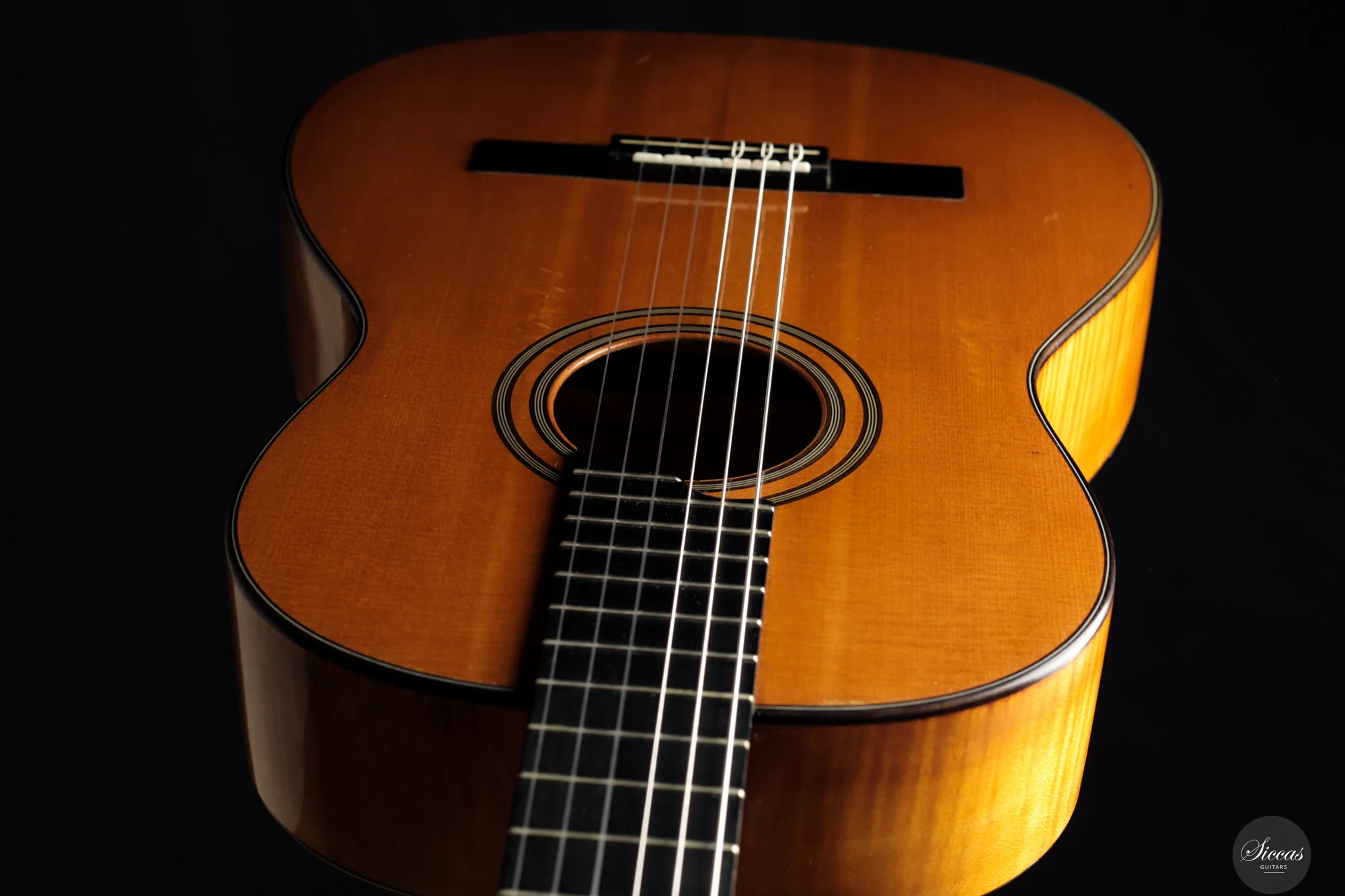
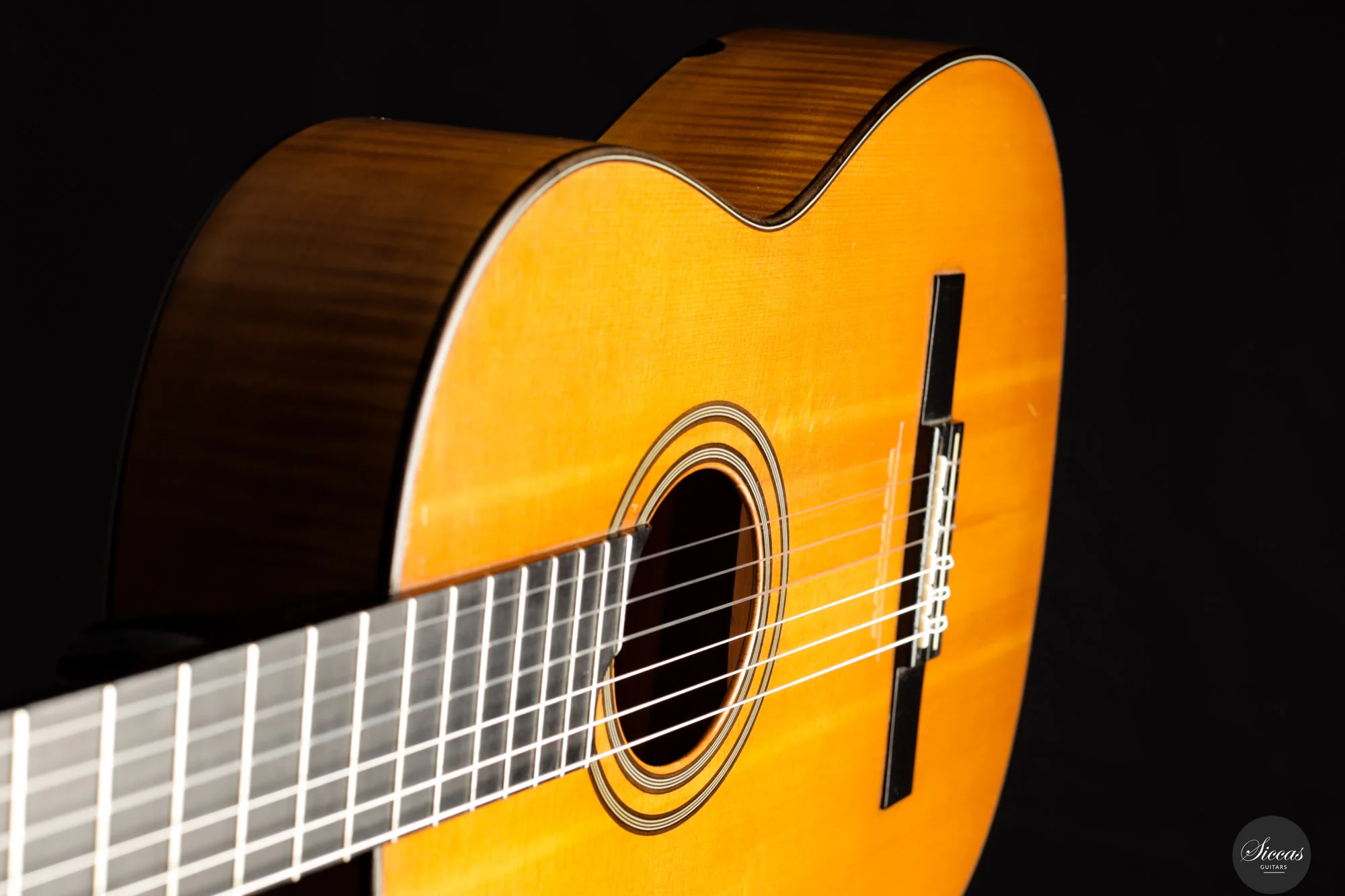
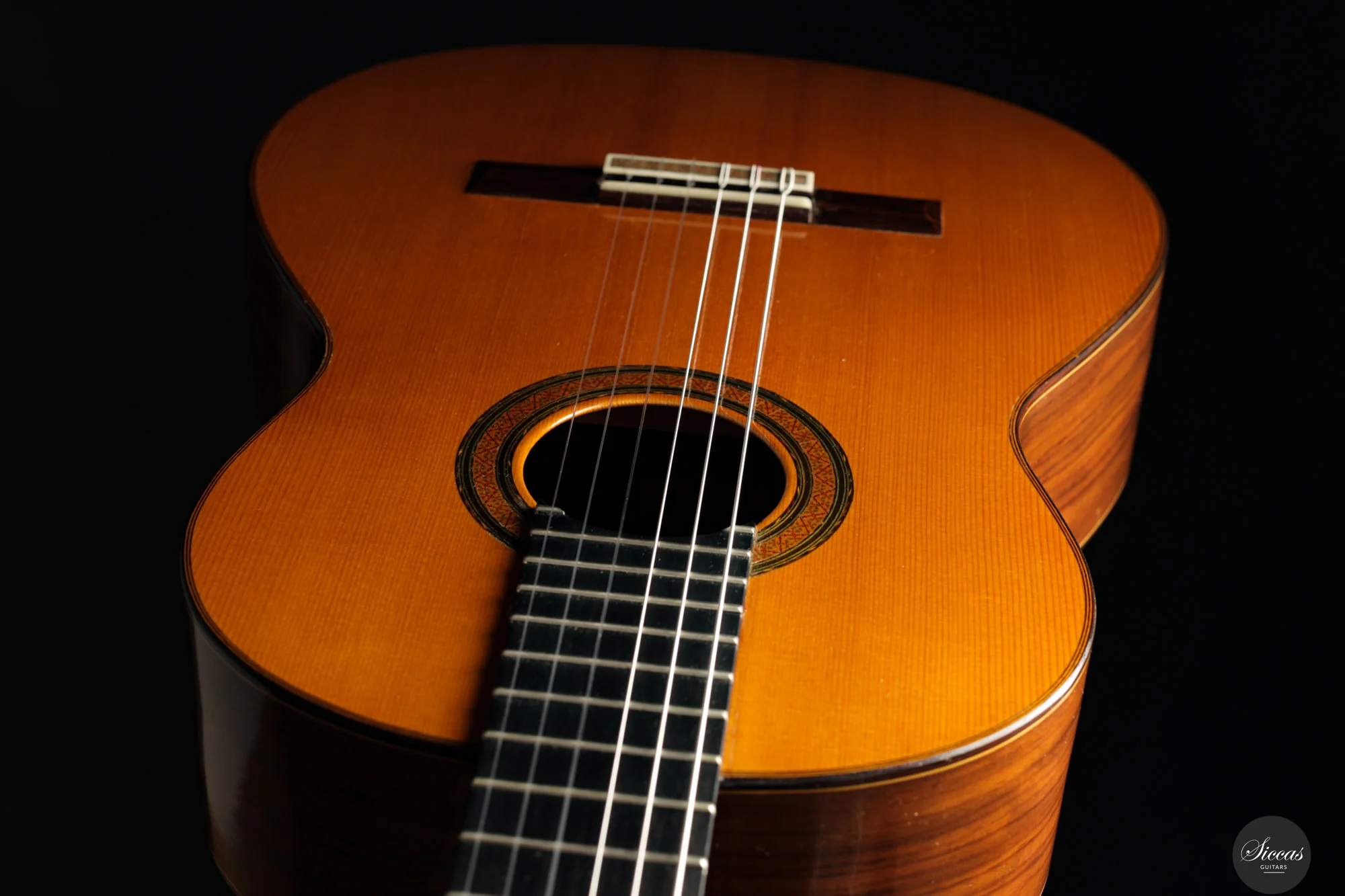
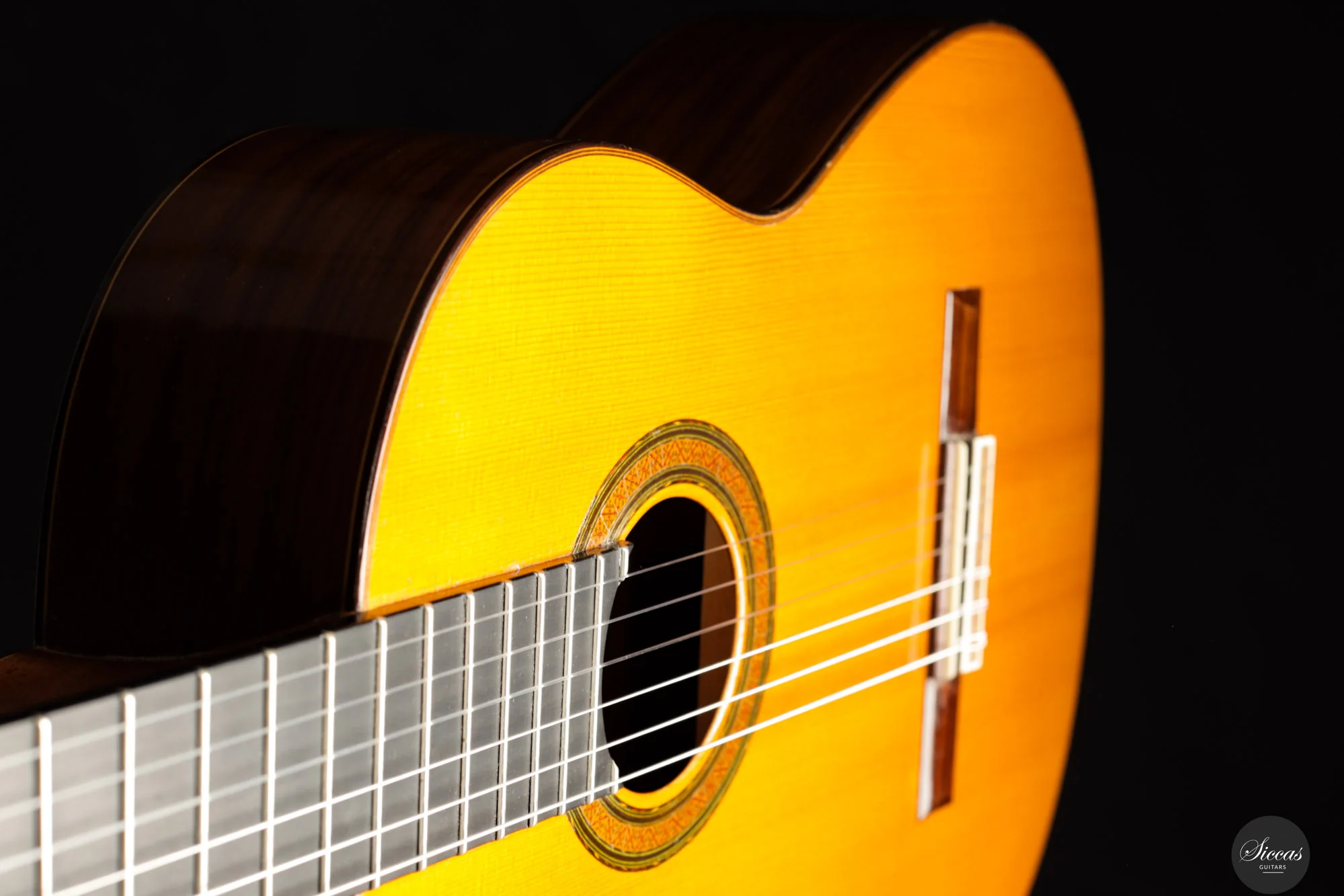
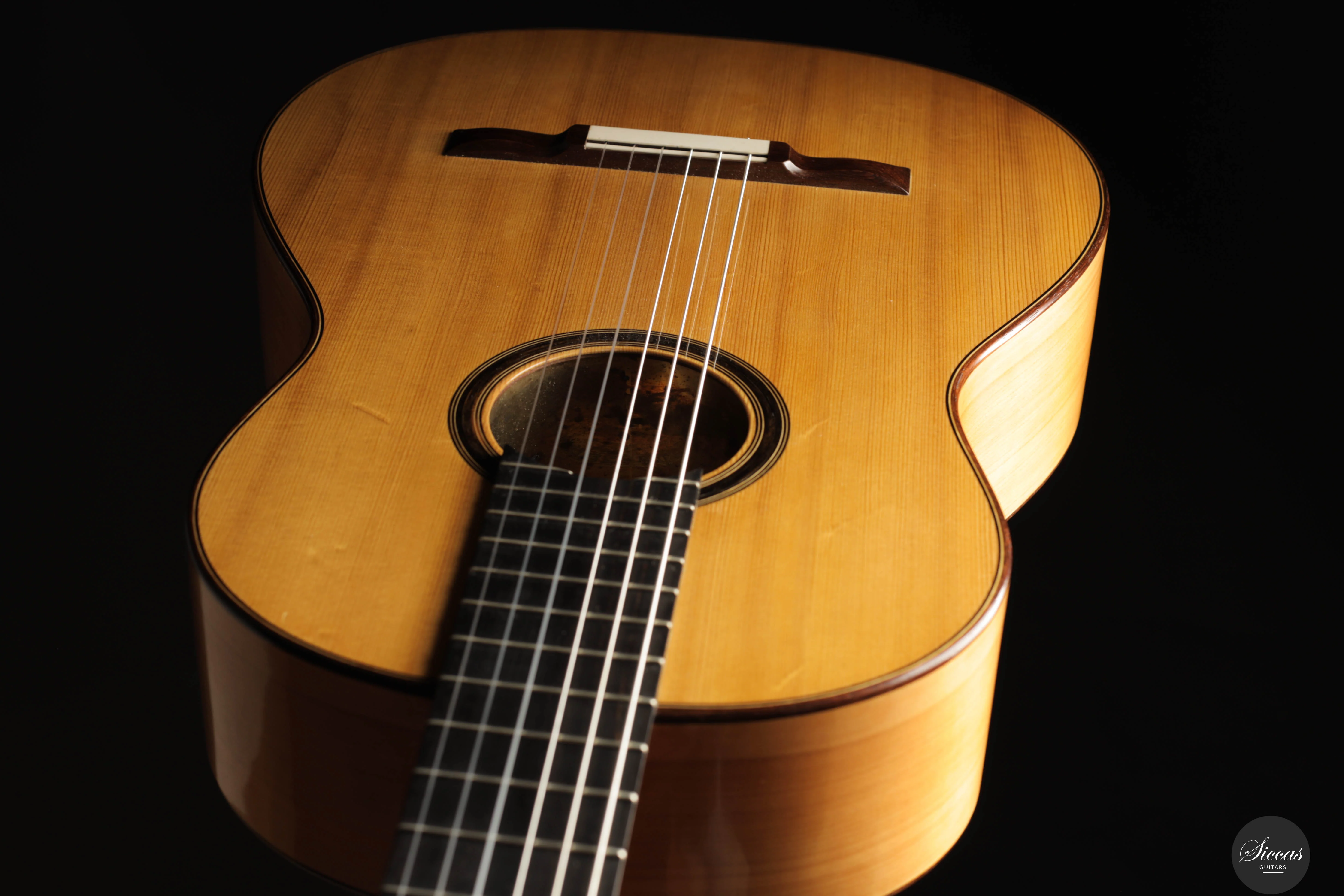
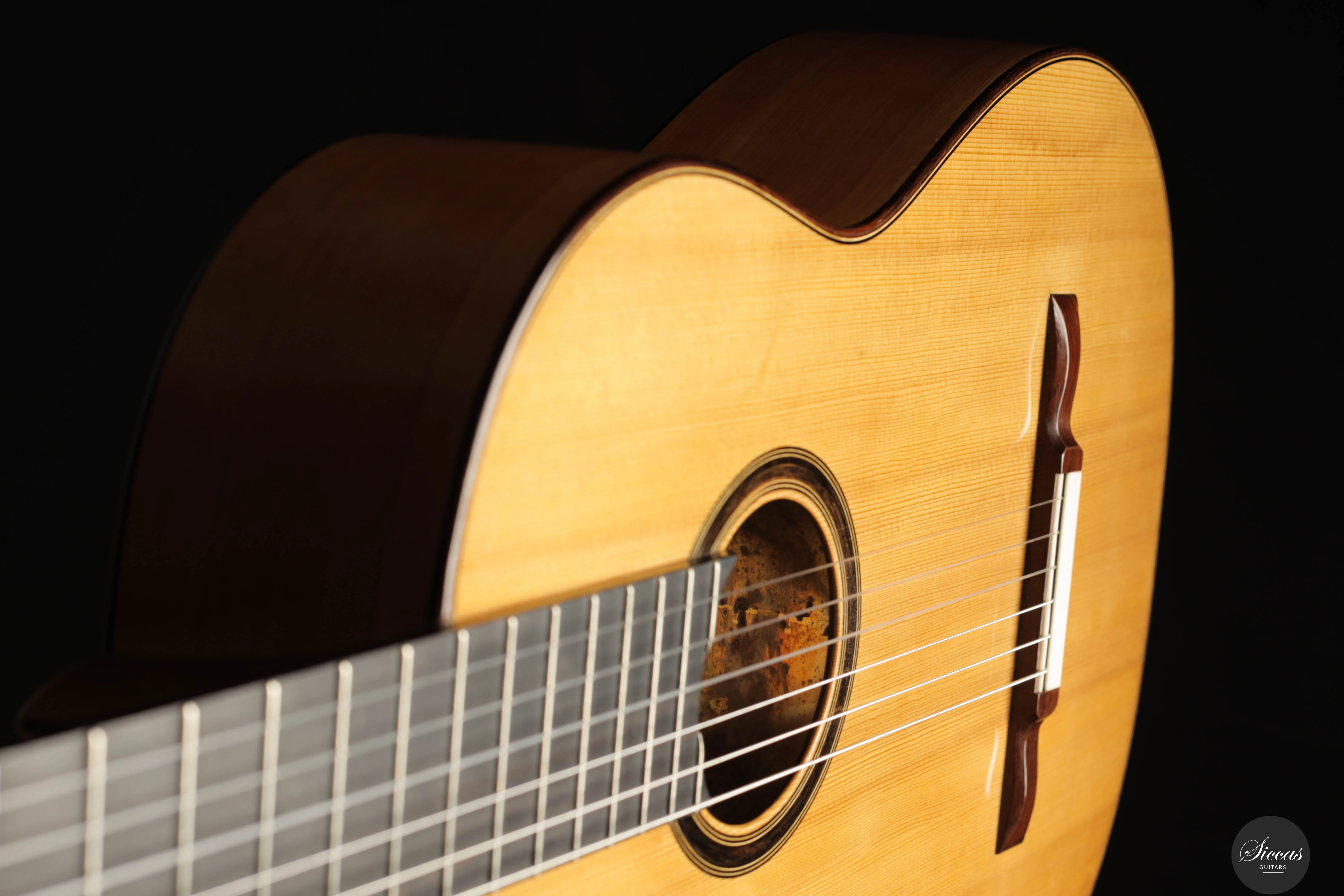
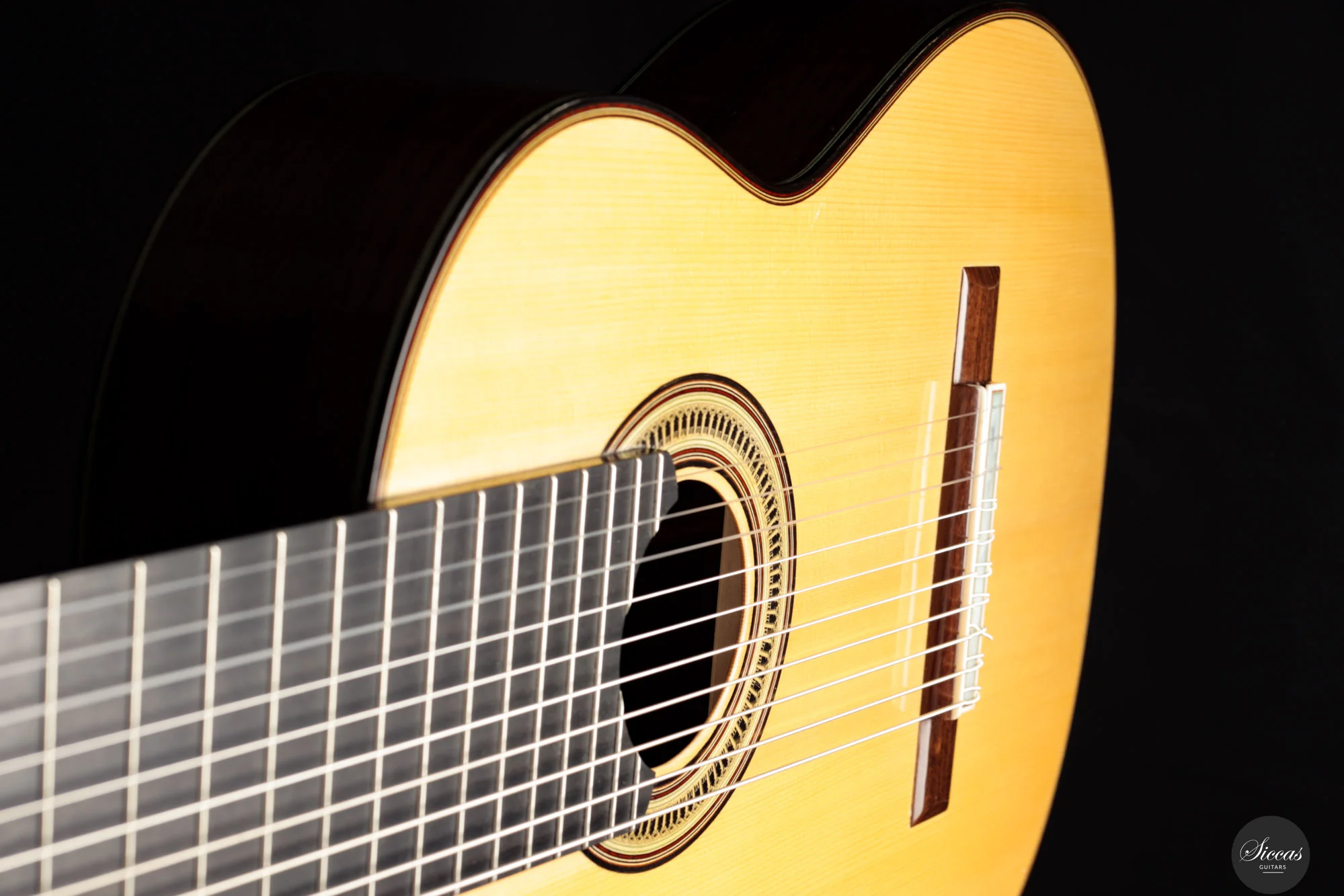
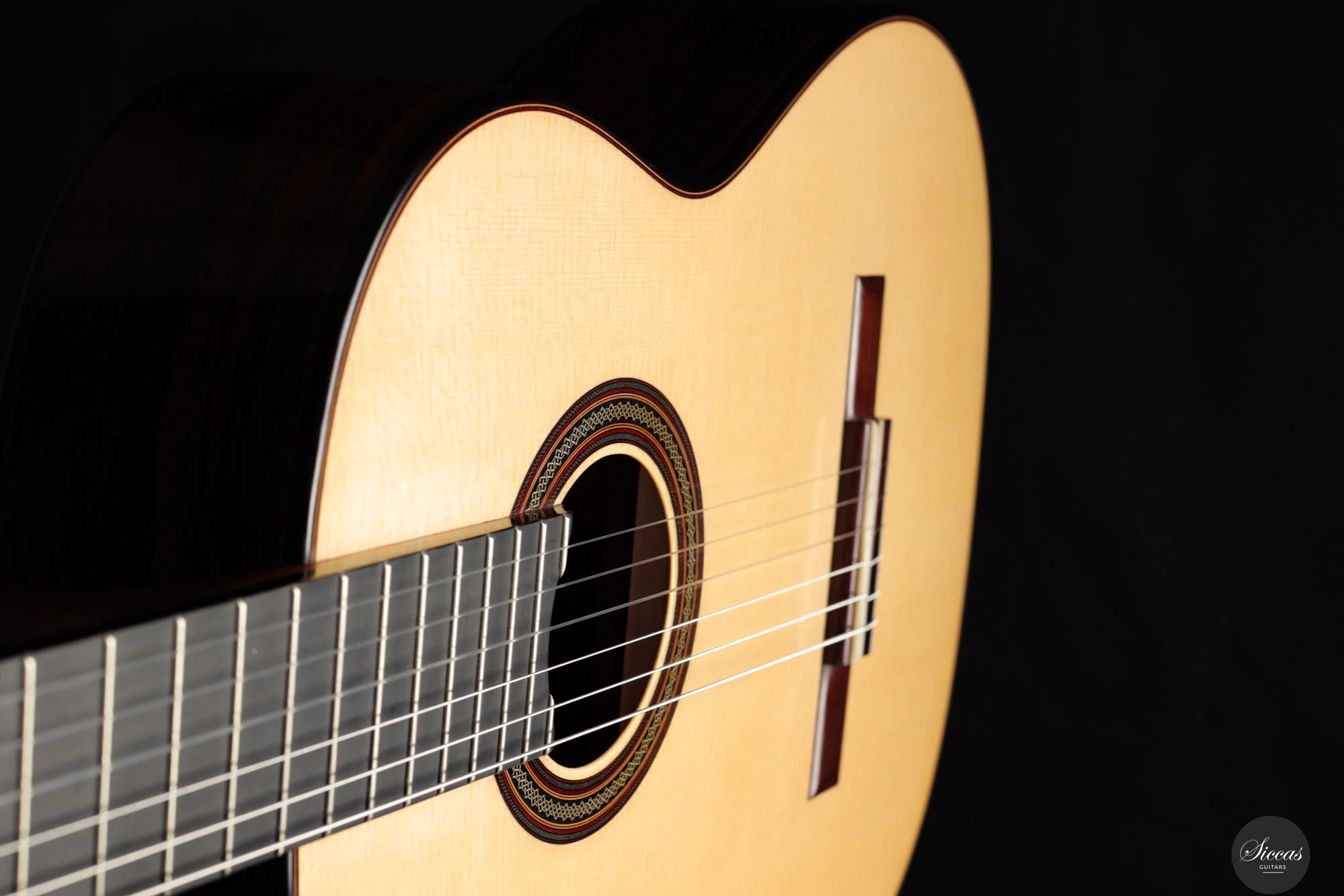
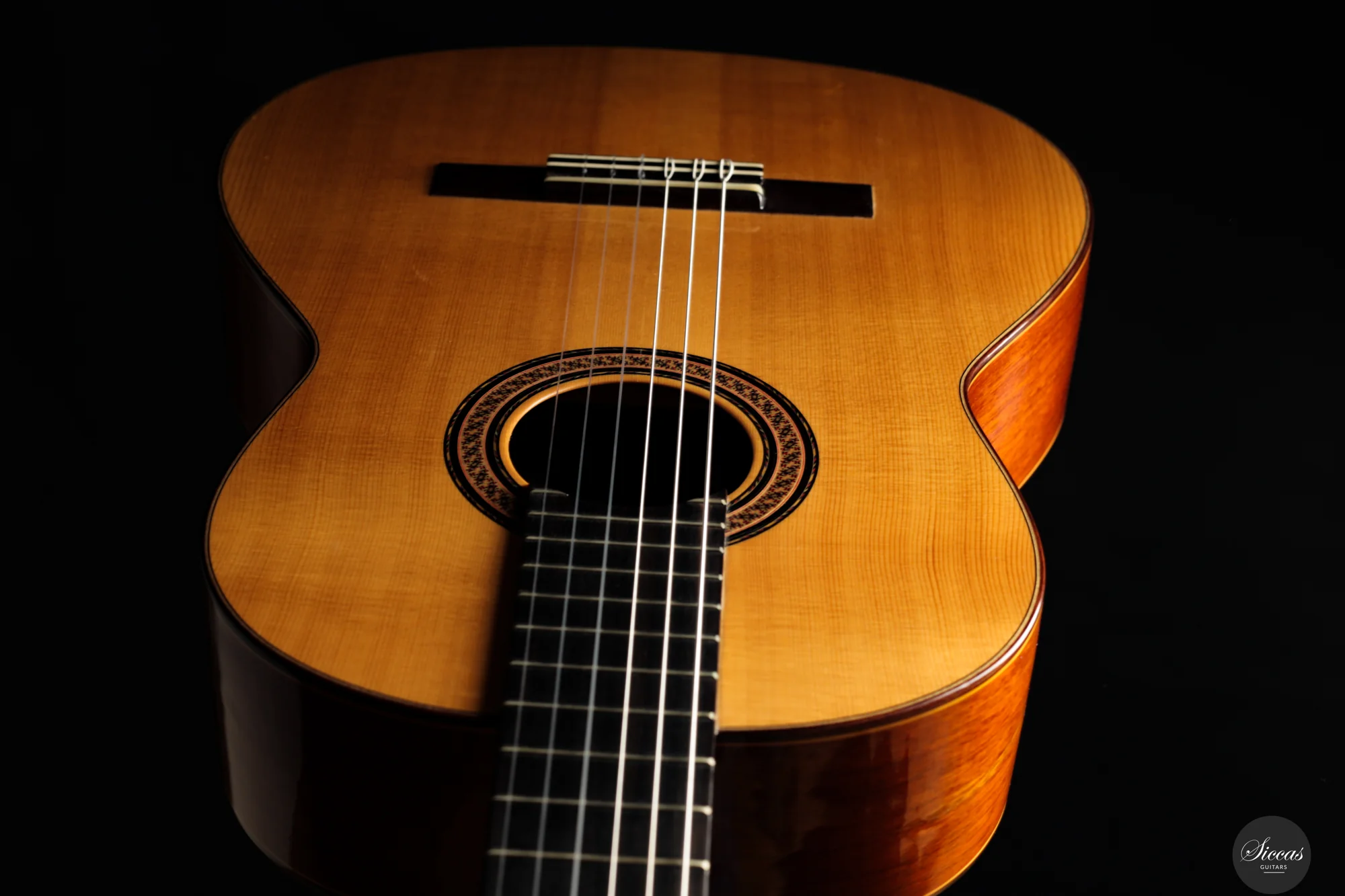
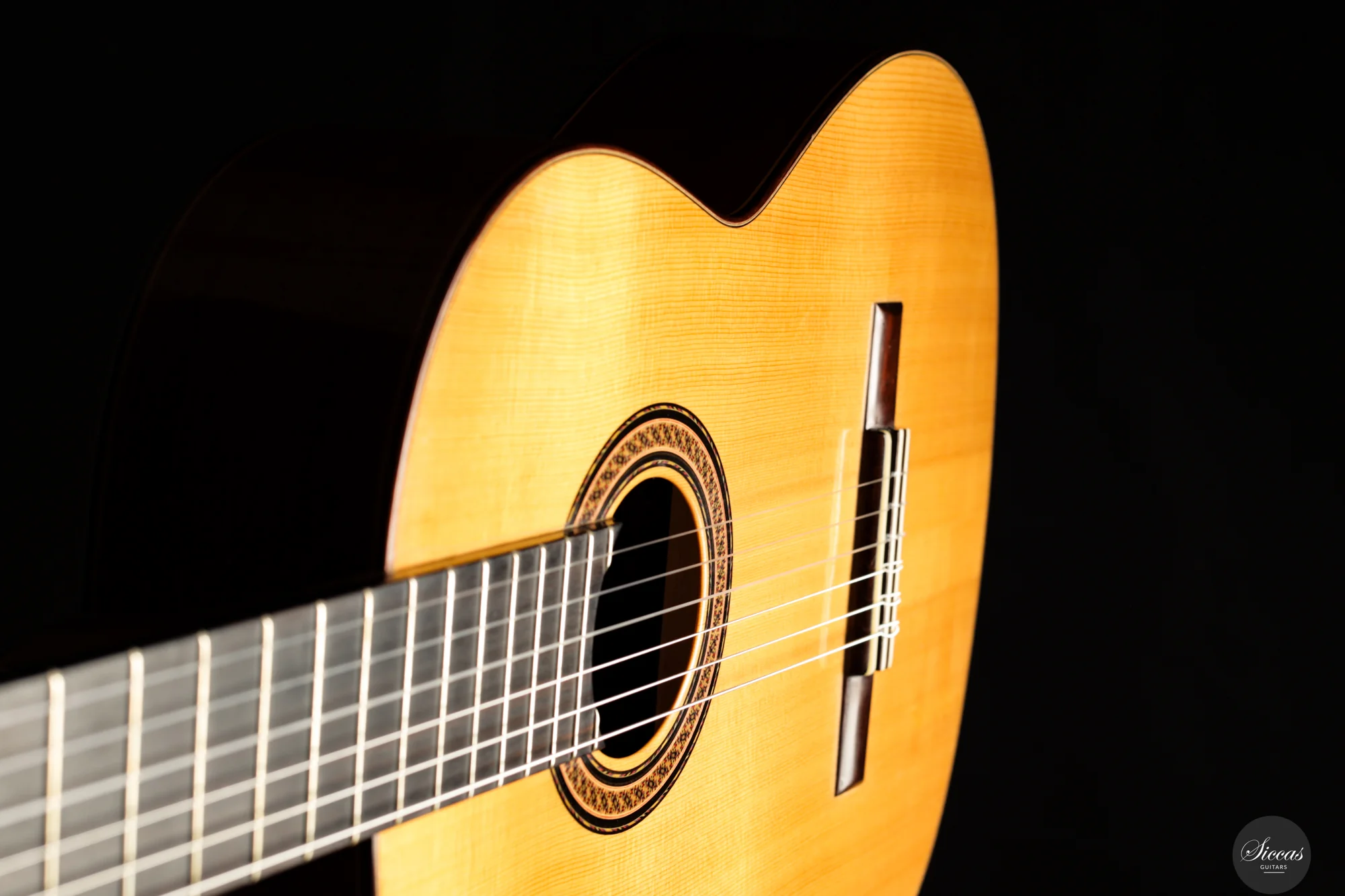
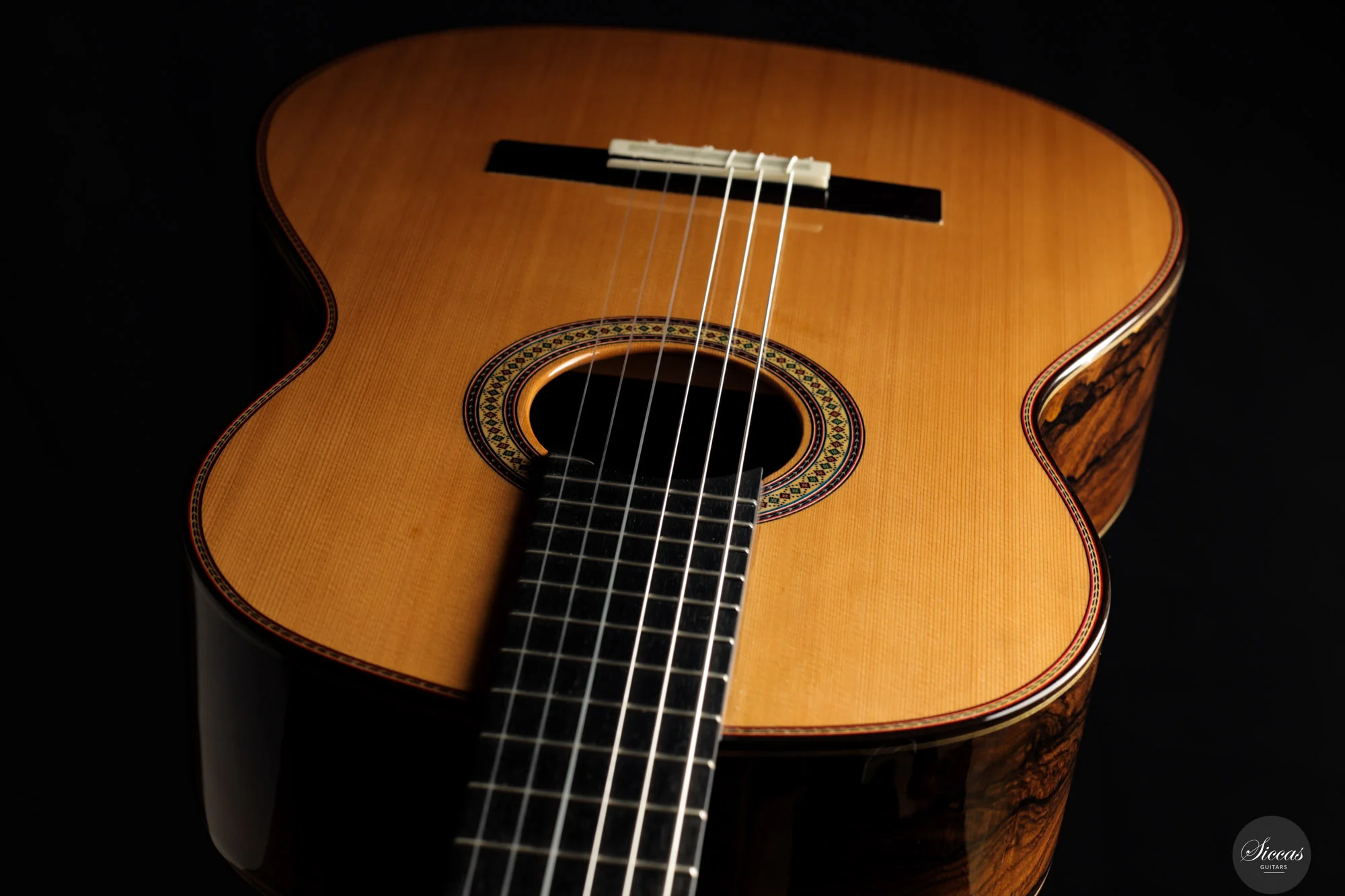
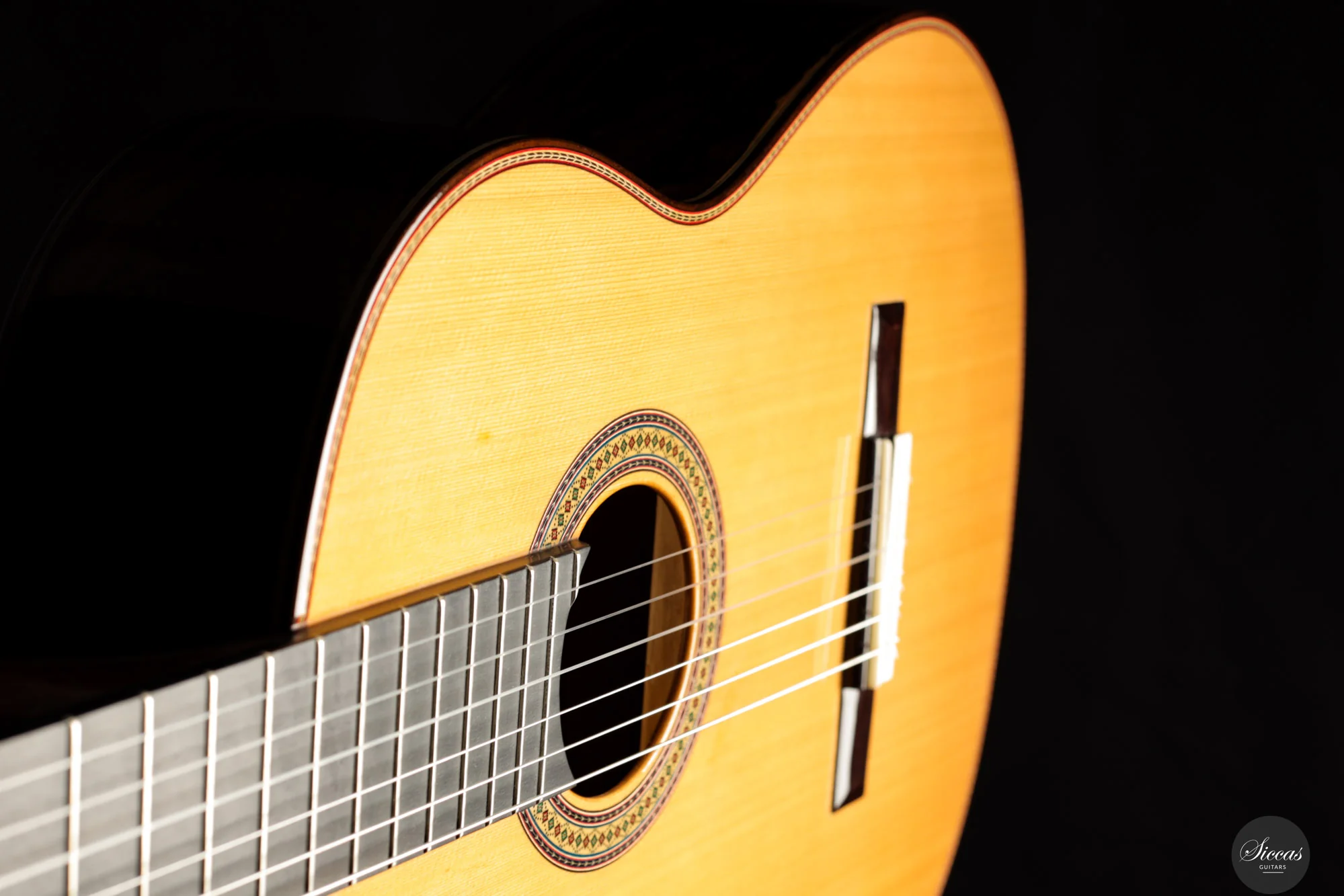
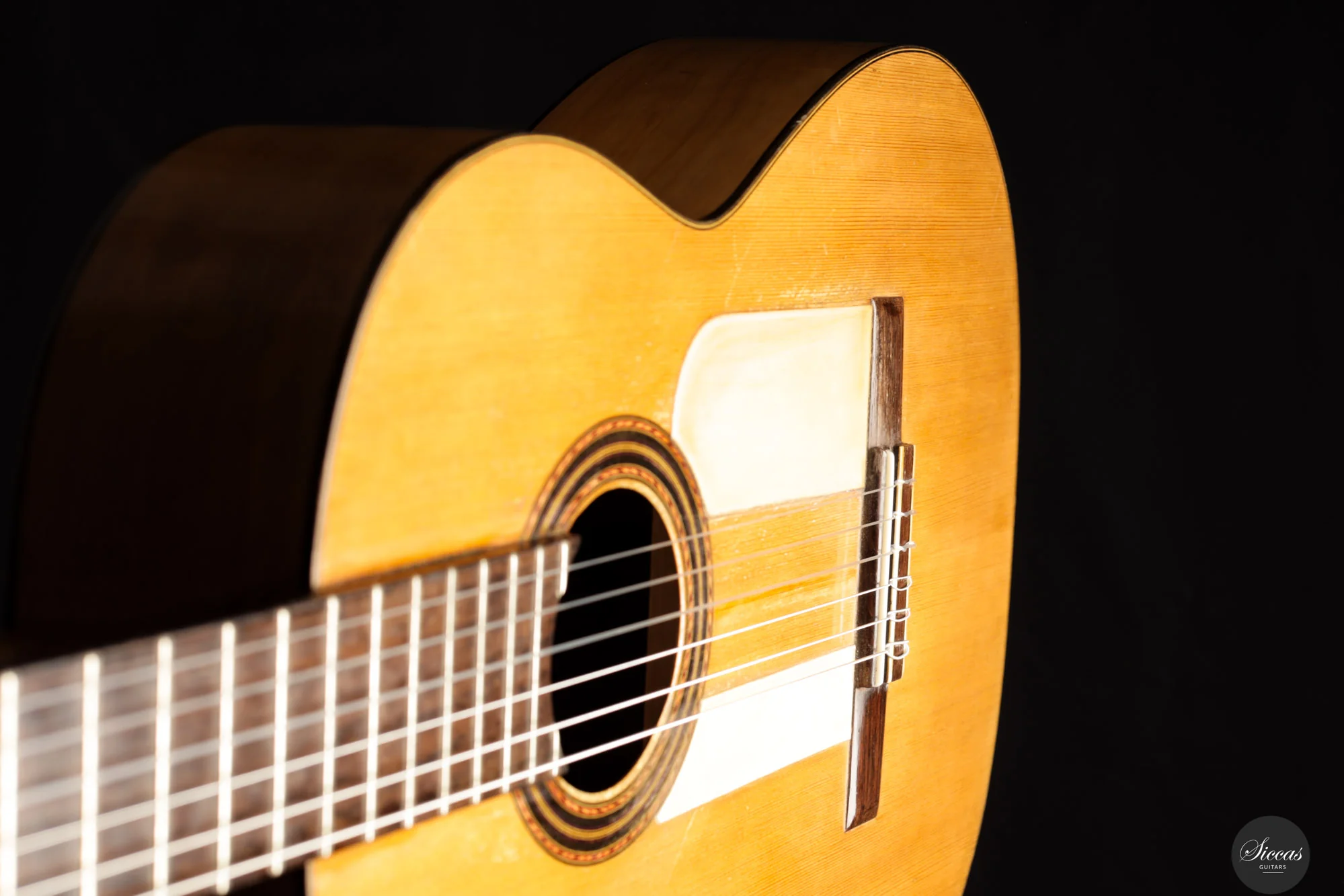
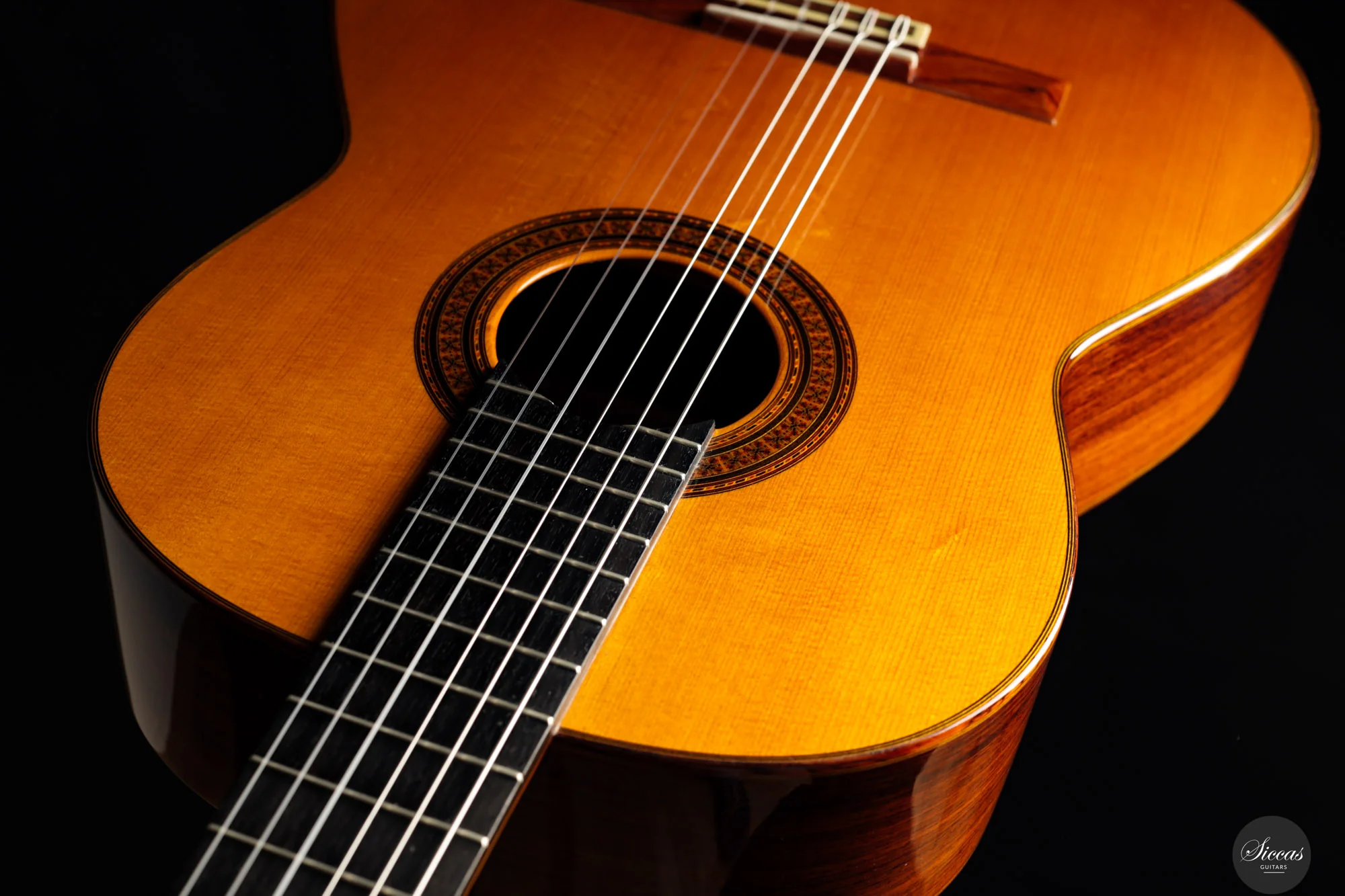
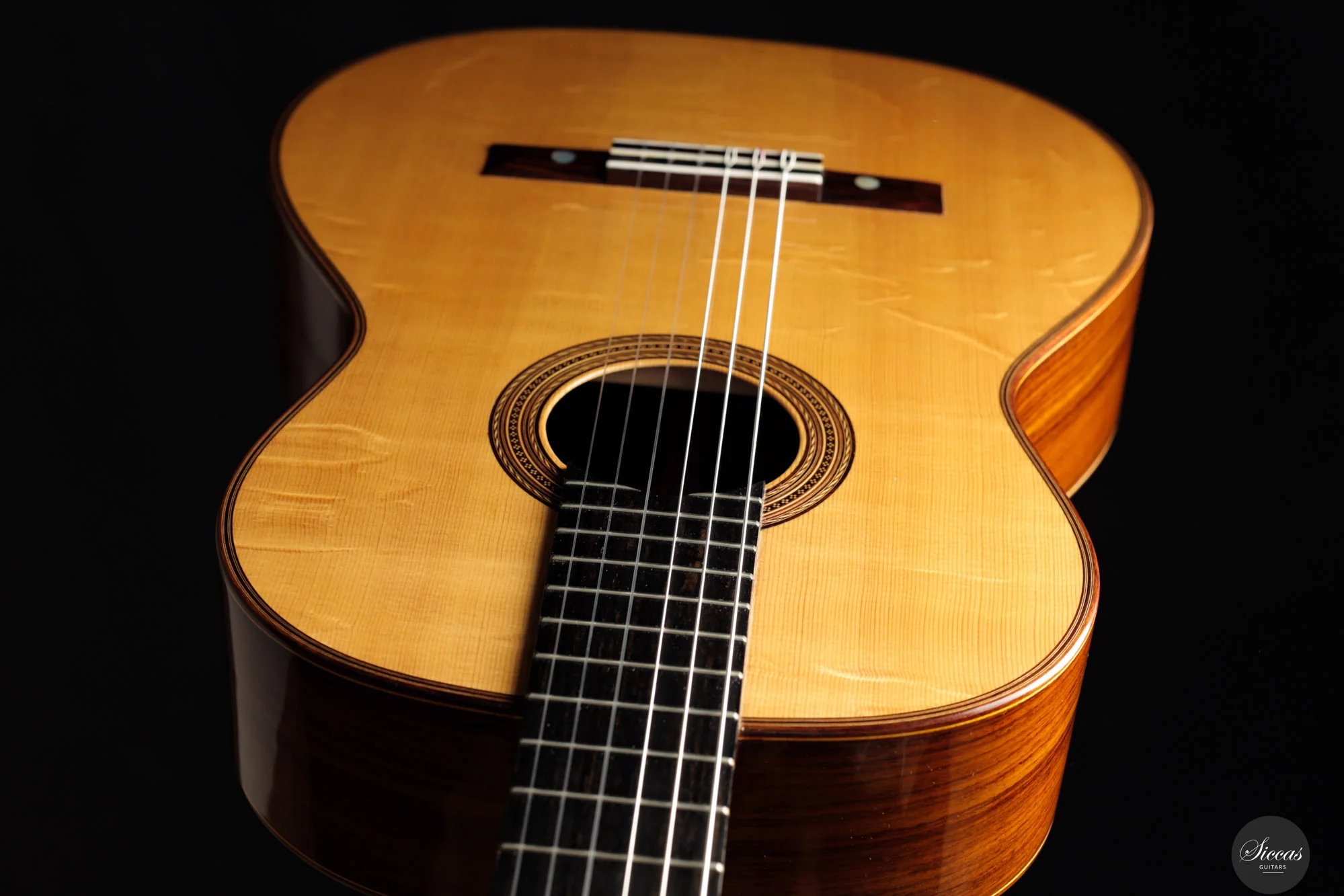
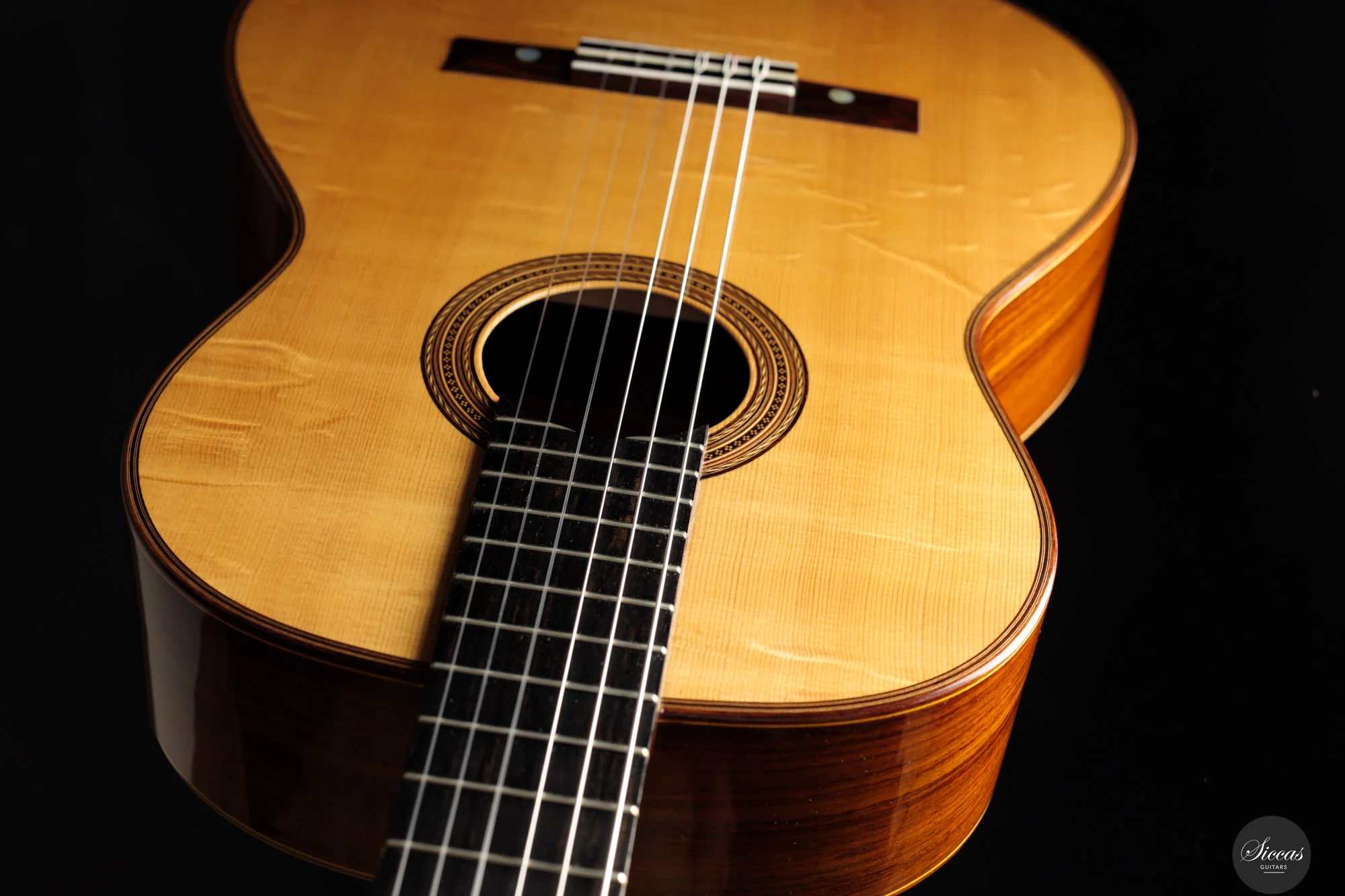
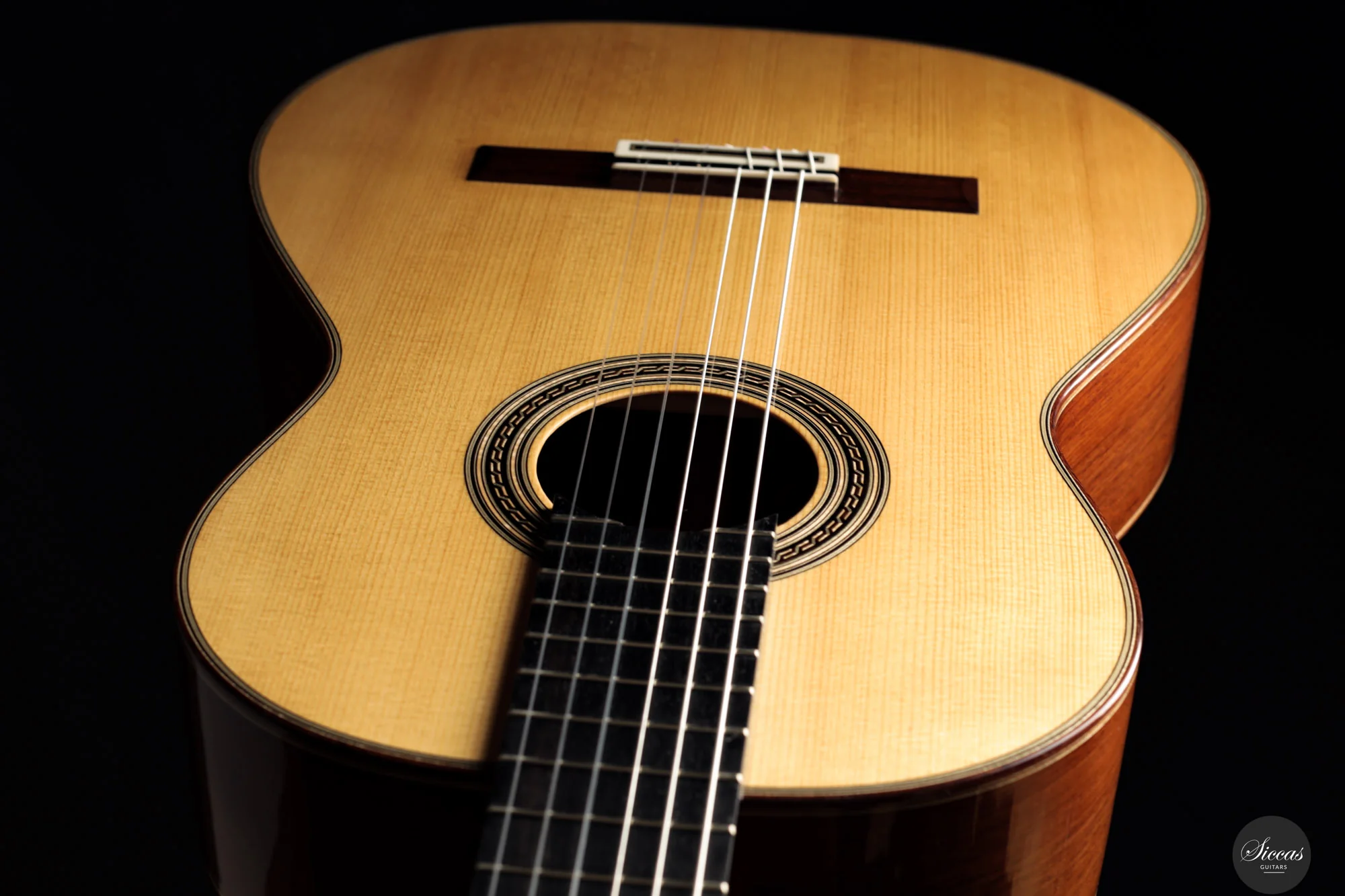
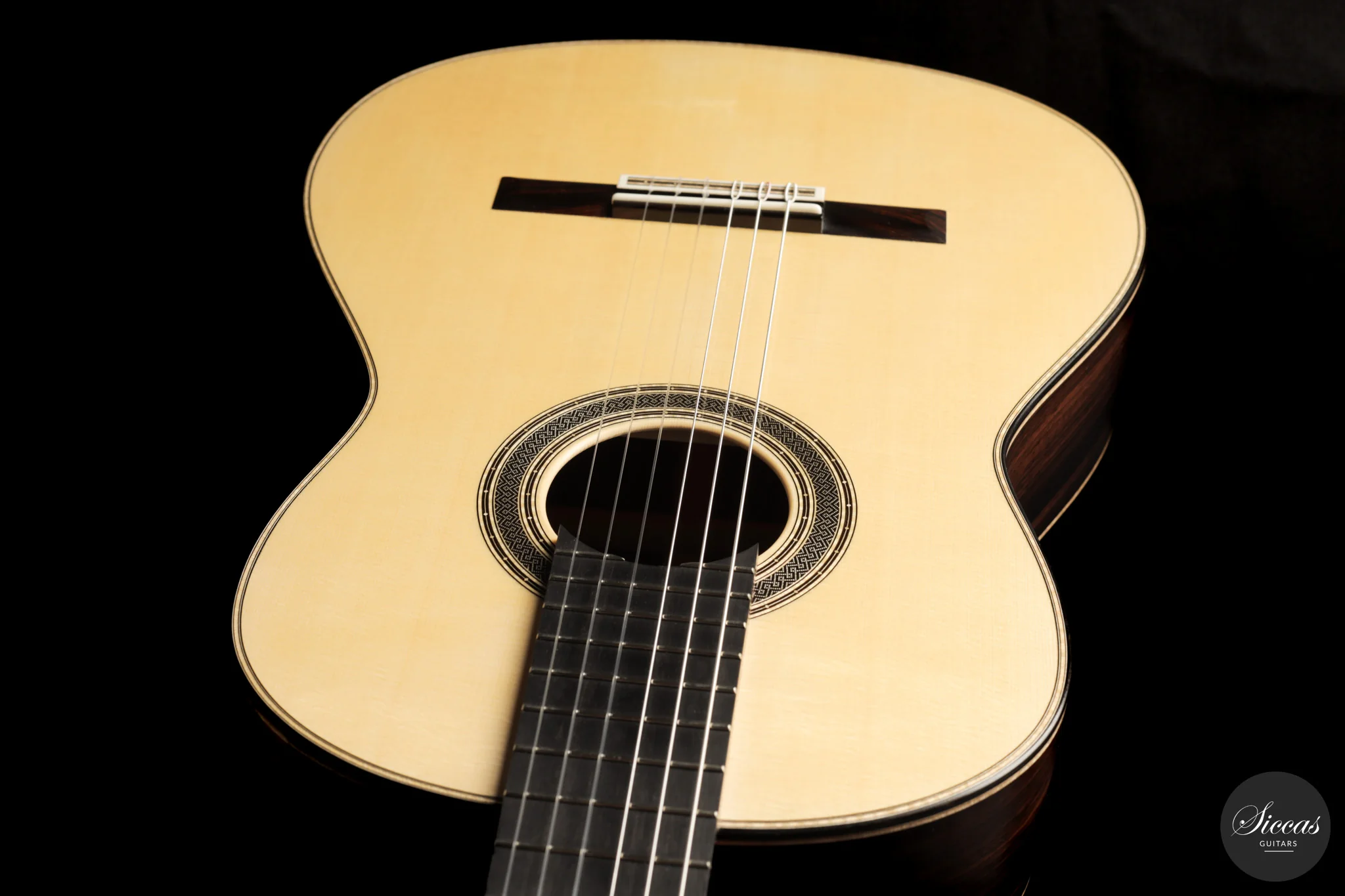
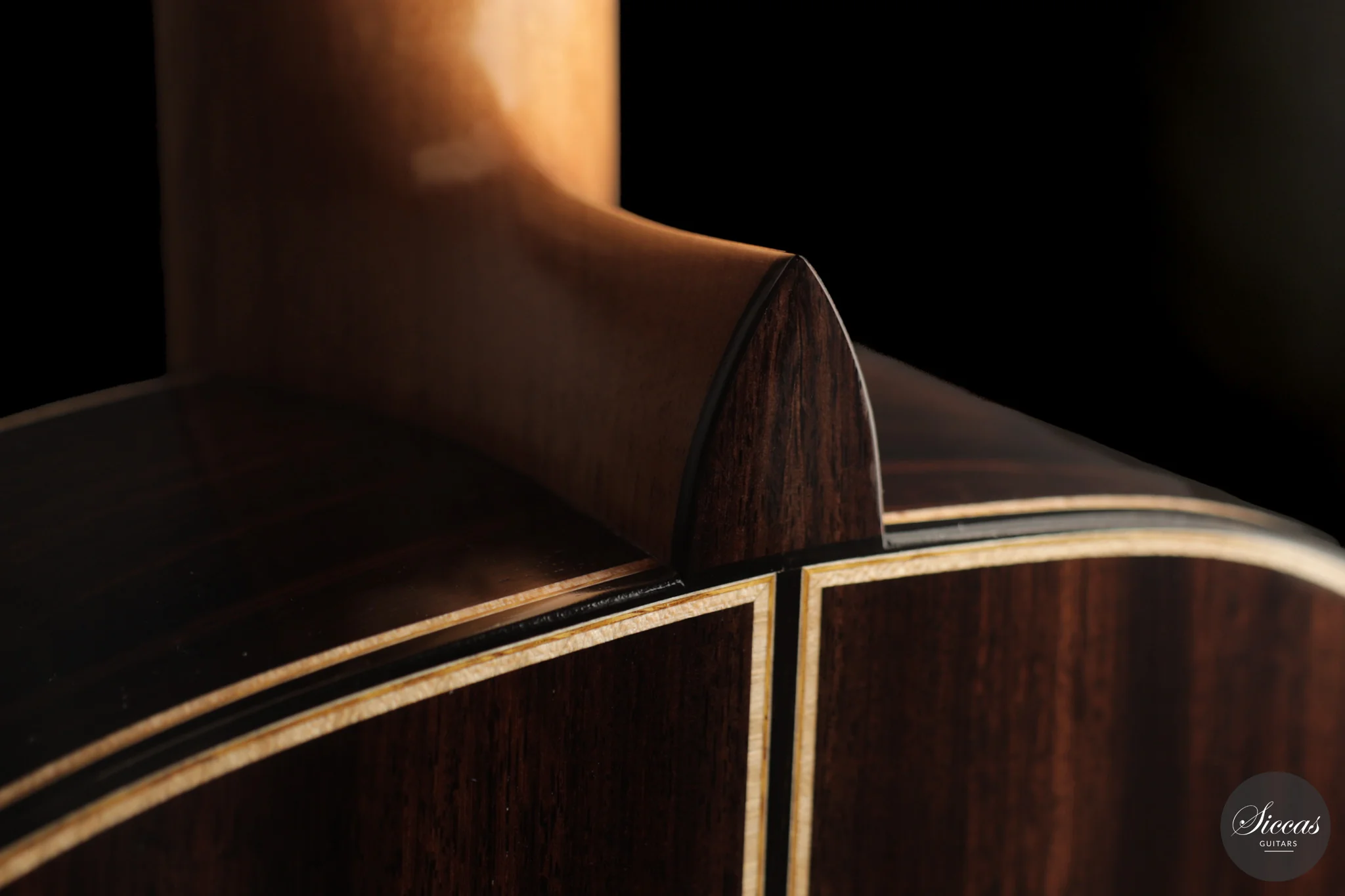
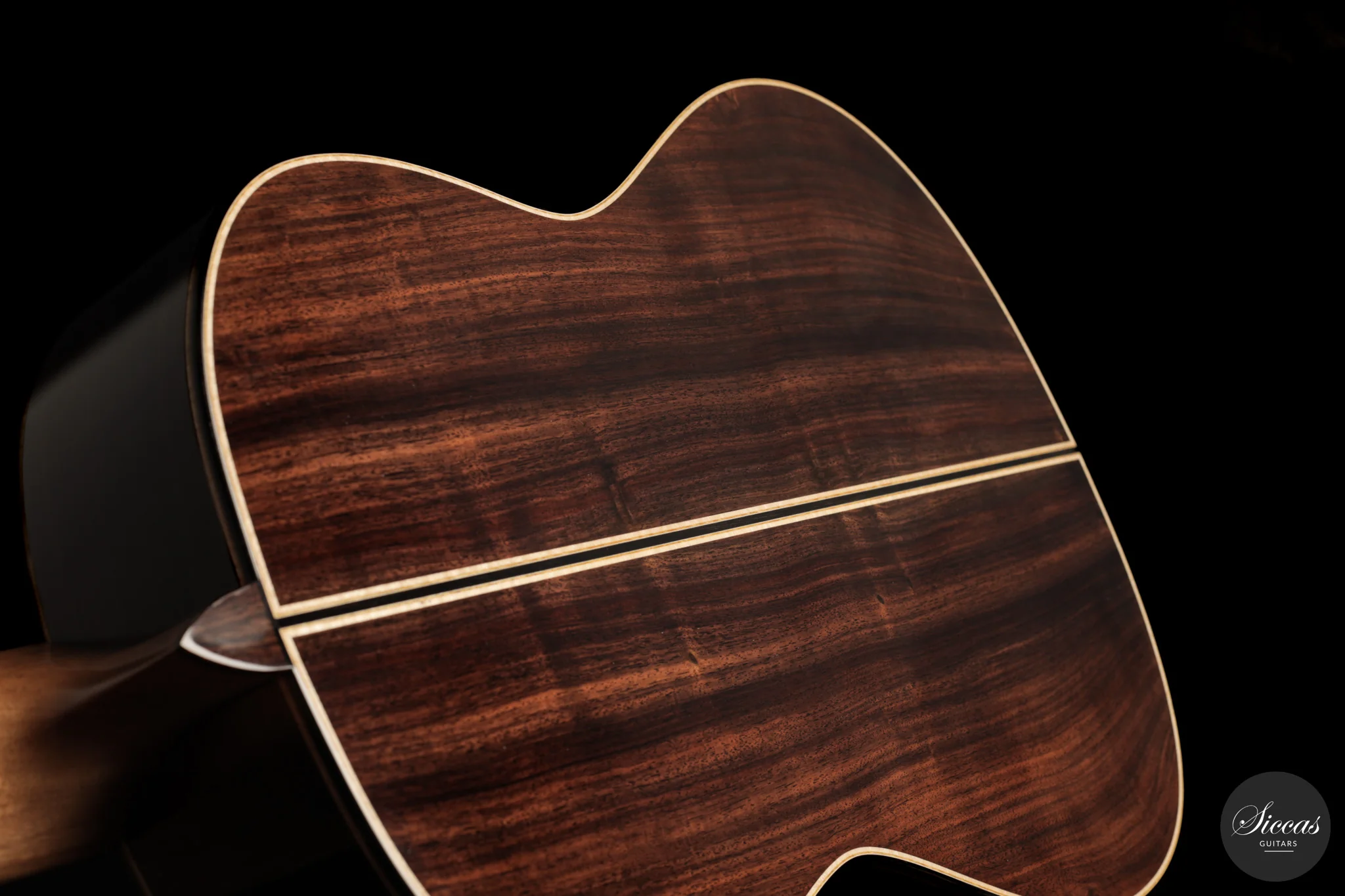
This 2026 guitar in spruce and Indian rosewood shows its quality not only in the initial attack, but in what happens after the note is released. The sound continues with striking ease, and the guitar produces a long, singing sustain that gives the whole instrument a strong sense of line. From the first impression, it feels like a guitar that does not simply speak clearly, but knows how to carry the tone forward.
Just as important is its evenness. The voice remains notably balanced across the register, without any part of the instrument pushing forward unnaturally or drawing too much attention to itself. That internal proportion gives the guitar a certain quiet authority. It does not rely on obvious effect. Instead, it sounds settled, mature, and dependable.
Its behaviour under increased attack is especially convincing. When pushed, the guitar responds with more volume and more intensity, yet it does not become harsh, compressed, or overdriven. That is one of the most valuable aspects of the instrument. It retains a traditional voice, but opens up enough to project with real strength when the player asks for it.
This makes the guitar particularly attractive for players who want more than tonal beauty from a traditionally built concert instrument. It combines long sustain, singing note development, stable balance, and a dynamic range that remains genuinely usable in practice. The result is a guitar that feels cultivated, but never timid.
Original: $6,907.28
-70%$6,907.28
$2,072.18Product Information
Product Information
Shipping & Returns
Shipping & Returns
Description
About the luthier
Raffaele Dantone builds his guitars in Canazei, in the Dolomites. His work stands in close relation to the traditions of Torres and Robert Bouchet, but it is not directed toward imitation alone. What matters more is how clarity, carrying power, and tonal beauty can be rebalanced within the framework of a traditional guitar. Careful wood selection, precise workmanship, and continued attention to soundboard design and bracing all play an important role in his instruments.
Dantone’s guitars reflect an approach that takes the traditional voice seriously while continuing to question how it can be made more effective in projection, tonal reach, and expressive flexibility. His research is not aimed at novelty for its own sake, but at building instruments that can develop real power without losing composure or warmth. That gives his work a clear internal direction and helps explain the coherence of his guitars as musical tools.
About the guitar
This 2026 guitar in spruce and Indian rosewood shows its quality not only in the initial attack, but in what happens after the note is released. The sound continues with striking ease, and the guitar produces a long, singing sustain that gives the whole instrument a strong sense of line. From the first impression, it feels like a guitar that does not simply speak clearly, but knows how to carry the tone forward.
Just as important is its evenness. The voice remains notably balanced across the register, without any part of the instrument pushing forward unnaturally or drawing too much attention to itself. That internal proportion gives the guitar a certain quiet authority. It does not rely on obvious effect. Instead, it sounds settled, mature, and dependable.
Its behaviour under increased attack is especially convincing. When pushed, the guitar responds with more volume and more intensity, yet it does not become harsh, compressed, or overdriven. That is one of the most valuable aspects of the instrument. It retains a traditional voice, but opens up enough to project with real strength when the player asks for it.
This makes the guitar particularly attractive for players who want more than tonal beauty from a traditionally built concert instrument. It combines long sustain, singing note development, stable balance, and a dynamic range that remains genuinely usable in practice. The result is a guitar that feels cultivated, but never timid.