



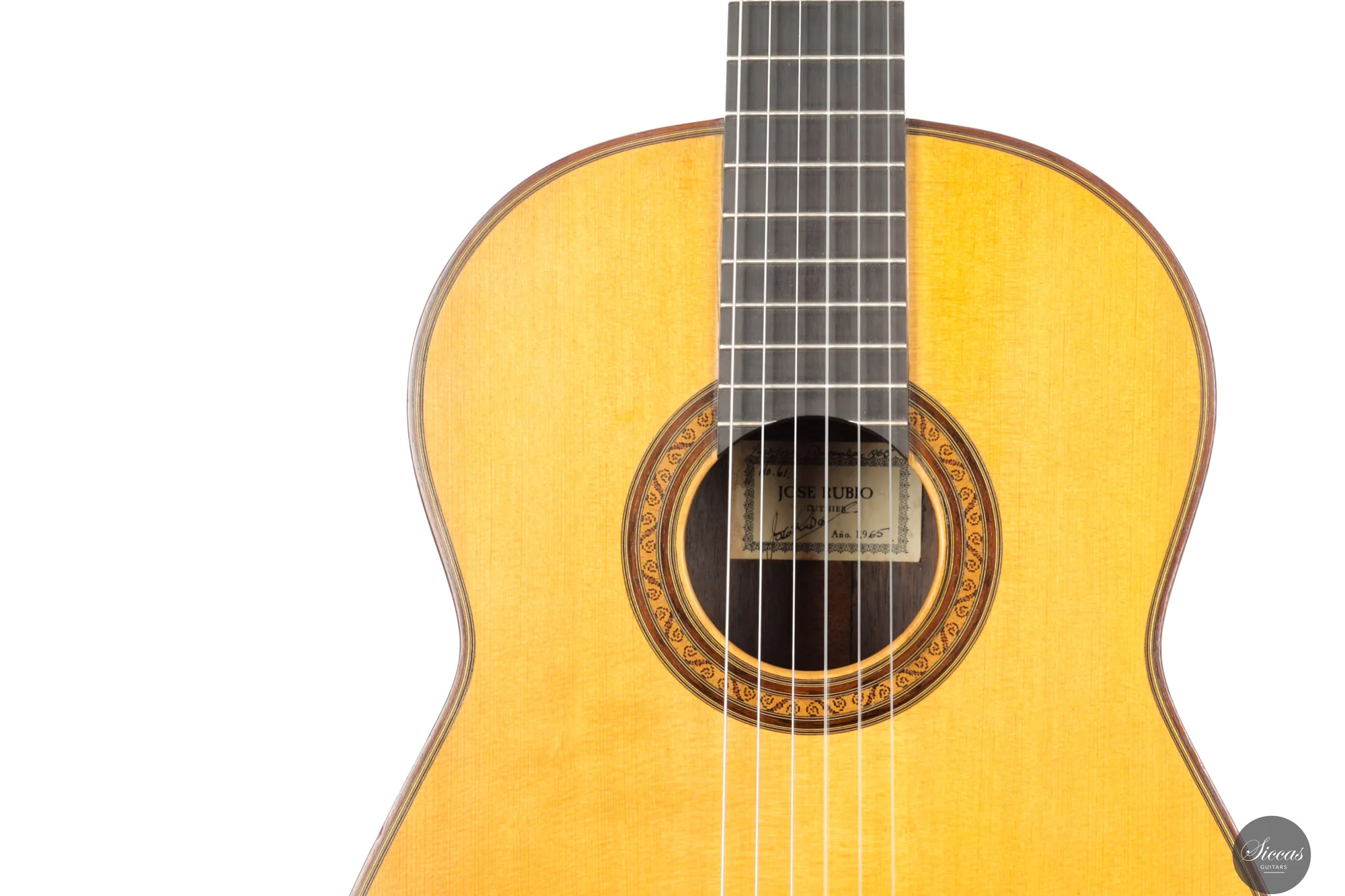




José Rubio - 1965 No. 61
About the luthier
David Rubio (1934–2000), born David Joseph Spink in London, stands as one of the most significant figures in modern British lutherie. After leaving medical school in Dublin, he moved to Spain in the 1950s, where he worked as a flamenco guitarist and adopted the professional name “José Rubio.” His transition into lutherie began during his time in the United States, where he studied under Miguel Company in Miami before building his first guitars in New York in the early 1960s, guided largely by memory. Rubio’s work quickly gained attention, particularly from Julian Bream, who had lost his beloved Bouchet and was seeking a replacement. With Bream’s support, Rubio crafted instruments first in the Bouchet tradition and later drawing from Santos Hernández and Enrique García. His guitars became a mainstay of Bream’s performances and recordings from the mid-1960s onward. Rubio’s influence helped define what is now recognised as the English school of classical guitar making.
About the guitar
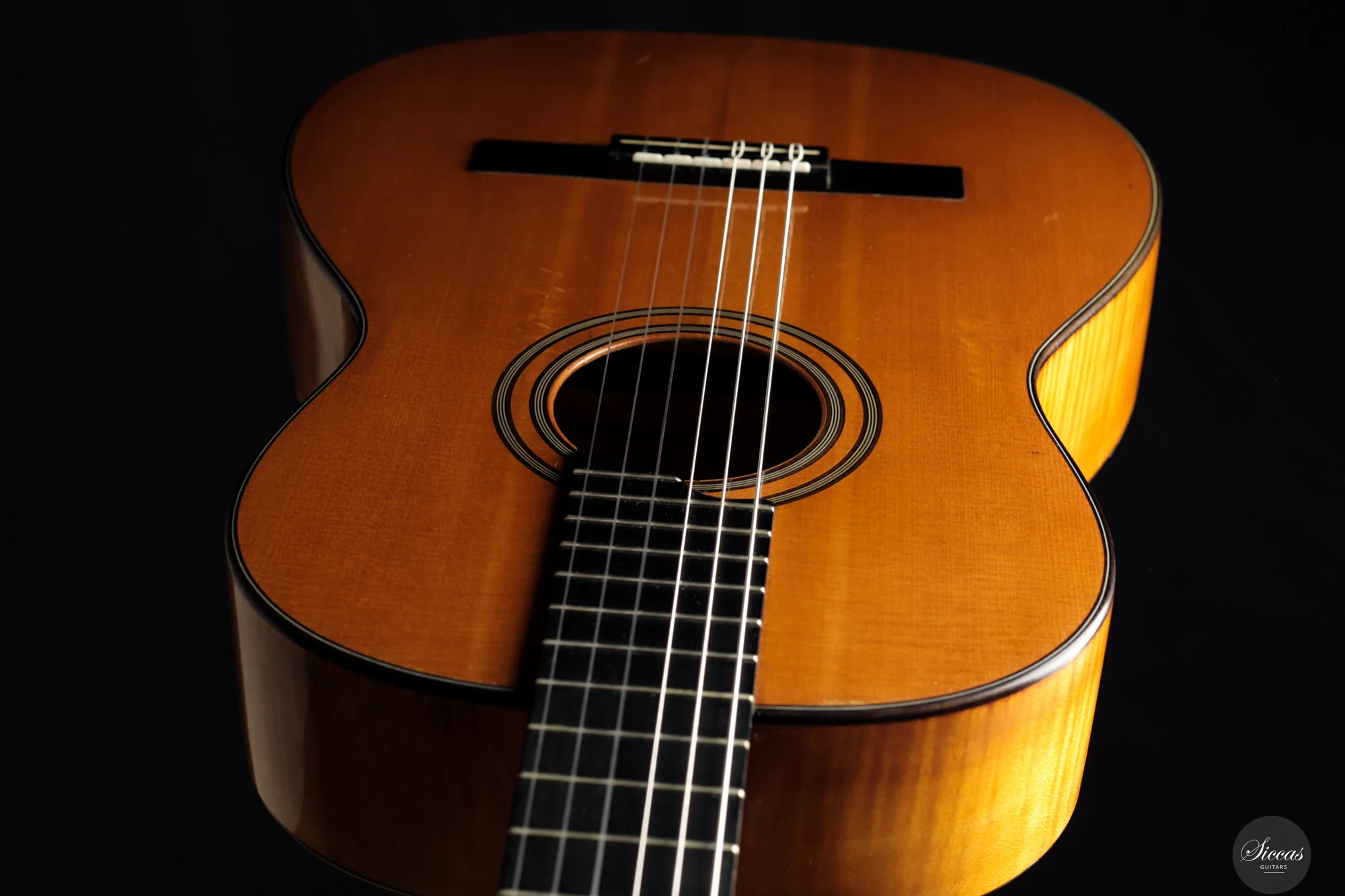
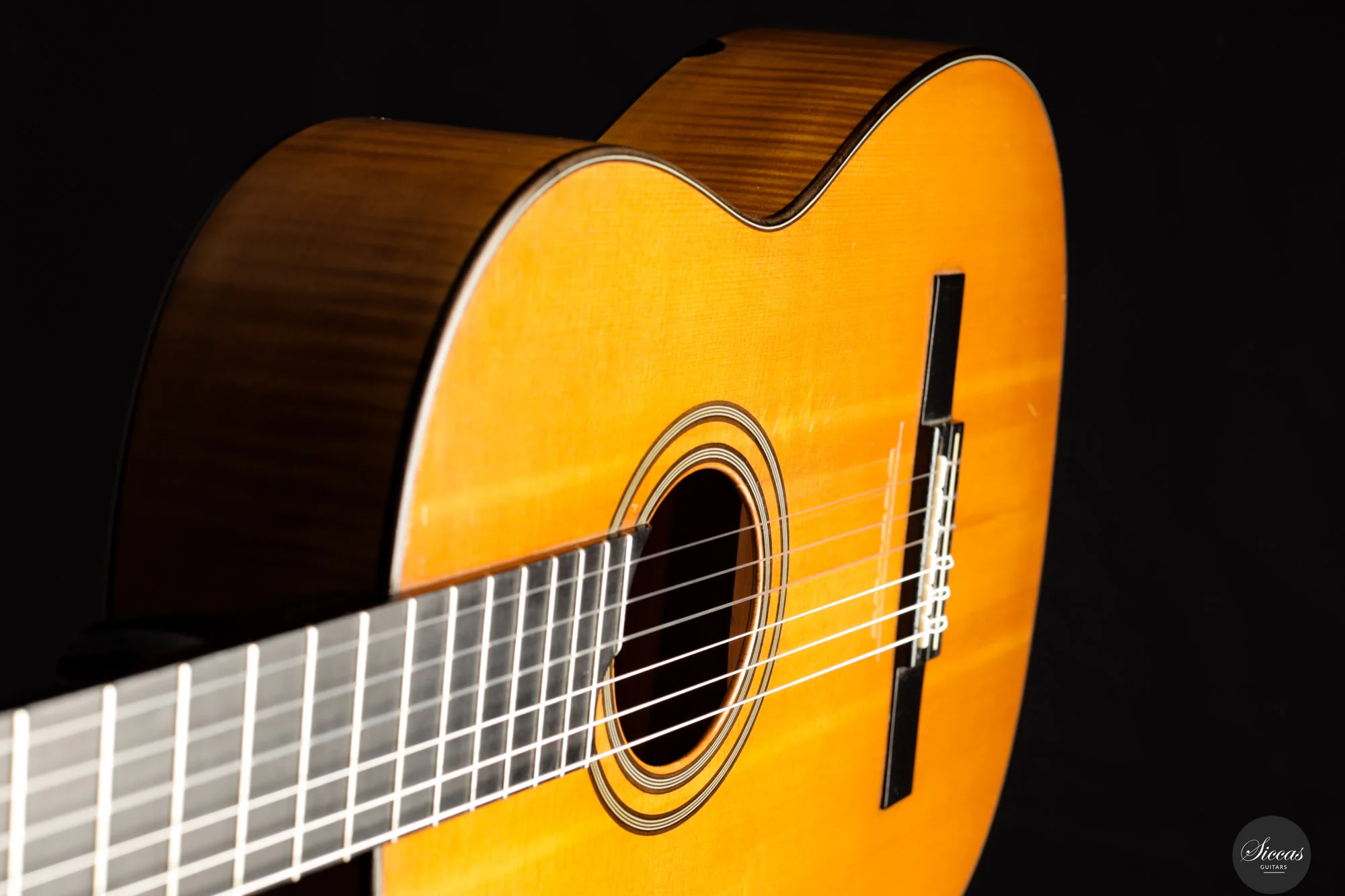
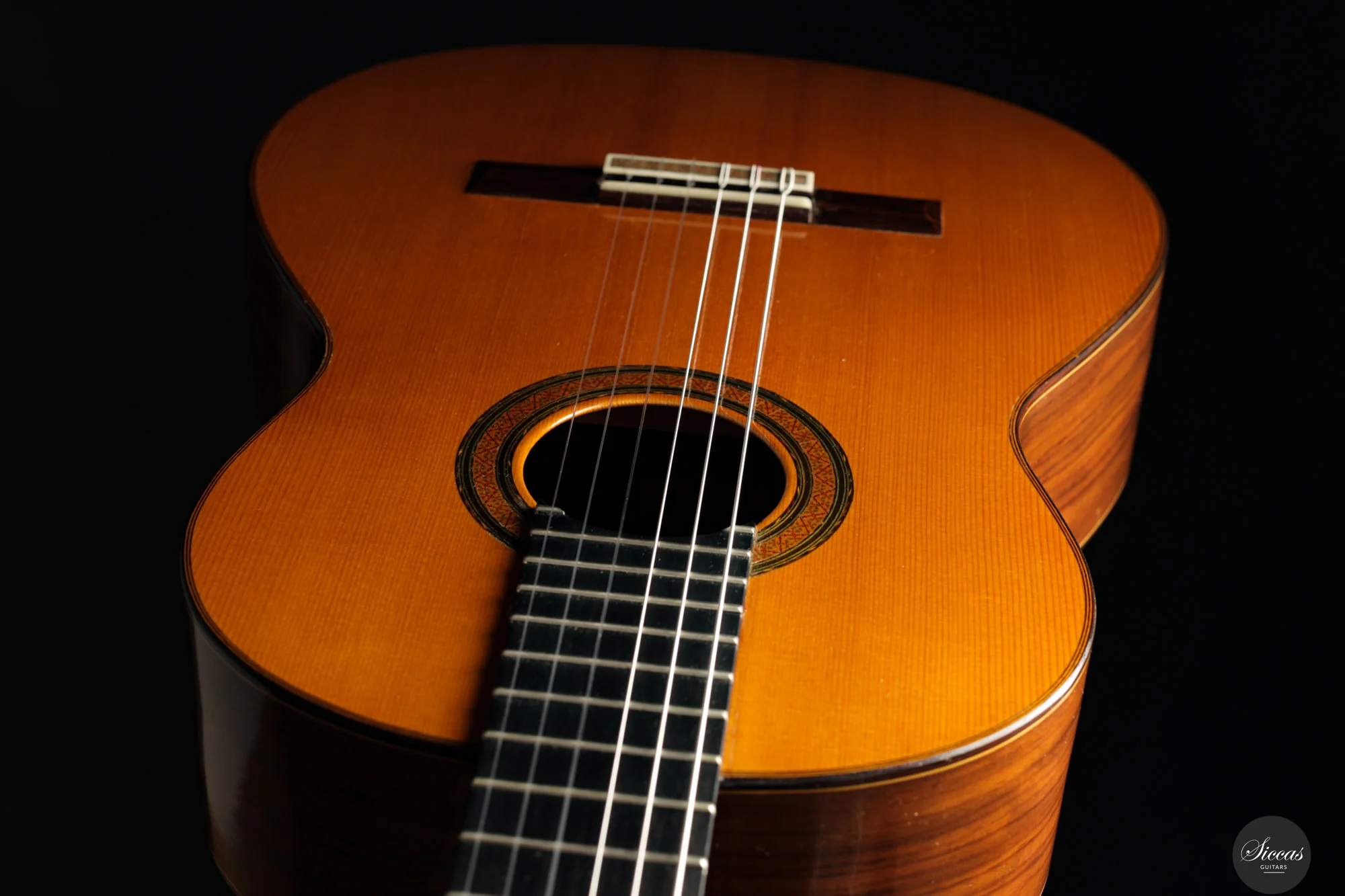
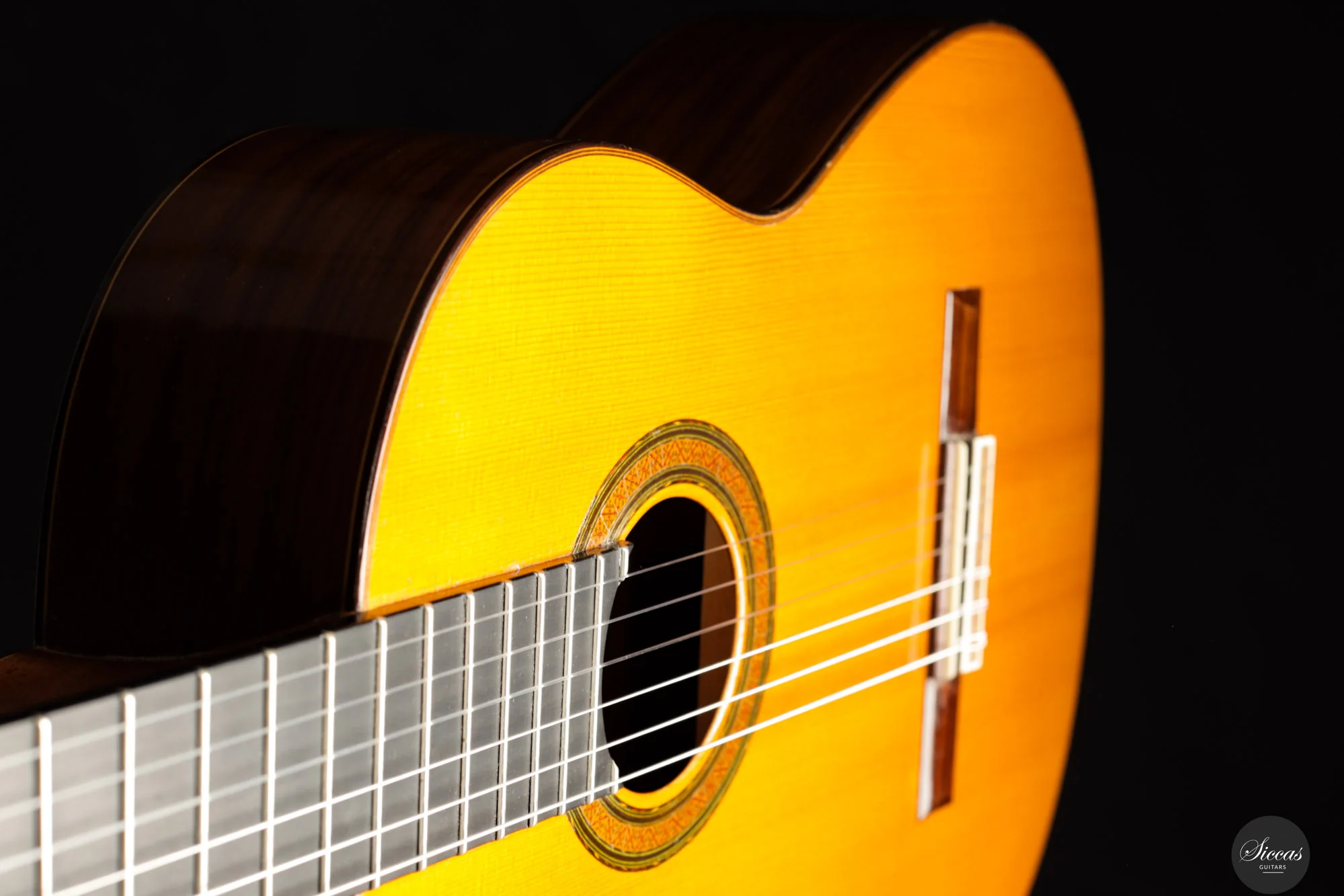
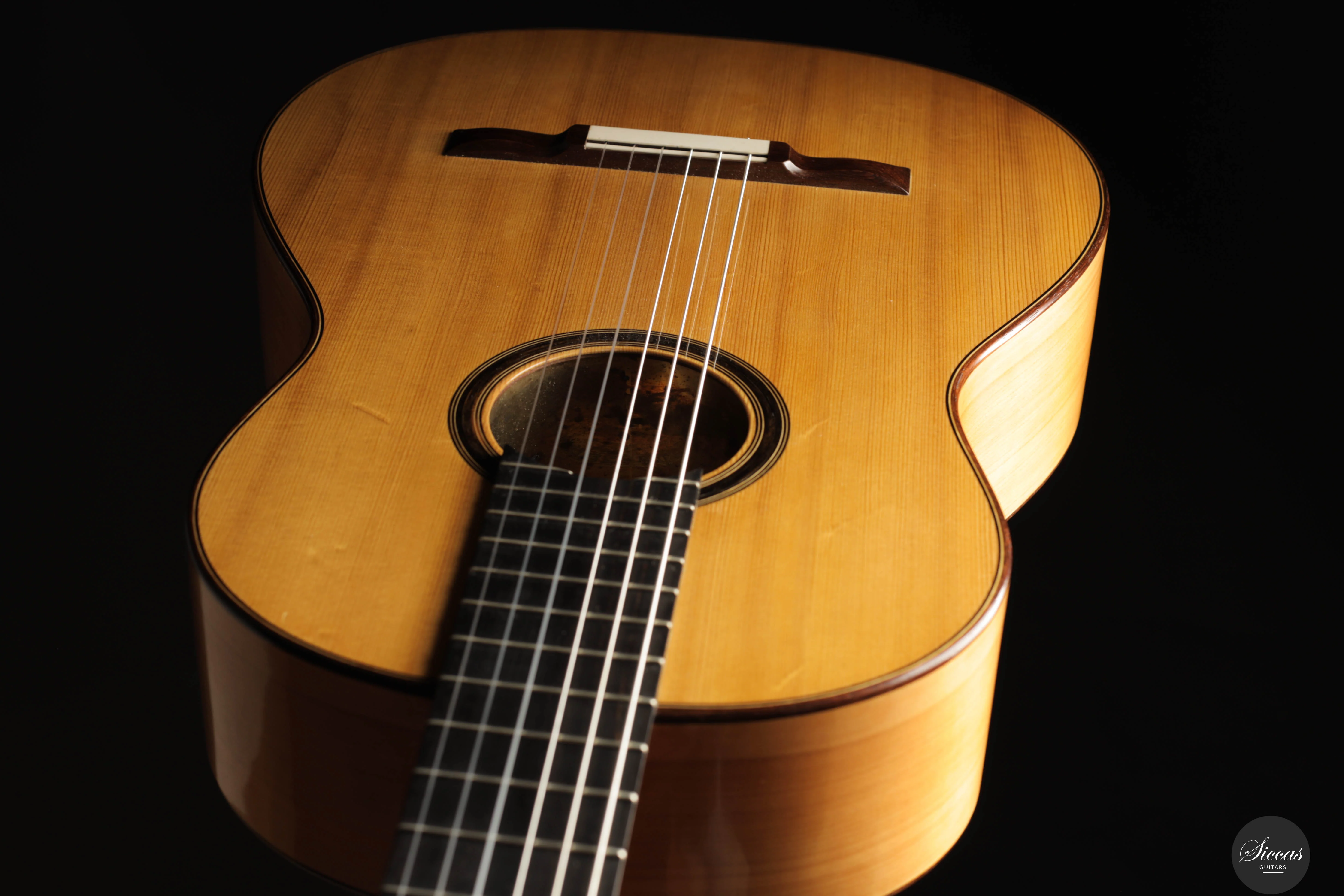
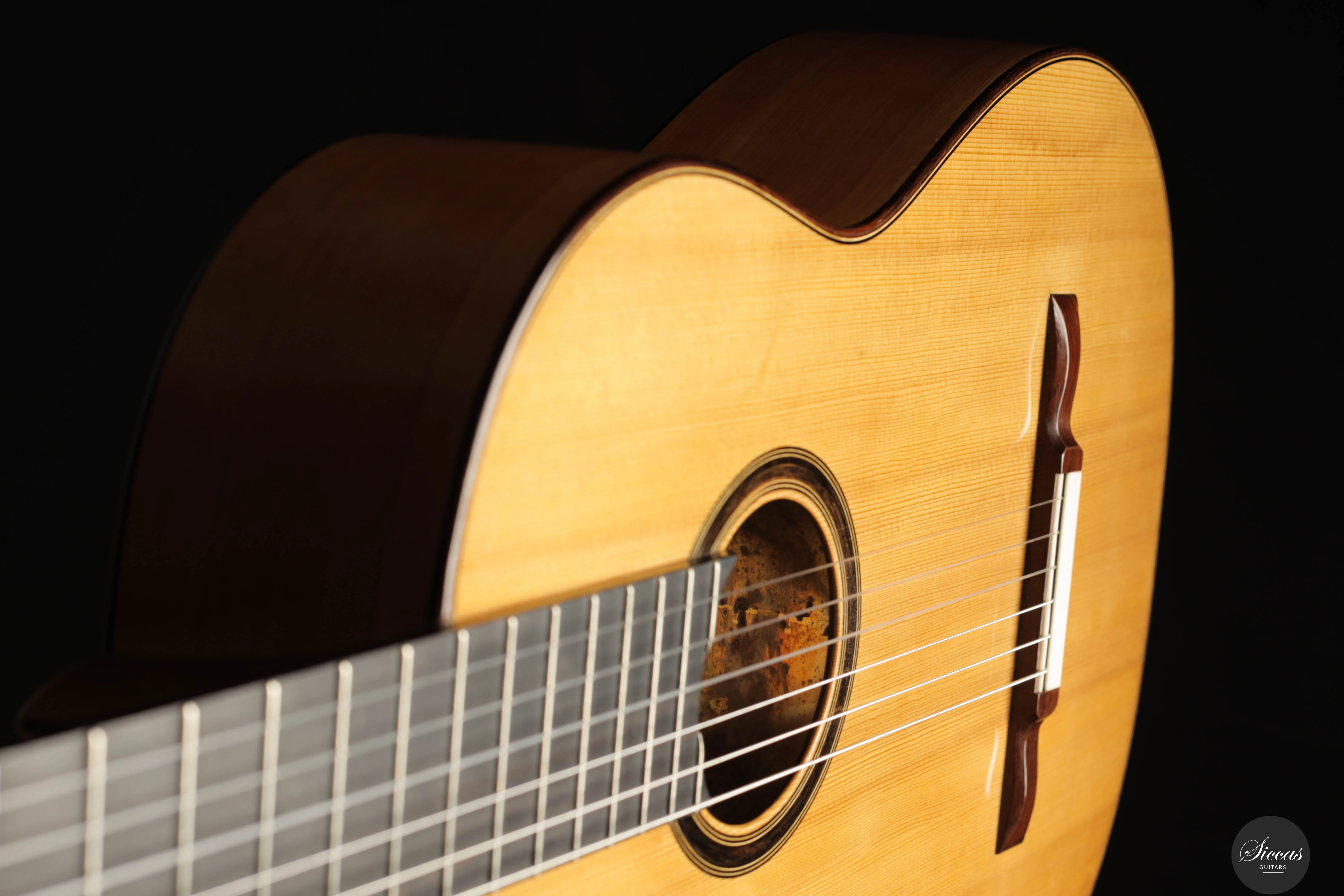
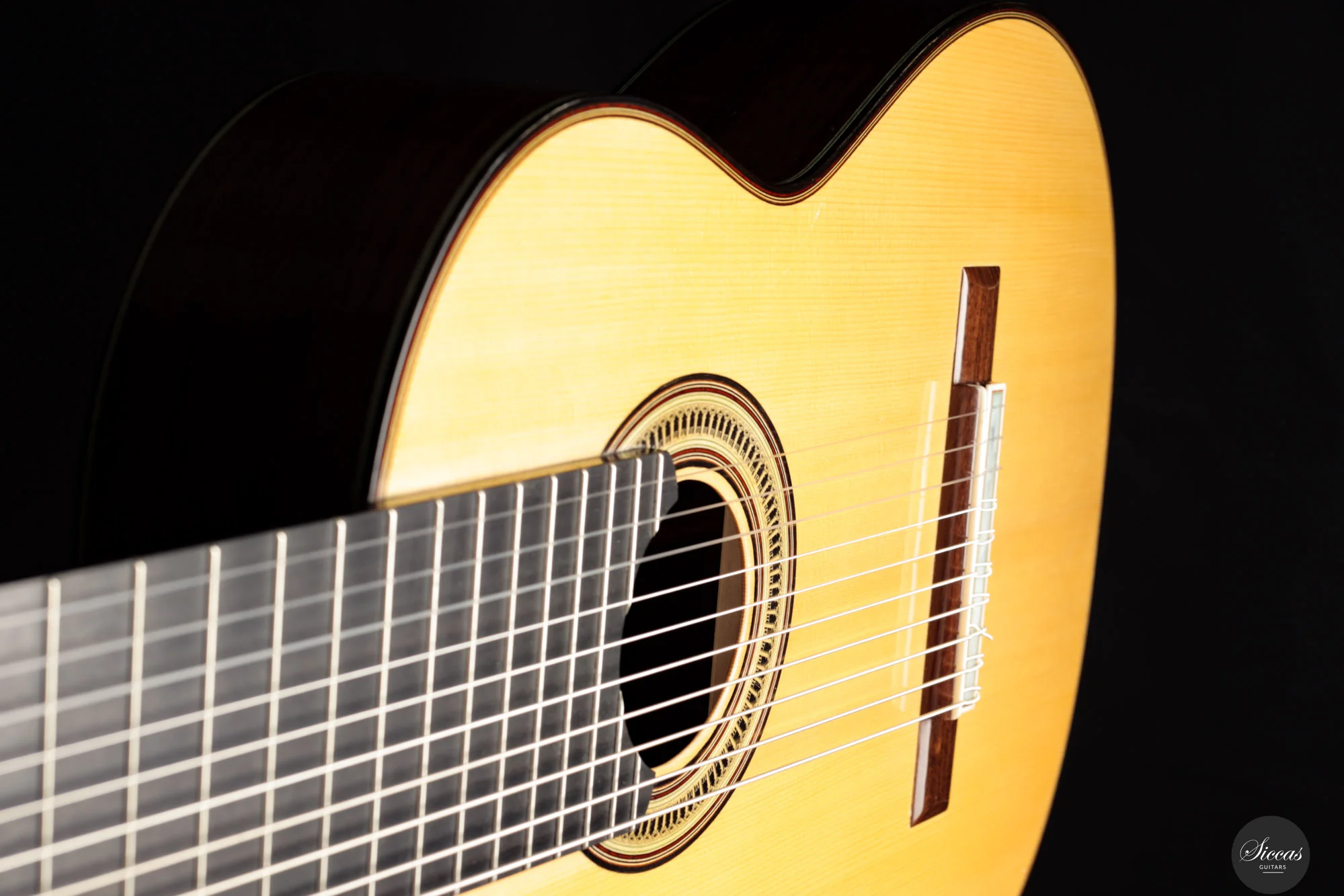
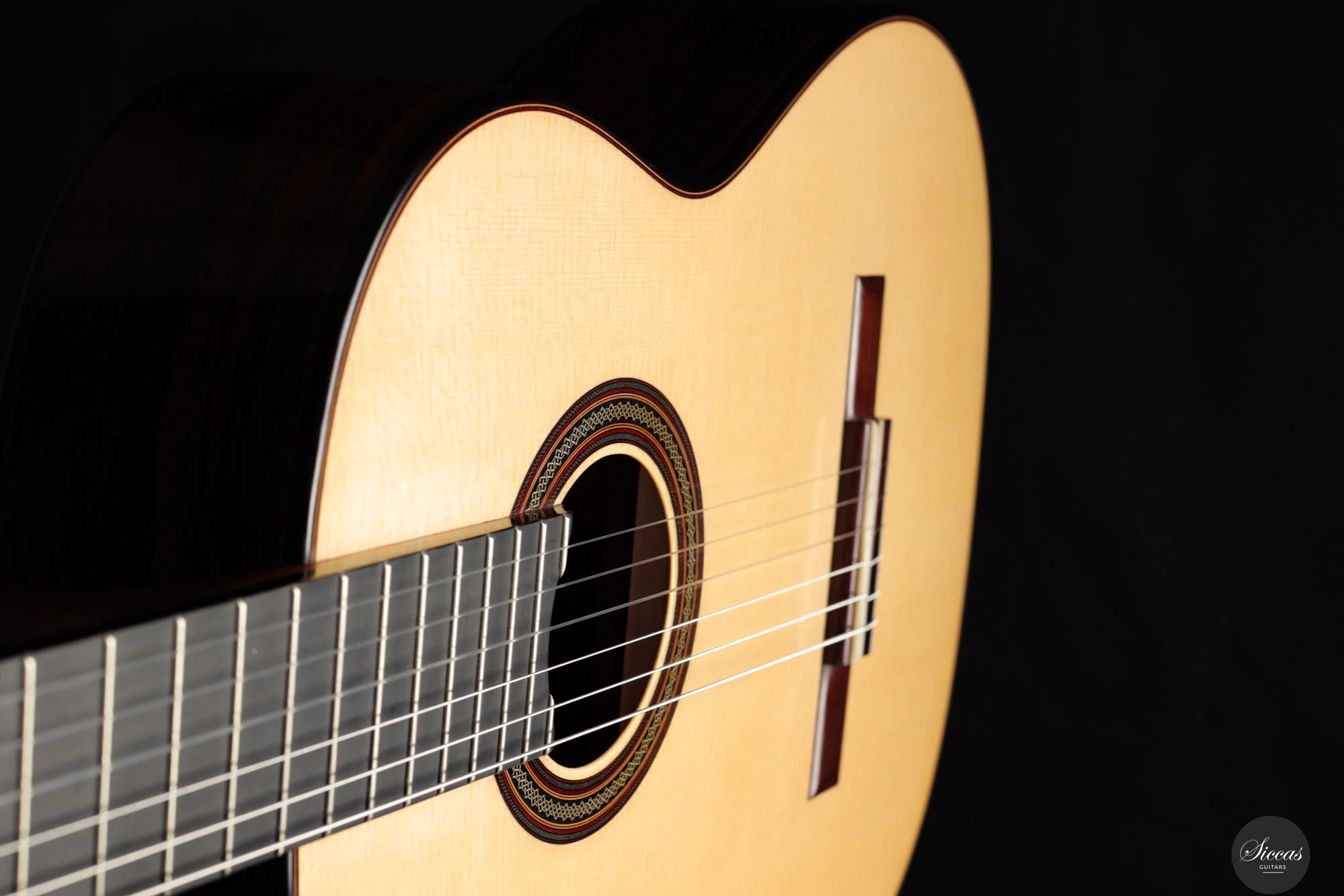
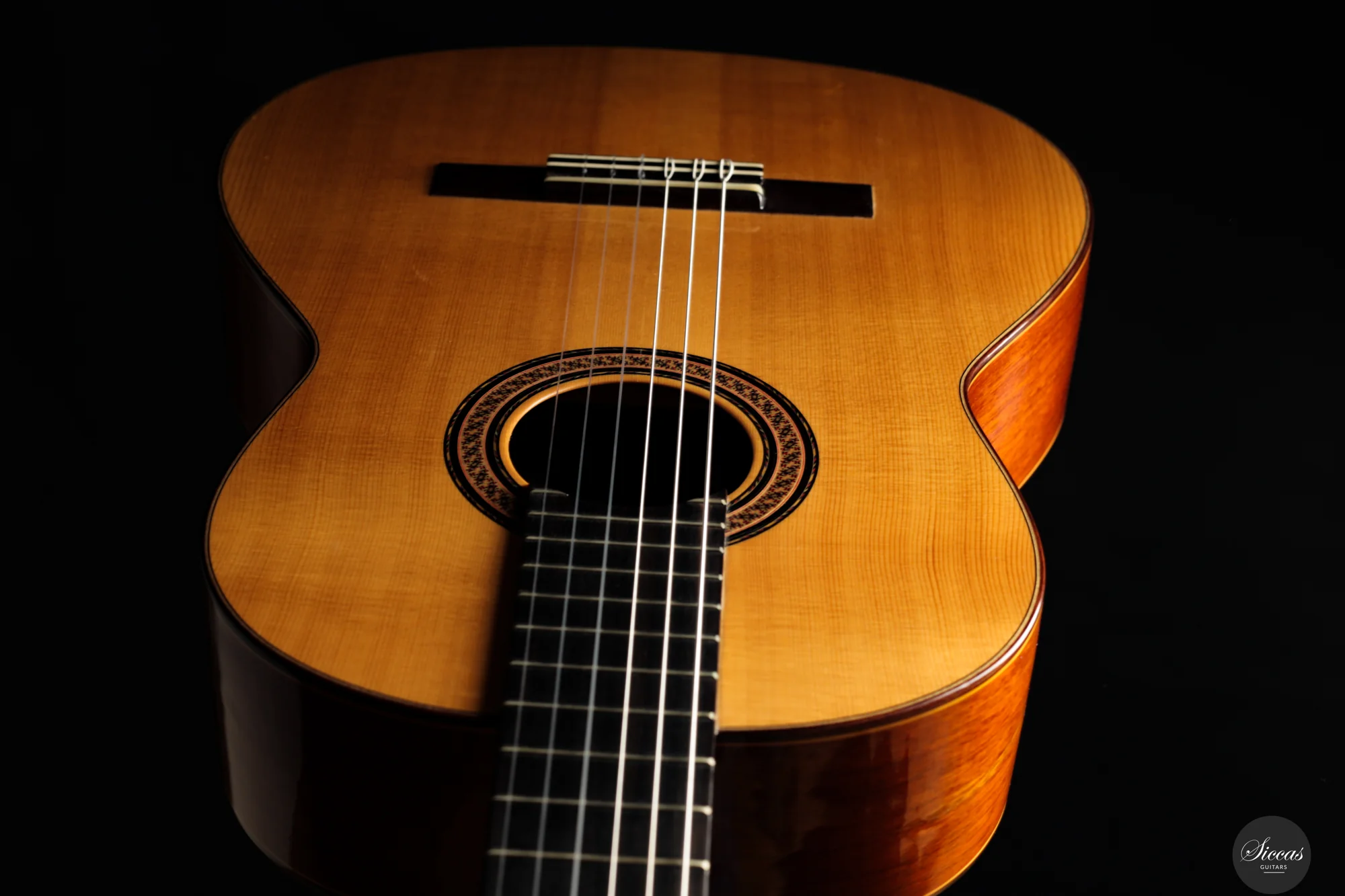
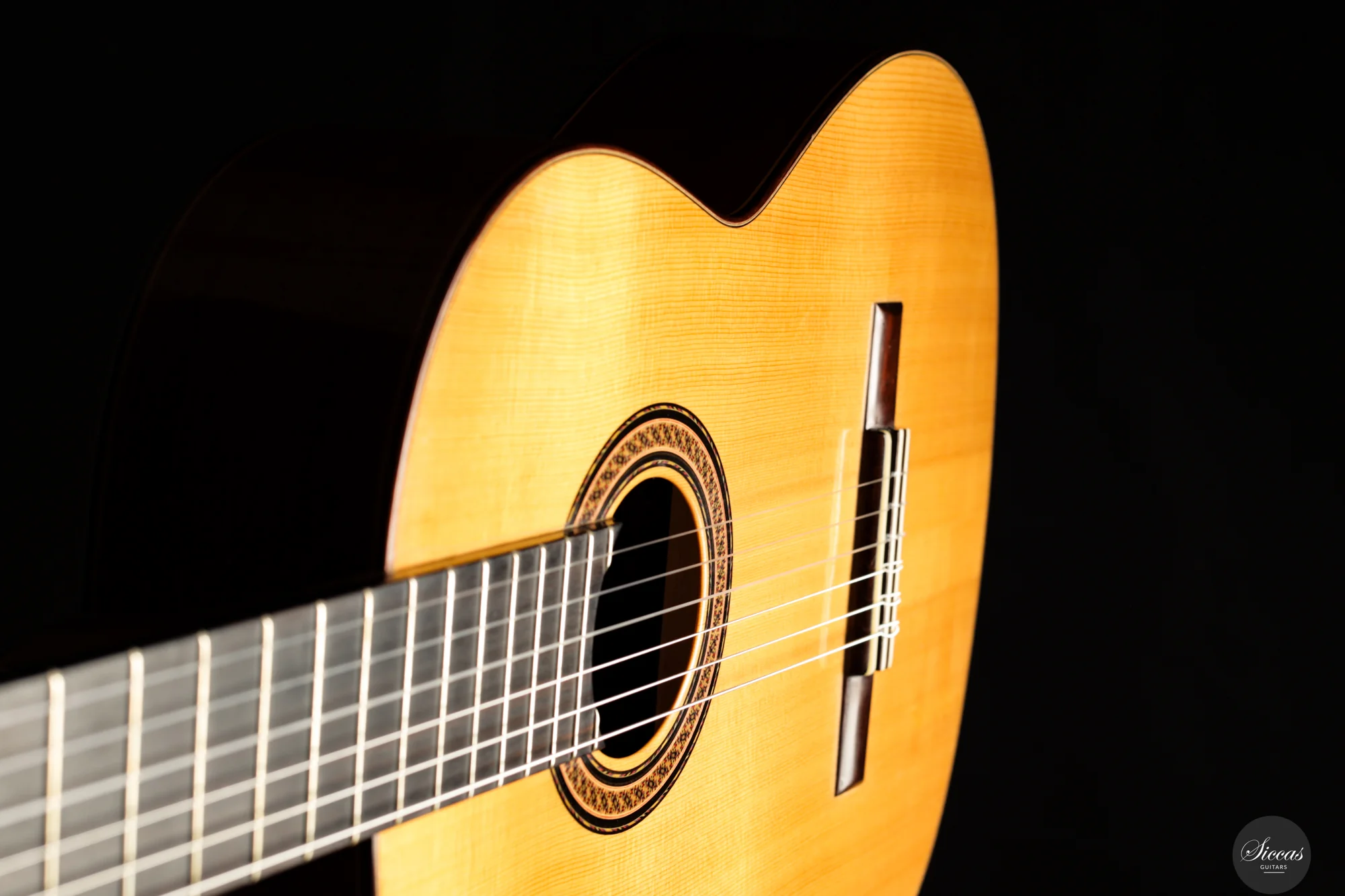
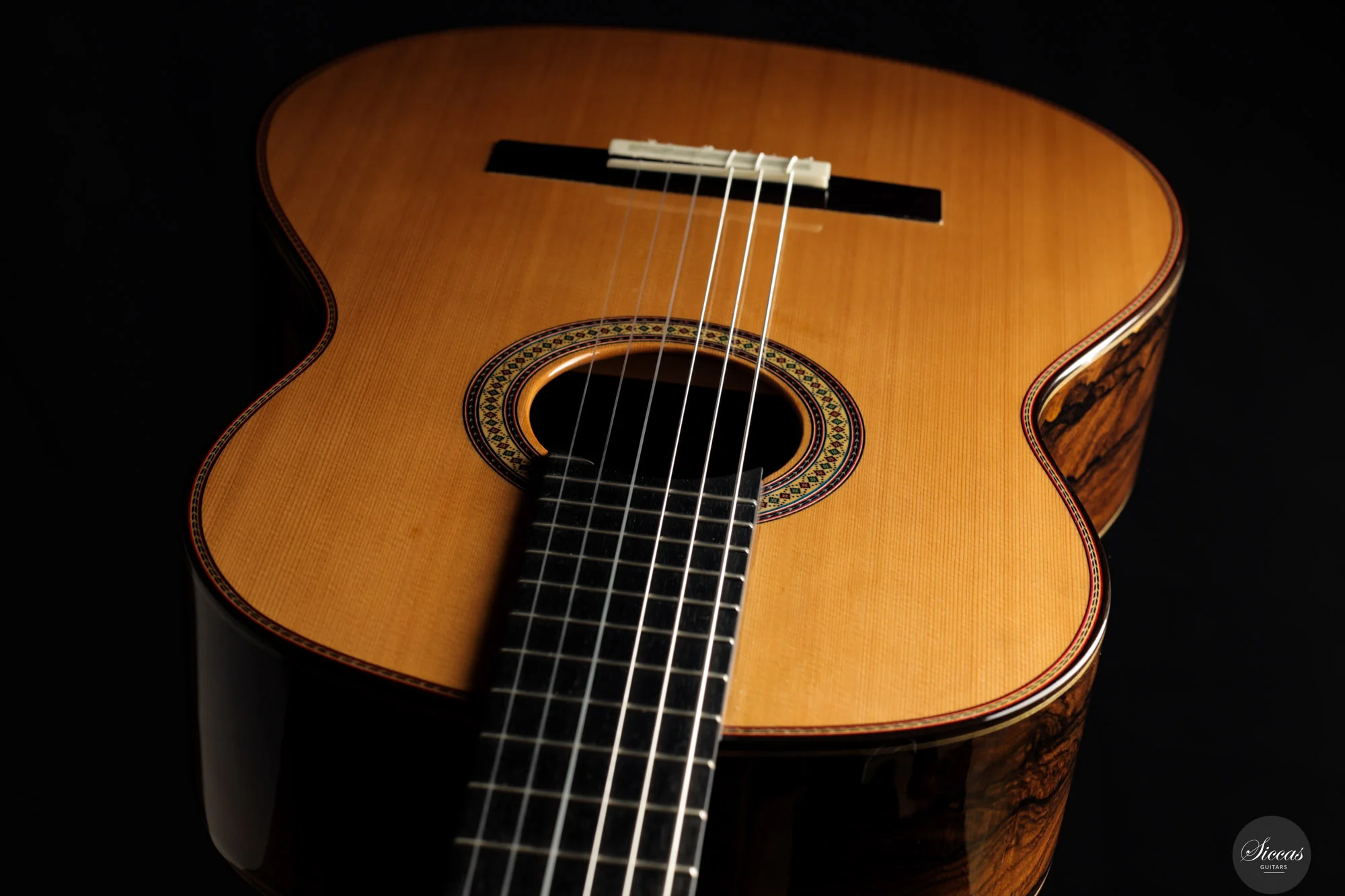
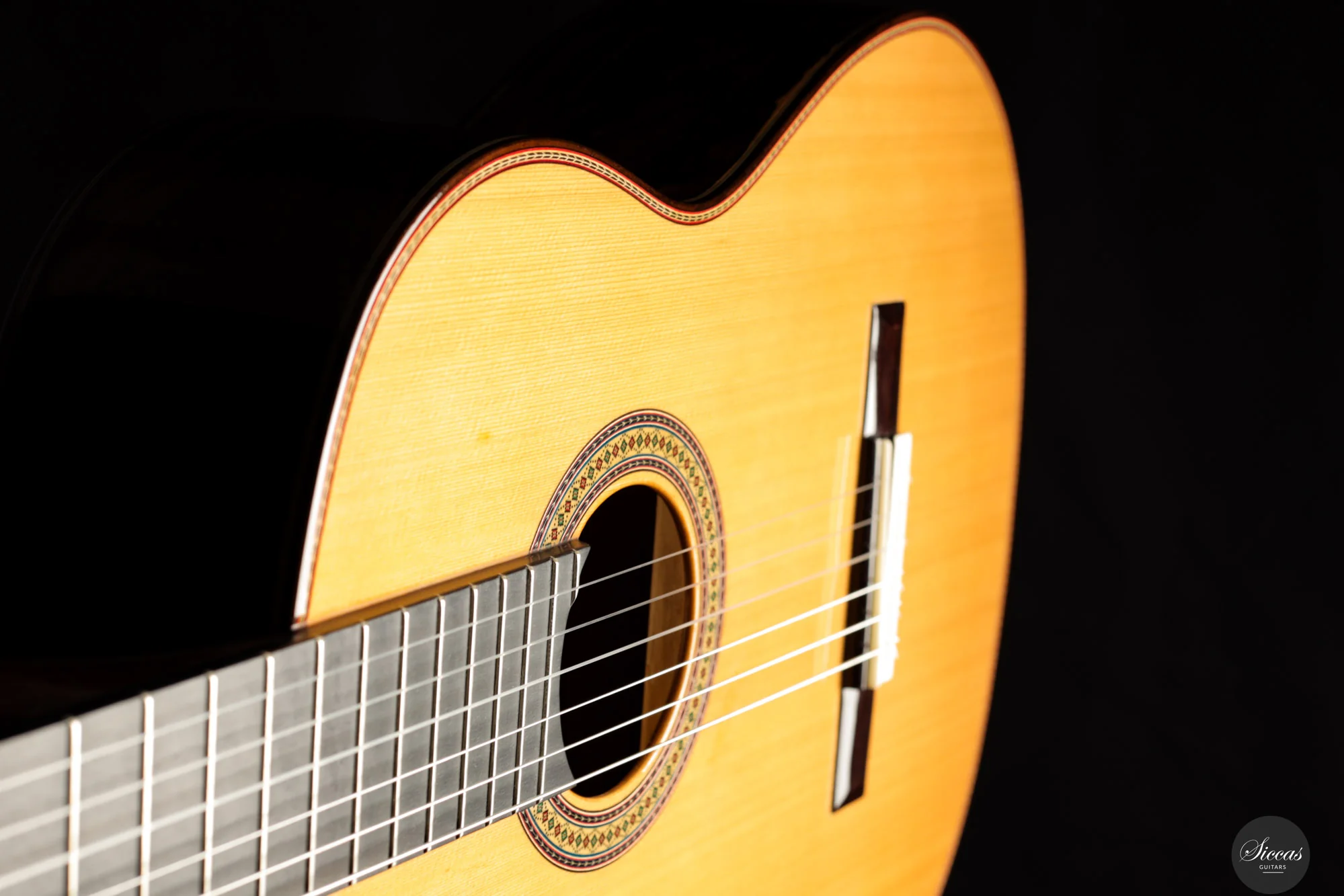
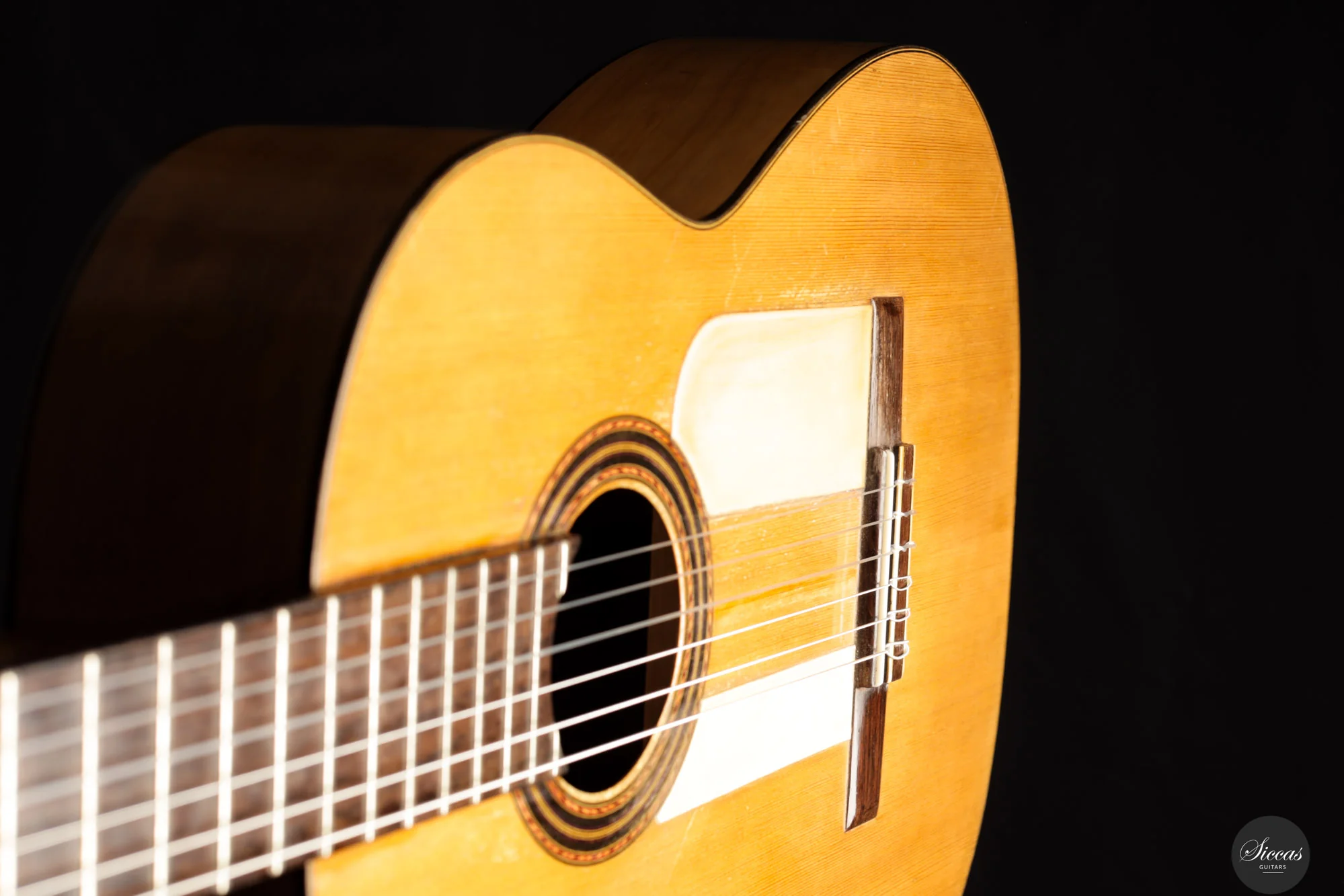
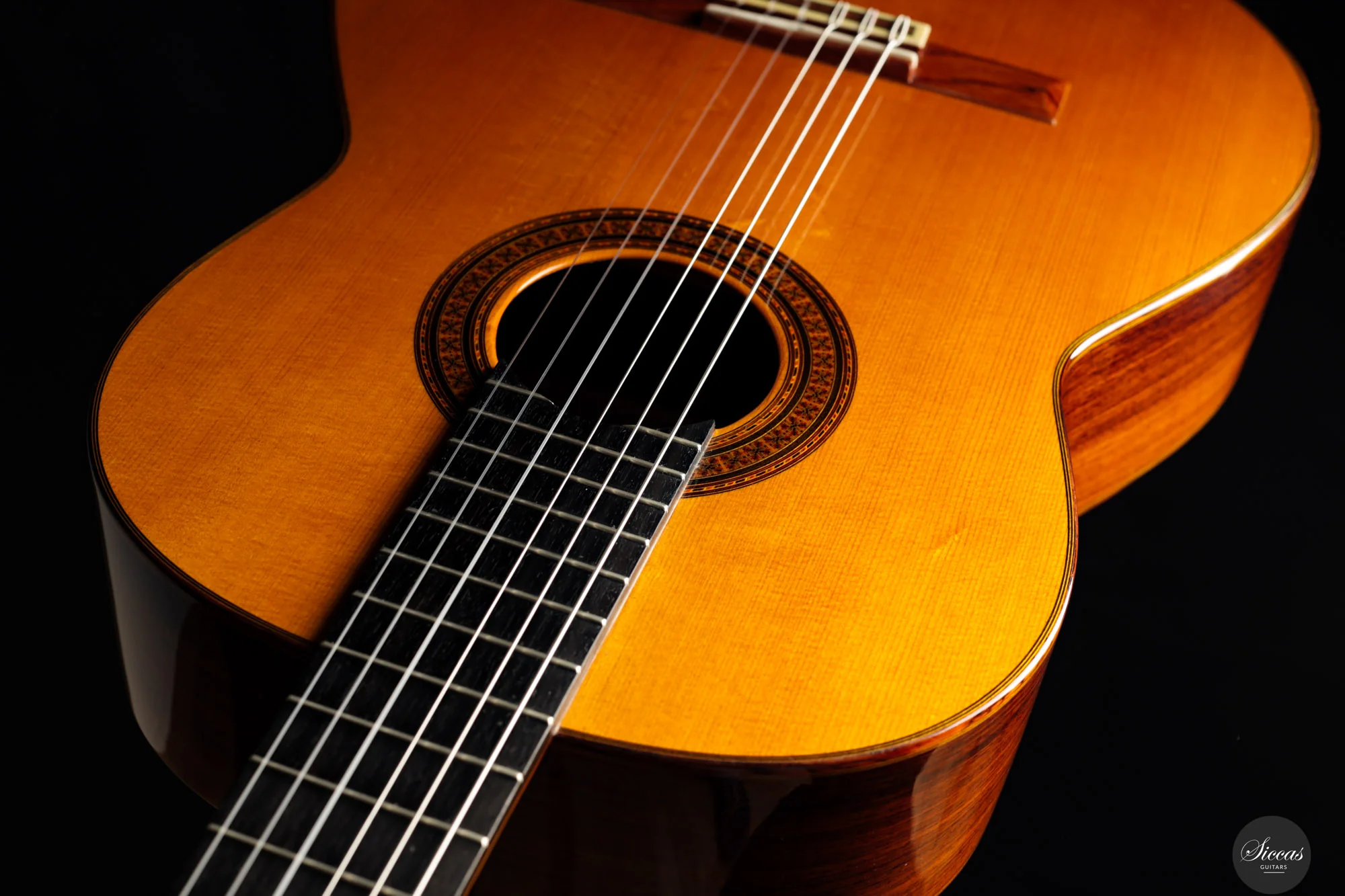
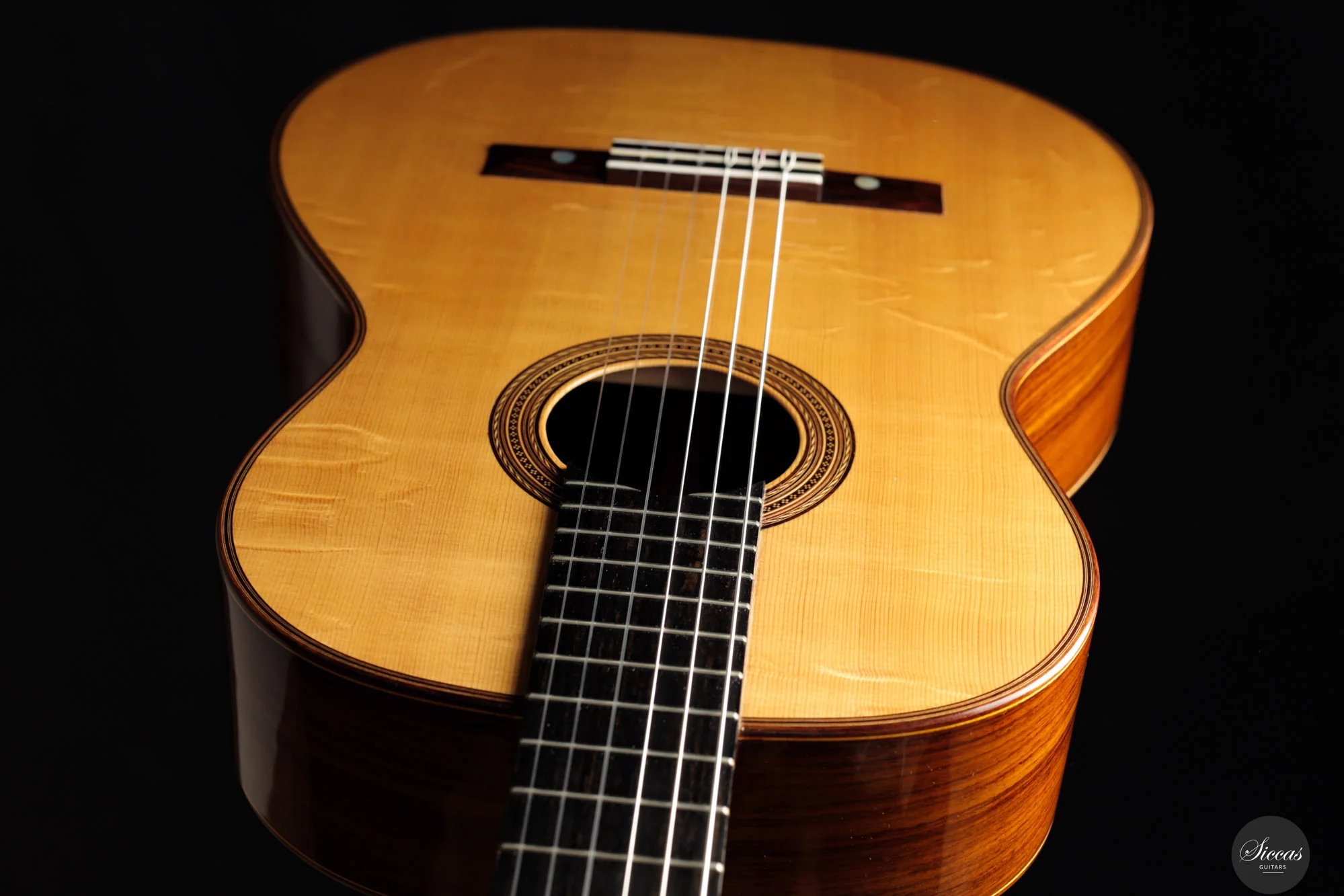
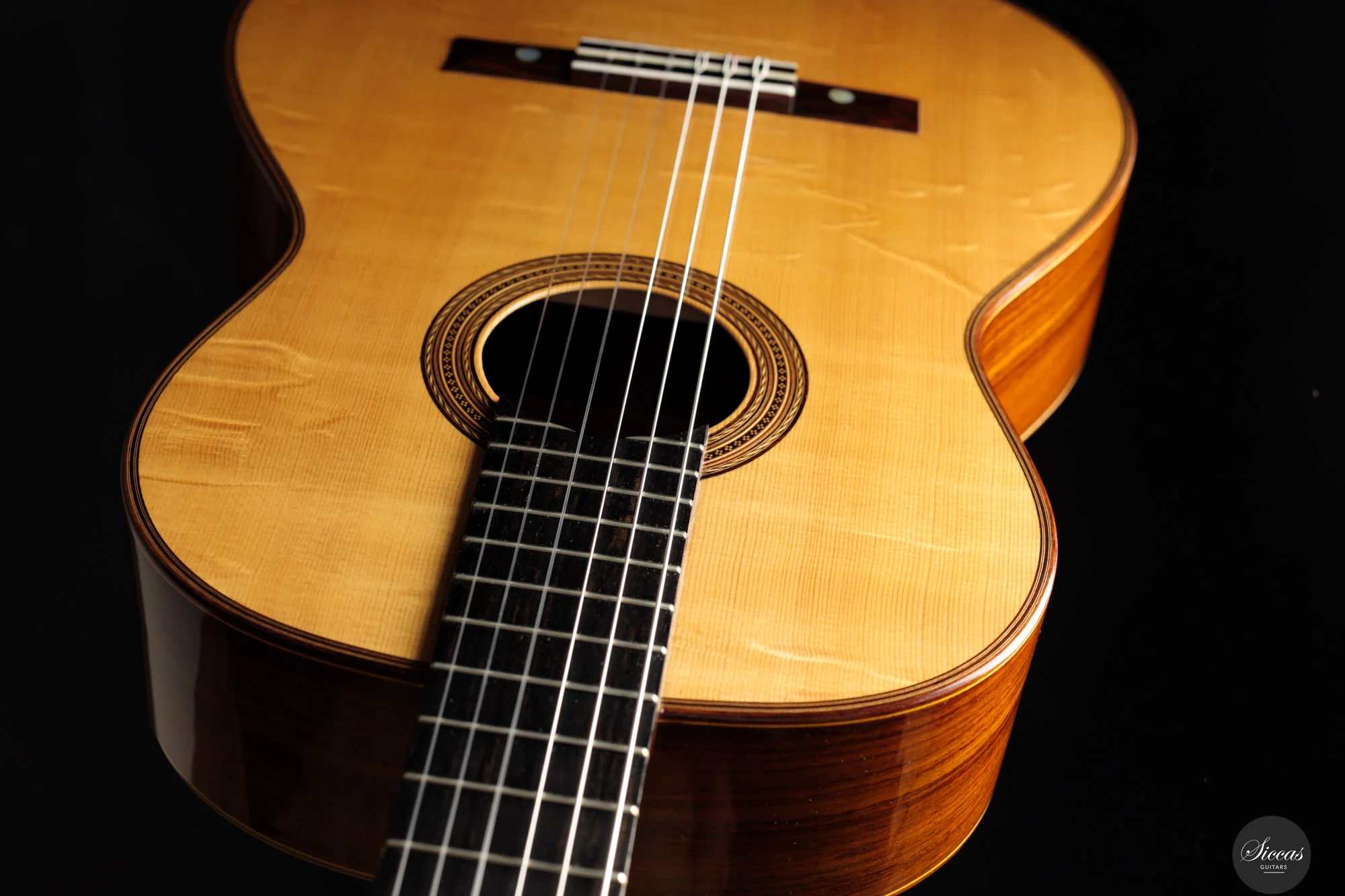
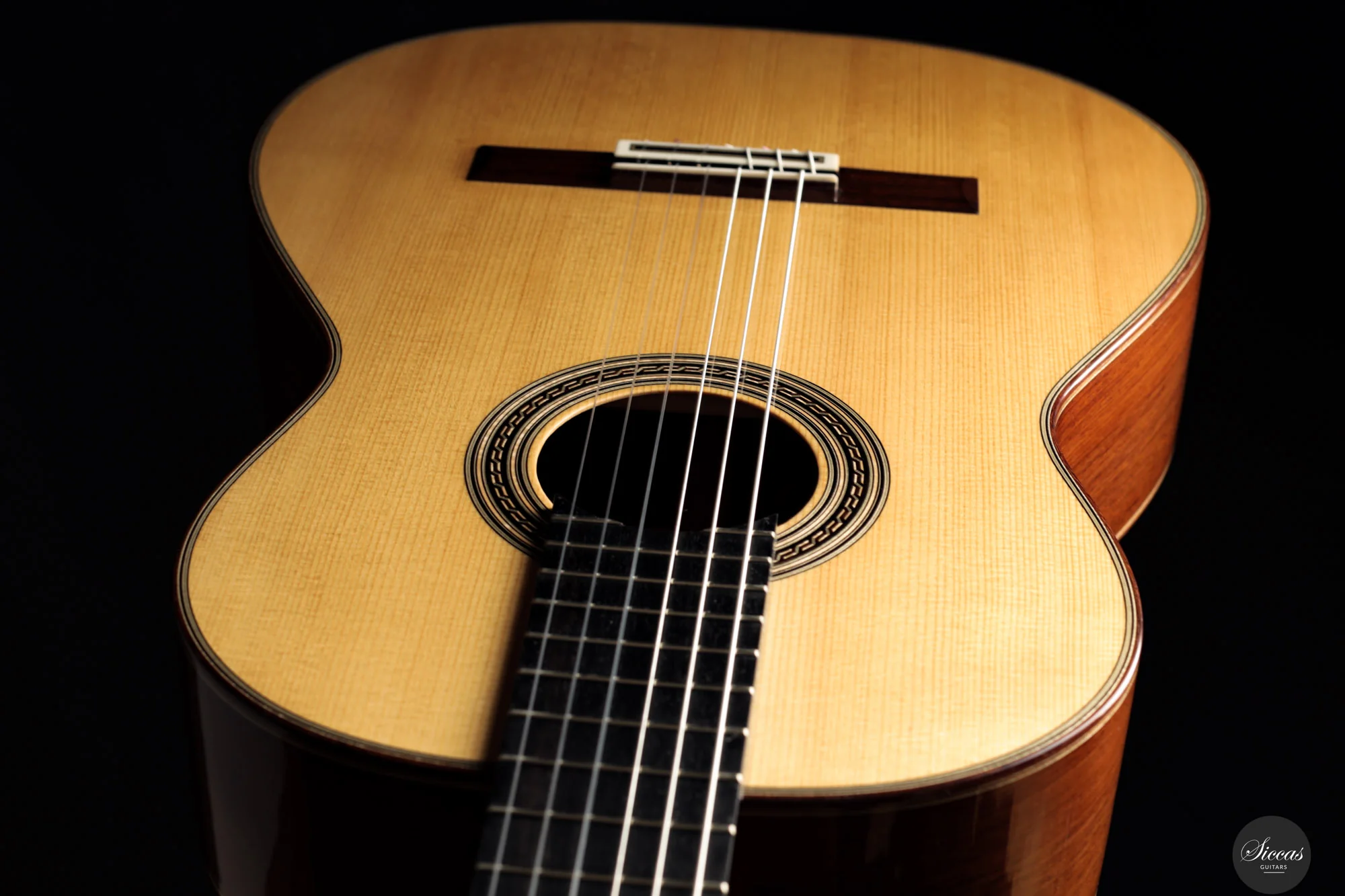
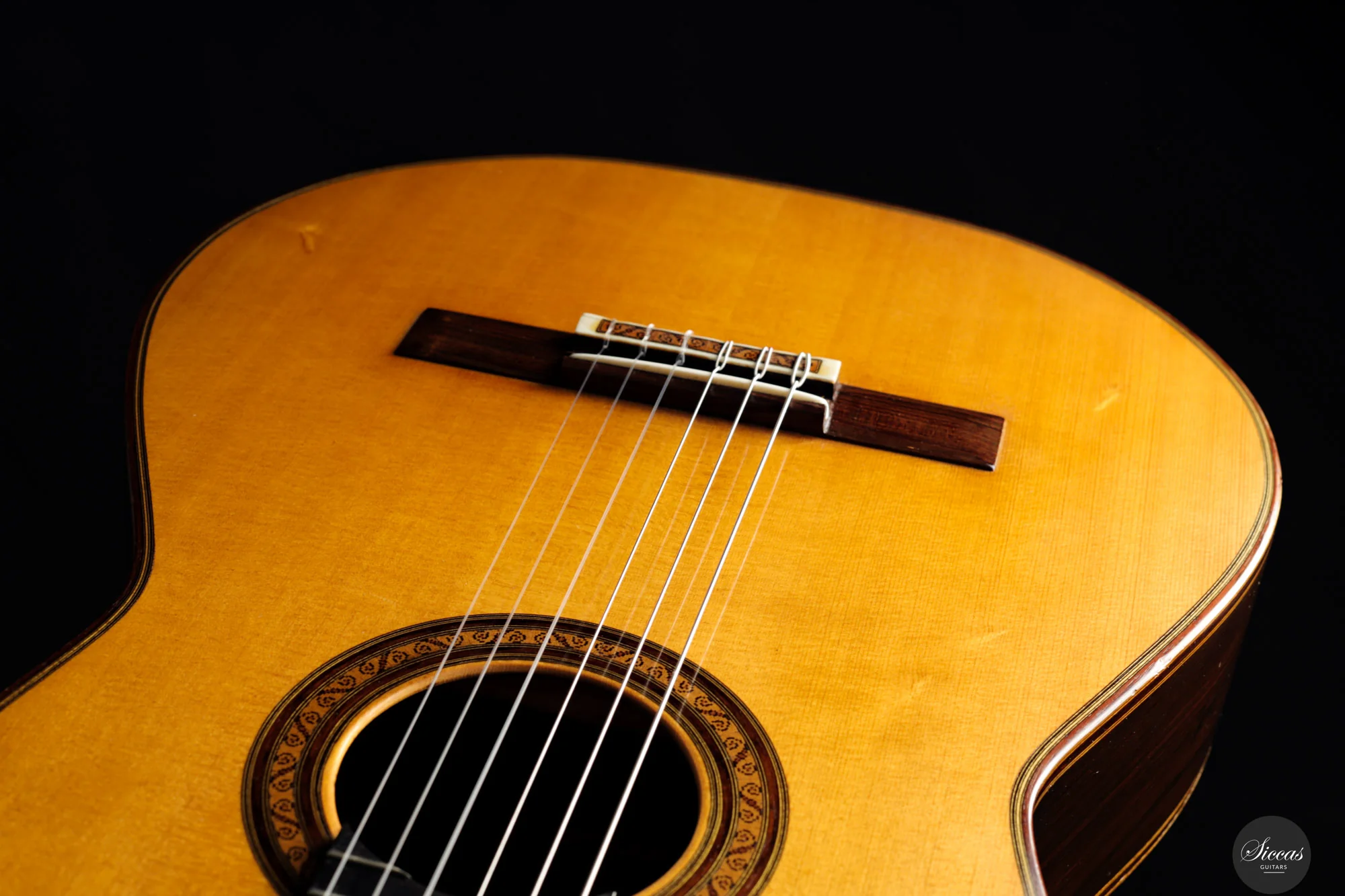
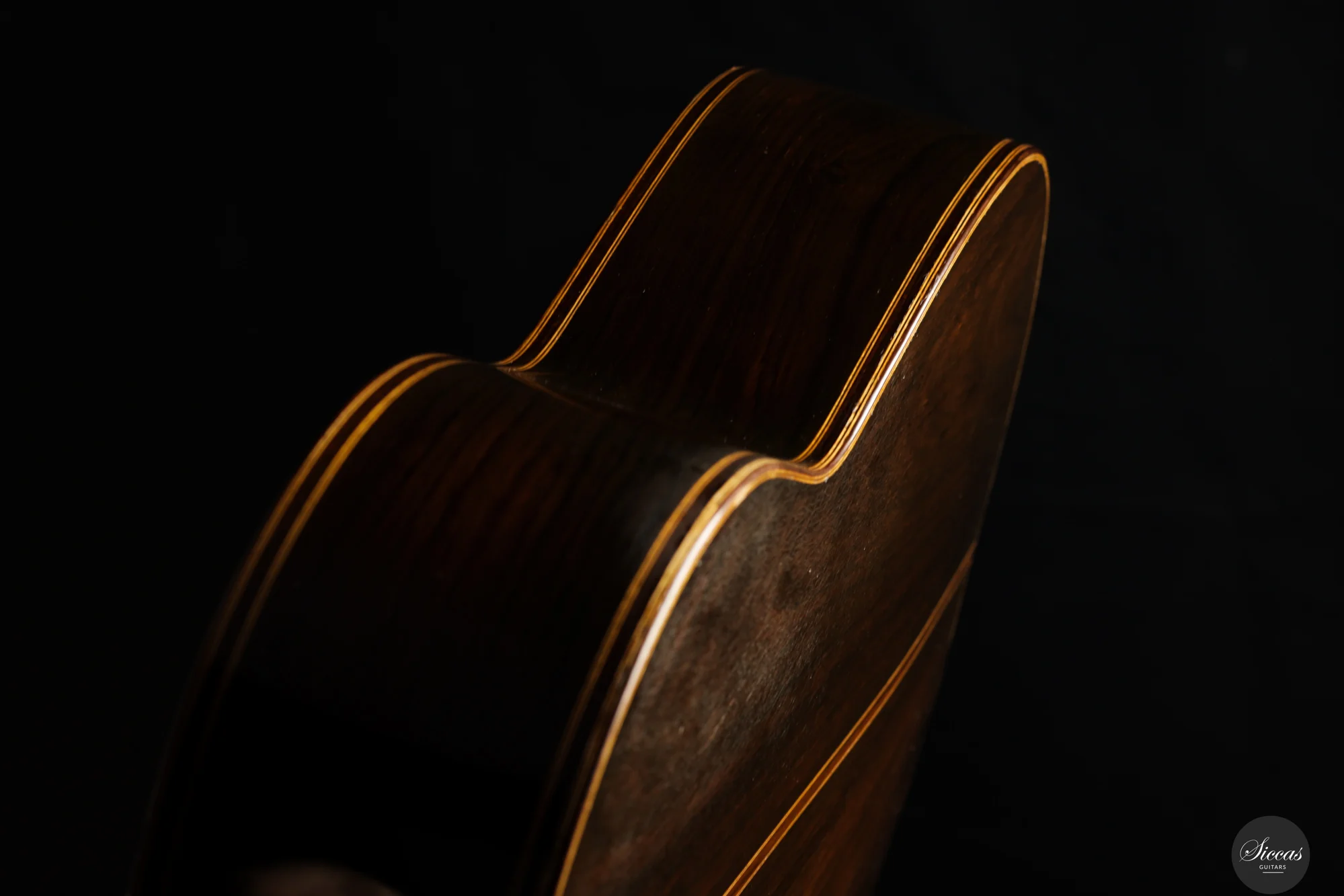
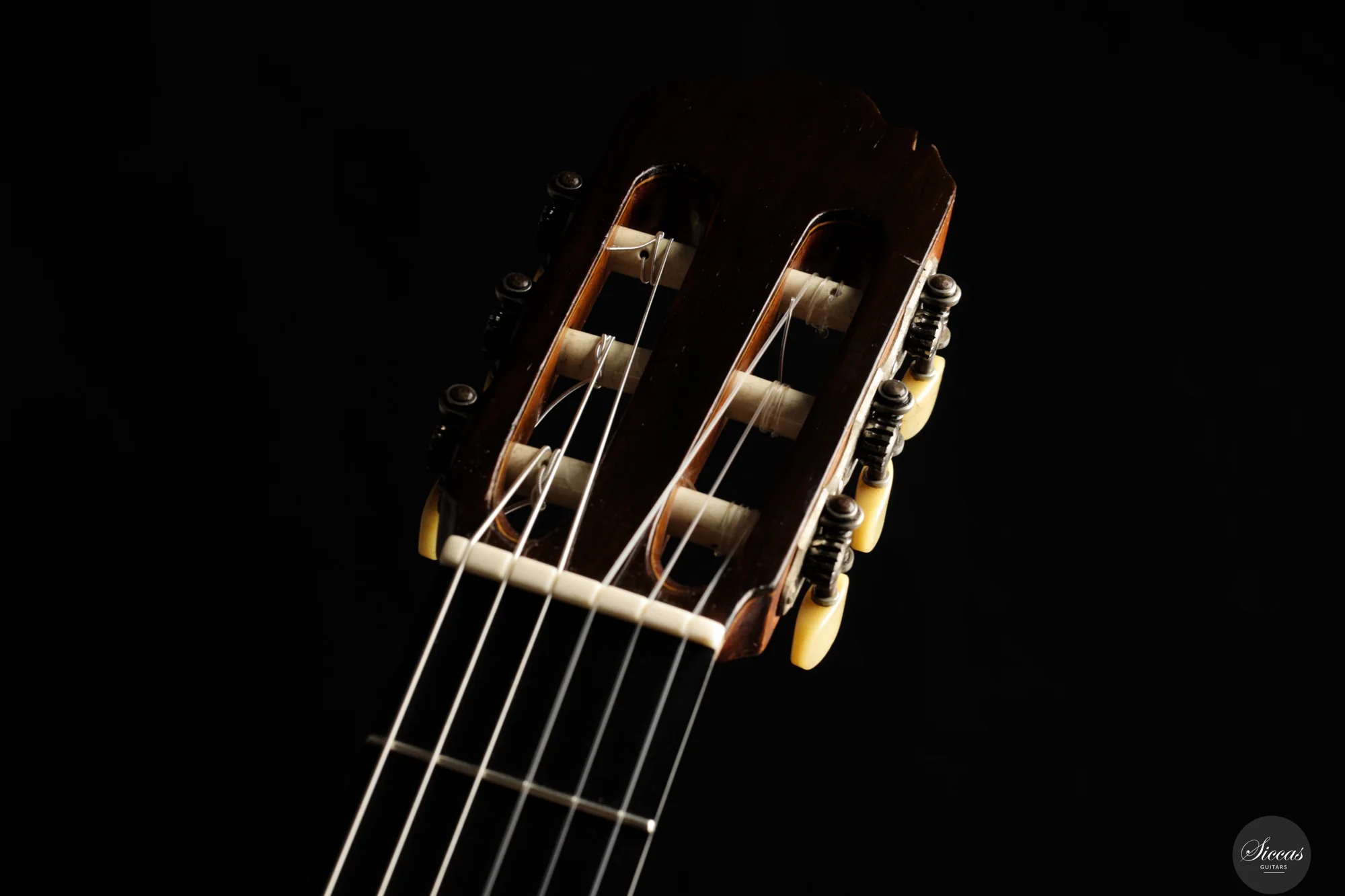
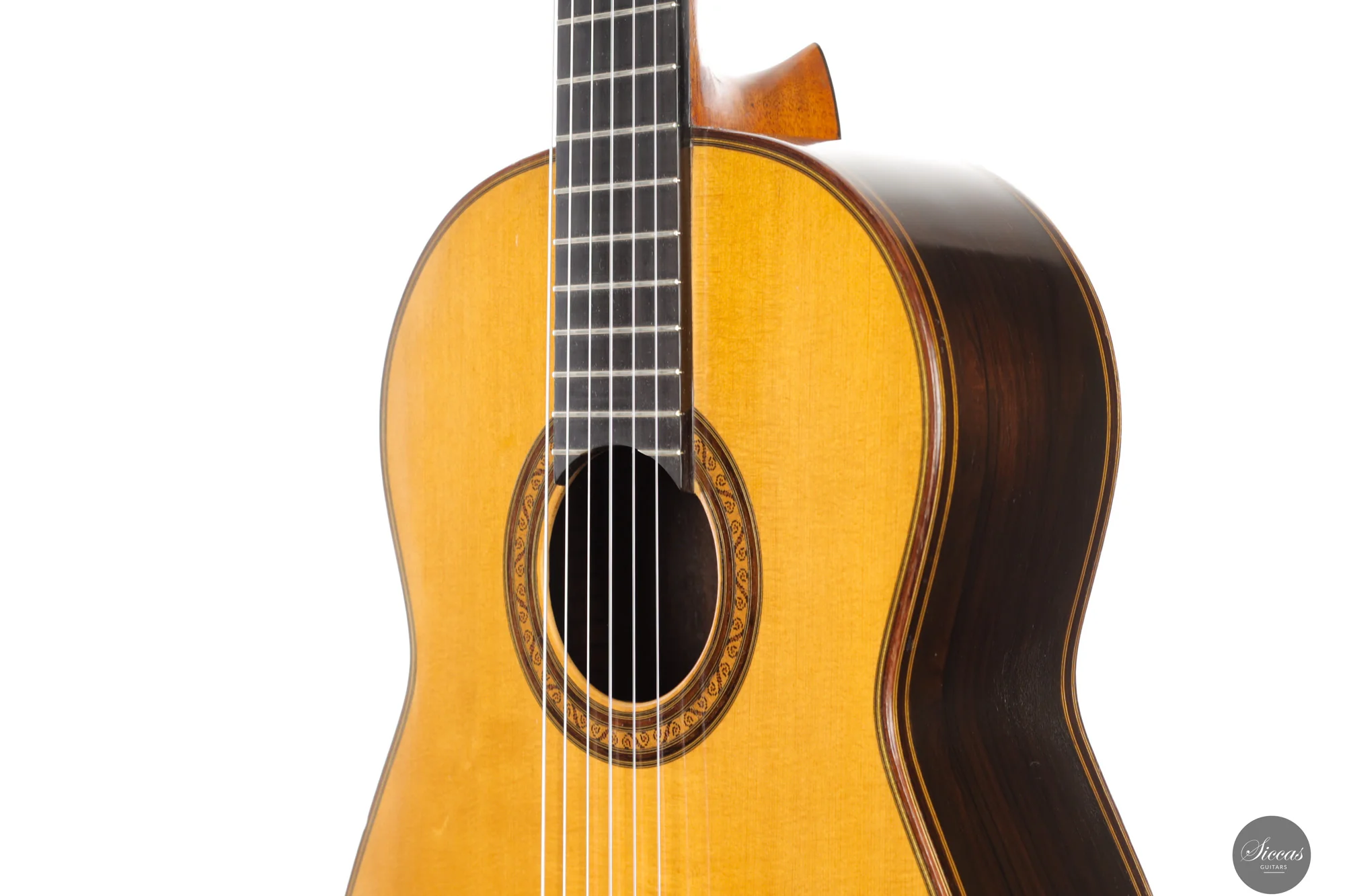
Built in 1965, this guitar is from the same pivotal year as Julian Bream’s famed Rubio No. 31, and shares the tonal architecture that marked the beginning of Rubio’s mature style. Featuring a spruce soundboard and Brazilian rosewood back and sides, it represents Rubio’s synthesis of French and Spanish influences, guided by Bouchet’s tonal clarity and Santos’s structural elegance. The internal layout and air resonance, tuned to G sharp, offer a firm foundation for a voice that is luminous, balanced, and precise. The guitar excels in separation and sustain, supporting a nuanced touch with a distinctly “pianistic” clarity, while retaining the warmth and intimacy characteristic of traditional concert instruments. Projection is focused and controlled, ideal for expressive phrasing across a wide dynamic range. Its distinctive response and refined musicality position this instrument firmly within the early peak of Rubio’s concert guitar output.
Condition
The guitar is in good condition, with two repaired cracks typical of age and climate stress near the fingerboard, stabilized with three internal cleats. The finish and structure remain stable, and the instrument is fully functional.
Original: $1,153,134,998.85
-70%$1,153,134,998.85
$345,940,499.65Product Information
Product Information
Shipping & Returns
Shipping & Returns
Description
About the luthier
David Rubio (1934–2000), born David Joseph Spink in London, stands as one of the most significant figures in modern British lutherie. After leaving medical school in Dublin, he moved to Spain in the 1950s, where he worked as a flamenco guitarist and adopted the professional name “José Rubio.” His transition into lutherie began during his time in the United States, where he studied under Miguel Company in Miami before building his first guitars in New York in the early 1960s, guided largely by memory. Rubio’s work quickly gained attention, particularly from Julian Bream, who had lost his beloved Bouchet and was seeking a replacement. With Bream’s support, Rubio crafted instruments first in the Bouchet tradition and later drawing from Santos Hernández and Enrique García. His guitars became a mainstay of Bream’s performances and recordings from the mid-1960s onward. Rubio’s influence helped define what is now recognised as the English school of classical guitar making.
About the guitar
Built in 1965, this guitar is from the same pivotal year as Julian Bream’s famed Rubio No. 31, and shares the tonal architecture that marked the beginning of Rubio’s mature style. Featuring a spruce soundboard and Brazilian rosewood back and sides, it represents Rubio’s synthesis of French and Spanish influences, guided by Bouchet’s tonal clarity and Santos’s structural elegance. The internal layout and air resonance, tuned to G sharp, offer a firm foundation for a voice that is luminous, balanced, and precise. The guitar excels in separation and sustain, supporting a nuanced touch with a distinctly “pianistic” clarity, while retaining the warmth and intimacy characteristic of traditional concert instruments. Projection is focused and controlled, ideal for expressive phrasing across a wide dynamic range. Its distinctive response and refined musicality position this instrument firmly within the early peak of Rubio’s concert guitar output.
Condition
The guitar is in good condition, with two repaired cracks typical of age and climate stress near the fingerboard, stabilized with three internal cleats. The finish and structure remain stable, and the instrument is fully functional.