





José Luis Romanillos/Hector Quine - 1973
About the luthier
Hector Quine (December 30, 1926 – January 1, 2015) was a pioneering classical guitarist and educator whose contributions to the guitar world are immeasurable. Studying initially under Alexis Chesnakov, Quine’s early career was significantly influenced by his association with Julian Bream whom he met at Dr. Boris Perott’s “Philharmonic Society of Guitarists.” This relationship not only forged a lifelong friendship but also deeply influenced Quine’s approach to guitar playing and pedagogy. He authored numerous influential textbooks focusing on guitar methodology and technique, and notably became the first professor of guitar at the Royal Academy of Music. His teachings shaped the careers of eminent guitarists such as Roland Gallery, Michael Lewin, and David Russell. Beyond his educational contributions, Quine was an accomplished luthier, crafting 18 exceptional guitars from 1951 to 1973, reminiscent of the early Hermann Hauser I models. Notably, Julian Bream played Quine’s guitar no. 2 during his debut concert at London’s Wigmore Hall in 1951 and used the same instrument for his recordings in Vienna’s Mozart Hall in 1956, where Bream celebrated its bell-like tone as a revelation in sound.About the guitar
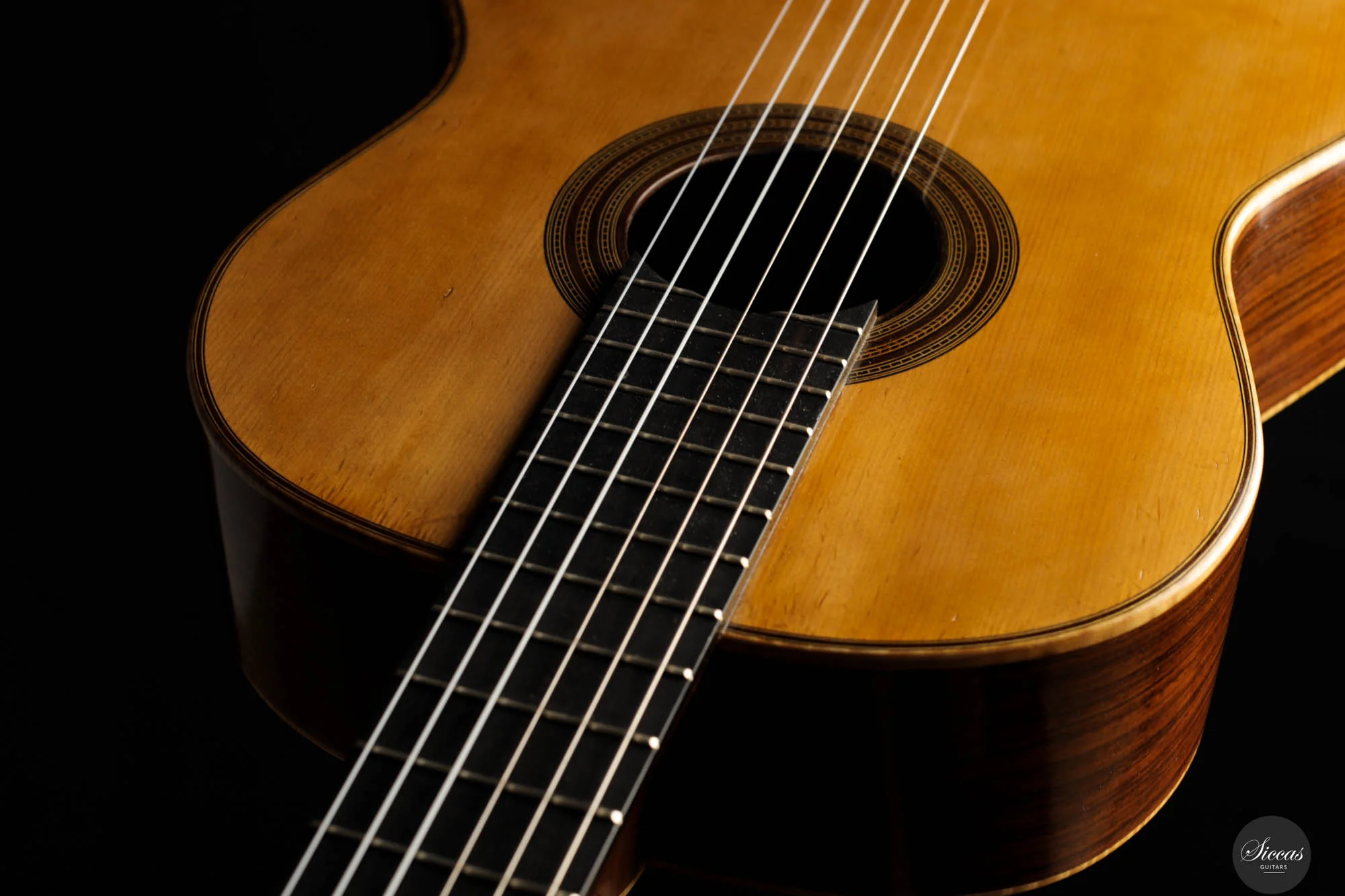
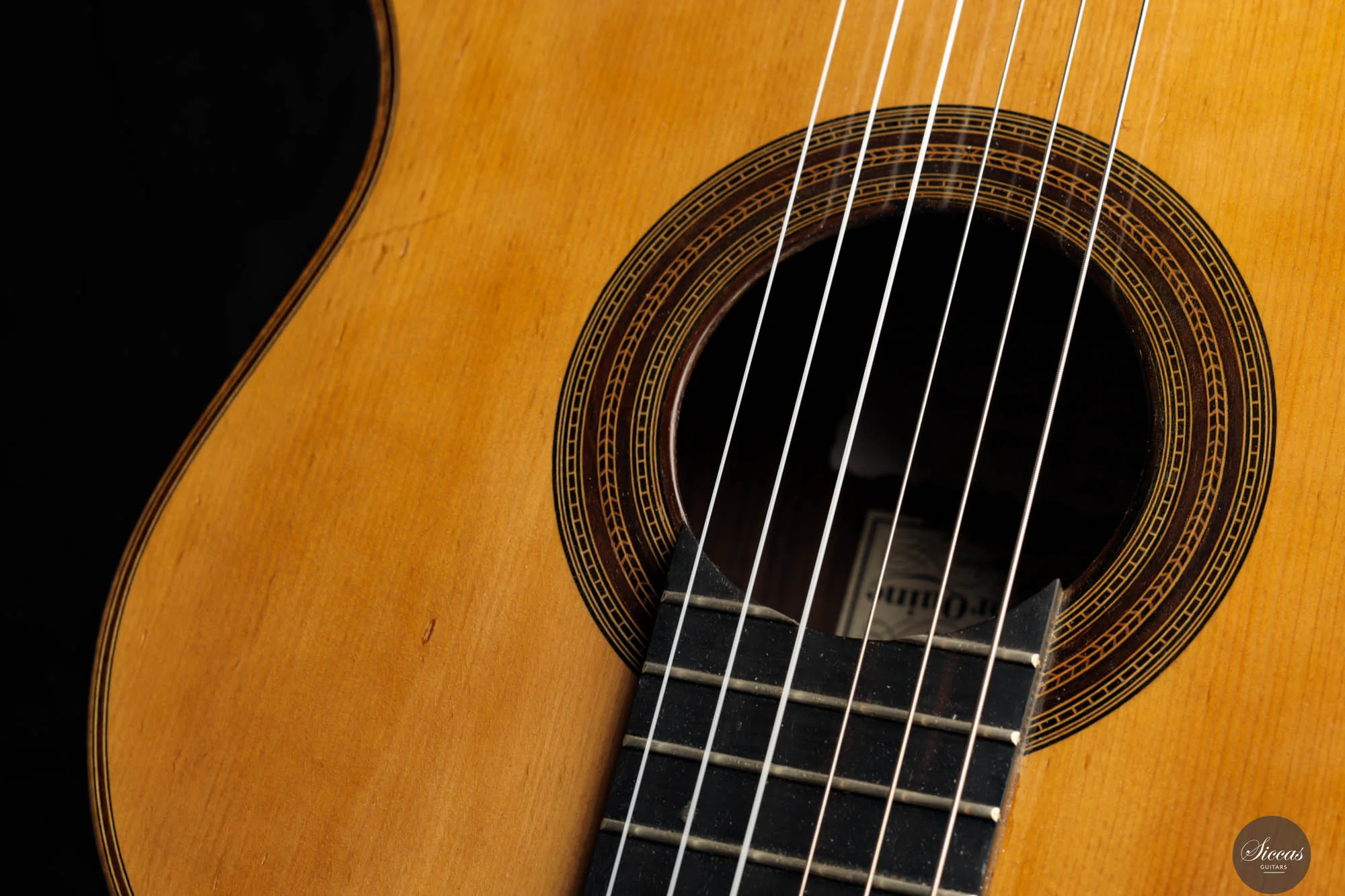
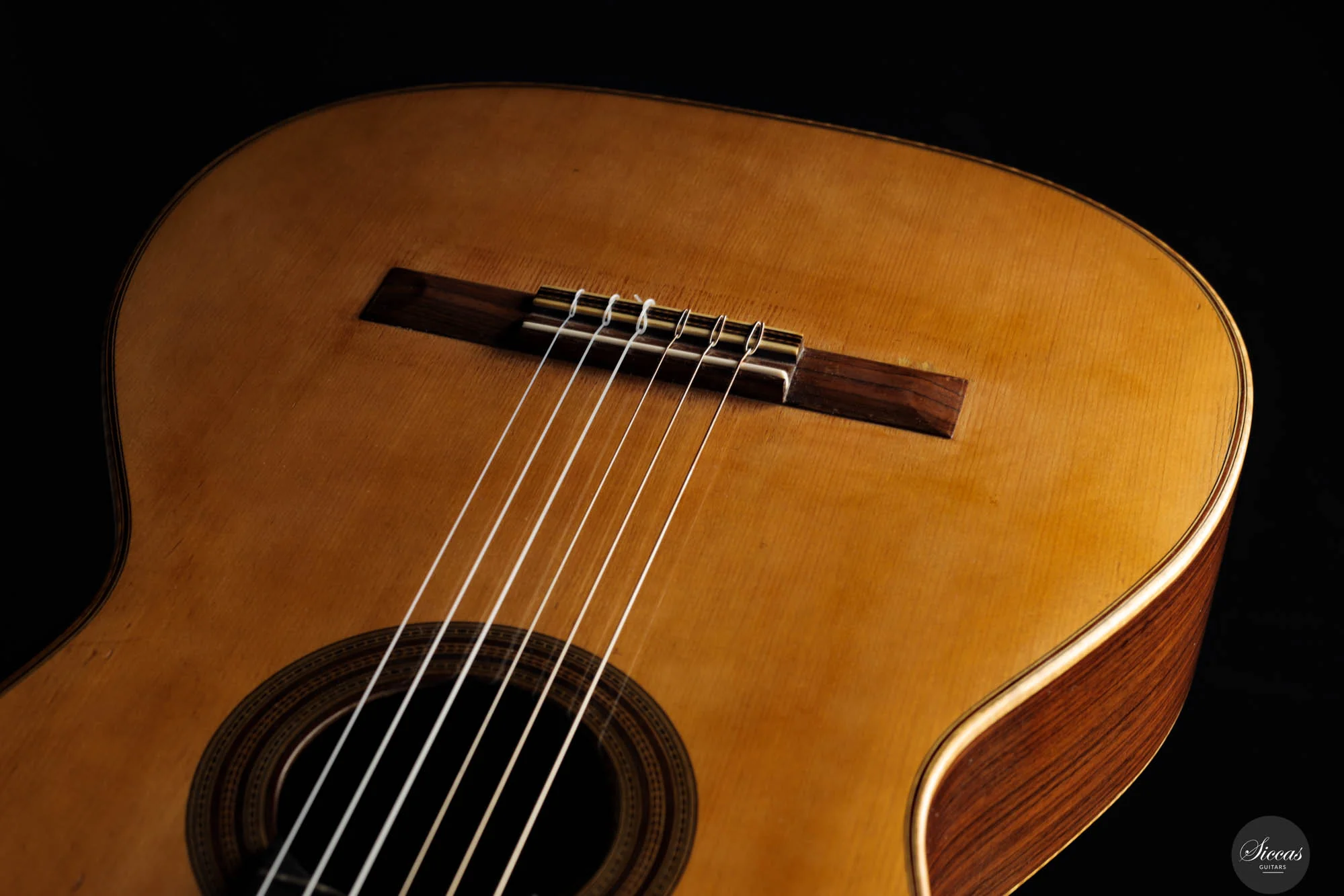
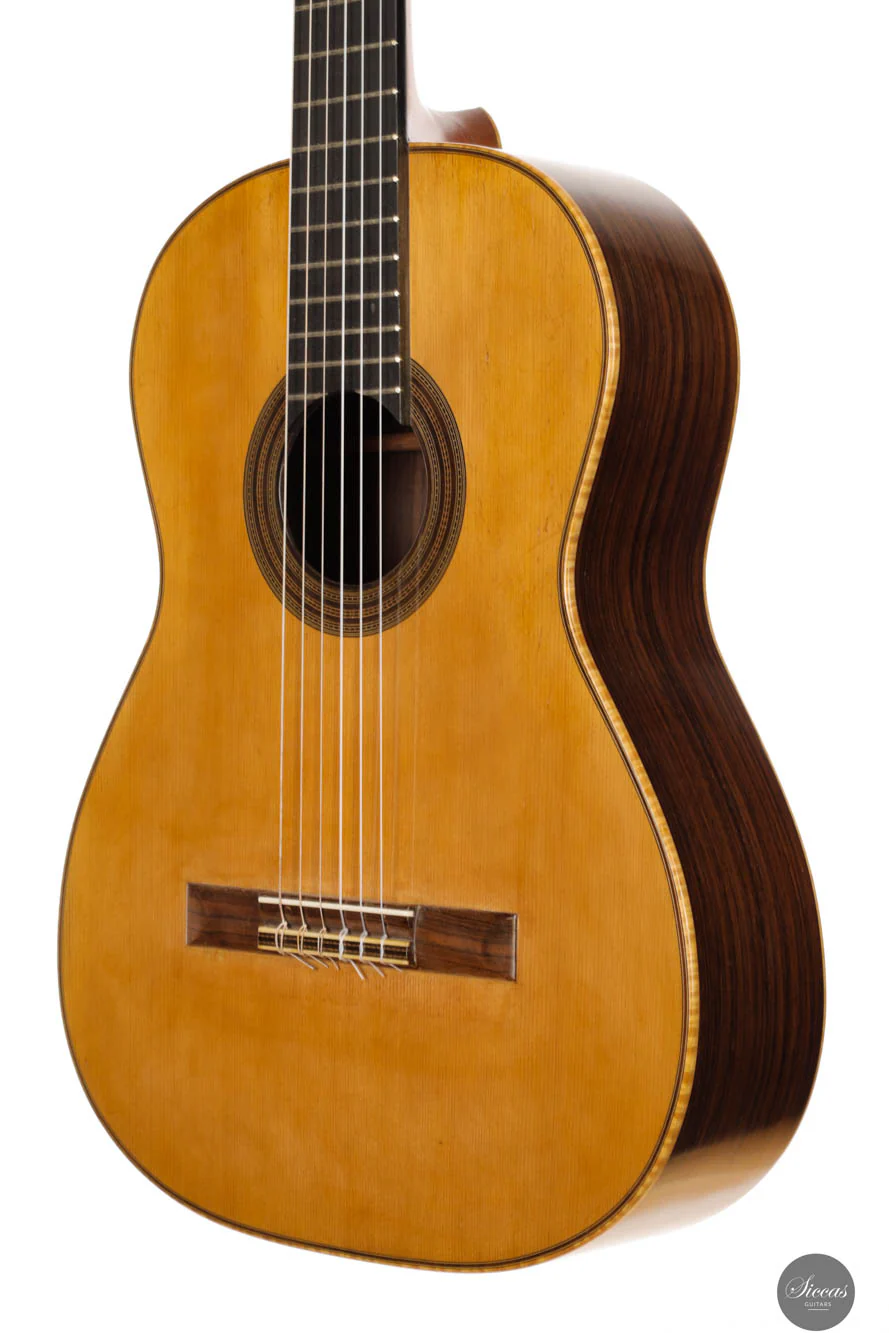
The guitar labeled “No. 18” from 1973 represents a unique collaboration in the world of lutherie, featuring a top crafted by Hector Quine and the remainder of the instrument-sides, back, fingerboard, and purfling—constructed by José Luis Romanillos. This partnership was confirmed by Quine to a student and friend, and is further authenticated by the label inside the guitar, which is handwritten with “completed by J. Romanillos.” The design and dimensions of this guitar align closely with those made by Romanillos during the 1970s, a period that also saw the creation of JB’s legendary Romanillos guitar.Dubbed “Quinillos” due to its dual heritage, this guitar is not only a piece of musical artistry but also a significant historical artifact, regarded as one of the rarest guitars on the planet. It remains in very good condition, free from any structural issues. The trebles resonate with the lively and bright characteristics reminiscent of Romanillos guitars from the 1970s, and the feel of the neck distinctly echoes Romanillos’s style, offering a comfortable and familiar playability. This instrument stands out not just for its exceptional craftsmanship and sound quality, but also for its unique provenance and collector’s value, making it a prized possession for any serious guitarist or collector.
$18,438.63
José Luis Romanillos/Hector Quine - 1973—
$18,438.63
Product Information
Product Information
Shipping & Returns
Shipping & Returns
Description
About the luthier
Hector Quine (December 30, 1926 – January 1, 2015) was a pioneering classical guitarist and educator whose contributions to the guitar world are immeasurable. Studying initially under Alexis Chesnakov, Quine’s early career was significantly influenced by his association with Julian Bream whom he met at Dr. Boris Perott’s “Philharmonic Society of Guitarists.” This relationship not only forged a lifelong friendship but also deeply influenced Quine’s approach to guitar playing and pedagogy. He authored numerous influential textbooks focusing on guitar methodology and technique, and notably became the first professor of guitar at the Royal Academy of Music. His teachings shaped the careers of eminent guitarists such as Roland Gallery, Michael Lewin, and David Russell. Beyond his educational contributions, Quine was an accomplished luthier, crafting 18 exceptional guitars from 1951 to 1973, reminiscent of the early Hermann Hauser I models. Notably, Julian Bream played Quine’s guitar no. 2 during his debut concert at London’s Wigmore Hall in 1951 and used the same instrument for his recordings in Vienna’s Mozart Hall in 1956, where Bream celebrated its bell-like tone as a revelation in sound.About the guitar
The guitar labeled “No. 18” from 1973 represents a unique collaboration in the world of lutherie, featuring a top crafted by Hector Quine and the remainder of the instrument-sides, back, fingerboard, and purfling—constructed by José Luis Romanillos. This partnership was confirmed by Quine to a student and friend, and is further authenticated by the label inside the guitar, which is handwritten with “completed by J. Romanillos.” The design and dimensions of this guitar align closely with those made by Romanillos during the 1970s, a period that also saw the creation of JB’s legendary Romanillos guitar.Dubbed “Quinillos” due to its dual heritage, this guitar is not only a piece of musical artistry but also a significant historical artifact, regarded as one of the rarest guitars on the planet. It remains in very good condition, free from any structural issues. The trebles resonate with the lively and bright characteristics reminiscent of Romanillos guitars from the 1970s, and the feel of the neck distinctly echoes Romanillos’s style, offering a comfortable and familiar playability. This instrument stands out not just for its exceptional craftsmanship and sound quality, but also for its unique provenance and collector’s value, making it a prized possession for any serious guitarist or collector.