


Hernandez y Aguado - 1963 No.233
About the luthier
Manuel Hernández, originally Santiago Díaz Martínez, was born in 1895 in Valmojado near Toledo. Victoriano Aguado Rodríguez was born in Madrid in 1897. The two met in Madrid while working in a piano factory, where a close friendship developed. They later founded a joint workshop that initially focused on the restoration of furniture and pianos.
Their path toward guitar making began in the mid 1940s, when Victoriano Aguado built two guitars for his own use. These instruments drew the attention of Regino Sainz de la Maza, then professor at the Real Conservatorio in Madrid, who encouraged them to pursue the craft more seriously. Further experience was gained through collaboration with Modesto Borreguero, who had previously worked with Manuel Ramírez. From that point onward, Hernández y Aguado established an international reputation. Their guitars were played by artists such as John Williams, Julian Bream, and Atahualpa Yupanqui, and were exported worldwide.
About the guitar
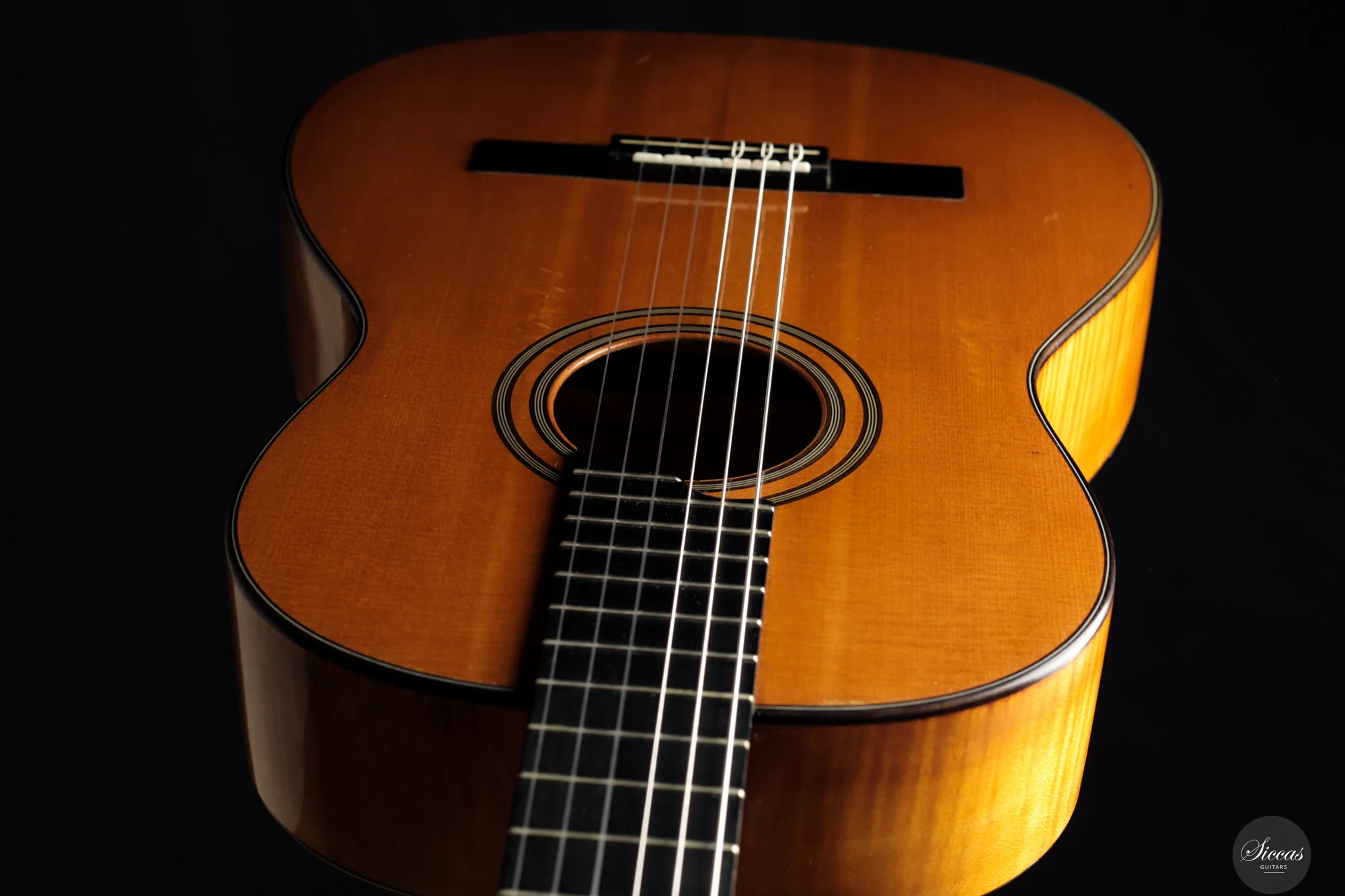
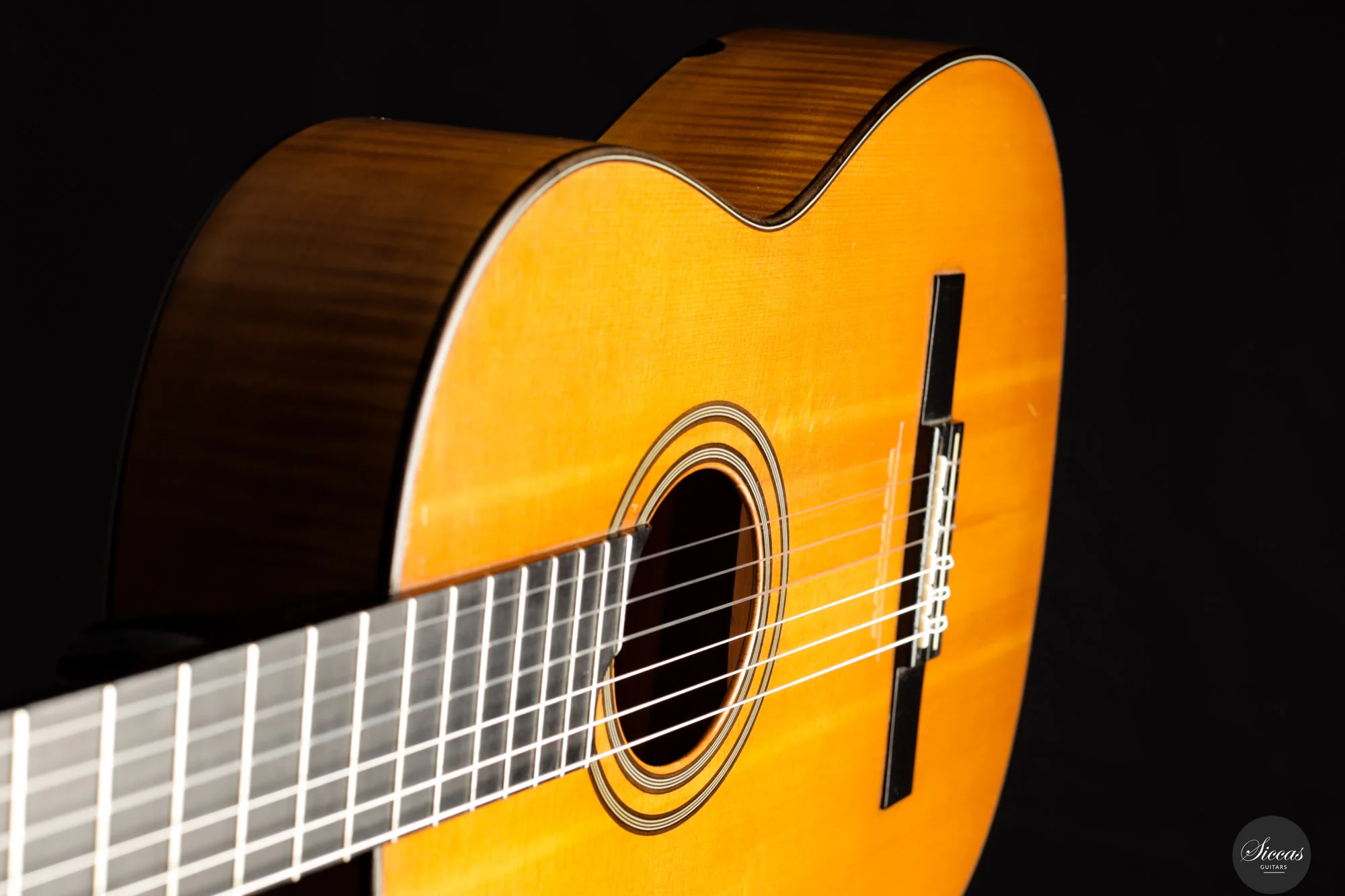
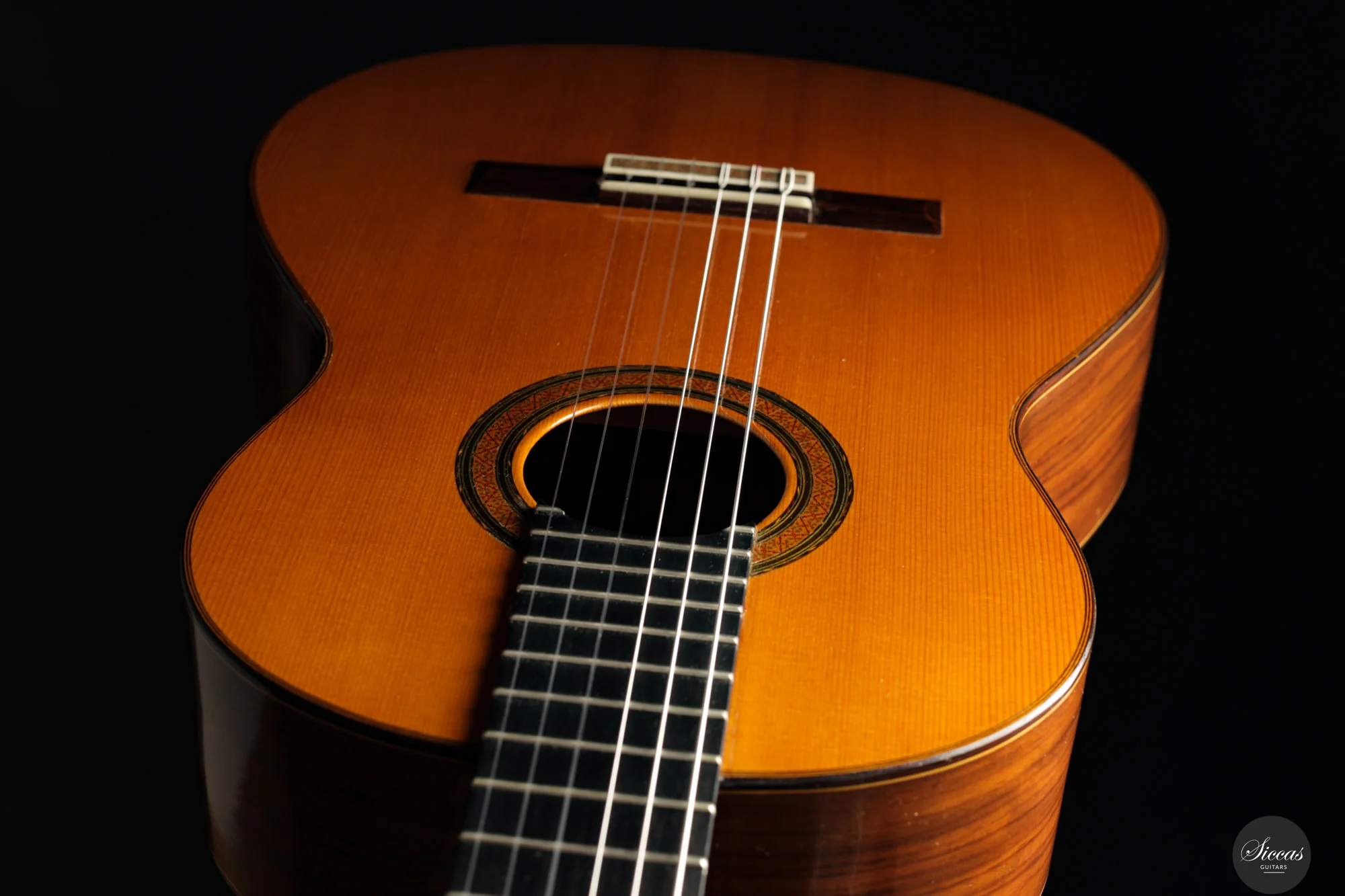
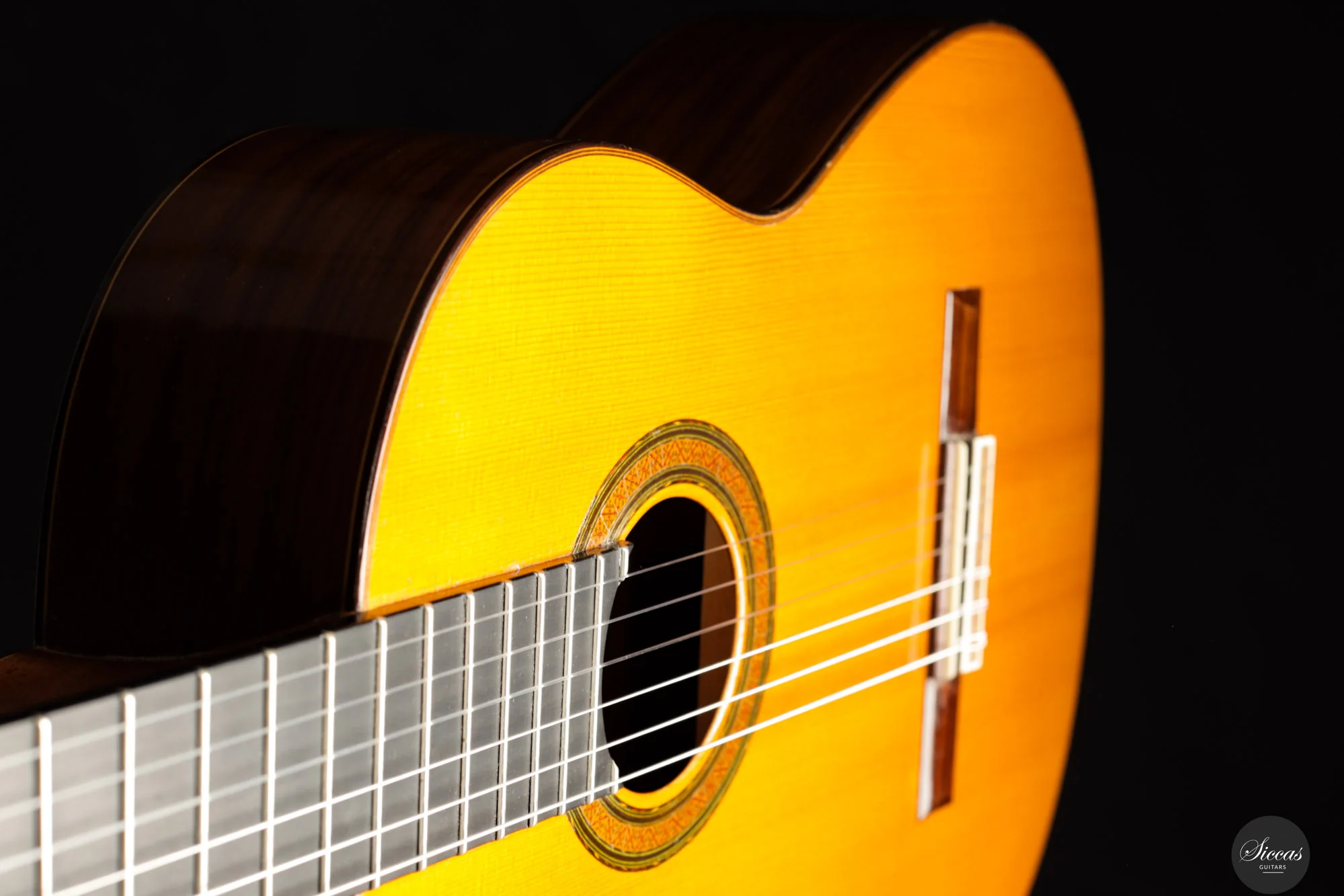
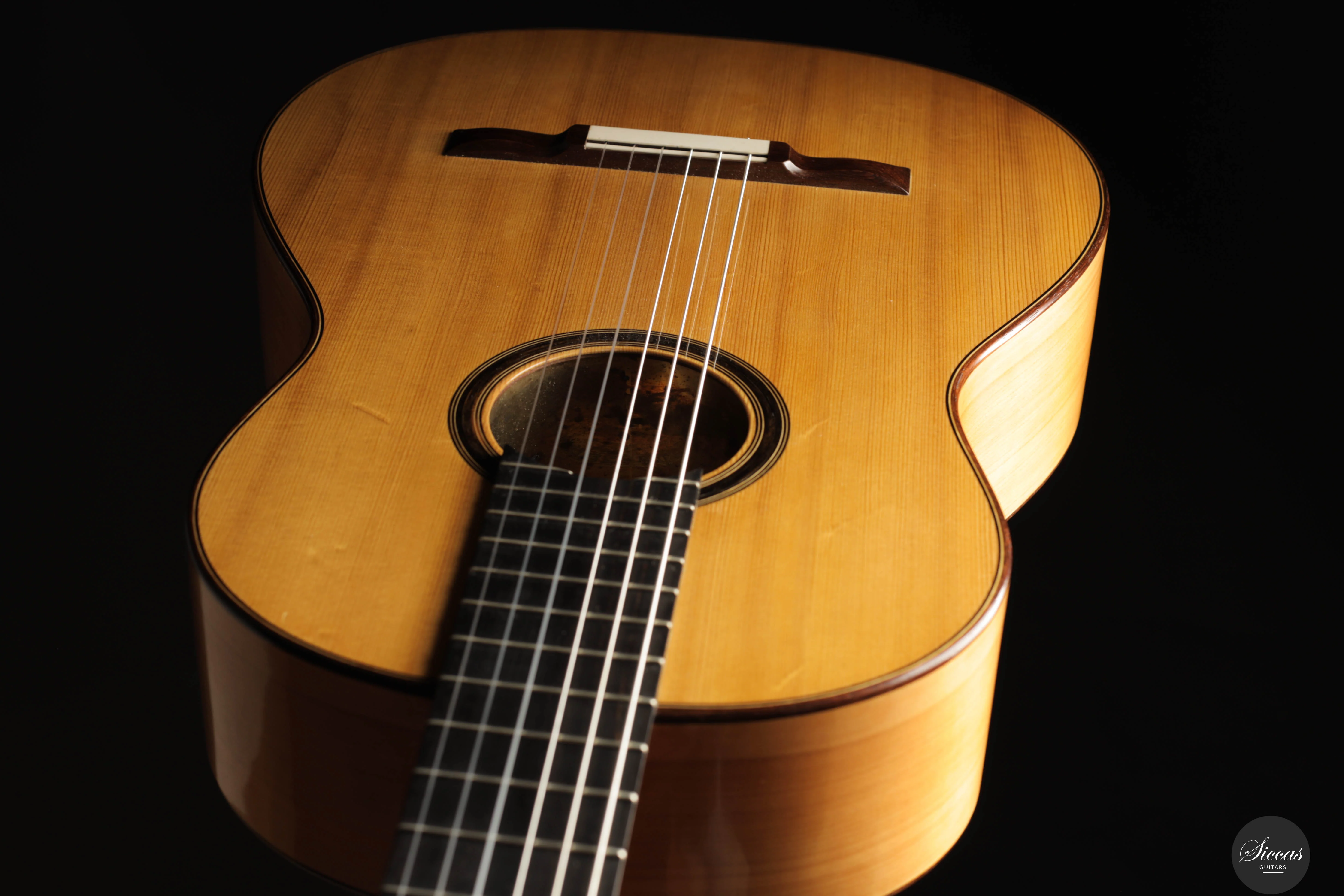
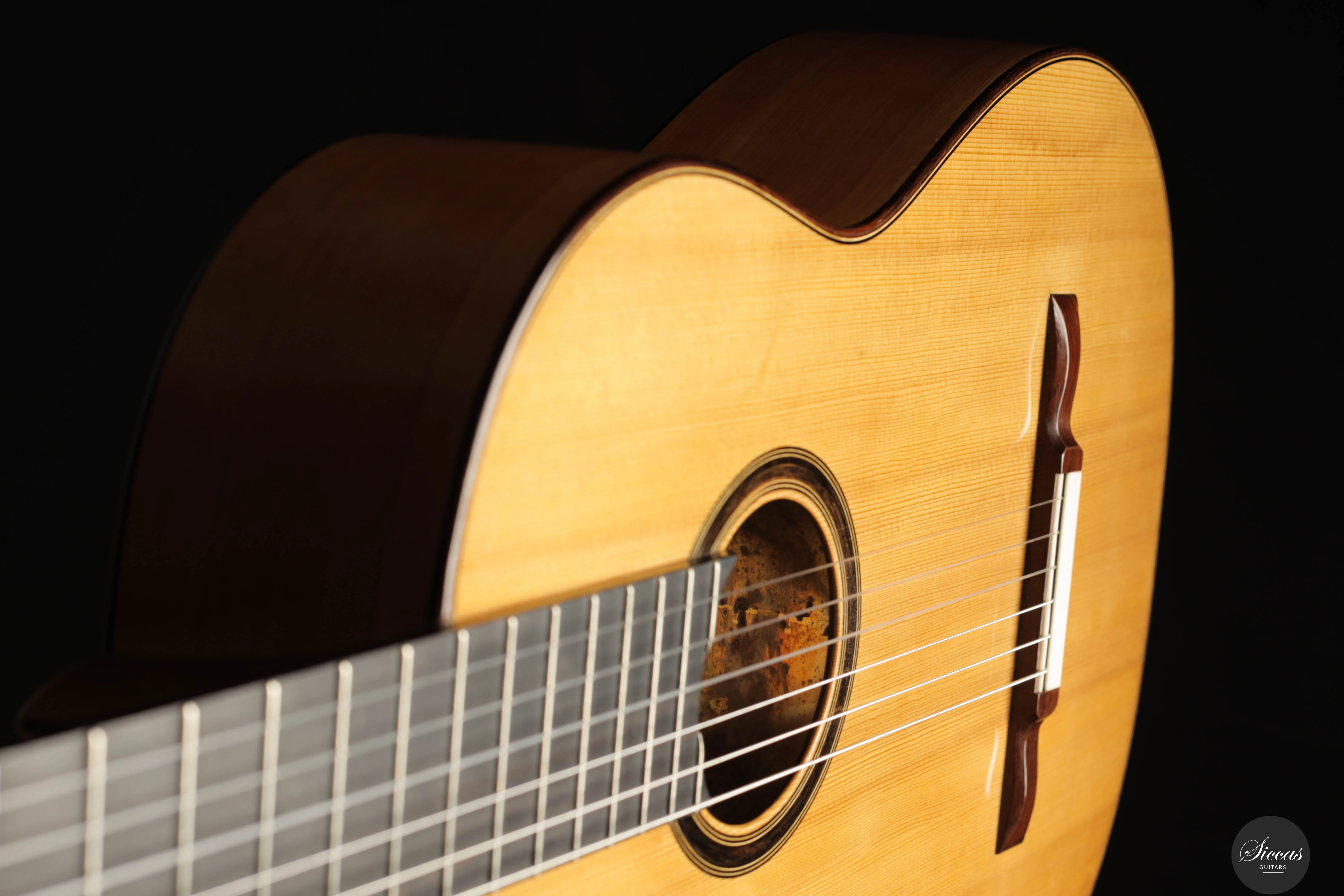
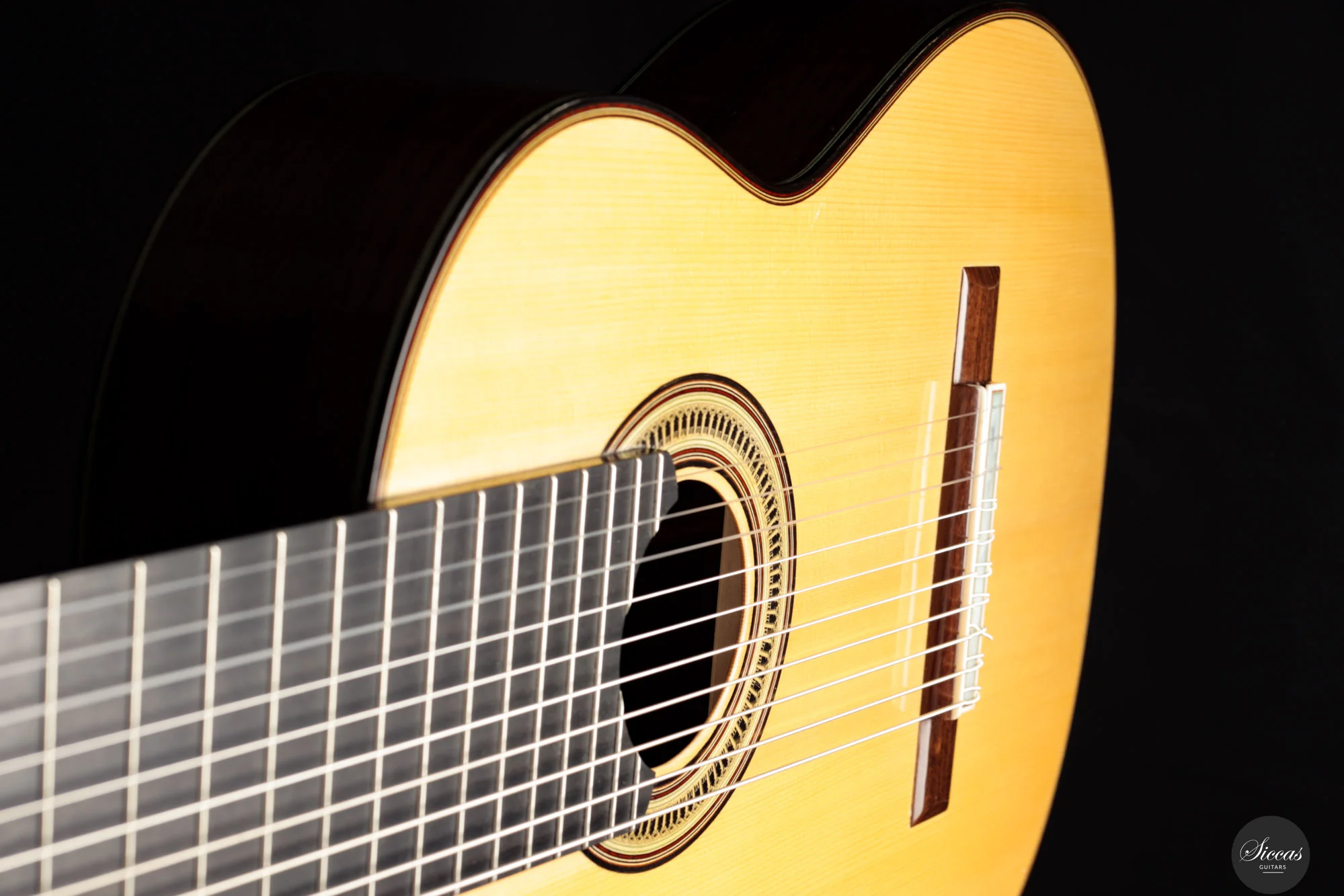
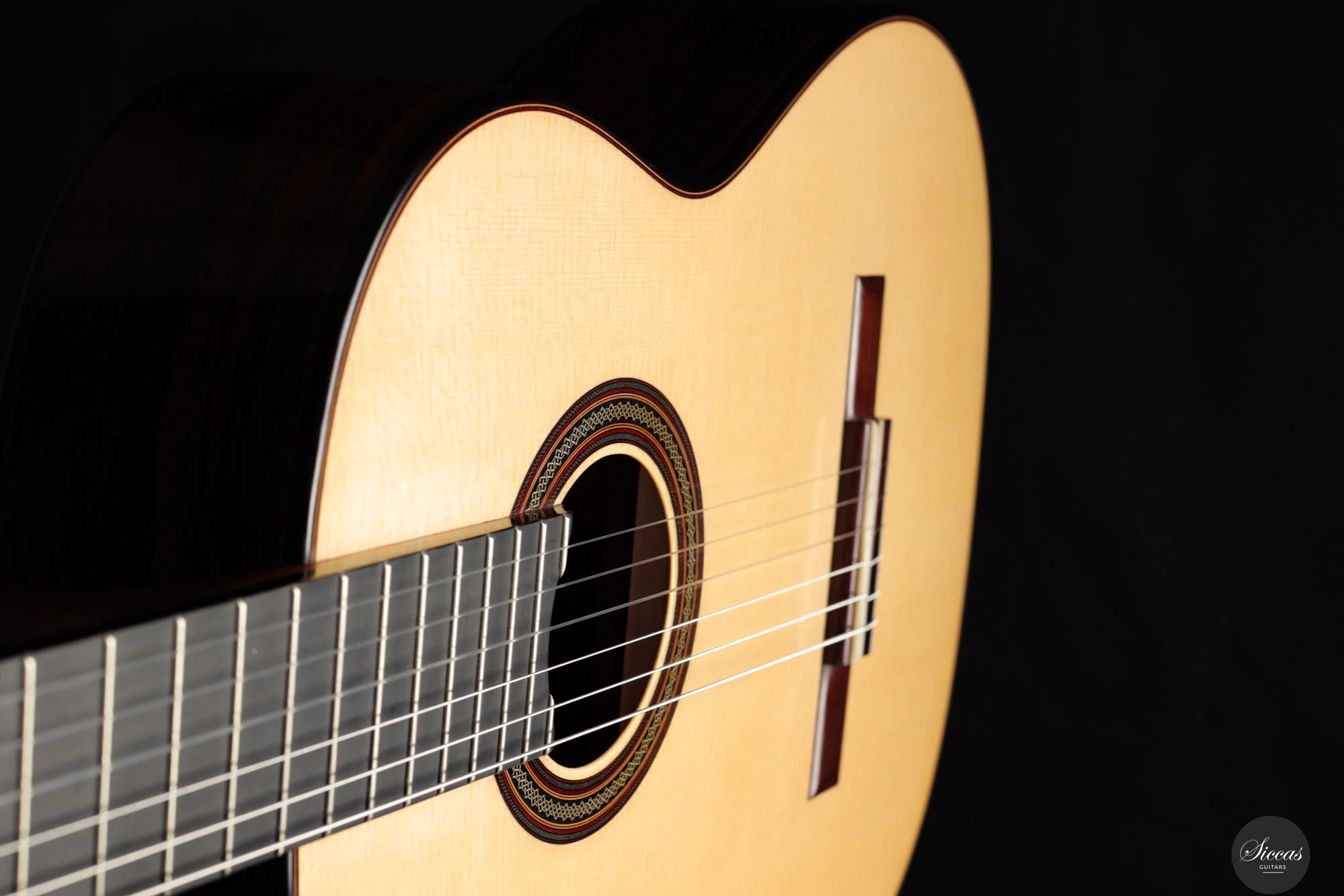
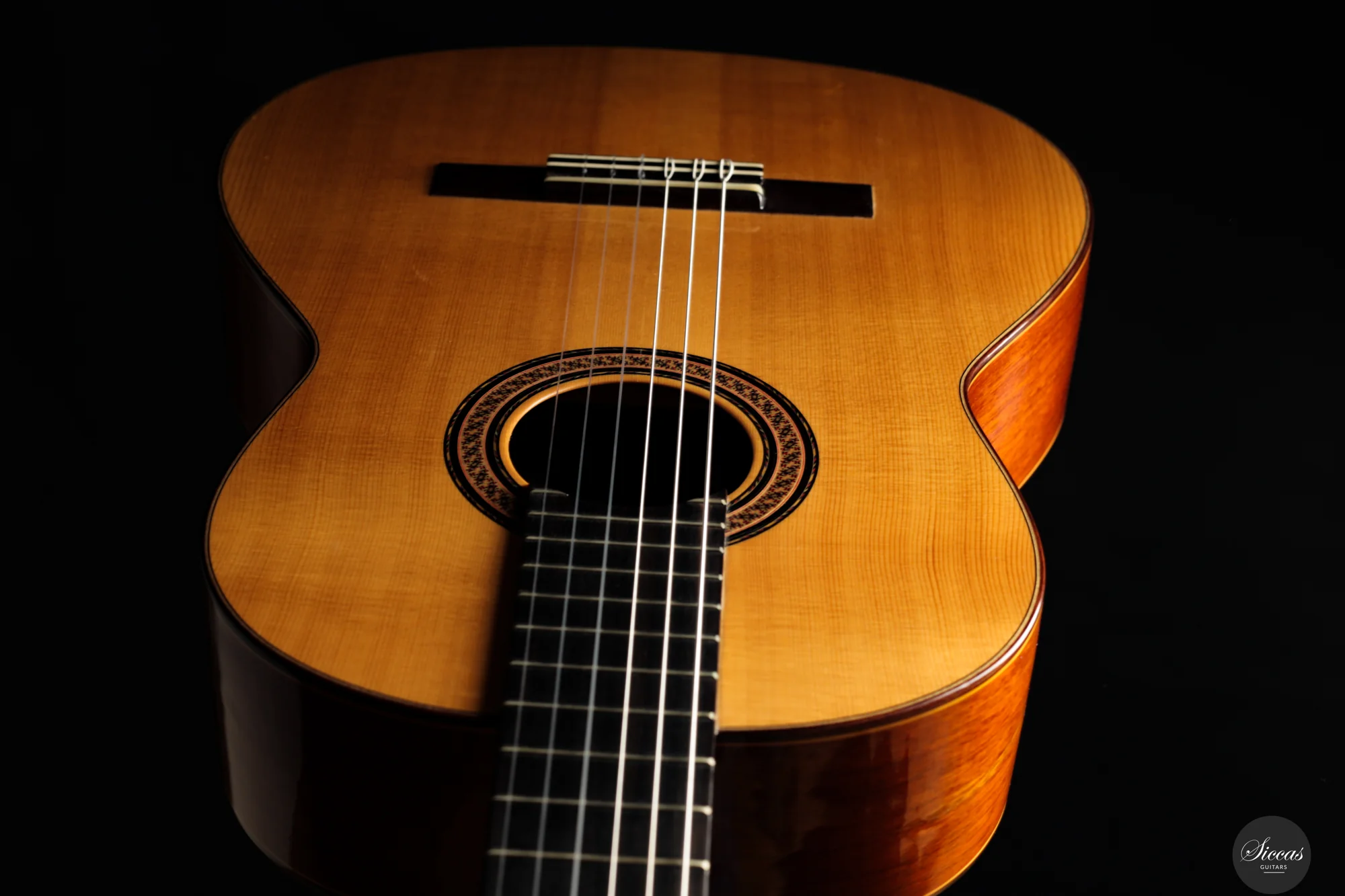
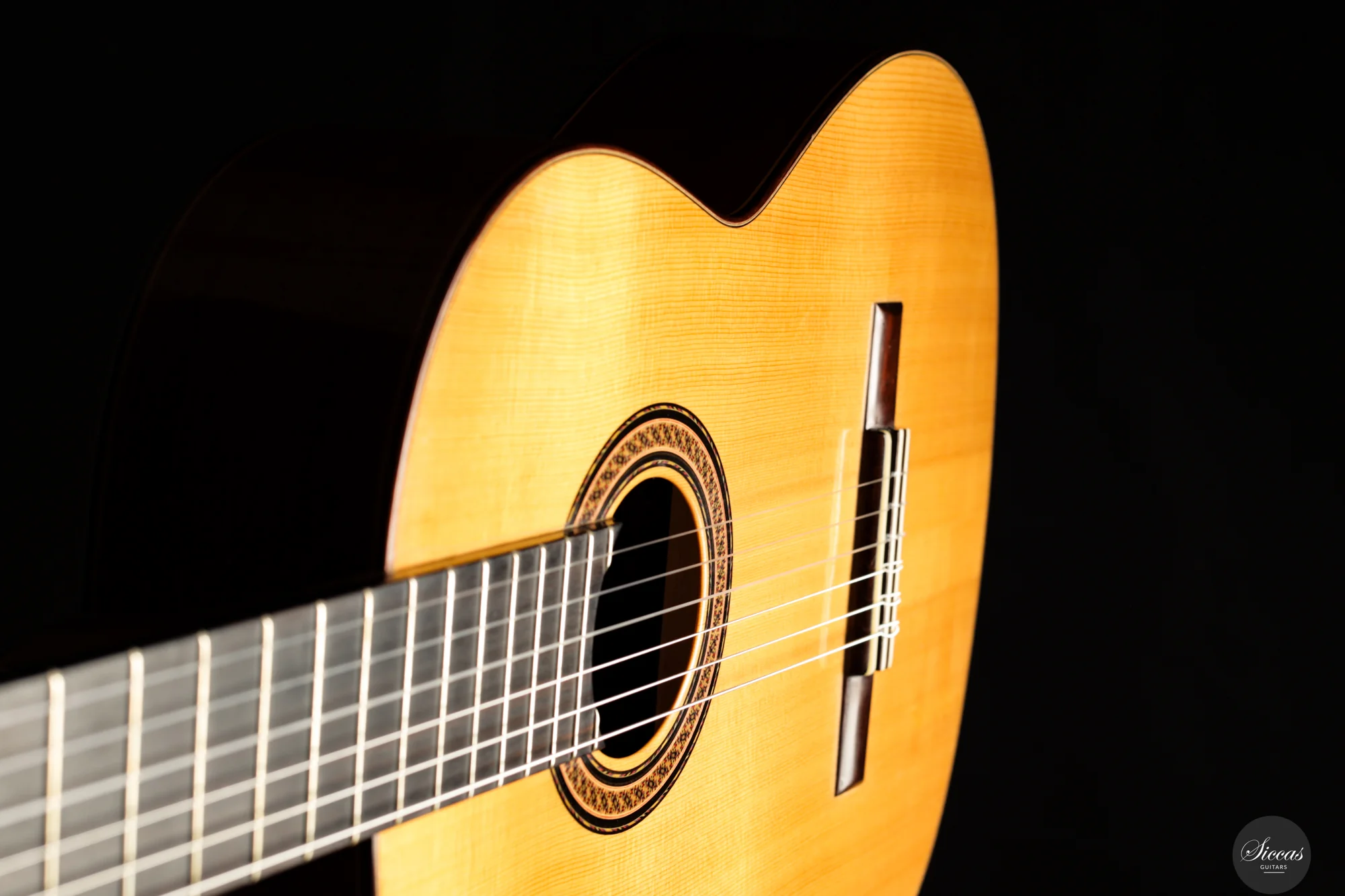
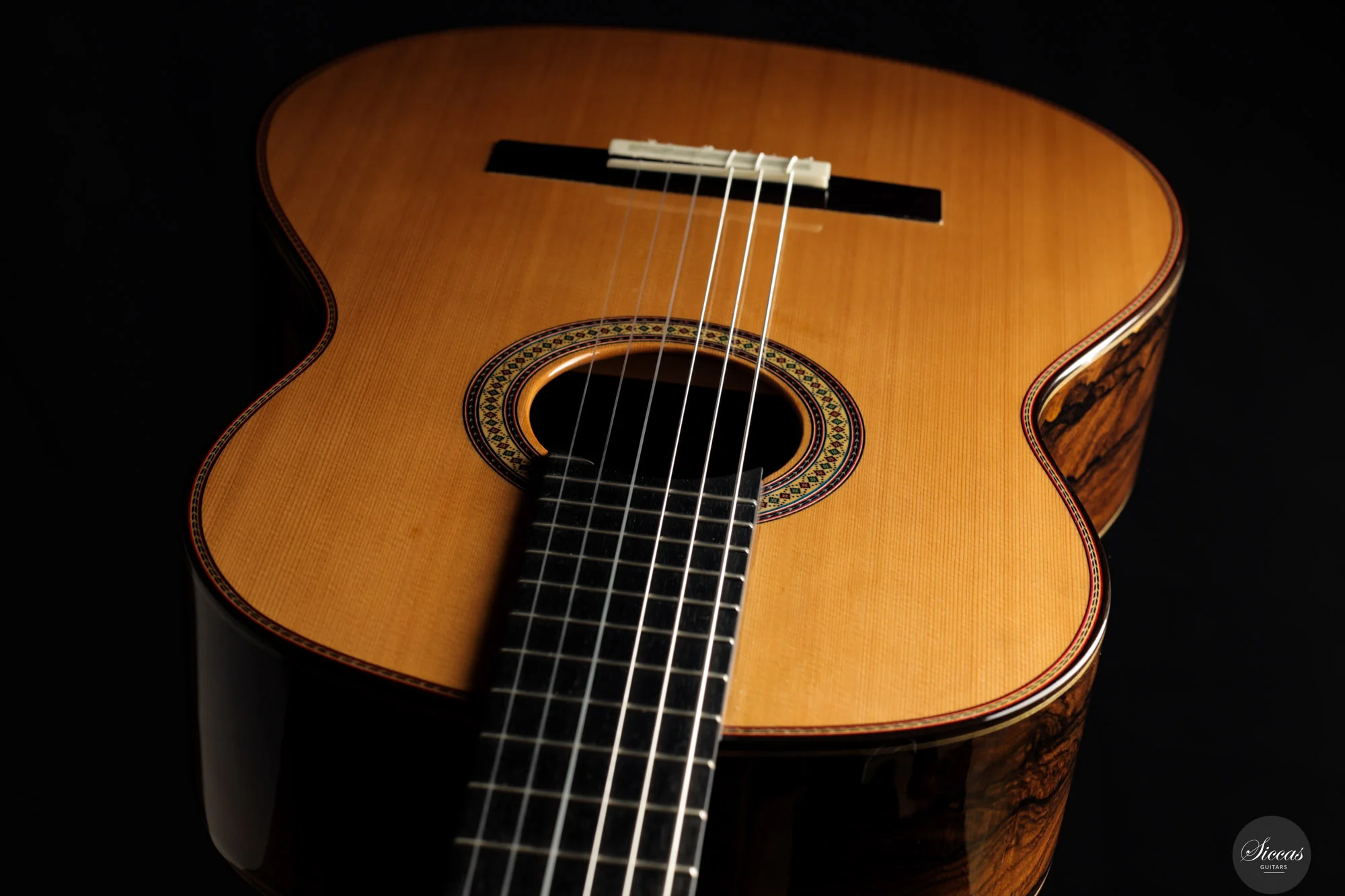
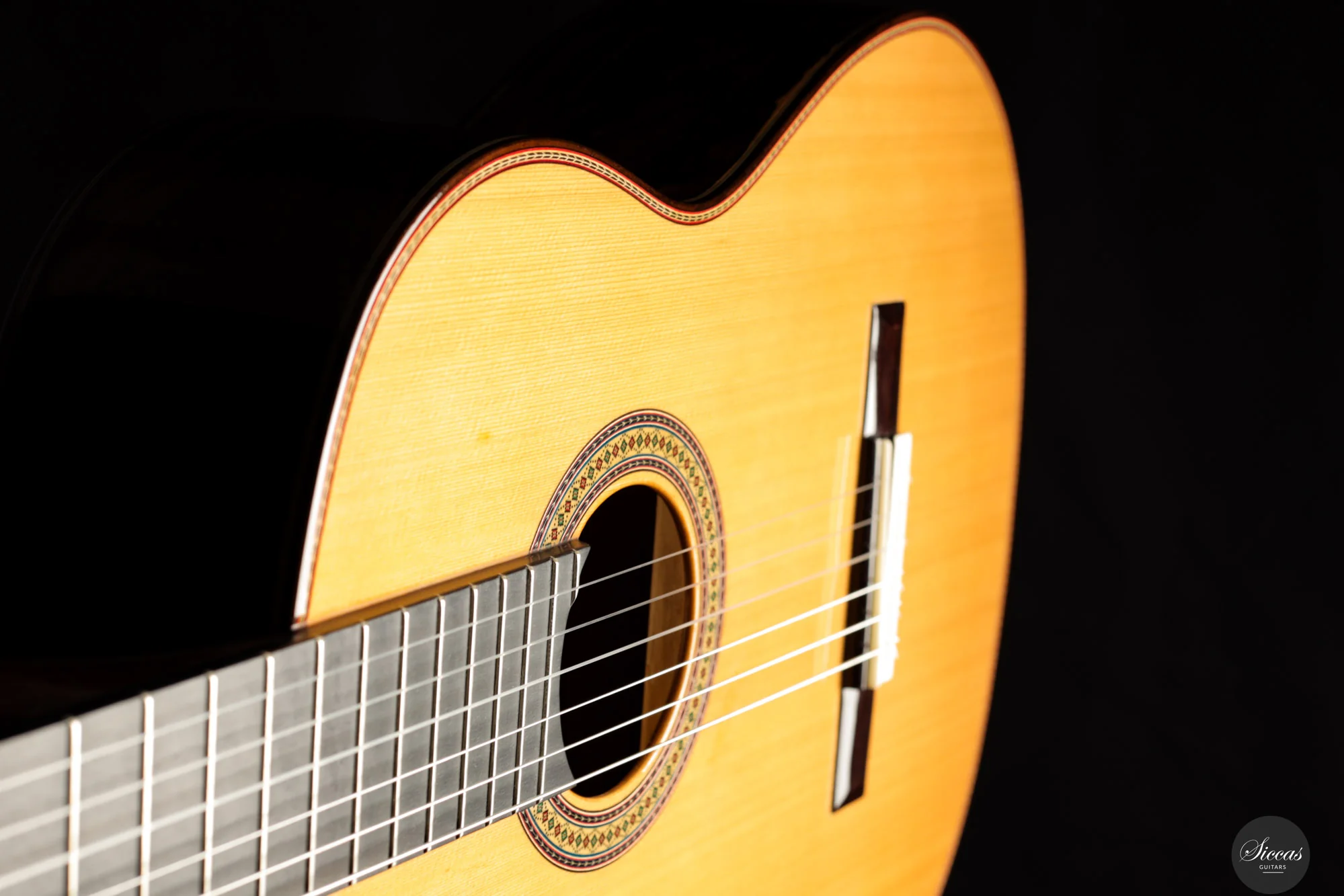
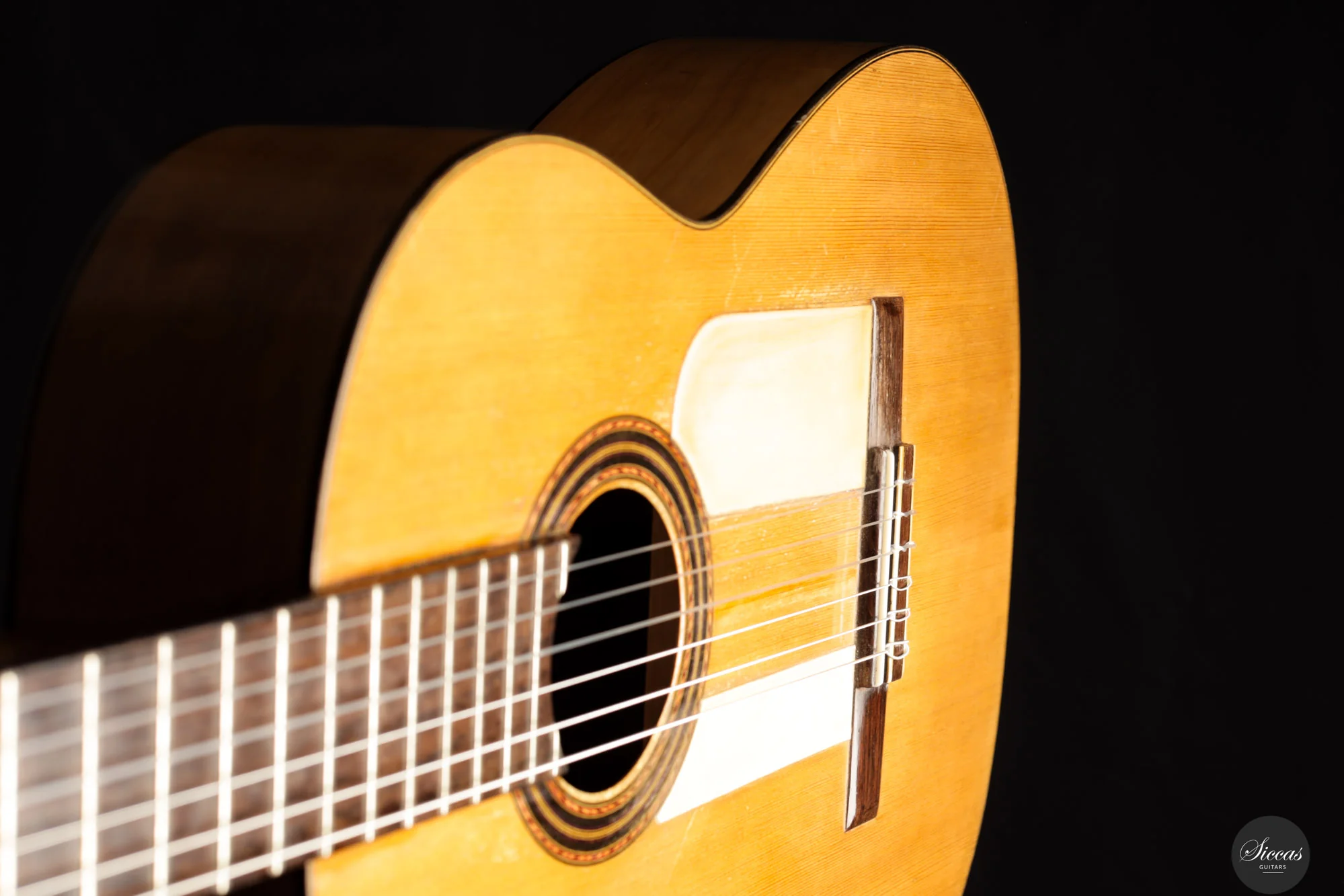
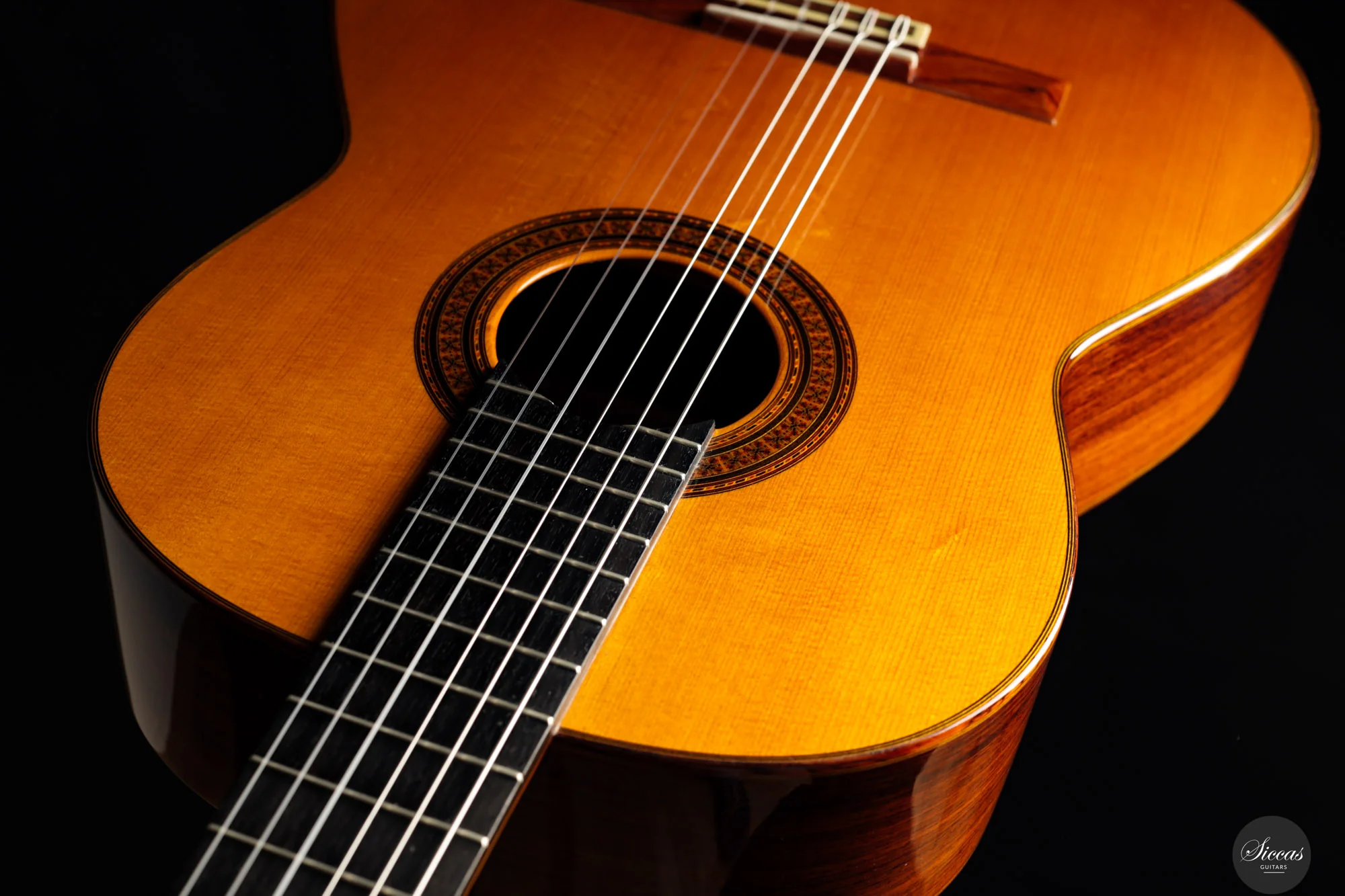
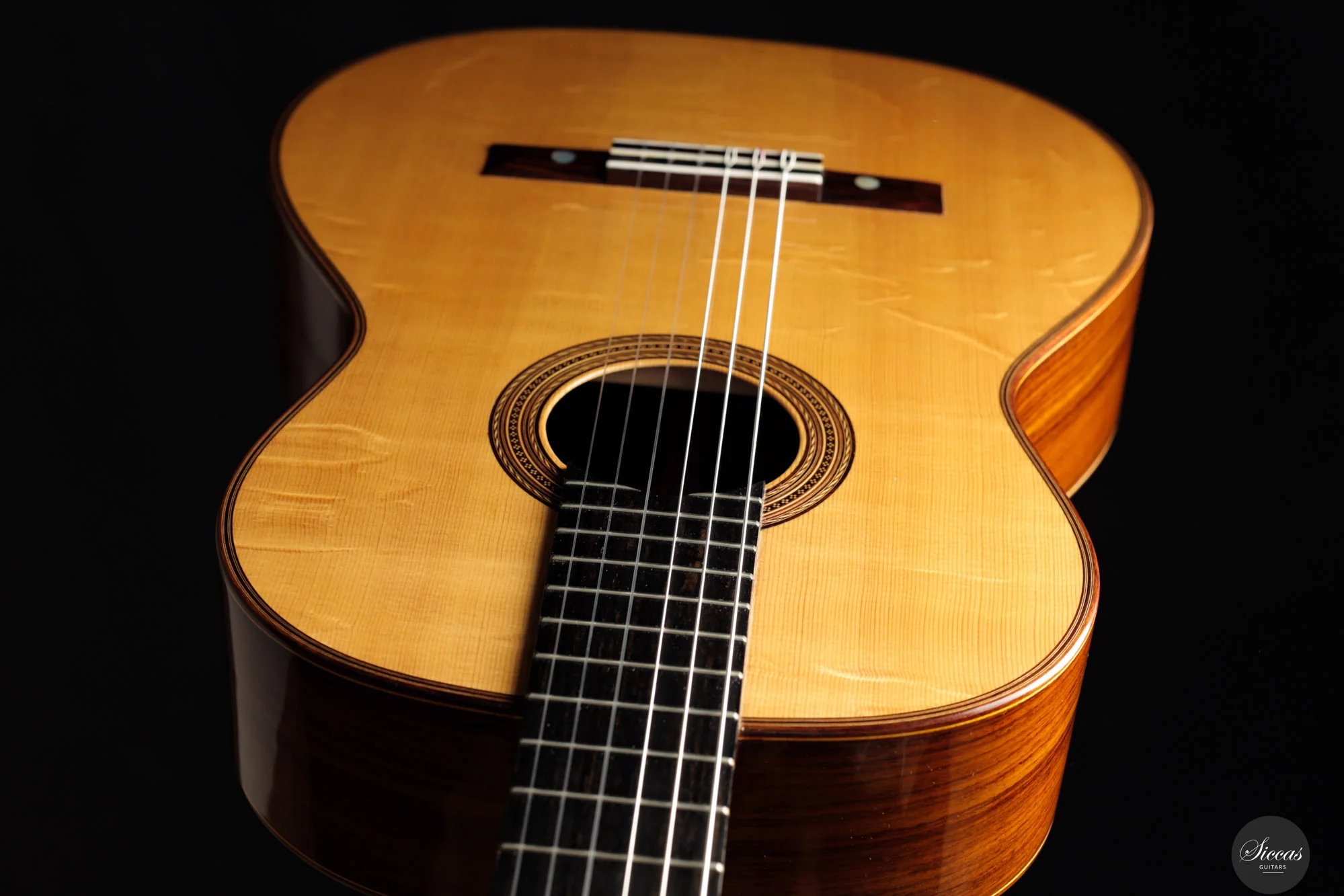
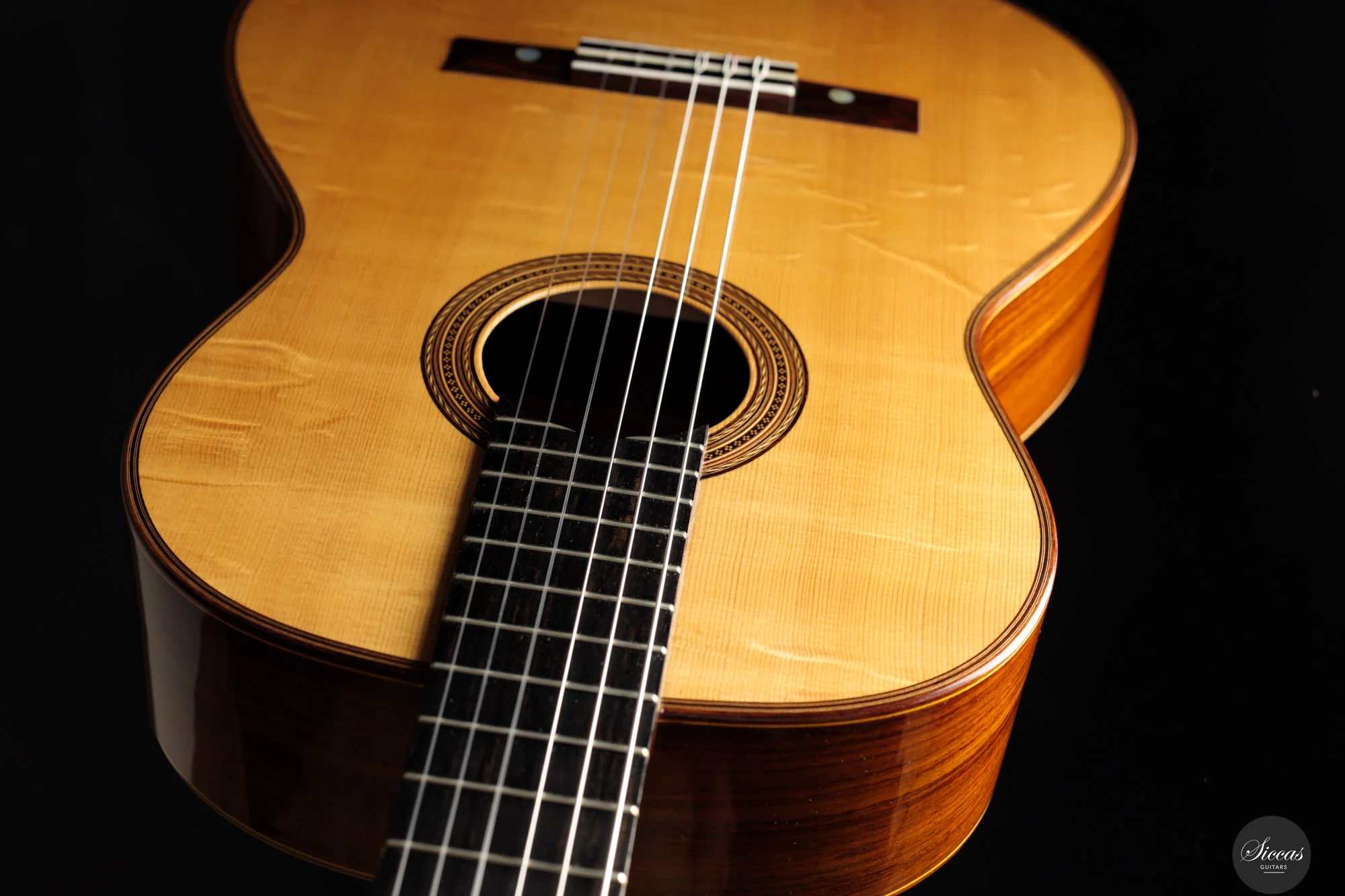
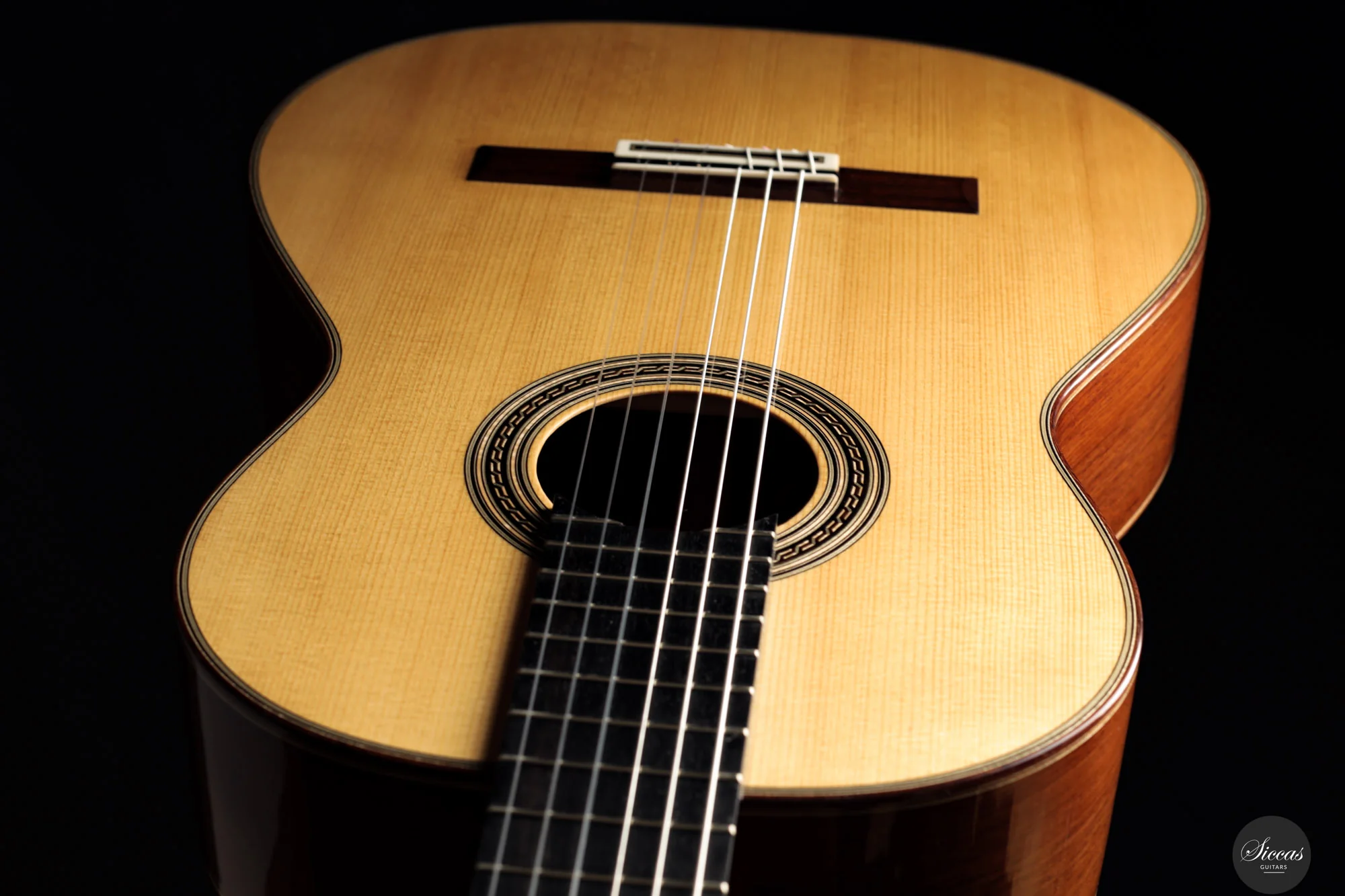
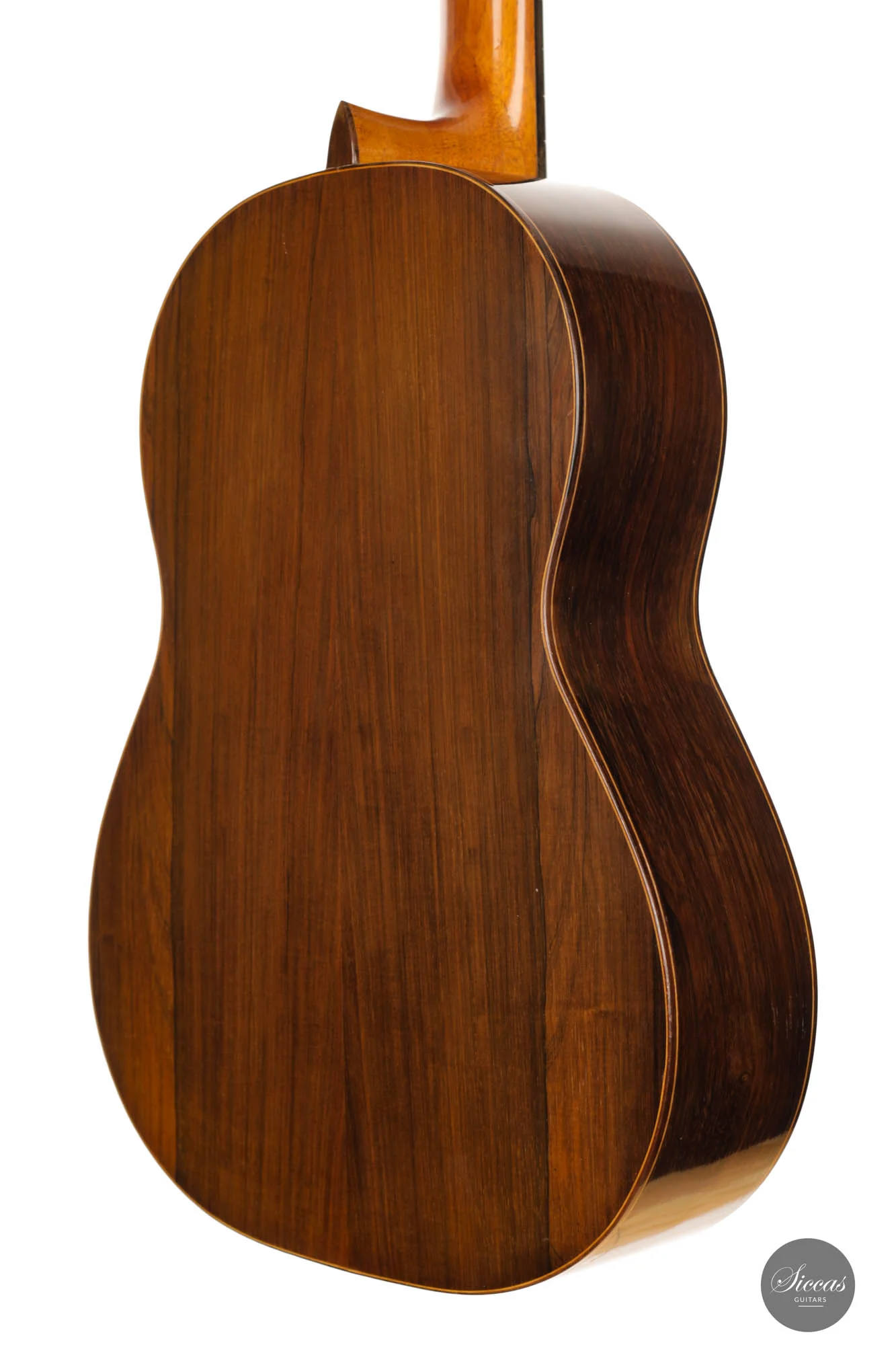
This guitar from 1963, numbered 233, was built during the mature period of the Hernández y Aguado workshop. It is constructed in traditional Spanish manner, with Brazilian rosewood back and sides and finished in French polish. The visual presence is defined by the characteristic elegance and proportion associated with the Madrid school of the time.
Tonally, the instrument presents a highly refined and balanced voice. The relationship between basses and trebles is exceptionally even, allowing polyphonic textures to unfold with clarity. The bass register is round and supportive without excess weight, while the trebles are singing and transparent, carrying a noble and composed quality. The sustain is long and stable, and the intonation remains precise across the fingerboard.
With an air resonance at F sharp, the tonal architecture feels compact and centred. The instrument reacts sensitively to articulation and offers a wide expressive range, rewarding controlled playing with depth of colour and nuance. More than six decades after its construction, it retains a remarkable structural and acoustic integrity.
Condition
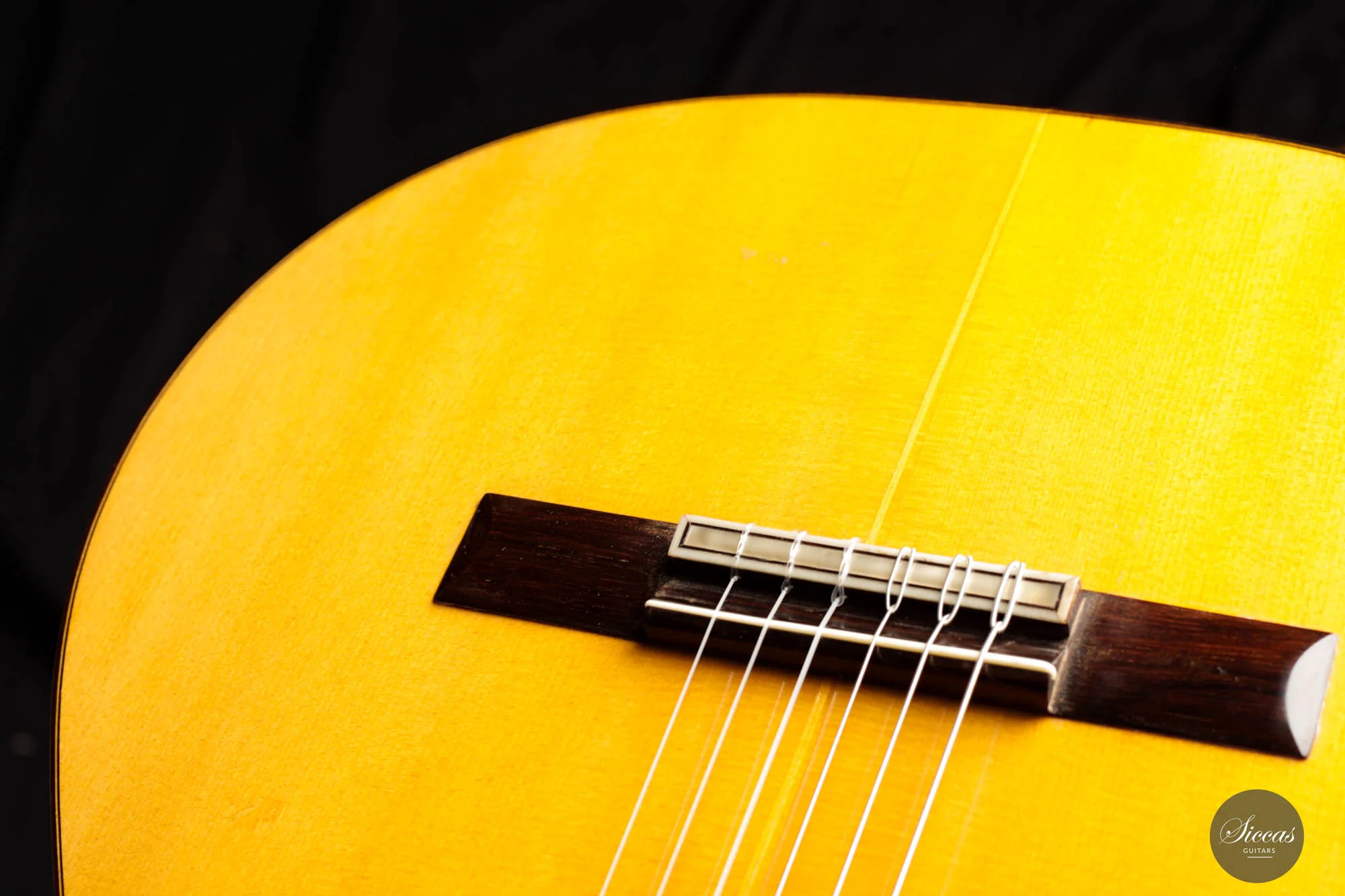
The guitar is in excellent condition. The soundboard has two professionally restored cracks. At the centre seam of the top, a fine strip of approximately 2 mm has been inlaid along the bookmatch joint. The back is free from damage. On one side, there is a very small crack of approximately 2 cm at the lower bout. All repairs have been executed cleanly and the instrument is structurally stable.
Original: $1,153,134,998.85
-70%$1,153,134,998.85
$345,940,499.65Product Information
Product Information
Shipping & Returns
Shipping & Returns
Description
About the luthier
Manuel Hernández, originally Santiago Díaz Martínez, was born in 1895 in Valmojado near Toledo. Victoriano Aguado Rodríguez was born in Madrid in 1897. The two met in Madrid while working in a piano factory, where a close friendship developed. They later founded a joint workshop that initially focused on the restoration of furniture and pianos.
Their path toward guitar making began in the mid 1940s, when Victoriano Aguado built two guitars for his own use. These instruments drew the attention of Regino Sainz de la Maza, then professor at the Real Conservatorio in Madrid, who encouraged them to pursue the craft more seriously. Further experience was gained through collaboration with Modesto Borreguero, who had previously worked with Manuel Ramírez. From that point onward, Hernández y Aguado established an international reputation. Their guitars were played by artists such as John Williams, Julian Bream, and Atahualpa Yupanqui, and were exported worldwide.
About the guitar
This guitar from 1963, numbered 233, was built during the mature period of the Hernández y Aguado workshop. It is constructed in traditional Spanish manner, with Brazilian rosewood back and sides and finished in French polish. The visual presence is defined by the characteristic elegance and proportion associated with the Madrid school of the time.
Tonally, the instrument presents a highly refined and balanced voice. The relationship between basses and trebles is exceptionally even, allowing polyphonic textures to unfold with clarity. The bass register is round and supportive without excess weight, while the trebles are singing and transparent, carrying a noble and composed quality. The sustain is long and stable, and the intonation remains precise across the fingerboard.
With an air resonance at F sharp, the tonal architecture feels compact and centred. The instrument reacts sensitively to articulation and offers a wide expressive range, rewarding controlled playing with depth of colour and nuance. More than six decades after its construction, it retains a remarkable structural and acoustic integrity.
Condition
The guitar is in excellent condition. The soundboard has two professionally restored cracks. At the centre seam of the top, a fine strip of approximately 2 mm has been inlaid along the bookmatch joint. The back is free from damage. On one side, there is a very small crack of approximately 2 cm at the lower bout. All repairs have been executed cleanly and the instrument is structurally stable.